


Pneumatic Exhaust
In industrial automation and fluid power systems, the management of pneumatic exhaust is a critical engineering consideration that directly impacts machine performance, operator safety, and environmental compliance. While the primary focus of pneumatic design often rests on supply pressure and actuator force, the manner in which compressed air is released back into the atmosphere—the exhaust phase—determines the efficiency of the entire cycle.
Properly engineered pneumatic exhaust solutions address three primary challenges: noise reduction, contaminant filtration, and backpressure management. As high-pressure air expands rapidly upon release, it generates significant acoustic energy and can carry lubricants or particulates into the workspace. For engineers and maintenance professionals, selecting the right filtration and silencing components is essential for maintaining a reliable and compliant production environment.
The Engineering Dynamics of Pneumatic Exhaust
Pneumatic exhaust occurs when a control valve shifts to vent compressed air from an actuator or process line. This transition involves a rapid drop in pressure, transforming potential energy into kinetic energy. The velocity of the air at the exhaust port can reach sonic speeds, leading to several physical phenomena that require mitigation.
Turbulence and Acoustic Energy
When compressed air exits a small orifice into the ambient atmosphere, the sudden expansion creates extreme turbulence. This turbulence is the primary source of the high-frequency "hiss" or "pop" associated with pneumatic machinery. Without mitigation, these noise levels can exceed 100 decibels (dB), posing a significant risk for noise-induced hearing loss among factory personnel and violating occupational safety standards.
Thermal Effects
The Joule-Thomson effect describes the temperature change of a real gas when it is allowed to expand freely through a valve or porous plug. In pneumatic exhaust applications, this often results in a rapid cooling of the exhaust port. In high-cycle applications or environments with high humidity, this localized cooling can lead to moisture condensation or even icing, which may obstruct the exhaust path and cause erratic machine behavior.
Noise Mitigation and Regulatory Compliance
One of the most immediate requirements for managing pneumatic exhaust is the reduction of sound pressure levels. Regulatory bodies, such as OSHA in the United States and similar agencies globally, mandate strict limits on permissible noise exposure. For example, the standard limit is often 90 dBA for an eight-hour TWA (Time Weighted Average), but many modern facilities strive for 80-85 dBA to ensure a safer working environment.
The Role of Sintered Metal Silencers
Silencers, often referred to as mufflers, are installed directly into the exhaust ports of directional control valves. These components utilize porous media—most effectively sintered stainless steel or bronze—to diffuse the exhaust stream. By forcing the air through a complex network of microscopic pores, the silencer breaks down the large, turbulent air stream into thousands of smaller, laminar streams. This process significantly reduces the velocity and, consequently, the acoustic energy of the exhaust.
Decibel Reduction Performance
A high-quality stainless steel exhaust silencer can reduce noise levels by 20 to 35 dB. When evaluating these components, engineers must look at the noise reduction curve across different frequencies. While most silencers are effective at high frequencies, premium sintered metal components provide more consistent attenuation across the mid-range frequencies, which are often the most disruptive in a factory setting.
Contamination Control in Exhaust Streams
In many pneumatic systems, the air is not "clean" when it reaches the exhaust port. It often contains trace amounts of compressor oil, moisture, and fine metallic particulates worn from the internal seals of valves and cylinders. Releasing this mixture directly into the plant environment can lead to several issues.
Oil Mist Recovery
In lubricated pneumatic circuits, the exhaust air carries an aerosolized oil mist. If left unfiltered, this mist can settle on machinery, floors, and finished products. In industries such as food and beverage or pharmaceutical manufacturing, this is a major contamination risk. Exhaust filters, specifically designed with coalescing media or fine wire mesh, can capture these oil droplets before they enter the atmosphere.
Particulate Filtration
Internal wear is inevitable in any mechanical system. As seals and pistons move, they generate microscopic debris. Sintered stainless steel filter elements in the exhaust path serve a dual purpose: they act as a silencer while simultaneously trapping particulates. This prevents the inhalation of fine dust by workers and keeps the surrounding environment sterile, which is vital for cleanroom applications or precision electronics assembly.
Engineering Selection Criteria for Exhaust Components
Selecting a component for pneumatic exhaust is not merely a matter of matching thread sizes. Engineers must balance the need for noise and contamination control against the physical requirements of the pneumatic circuit.
Flow Capacity and the Cv Factor
The most critical technical specification for an exhaust silencer or filter is its flow coefficient (Cv). The Cv value represents the volume of air that can pass through the component at a given pressure drop. If a silencer is undersized, it creates excessive backpressure.
Backpressure at the exhaust port directly opposes the movement of the actuator. For example, in a double-acting cylinder, if the exhaust air cannot escape quickly enough, the piston will move slower than intended, increasing cycle times and reducing throughput. Engineers should select exhaust components with a Cv rating that meets or exceeds the Cv rating of the control valve to ensure optimal performance.
Pressure Drop (ΔP)
Every component added to a pneumatic line introduces a pressure drop. In exhaust applications, the goal is to keep the ΔP as low as possible. A high pressure drop indicates that the filter media is either too restrictive for the application or has become clogged with contaminants. Monitoring the pressure drop across exhaust filters is a key part of predictive maintenance.
Thread Compatibility and Mounting
Pneumatic exhaust ports typically use NPT (National Pipe Thread) or G (ISO Parallel) threads. Ensuring a leak-proof connection is essential, not for preventing air loss (since it is an exhaust line), but for ensuring that all exhaust air is forced through the filtration media rather than leaking out around the threads, which would bypass the silencing and filtration functions.
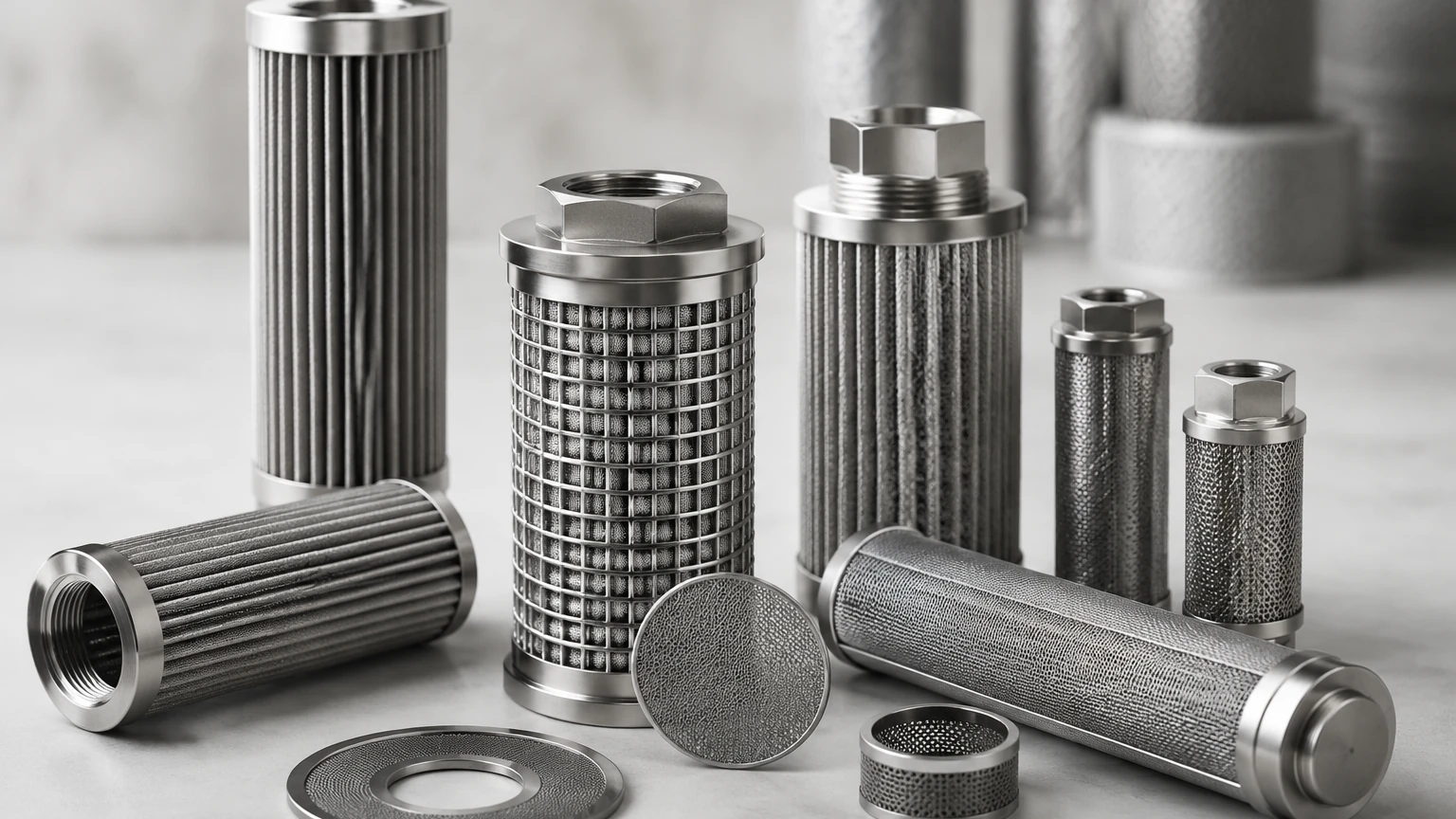
Material Considerations for Stainless Steel Filtration
While plastic and brass silencers are common in light-duty applications, industrial environments often demand the durability and chemical resistance of stainless steel. Kaifil specializes in custom stainless steel filtration solutions that are particularly suited for demanding pneumatic exhaust requirements.
Corrosion Resistance
In chemical processing plants or offshore environments, the atmosphere can be highly corrosive. Standard brass silencers may undergo dezincification or surface oxidation, which can eventually lead to the clogging of the porous structure or structural failure. Stainless steel (Grade 304 or 316L) provides superior resistance to a wide range of chemicals and salt spray, ensuring the exhaust path remains open and functional over a long service life.
Temperature Extremes
Pneumatic systems operating near furnaces, in foundries, or in cryogenic applications face extreme temperature fluctuations. Sintered stainless steel maintains its structural integrity and filtration characteristics at temperatures where plastic components would melt or become brittle. This thermal stability is crucial for maintaining consistent exhaust flow and noise reduction in heavy-duty industrial processes.
Structural Integrity and High Pressure
In some specialized pneumatic applications, such as high-pressure blow molding or rapid-venting pressure vessels, the exhaust pulse can be incredibly violent. Stainless steel wire mesh and sintered components offer the mechanical strength to withstand these high-pressure pulses without deforming or shedding media particles into the exhaust stream.
Maintenance and Operational Longevity
A common mistake in facility management is treating pneumatic exhaust components as "install and forget" items. However, because these components act as filters, they will eventually accumulate enough debris to impact system performance.
Identifying Clogged Exhaust Ports
The primary symptom of a clogged exhaust silencer is a gradual increase in machine cycle time. If a cylinder that used to extend in one second now takes 1.5 seconds, and the supply pressure remains constant, the exhaust path is likely restricted. In extreme cases, a completely blocked silencer can cause a pneumatic system to stall entirely, as the backpressure equals the supply pressure.
Cleaning vs. Replacement
One of the advantages of stainless steel exhaust components is their cleanability. Unlike plastic or felt-based silencers, which are typically disposable, sintered stainless steel elements can often be cleaned using ultrasonic baths or compatible chemical solvents. This ability to regenerate the filter media can lower the total cost of ownership over the life of the machine. However, if the media has been physically damaged or the pores are deeply embedded with carbonized oil, replacement is necessary to restore original flow characteristics.
Customization and OEM Solutions
Standard off-the-shelf silencers do not always meet the specific needs of complex industrial equipment. Factors such as space constraints, specific micron rating requirements, or integrated mounting brackets may necessitate a custom solution.
For manufacturers of pneumatic machinery, partnering with a specialist like Kaifil allows for the development of integrated exhaust solutions. Custom-designed stainless steel filter cartridges can be engineered to fit within the existing footprint of a machine while providing targeted noise reduction and filtration levels. This level of customization ensures that the final product meets all regulatory standards while maintaining the aesthetic and functional design of the equipment.
When specifying custom components, engineers should confirm:
1. Target Micron Rating: Balancing particulate capture with flow requirements.
2. Maximum Operating Pressure: Ensuring the housing and media can handle the initial exhaust pulse.
3. Environmental Exposure: Selecting the appropriate grade of stainless steel for the operating environment.
4. Dimensional Constraints: Designing for ease of access during maintenance without interfering with other machine components.
Conclusion
Managing pneumatic exhaust is a multifaceted challenge that requires a balance between environmental safety and mechanical efficiency. By utilizing high-performance stainless steel silencers and filters, industrial operations can significantly reduce noise pollution, protect workers from oil mist and particulates, and ensure that pneumatic actuators operate at their intended speeds.
Choosing the right materials and specifications—such as Cv factors and corrosion-resistant alloys—is the key to a long-lasting and efficient pneumatic system. For those looking to optimize their filtration and exhaust strategies, you can Review product options and application support on our Main Page to find the ideal solution for your specific industrial needs. Investing in quality exhaust components is not just a matter of compliance; it is a fundamental step toward operational excellence and equipment longevity.
