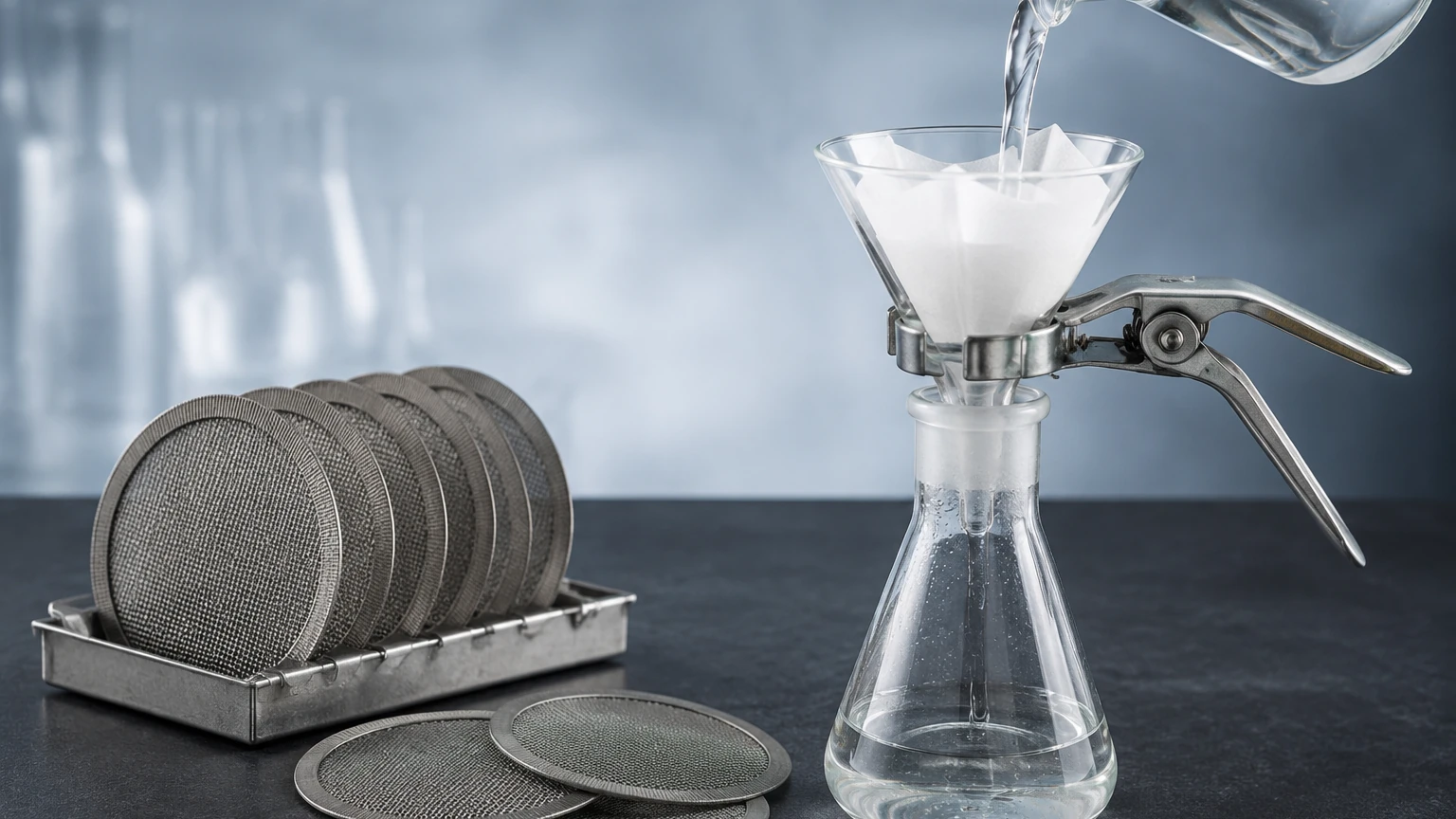
Flask Filtration
Flask filtration is a fundamental process in both laboratory research and industrial pilot-scale operations. It serves as a primary method for solid-liquid separation, enabling engineers and technicians to isolate precipitates, clarify liquids, and perform quality control checks on chemical batches. While often perceived as a simple laboratory procedure, the engineering principles governing flask filtration—such as pressure differentials, pore size distribution, and material compatibility—are the same principles that dictate the performance of large-scale industrial filtration systems. For professionals in the chemical, pharmaceutical, and food processing industries, mastering the nuances of flask-level separation is essential for successful process development and scale-up.
The Mechanics of Flask Filtration Systems
At its core, flask filtration relies on a pressure gradient to force a fluid through a semi-permeable medium. In industrial and high-precision laboratory settings, this is typically achieved through one of two methods: gravity filtration or vacuum filtration.
Gravity Filtration
Gravity filtration is the most basic form, where the weight of the liquid column provides the force necessary to pass through the filter media. While effective for simple clarifications where the solid load is low and the particles are large, it is often too slow for industrial R&D. The flow rate in gravity-based systems is limited by the hydrostatic head and the permeability of the filter medium.
Vacuum (Suction) Filtration
Vacuum filtration, often referred to as Büchner filtration, utilizes a vacuum pump to create a lower pressure inside the receiving flask. This creates a significant pressure differential $(\Delta P)$ across the filter media, dramatically increasing the flow rate. In this setup, a thick-walled filtering flask (or Kitasato flask) is used to withstand the external atmospheric pressure without collapsing. For engineers, vacuum flask filtration is the preferred method for recovering fine solids or handling viscous liquids that would otherwise blind a gravity filter too quickly.
Engineering Considerations for Filter Media
The choice of filter media within a flask filtration setup is the most critical factor in determining the efficiency and purity of the output. While disposable paper filters are common in general chemistry, industrial applications often require more robust materials that can withstand aggressive solvents, high temperatures, and mechanical stress.
Stainless Steel Wire Mesh
For many B2B applications, stainless steel wire mesh is the superior choice for flask-scale filtration. Unlike cellulose or polymer membranes, stainless steel mesh offers:
* Chemical Inertness: Resistance to a wide range of organic solvents, acids, and bases, particularly when using 316L grade stainless steel.
* Thermal Stability: The ability to filter hot solutions that would melt or degrade plastic-based media.
* Precision and Reusability: Metal filters can be manufactured with highly precise micron ratings, ensuring consistent particle retention. Furthermore, they can be cleaned and reused, reducing the total cost of ownership and waste in long-term pilot studies.
Pore Size and Micron Ratings
When selecting media for flask filtration, engineers must distinguish between nominal and absolute micron ratings. A nominal rating indicates the ability of the filter to retain a majority of particles of a certain size, whereas an absolute rating guarantees that no particle larger than the specified size will pass through. In precision industrial processes, absolute-rated stainless steel components are often required to ensure that downstream equipment or final products meet stringent purity standards.
Selection Criteria for Industrial Flask Filtration
Selecting the right equipment for flask filtration requires a technical evaluation of the process requirements. Engineers should consider the following factors before finalizing their setup:
1. Chemical Compatibility
The materials of construction for both the flask and the filter media must be compatible with the process fluid. Borosilicate glass is standard for flasks due to its thermal shock resistance, but the seals (O-rings or gaskets) and the filter support must be checked against chemical resistance charts. For instance, in pharmaceutical applications, PTFE or high-grade stainless steel components are often mandated to prevent leaching or contamination.
2. Solids Loading and Cake Formation
The concentration of solids in the slurry affects how quickly a "filter cake" builds up on the surface of the media. In flask filtration, a rapidly growing cake can increase resistance and slow down the process. Engineers must decide whether the goal is to recover the liquid (filtrate) or the solid (cake). If the solid is the desired product, the filter surface must be flat and accessible for easy cake recovery.
3. Required Flow Rates and Throughput
In a B2B context, time is a critical resource. The filtration area of the flask setup (determined by the diameter of the funnel) must be sufficient to handle the required volume within a reasonable timeframe. If the flow rate is too low, it may indicate that the pore size is too fine or that the vacuum pressure is insufficient.
Common Risks and Performance Limitations
Even a well-designed flask filtration process can encounter issues that compromise the integrity of the results. Understanding these risks allows for better preventive measures.
* Media Blinding: This occurs when particles become lodged within the pores of the filter media, rather than forming a cake on top. Blinding leads to a rapid drop in flow rate. Selecting a depth-loading filter or a different mesh weave can often mitigate this.
* Bypass and Leaks: If the filter media is not properly seated or sealed within the funnel, "bypass" occurs, where unfiltered liquid enters the receiving flask. This is a common failure point in vacuum systems where the seal between the funnel and the flask is compromised.
* Structural Failure: Using a standard Erlenmeyer flask instead of a dedicated vacuum flask can lead to implosion under high vacuum. Engineers must ensure all glassware is rated for the intended pressure differentials.
* Media Migration: In some low-quality disposable filters, fibers from the filter itself can break off and contaminate the filtrate. This is why precision-manufactured stainless steel mesh is often preferred for high-purity industrial applications.
Transitioning from Lab to Scale
One of the primary roles of flask filtration in an industrial setting is to serve as a proof-of-concept for larger systems. The data gathered during flask-scale tests—such as the time required to filter a specific volume and the clarity of the resulting liquid—is used to calculate the required surface area for industrial-scale filter cartridges and pressure leaf filters.
When a process moves from the lab to the factory floor, the simple flask is replaced by stainless steel filter housings and multi-layered cartridges. However, if the initial flask filtration was performed using the same material (e.g., 316L stainless steel mesh) that will be used in the production scale, the transition is much more predictable. This alignment reduces the risk of unexpected chemical reactions or filtration failures during the scale-up phase.
Maintenance and Optimization of Reusable Filters
For B2B operations utilizing reusable stainless steel filtration components in their flask setups, proper maintenance is essential to ensure longevity and consistent performance. Unlike disposable filters, metal media can be restored through various cleaning methods:
* Ultrasonic Cleaning: Using high-frequency sound waves in a cleaning solvent to dislodge fine particles from the mesh.
* Backflushing: Passing a clean fluid through the filter in the opposite direction of the process flow to push out trapped contaminants.
* Chemical Cleaning: Using compatible acids or bases to dissolve organic or inorganic deposits that have accumulated on the metal surface.
Regular inspection of the mesh for signs of mechanical wear, such as fraying or deformation, is also necessary. A damaged filter can lead to inconsistent micron retention, which may go unnoticed until a batch fails quality control.
Conclusion
Flask filtration remains a cornerstone of industrial process development. By applying rigorous engineering standards to the selection of flasks, vacuum sources, and filter media, professionals can ensure that their small-scale separations are both efficient and representative of larger production goals. Choosing high-quality, durable materials like stainless steel for filtration components not only improves the accuracy of the process but also contributes to a more sustainable and cost-effective operation.
For those seeking to optimize their filtration processes with precision-engineered components, exploring professional manufacturing options is the next logical step. You can Review product options and application support on our Main Page to see how custom stainless steel solutions can enhance your specific industrial filtration requirements. Whether you are working on a new chemical formulation or refining a food-grade process, the right filtration partner can provide the technical expertise needed to move from the flask to full-scale production with confidence.