


Pneumatic Muffler
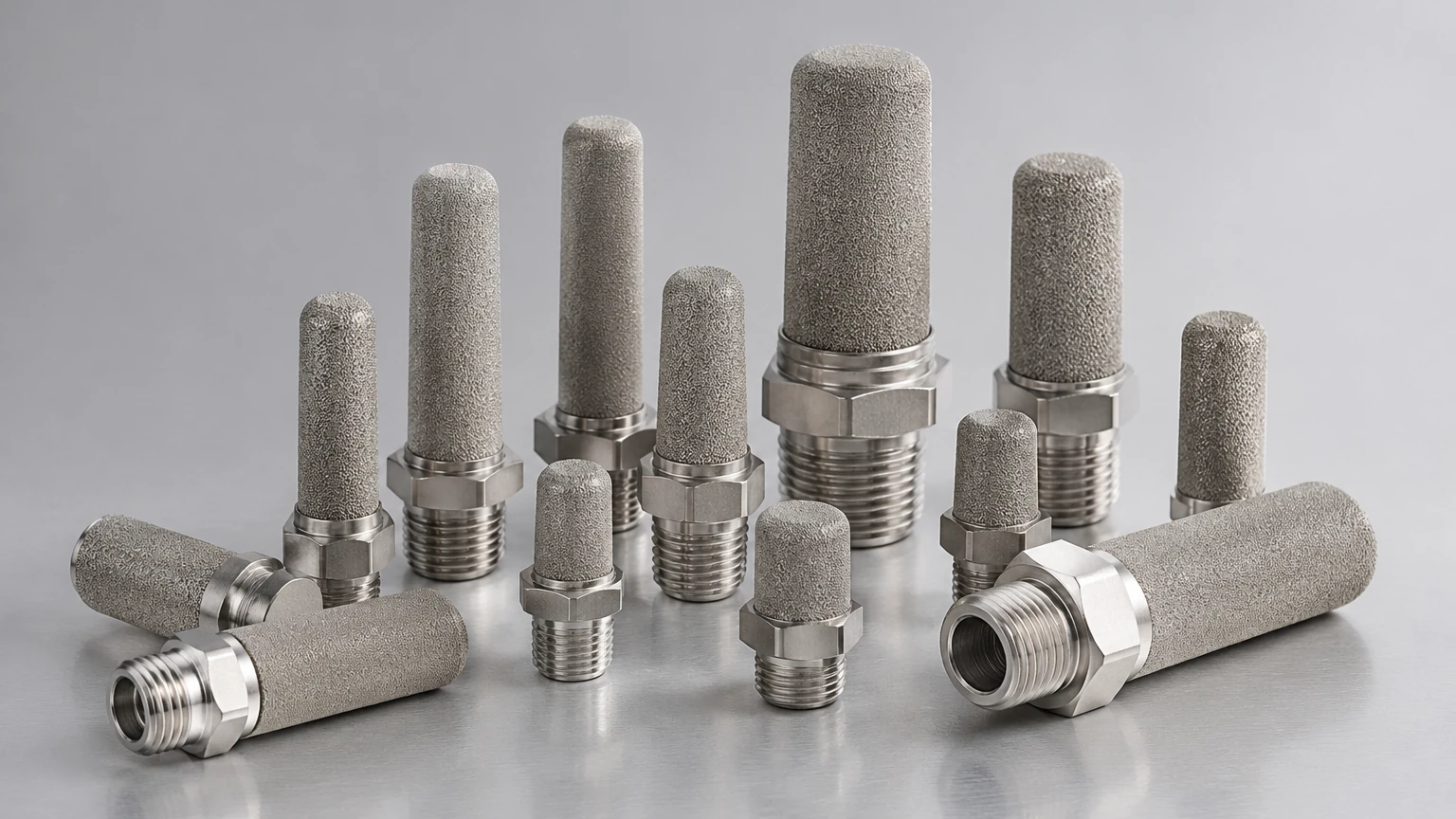
In industrial environments, the management of compressed air exhaust is a critical factor for both operational efficiency and workplace safety. A pneumatic muffler, also commonly referred to as a pneumatic silencer, is a device designed to reduce the noise levels generated by the rapid release of compressed air from exhaust ports of pneumatic valves, cylinders, and manifolds. Beyond noise reduction, these components serve as a protective barrier, preventing contaminants from entering the pneumatic system through the exhaust ports.
For engineers and procurement professionals, selecting the correct pneumatic muffler involves a technical evaluation of flow rates, pressure drops, and material compatibility. As a specialized manufacturer of stainless steel filtration solutions, Kaifil provides precision-engineered components that address the demanding requirements of high-pressure and corrosive industrial applications. Understanding the engineering principles behind these devices is essential for optimizing system performance and ensuring compliance with occupational noise regulations.
Understanding the Role of Pneumatic Mufflers in Industrial Systems
Pneumatic systems operate by utilizing compressed air to perform mechanical work. When a pneumatic cycle is completed, the air must be exhausted to the atmosphere. This release often occurs at high velocities, creating significant turbulence and acoustic energy. Without mitigation, the sound levels can exceed 100 decibels (dB), which poses a risk of hearing loss to operators and violates safety standards such as those set by OSHA.
A pneumatic muffler is installed directly into the exhaust port of a directional control valve. Its primary function is to diffuse the exhaust air over a larger surface area, thereby reducing the velocity and the resulting noise. However, the introduction of a muffler creates a potential restriction in the exhaust path. If not properly specified, this can lead to excessive backpressure, which negatively impacts the speed and force of the pneumatic actuators.
In addition to acoustic management, these components act as a secondary filter. In many industrial environments, ambient dust, moisture, and chemical vapors can migrate back into the valve through an open exhaust port during the return stroke of a cylinder. A high-quality sintered or wire mesh muffler prevents these particles from entering the internal mechanisms of the valve, extending the service life of the entire pneumatic circuit.
The Physics of Noise Reduction and Exhaust Diffusion
The effectiveness of a pneumatic muffler is determined by its ability to manage the kinetic energy of the escaping air. There are three primary mechanisms through which noise is attenuated:
1. Expansion: As air moves from the high-pressure environment of the valve into the larger volume of the muffler body, its pressure drops and its velocity decreases. This expansion reduces the turbulence that generates high-frequency noise.
2. Diffusion: The air is forced through a porous medium—typically sintered metal or layered wire mesh. This breaks the single, high-velocity air stream into thousands of tiny, low-velocity streams. The cumulative effect is a significant reduction in the sound pressure level.
3. Absorption: Some muffler designs incorporate acoustic materials that absorb sound waves. In industrial metal mufflers, the internal geometry is often designed to reflect sound waves back into the porous media, where the energy is dissipated as heat.
Engineers must balance these noise reduction capabilities with the "Cv" factor (flow coefficient). A higher Cv indicates less resistance to flow. If the muffler's pore size is too fine, the noise reduction will be excellent, but the backpressure will increase, potentially causing cylinder "stutter" or sluggish response times. For more information on optimizing flow and filtration performance, technical teams can consult the Main Page for detailed product specifications.
Material Engineering: Why Stainless Steel is Superior for Silencers
While pneumatic mufflers are available in plastic, brass, and stainless steel, the choice of material is dictated by the operating environment and the required durability. In many heavy industrial and high-purity applications, stainless steel (typically 304 or 316L) is the preferred material for several reasons:
Corrosion Resistance
In chemical processing, pharmaceutical manufacturing, and offshore environments, the air may contain corrosive vapors, or the equipment may be subject to aggressive washdown procedures. Stainless steel mufflers resist oxidation and chemical attack far better than brass or polymer alternatives, ensuring that the exhaust ports do not become blocked by corrosion products.
Thermal Stability
Compressed air systems can experience temperature fluctuations, especially in high-speed cycling applications where the rapid expansion of air causes localized cooling (the Joule-Thomson effect), or in high-ambient-temperature environments like glass manufacturing or foundries. Stainless steel maintains its structural integrity across a wide temperature range, whereas plastic mufflers may become brittle or deform.
Mechanical Strength
Pneumatic systems often operate at pressures exceeding 10 bar (145 psi). In the event of a system surge or mechanical impact, a stainless steel muffler is less likely to shatter or blow out compared to plastic versions. This is particularly important for safety-critical systems where a failed muffler could lead to a sudden, uncontrolled release of pressure.
Critical Performance Metrics: Noise Attenuation vs. Backpressure
When evaluating a pneumatic muffler, two metrics are paramount: decibel (dB) reduction and backpressure.
Noise Attenuation
Most industrial mufflers are rated to provide a noise reduction between 15 dB and 35 dB. It is important to note that the decibel scale is logarithmic; a 3 dB reduction represents a 50% decrease in sound energy. For an engineer, selecting a muffler that brings the exhaust noise below the 85 dB threshold is often the target for continuous-duty machinery.
Backpressure and Flow Capacity
Backpressure is the resistance to flow created by the muffler. If the backpressure is too high, the exhaust air cannot escape quickly enough, creating a "cushion" of air that slows down the movement of the pneumatic cylinder. This can lead to increased cycle times and reduced throughput.
To avoid this, engineers should select a muffler with a flow capacity that matches or exceeds the flow capacity of the valve it is attached to. This is typically calculated using the Cv value. A common rule of thumb is to select a muffler with a larger port size or a higher-porosity sintered element if the application requires high-speed actuation.
Selection Criteria for Engineering and Procurement Teams
To ensure the long-term reliability of a pneumatic system, the following criteria should be confirmed before purchasing or specifying a pneumatic muffler:
* Connection Type and Size: Mufflers are available with NPT, BSPT (R), or BSPP (G) threads. Ensuring a leak-free fit requires matching the thread standard of the valve exhaust port. Common sizes range from M5 to 2 inches.
* Filtration Rating (Micron): For sintered metal mufflers, the micron rating determines the size of the pores. A 40-micron element is standard for general industrial use, providing a good balance between noise reduction and flow. Finer ratings (e.g., 5 or 10 microns) provide better protection against ingress but increase backpressure.
* Environment and Compliance: Does the application require FDA-compliant materials for food and beverage use? Is the environment explosive, requiring ATEX-certified components? Stainless steel is often the default choice for these specialized requirements.
* Form Factor: In tight manifold configurations, space is limited. Flat-head or low-profile mufflers may be necessary, whereas cone-shaped or "beehive" designs offer more surface area for higher flow rates.
Maintenance and Cleaning of Sintered Metal Mufflers
One of the primary advantages of stainless steel sintered mufflers is their cleanability. Over time, the porous structure of any pneumatic muffler will become clogged with compressor oil, pipe scale, and atmospheric dust. In plastic or brass mufflers, this usually necessitates replacement.
However, stainless steel components can often be restored through various cleaning methods:
* Ultrasonic Cleaning: Using high-frequency sound waves in a cleaning solution to dislodge deep-seated particulates from the pores.
* Back-flushing: Directing a cleaning solvent or high-pressure air in the opposite direction of normal flow to push contaminants out.
* Chemical Cleaning: Using compatible solvents to dissolve accumulated oils or greases.
Regular inspection of mufflers should be part of a preventative maintenance program. A noticeable increase in cylinder cycle time is often the first indicator that a pneumatic muffler is becoming restricted and requires cleaning or replacement.
Custom Filtration Solutions and OEM Integration
For many original equipment manufacturers (OEMs), standard off-the-shelf mufflers may not meet specific design constraints or performance targets. Customization options allow for the optimization of the muffler’s geometry, material grade, and filtration efficiency to suit a particular machine's requirements.
Kaifil specializes in developing customized filtration components, including bespoke pneumatic muffler designs that integrate seamlessly into complex industrial equipment. By controlling the sintering process and wire mesh density, it is possible to tune the acoustic and flow characteristics of the muffler to achieve a specific performance profile.
Whether the goal is to minimize the footprint of a manifold or to ensure maximum durability in a high-vibration environment, engineering-led customization provides a significant advantage over generic components. For assistance with material selection or custom design projects, engineers can explore the capabilities and technical resources available on the Main Page.
In summary, the pneumatic muffler is a small but vital component in the industrial landscape. By understanding the trade-offs between noise attenuation and backpressure, and by selecting high-performance materials like stainless steel, facilities can ensure a safer, quieter, and more efficient pneumatic operation. Proper specification and maintenance of these devices not only protect the workforce but also safeguard the longevity of the pneumatic infrastructure.
