


Pneumatic Silencer
In industrial environments, the management of compressed air exhaust is a critical factor in both operational efficiency and workplace safety. A pneumatic silencer, often referred to as a pneumatic muffler, is a component designed to reduce the noise levels generated by the rapid release of pressurized air from exhaust ports. Beyond noise suppression, these components act as diffusers, preventing high-velocity air from disturbing the surrounding environment and protecting internal valve components from contaminants.
For engineers and procurement professionals, selecting the correct pneumatic silencer involves more than matching a thread size. It requires a deep understanding of fluid dynamics, material compatibility, and the specific demands of the application environment. As a specialist in custom stainless steel filtration and precision metal components, Kaifil provides high-performance solutions that address the rigorous requirements of industrial filtration and exhaust management. To explore the full range of custom capabilities, professionals can visit the Main Page for detailed technical specifications.
Understanding the Role of Pneumatic Silencers in Industrial Systems
Pneumatic systems rely on the controlled release of air to actuate cylinders, valves, and tools. When this air is exhausted directly into the atmosphere, it creates significant noise pollution—often exceeding 100 decibels (dB). This level of noise is not only a nuisance but a violation of occupational health and safety standards (such as OSHA in the United States), which can lead to long-term hearing damage for operators.
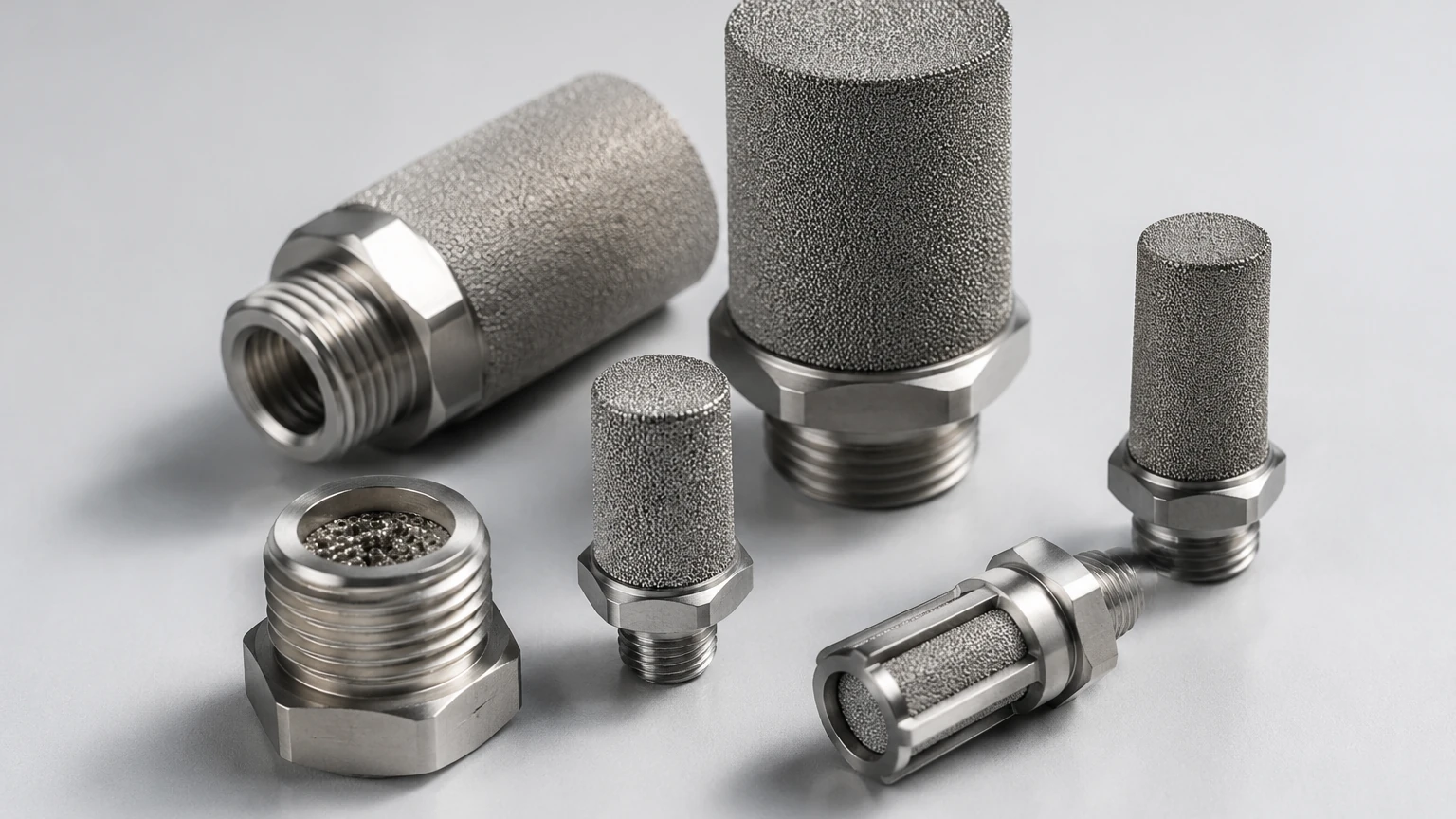
A pneumatic silencer functions by increasing the surface area through which the air must pass. By forcing the air through a porous medium—such as sintered metal or multi-layered wire mesh—the silencer breaks up the large, turbulent air stream into many smaller, laminar streams. This process dissipates the energy of the sound waves and reduces the velocity of the air, resulting in a significant drop in decibel levels.
Furthermore, silencers serve a secondary protective function. In many industrial settings, the ambient air contains dust, oil mist, or moisture. When a pneumatic valve is in its "off" position, the exhaust port can become an entry point for these contaminants. A high-quality silencer acts as a barrier, preventing particulate matter from entering the valve and causing premature wear or failure.
Material Engineering: Why Stainless Steel is the Preferred Choice
While pneumatic silencers are available in various materials, including plastic and sintered bronze, stainless steel remains the gold standard for demanding industrial applications. The choice of material directly impacts the durability, chemical resistance, and filtration efficiency of the component.
Sintered Bronze vs. Stainless Steel
Sintered bronze is a common material for standard pneumatic silencers due to its cost-effectiveness. However, bronze is susceptible to oxidation and physical damage in harsh environments. In contrast, stainless steel silencers—particularly those utilizing 304 or 316L grades—offer superior mechanical strength and corrosion resistance. This is essential in industries such as chemical processing or marine applications where exposure to corrosive agents is frequent.
The Advantage of Wire Mesh and Sintered Mesh
Kaifil specializes in the manufacturing of stainless steel wire mesh filters and precision components. When applied to a pneumatic silencer, stainless steel wire mesh provides several advantages:
1. High Porosity and Low Back Pressure: Precision-woven mesh allows for high flow rates, ensuring that the silencer does not throttle the performance of the pneumatic system.
2. Thermal Stability: Stainless steel can withstand extreme temperatures that would cause plastic silencers to melt or bronze silencers to degrade.
3. Cleanability: Unlike disposable plastic filters, stainless steel mesh silencers can often be cleaned using ultrasonic baths or chemical solvents, extending their service life and reducing the total cost of ownership.
4. Structural Integrity: In high-pressure applications, the structural rigidity of stainless steel prevents the silencer from bursting or deforming under sudden exhaust surges.
Technical Specifications and Performance Metrics
When evaluating a pneumatic silencer, engineers must consider several key performance metrics to ensure the component meets the system's requirements without compromising cycle times.
Noise Reduction (dB)
The primary metric is the level of noise attenuation. Most industrial silencers are rated to reduce noise by 20 to 35 dB. It is important to note that the decibel scale is logarithmic; a 3 dB reduction represents a 50% decrease in sound energy. Therefore, even small differences in rated attenuation can have a significant impact on the workplace environment.
Flow Capacity (Cv Factor)
The flow coefficient (Cv) measures the silencer's ability to allow air to pass through. A silencer with a low Cv factor will create excessive back pressure. Back pressure occurs when the exhaust air cannot escape quickly enough, creating a "bottleneck" that slows down the return stroke of a pneumatic cylinder or reduces the speed of a pneumatic motor. Engineers must ensure the silencer's flow capacity matches or exceeds the valve’s exhaust capacity.
Filtration Rating (Microns)
Although the primary goal is noise reduction, the porous media also acts as a filter. Silencers are typically rated in microns (e.g., 40-micron, 70-micron). A finer micron rating provides better protection against incoming contaminants but may clog more quickly if the compressed air system is not properly filtered upstream.
Selection Criteria for Engineers and Purchasing Teams
To select the optimal pneumatic silencer, the following factors should be confirmed during the procurement process:
* Connection Type and Thread Size: Most silencers use standard NPT (National Pipe Thread) or BSP (British Standard Pipe) threads. Ensuring a precise fit is critical to prevent leaks and ensure the silencer remains secure under vibration.
* Operating Pressure: Confirm the maximum operating pressure of the system. Most pneumatic exhausts operate at standard shop pressures (around 90-125 PSI), but some heavy-duty applications may require silencers rated for higher pressures.
* Environmental Compatibility: Does the application involve food contact, pharmaceutical production, or exposure to harsh chemicals? If so, 316L stainless steel is often required to meet hygiene and corrosion standards.
* Space Constraints: In compact manifold designs, the physical dimensions of the silencer (length and diameter) are critical. Flat-profile silencers or compact "button" silencers may be necessary where space is limited.
Maintenance, Clogging, and Service Life
A pneumatic silencer is a wear item that requires periodic inspection. Over time, the porous media will trap oil aerosols and particulates from the compressed air line. As the silencer clogs, the back pressure in the system will increase.
Signs of a Clogged Silencer
1. Increased Cycle Times: If a pneumatic cylinder begins to move more slowly than usual, it is often a sign that the exhaust air is being restricted.
2. Visible Contamination: Oil saturation or heavy dust buildup on the exterior of the silencer indicates that the media is reaching its capacity.
3. Increased Noise: In some cases, a damaged or heavily fouled silencer may actually become louder or produce a whistling sound.
Replacement Cycles
The replacement cycle depends heavily on the quality of the upstream air. Systems with high-efficiency dryers and coalescing filters will see much longer silencer life. In standard industrial environments, silencers should be inspected every six months and replaced or cleaned annually to maintain peak system performance.
Custom OEM Solutions for Specialized Pneumatic Exhaust
Many standard off-the-shelf silencers fail to meet the specific needs of specialized machinery. This is where custom manufacturing becomes a necessity. Kaifil’s expertise in custom stainless steel filtration allows for the development of bespoke pneumatic silencer designs tailored to unique engineering challenges.
Customization options include:
* Specialized Geometry: Designing silencers to fit within specific housing constraints or to direct exhaust air in a particular direction.
* Integrated Filtration: Combining noise reduction with high-efficiency particulate filtration for cleanroom environments.
* High-Temperature Alloys: Utilizing specialized metals for exhaust systems in foundries or high-heat processing plants.
* Custom Threading: Manufacturing silencers with non-standard threads for legacy equipment or specialized international machinery.
By working closely with an experienced manufacturer, engineering teams can optimize their pneumatic systems for both performance and longevity, ensuring that the exhaust components are as robust as the rest of the machinery.
Conclusion: Optimizing Performance with Quality Components
The pneumatic silencer is a small but vital component in the industrial ecosystem. Selecting the right silencer—one that balances noise reduction, flow capacity, and material durability—is essential for maintaining a safe and efficient production line. For industries where reliability is non-negotiable, such as chemical processing, food and beverage, and pharmaceuticals, stainless steel solutions offer the best path toward minimized downtime and maximized safety.
Engineers looking for dependable, high-performance filtration and exhaust components should prioritize material quality and manufacturing precision. For more information on custom filtration solutions and technical support, visit the Kaifil Main Page to connect with our engineering team and explore our full capabilities in stainless steel wire mesh and precision metal filter components.
