


Polyester Filter
In the landscape of industrial filtration, the selection of media is a critical engineering decision that directly impacts process efficiency, product purity, and operational costs. While metal-based solutions offer extreme durability, the polyester filter remains a cornerstone in many liquid and gas separation processes due to its versatile physical properties and cost-effectiveness. Understanding the technical nuances of polyester as a filtration medium—and knowing when to transition to more robust materials like stainless steel—is essential for engineers and procurement teams aiming to optimize their filtration systems.
Technical Characteristics of Polyester Media
Polyester, specifically Polyethylene Terephthalate (PET), is a synthetic polymer valued for its high tensile strength and dimensional stability. In filtration applications, it is utilized in various forms, including monofilament mesh, multifilament yarns, and needle-punched felts.
Thermal and Chemical Stability
From an engineering perspective, the thermal profile of a polyester filter is one of its most defining characteristics. It typically supports a continuous operating temperature of up to 150°C (300°F). While this is significantly lower than the thermal limits of stainless steel, it is sufficient for a wide range of industrial exhaust and chemical processing applications. However, it is important to note that polyester is susceptible to hydrolysis; exposure to high-temperature steam or moisture can lead to fiber degradation and loss of structural integrity.
Chemically, polyester offers excellent resistance to most organic solvents, bleaching agents, and oxidizing agents. It performs well in acidic environments but has limited resistance to concentrated alkalis. For processes involving high pH levels, engineers often look toward alternative polymers or precision metal filters to prevent media failure.
Woven vs. Non-Woven Polyester Filters
Industrial polyester filters are generally categorized into two structural types: woven and non-woven. Each serves distinct roles based on the required filtration accuracy and the nature of the contaminants.
Woven Monofilament Mesh
Woven polyester mesh is characterized by a precise, square-weave pattern. Because the pore sizes are fixed and uniform, these filters are ideal for surface filtration where exact particle size exclusion is required. They are frequently used in the food and beverage industry for sieving and in the pharmaceutical sector for primary separation. The smooth surface of monofilament polyester allows for relatively easy cleaning and backwashing compared to fibrous media.
Non-Woven Needle-Punched Felt
Non-woven polyester filters are created by mechanically interlocking fibers through a needle-punching process. This creates a three-dimensional depth filtration medium. Unlike woven mesh, felts capture particles throughout the thickness of the material, providing a high solids-loading capacity. These are the standard choice for industrial dust collection bags and liquid filter bags where high flow rates and high dirt-holding capacity are prioritized over absolute micron precision.
Key Performance Metrics for Engineers
When evaluating a polyester filter for a specific application, several technical metrics must be scrutinized to ensure the component meets the system's demands.
1. Micron Rating (Nominal vs. Absolute): Most polyester felt filters are nominally rated, meaning they trap a percentage of particles at a given size. For applications requiring 99% or higher efficiency, absolute-rated media or multi-layered stainless steel mesh may be required.
2. Air-to-Cloth Ratio: In gas filtration, this ratio (also known as filtration velocity) determines the volume of air passing through a square foot of the filter media. Exceeding the recommended ratio for polyester can lead to premature blinding and high pressure drops.
3. Permeability: This measures how easily air or liquid passes through the clean media. High permeability reduces the energy consumption of pumps and fans but must be balanced against the required filtration efficiency.
4. Tensile Strength and Elongation: In high-pressure liquid systems or pulse-jet dust collectors, the filter media is subjected to significant mechanical stress. Polyester’s high modulus of elasticity ensures that the pores do not stretch or distort under pressure, maintaining consistent filtration performance.
Common Applications and Industry Use Cases
Polyester filters are ubiquitous across several heavy industries. Their adaptability allows them to be fabricated into bags, cartridges, discs, and custom-shaped components.
* Chemical Processing: Used for the recovery of catalysts and the filtration of intermediate chemical products where acidic conditions are present.
* Water Treatment: Polyester mesh serves as a pre-filter in municipal and industrial water systems to remove large debris and sediment before more sensitive downstream processes.
* Food and Beverage: FDA-compliant polyester media is used for clarifying juices, oils, and syrups. Its resistance to fats and oils makes it superior to some other synthetic fibers in these environments.
* Dust Collection: In power plants, cement factories, and woodworking shops, polyester needle felt bags are the primary defense against particulate emissions, often treated with singed or glazed finishes to improve cake release.
Evaluating Risks and Limitations
While the polyester filter is a high-performance tool, it is not without risks. Engineers must be aware of potential failure points to avoid costly downtime.
Hydrolytic Degradation
As mentioned previously, the combination of heat and moisture is the primary enemy of polyester. In applications like steam-assisted dust collection or hot aqueous filtration, the ester bonds in the polymer can break down, causing the fibers to become brittle and eventually disintegrate. If a process involves consistent exposure to moisture above 100°C, transitioning to a metal filtration solution is often the most reliable path.
Static Electricity
In dry dust collection, polyester is a natural insulator and can accumulate static charges. In environments with explosive dust (such as flour, coal, or certain chemicals), this poses a significant safety risk. In these cases, antistatic polyester filters—which incorporate conductive fibers like carbon or stainless steel—are mandatory to safely dissipate charges to the ground.
Comparing Polyester with Stainless Steel Filtration
For many purchasing teams, the choice between a synthetic polyester filter and a stainless steel filter comes down to the balance between initial cost and long-term value.
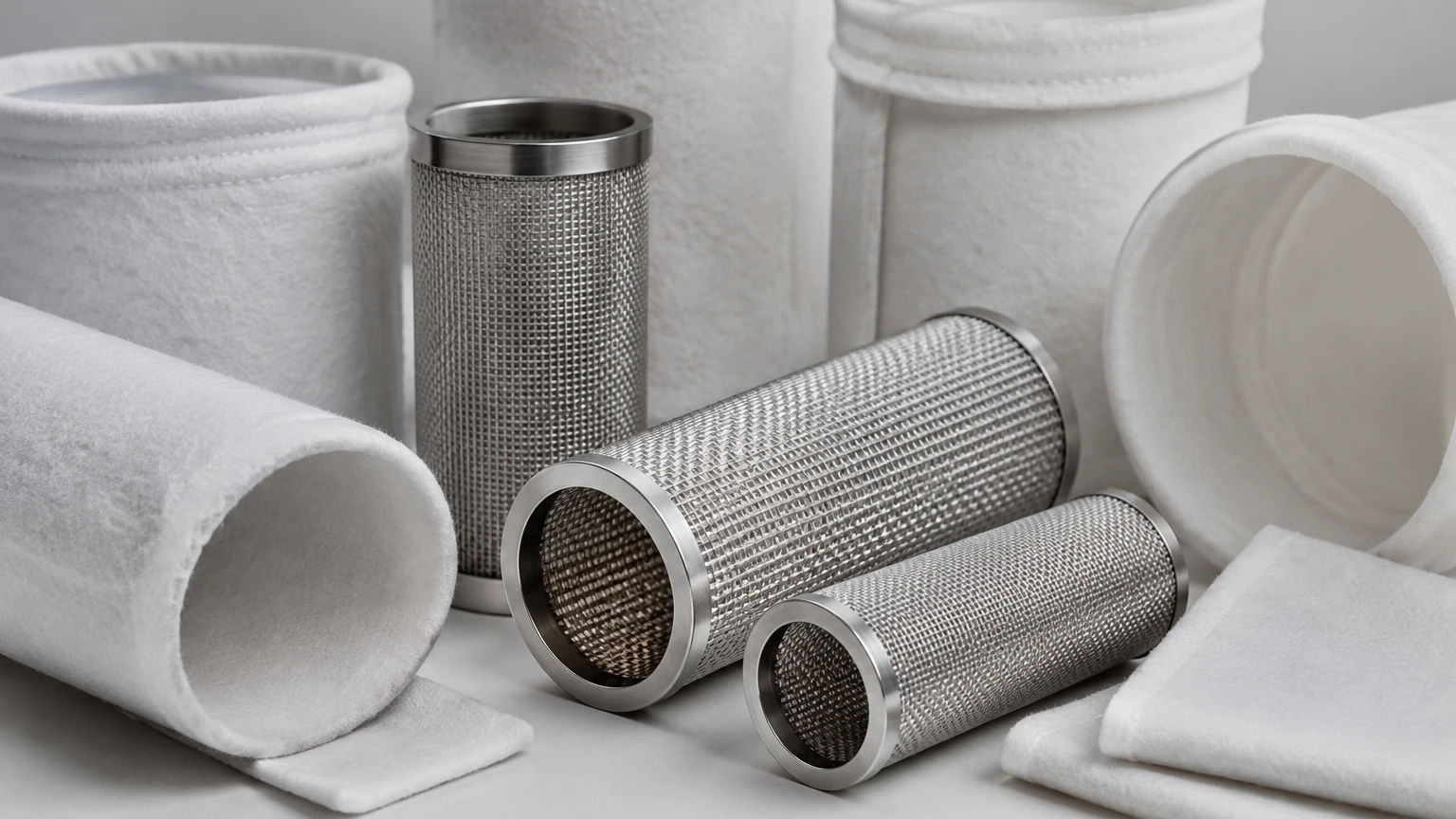
Stainless steel filters, such as those manufactured by Kaifil, provide distinct advantages in demanding environments. While polyester is often a consumable item—replaced once it becomes blinded or degraded—stainless steel components are designed for longevity. They offer superior pressure resistance, can withstand temperatures exceeding 500°C, and are compatible with aggressive cleaning protocols, including ultrasonic cleaning and chemical stripping.
In high-precision OEM applications where the cost of a single batch of product exceeds the cost of the filtration system, the reliability of a metal filter often outweighs the lower initial price point of polyester. However, for large-scale, low-pressure dust collection or general-purpose liquid straining, polyester remains a highly efficient choice.
Selection Guide and Procurement Considerations
Before finalizing a purchase or specifying a filter for a new project, engineers should confirm the following data points with their supplier:
* Exact Chemical Composition: Ensure the fluid or gas stream does not contain trace amounts of alkalis or steam that could compromise the polyester fibers.
* Pressure Drop Requirements: Calculate the maximum allowable clean pressure drop to ensure the system's pumps or fans are sized correctly for the chosen media density.
* Cleaning Cycles: Determine if the filter is intended to be disposable or if it must withstand mechanical cleaning. If frequent cleaning is required, a more durable weave or a metal alternative should be considered.
* Customization Options: Many industrial systems require non-standard sizes or specialized fittings. Working with a manufacturer that understands both synthetic and metal filtration can help in designing a hybrid solution that maximizes performance.
For technical professionals seeking to optimize their filtration processes through advanced engineering and high-quality components, reviewing a broad range of material options is the first step. You can explore a variety of filtration technologies and custom manufacturing capabilities by visiting the Kaifil Main Page.
Conclusion
The polyester filter is a vital component in the industrial toolkit, offering a blend of strength, chemical resistance, and affordability. By understanding its physical limits and performance characteristics, engineers can effectively deploy polyester media in applications ranging from food processing to heavy industrial dust collection. However, as process demands increase in terms of temperature, pressure, and chemical aggression, the transition to precision-engineered metal filtration becomes necessary. Balancing these material choices is key to achieving a reliable, cost-effective, and high-performance filtration system.
