


Polypropylene Membrane Filters
In the landscape of industrial liquid and gas separation, polypropylene membrane filters represent a critical component for achieving high-purity results across diverse chemical and biological processes. As a thermoplastic polymer, polypropylene (PP) is valued for its inherent chemical resistance, thermal stability, and cost-effectiveness. For engineers and procurement specialists, understanding the technical nuances of these membranes—ranging from pore structure to chemical compatibility—is essential for optimizing filtration efficiency and ensuring the longevity of downstream equipment.
While many high-pressure or high-temperature applications require the robustness of stainless steel filtration solutions, polypropylene membrane filters serve as a primary choice for fine filtration, pre-filtration, and clarification tasks where metal compatibility or weight may be a concern. This guide examines the technical specifications, selection criteria, and industrial applications of polypropylene membranes, providing the factual foundation necessary for informed engineering decisions.
Technical Composition and Pore Structure
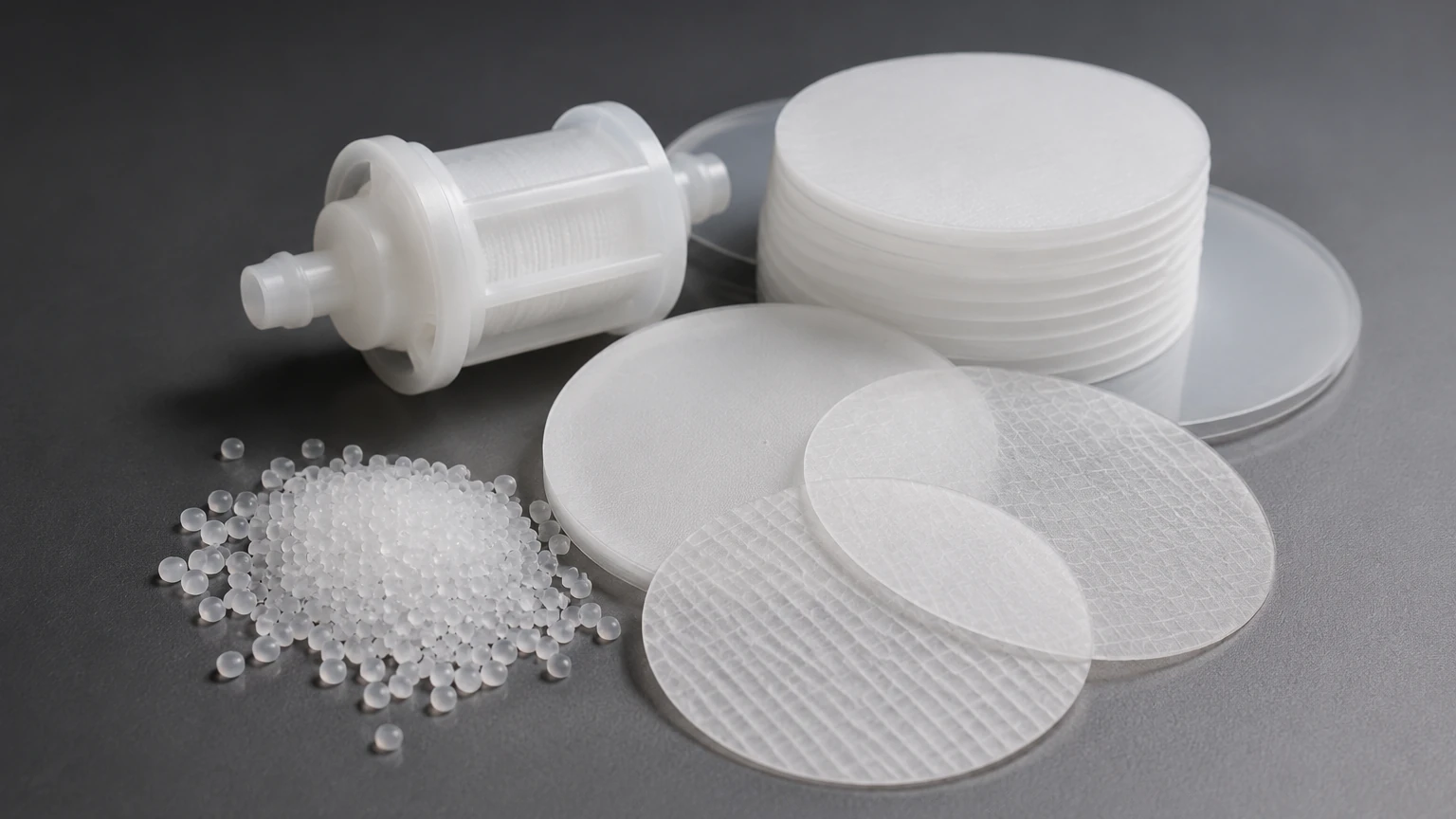
Polypropylene membrane filters are typically produced through controlled manufacturing processes such as melt-blowing or stretching, which create a complex, multi-layered matrix of microfibers. Unlike surface filters that capture particles only on the top layer, these membranes often function as depth filters, trapping contaminants throughout the thickness of the material.
Pore Size Distribution and Micron Ratings
The effectiveness of a polypropylene membrane is defined by its pore size, which generally ranges from 0.1 μm to 100 μm. In industrial B2B environments, it is vital to distinguish between nominal and absolute micron ratings:
1. Nominal Rating: Indicates the ability of the filter to retain a majority percentage (typically 60% to 90%) of particles of a specific size. These are often used in pre-filtration stages where total removal is not the primary objective.
2. Absolute Rating: Refers to the pore size at which a filter can retain 99.9% or more of particles. For critical applications in pharmaceuticals or fine chemicals, absolute-rated polypropylene membranes are required to ensure process consistency.
Hydrophobic Nature
Naturally, polypropylene is a hydrophobic material. In gas filtration or venting applications, this property is advantageous as it prevents moisture from blocking the pores (water breakthrough). However, for aqueous liquid filtration, the membrane must often be pre-wetted with an alcohol or treated with surfactants to allow the liquid to pass through the matrix. Engineers must confirm whether a specific membrane is "pre-wetted" or "naturally hydrophobic" based on the fluid being processed.
Chemical Compatibility and Thermal Resistance
One of the primary reasons for selecting polypropylene membrane filters is their broad chemical resistance. Polypropylene is a non-polar polymer, making it exceptionally resistant to a wide array of industrial chemicals that might degrade other synthetic materials or even certain low-grade metals.
Resistance to Acids and Bases
PP membranes exhibit excellent resistance to both organic and inorganic acids, as well as strong alkaline solutions. This makes them ideal for the filtration of plating baths, chemical cleaning agents, and caustic process streams in the pulp and paper or textile industries. Unlike some cellulose-based filters, polypropylene does not undergo hydrolysis in the presence of water and heat.
Solvent Limitations
While PP is resistant to many alcohols and ketones, it can be susceptible to degradation by strong oxidizing agents (such as concentrated nitric acid) and certain aromatic or chlorinated hydrocarbons (like benzene or chloroform), especially at elevated temperatures. In these instances, technical teams often evaluate whether a transition to stainless steel wire mesh or specialized fluoropolymer membranes is necessary to maintain structural integrity.
Thermal Operating Windows
Polypropylene typically maintains its structural properties up to approximately 80°C (176°F). Beyond this temperature, the polymer begins to soften, leading to pore deformation and a loss of filtration accuracy. For processes exceeding these temperatures, such as steam sterilization or high-heat chemical synthesis, engineers often turn to the Main Page of specialized manufacturers to source stainless steel filter cartridges that can withstand temperatures upwards of 250°C.
Comparing Polypropylene Membranes with Stainless Steel Mesh
In industrial filtration design, the choice between polymer membranes and metal filters is often dictated by the specific requirements of the application, including the required flow rate, pressure drop, and cleanability.
| Feature | Polypropylene Membrane Filters | Stainless Steel Filter Cartridges |
| :— | :— | :— |
| Filtration Type | Depth or Surface | Surface (Wire Mesh) |
| Durability | Disposable/Limited Reuse | Highly Durable/Cleanable |
| Pressure Tolerance | Low to Moderate | High to Extreme |
| Pore Precision | High (Sub-micron capable) | High (Precision Mesh) |
| Cost | Lower Initial Investment | Higher Initial Investment (Lower TCO) |
Polypropylene membranes excel in applications requiring high dirt-holding capacity and fine particle retention in a single-use or limited-use format. Conversely, stainless steel filters, such as those provided by Kaifil, are preferred for high-viscosity fluids, high-pressure hydraulic systems, and environments where the filter must be cleaned and reused multiple times to reduce the total cost of ownership (TCO).
Critical Performance Metrics for Engineers
When specifying polypropylene membrane filters for an industrial system, several performance metrics must be evaluated to ensure the filter does not become a bottleneck in the production line.
Differential Pressure (ΔP)
Differential pressure is the difference between the upstream and downstream pressure of the filter. As the membrane captures contaminants, the ΔP increases. Engineers must determine the "clean pressure drop" and the "terminal pressure drop" (the point at which the filter must be replaced). For PP membranes, exceeding the recommended terminal pressure drop can lead to "media migration" or "unloading," where captured particles are forced through the membrane into the filtrate.
Flow Rate vs. Surface Area
To maintain a low pressure drop while achieving high throughput, it is often necessary to increase the effective filtration area. This is why many polypropylene membrane filters are designed in a pleated configuration. Pleating significantly increases the surface area within a standard cartridge housing, allowing for higher flow rates without increasing the footprint of the filtration system.
Extractables and Purity
In the pharmaceutical and food and beverage sectors, the level of extractables—chemicals that leach from the filter material into the fluid—is a major concern. High-quality polypropylene membranes are manufactured without the use of binders, adhesives, or surfactants to minimize the risk of contamination. Verification of FDA compliance or USP Class VI biological toxicity testing is often a prerequisite for these industries.
Application-Specific Considerations
Polypropylene membrane filters are utilized across a spectrum of industries, each with unique operational demands.
Food and Beverage Processing
In the production of bottled water, beer, and wine, PP membranes are used for pre-filtration to remove yeast, proteins, and larger particulates before the final sterilization step. Their ability to handle high flow rates while protecting more expensive final membrane filters makes them a staple in beverage clarification.
Pharmaceutical and Biotechnology
In these sectors, polypropylene is frequently used for the filtration of buffers, reagents, and diagnostic samples. Because PP is naturally low-binding, it minimizes the loss of valuable proteins or active pharmaceutical ingredients (APIs) during the filtration process. However, for sterile filtration, an absolute-rated 0.22 μm membrane is typically required.
Chemical and Electronic Grade Fluids
For the manufacturing of semiconductors and electronic components, the purity of process water and chemicals is paramount. Polypropylene membranes help remove sub-micron particles that could cause defects in microcircuitry. The chemical inertness of PP ensures that the filter itself does not introduce metallic ions or other impurities into the ultra-pure water (UPW) systems.
Operational Lifecycle and Replacement Strategies
Unlike stainless steel filters, which can be ultrasonically cleaned or backwashed, polypropylene membrane filters are generally considered consumables. However, their lifecycle can be extended through strategic system design.
Multi-Stage Filtration
Implementing a multi-stage approach is the most effective way to protect a fine polypropylene membrane. By placing a coarse stainless steel wire mesh filter or a high-micron PP depth filter upstream, the bulk of the contaminant load is removed before it reaches the expensive fine-membrane stage. This reduces the frequency of membrane change-outs and ensures a more stable flow rate.
Monitoring and Maintenance
Automated pressure monitoring systems are essential for managing the replacement cycle. Relying on a fixed time schedule for filter replacement often leads to either premature disposal (wasted cost) or delayed replacement (risk of system failure). Monitoring the ΔP allows for "just-in-time" maintenance, ensuring optimal performance of the polypropylene membrane filters throughout their service life.
Technical Verification Before Purchase
Before finalizing a procurement order for polypropylene membrane filters, technical teams should confirm the following data points with their supplier or manufacturer:
* Beta Ratio: What is the specific efficiency at the target micron rating?
* Compatibility Data: Has the membrane been tested against the specific concentrations and temperatures of the process fluid?
* Sterilization Compatibility: If required, can the membrane withstand autoclave cycles or Gamma irradiation?
* Housing Fitment: Does the cartridge end-cap configuration (e.g., Code 7, 222, 226) match the existing filter housing to ensure a leak-proof seal?
By focusing on these factual boundaries and engineering considerations, organizations can select filtration solutions that balance performance, compliance, and cost. Whether utilizing the fine-particle retention of polypropylene or the industrial durability of stainless steel components, the goal remains the same: achieving consistent, high-purity results in demanding industrial environments.
