


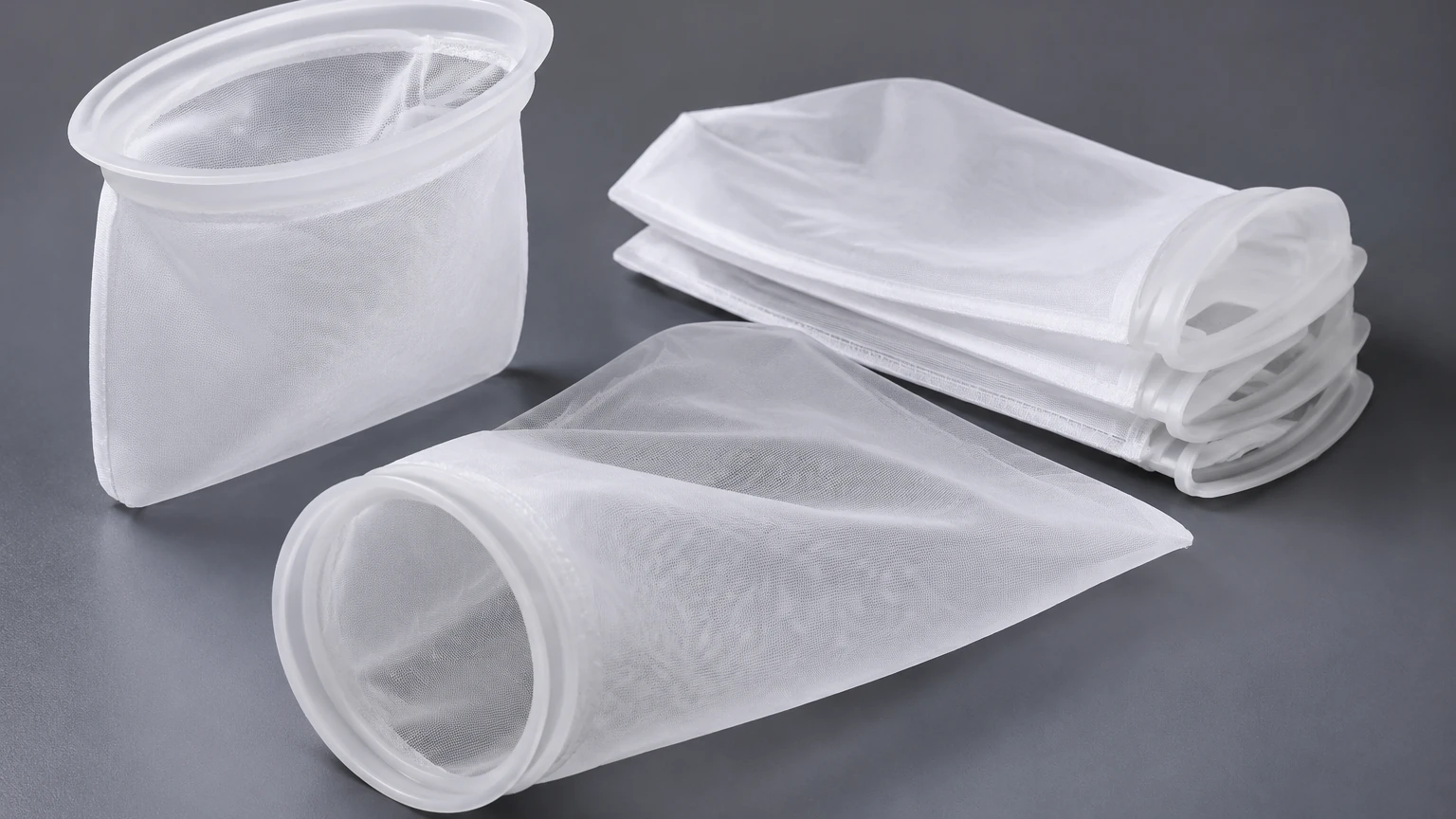
Polypropylene Mesh Filter Bag
In industrial liquid filtration, the selection of filter media is a critical engineering decision that directly impacts process efficiency, product purity, and operational costs. The polypropylene mesh filter bag remains one of the most widely utilized solutions due to its versatile chemical resistance and precise surface filtration capabilities. Unlike depth filtration media, such as felt, mesh filter bags utilize a structured weave to capture contaminants on a single plane, making them ideal for applications requiring high flow rates and predictable particle retention.
For technical professionals and procurement teams, understanding the nuances of polypropylene (PP) mesh construction, its chemical boundaries, and its performance under varying hydraulic loads is essential for optimizing filtration systems. This guide explores the technical specifications and engineering considerations necessary for selecting the right polypropylene mesh filter bag for industrial applications.
Understanding Polypropylene Mesh Construction: Monofilament vs. Multifilament
The performance of a polypropylene mesh filter bag is primarily defined by the type of yarn used in its construction. In industrial settings, there are two primary categories: monofilament and multifilament.
Monofilament Mesh
Monofilament mesh is constructed from single, continuous strands of polypropylene fiber woven into a precise, square-hole pattern. This construction provides high structural integrity and a fixed pore size that does not easily distort under pressure. Because the surface is smooth and the intersections are often heat-set, monofilament bags are excellent for surface filtration where particles need to be washed off or where fiber migration into the filtrate must be strictly avoided. These are typically used for "absolute" or high-precision nominal filtration.
Multifilament Mesh
Multifilament mesh consists of bundles of smaller-diameter fibers twisted together to form a single thread, which is then woven. While this provides a higher surface area and can be more cost-effective for certain coarse filtration tasks, multifilament mesh is generally less precise than monofilament. It is often used in applications where the primary goal is the removal of large debris or where the specific micron rating is less critical than the overall flow capacity.
For engineers evaluating these options, the choice often comes down to the required filtration accuracy. Monofilament polypropylene mesh is the standard for critical processes where consistent particle bypass prevention is mandatory.
Chemical Compatibility and Thermal Limits in Industrial Environments
Polypropylene is favored in the chemical processing and water treatment industries because of its broad chemical resistance. However, it has specific thermal and oxidative limitations that must be accounted for during the system design phase.
Chemical Resistance
Polypropylene is highly resistant to a wide range of acids and bases, making it suitable for neutralizing tanks and acidic chemical filtration. It is generally stable in the presence of most organic solvents, although it can be susceptible to swelling or degradation when exposed to certain hydrocarbons or strong oxidizing agents at elevated temperatures. When designing a filtration system, engineers should consult compatibility charts to ensure that the polypropylene mesh filter bag will not lose structural integrity when exposed to the specific process fluid.
Temperature Thresholds
The thermal limit of polypropylene is relatively low compared to fluoropolymers or stainless steel. Most polypropylene mesh filter bags have a maximum operating temperature of approximately 80°C to 90°C (176°F to 194°F). Exceeding these temperatures can lead to softening of the fibers, which causes pore enlargement and eventual mechanical failure. For high-temperature applications, engineers often pivot toward stainless steel mesh or specialized polymers like PTFE or PEEK.
Technical Selection: Micron Ratings and Filtration Efficiency
Micron ratings for polypropylene mesh filter bags typically range from 1 micron up to 1500 microns. However, the distinction between "nominal" and "absolute" ratings is a frequent point of confusion in procurement.
Nominal Filtration
Most mesh filter bags are nominally rated, meaning they are designed to capture a high percentage (typically 60% to 80%) of particles at the specified micron size. Because mesh relies on surface filtration, the efficiency is relatively high for particles larger than the pore size, but smaller particles can easily pass through if they are oriented correctly or if the mesh deforms under high differential pressure.
Surface Filtration Dynamics
Unlike needle felt bags, which provide depth filtration by trapping particles within a tortuous path of fibers, mesh bags provide surface filtration. This means the filter cake builds up directly on the surface of the mesh. While this can lead to faster blinding (clogging) if the solids loading is extremely high, it also allows for easier cleaning and recovery of the captured solids if the process requires it. For engineers looking to compare these technologies with more robust alternatives, reviewing the Main Page of specialized manufacturers like Kaifil can provide technical data on how different materials—including stainless steel and polymers—behave under specific filtration loads.
Engineering Considerations for Flow Rate and Pressure Drop
One of the primary advantages of a polypropylene mesh filter bag is its high open area, which translates to a low initial pressure drop (Clean Delta P). To maintain system efficiency, engineers must balance the flow rate with the available surface area of the filter bag.
Calculating Flow Capacity
The flow capacity of a mesh bag is determined by the micron rating and the viscosity of the fluid. A 100-micron bag will naturally allow a much higher flow rate than a 5-micron bag at the same pressure. As a general rule, the flow rate should be derated as the viscosity of the fluid increases. For example, a system filtering water at 1 centipoise (cP) will have a significantly higher throughput than a system filtering a heavy oil or resin at 500 cP.
Managing Pressure Drop (Delta P)
The terminal pressure drop is the point at which the filter bag must be replaced or cleaned. For polypropylene mesh, the recommended change-out pressure is typically between 1.0 and 1.5 bar (15 to 22 psi). Operating beyond this limit risks "blow-through," where the pressure forces contaminants through the mesh or causes the bag to rupture. Monitoring Delta P is the most effective way to ensure the longevity of the filter housing and the quality of the filtrate.
Comparing Polypropylene Mesh with Stainless Steel Filtration Solutions
While polypropylene mesh filter bags are cost-effective and chemically versatile, they are often compared to stainless steel wire mesh filters in heavy-duty industrial applications. Understanding the trade-offs is vital for total cost of ownership (TCO) analysis.
1. Durability: Stainless steel filters, such as those manufactured by Kaifil, offer superior mechanical strength and can withstand much higher differential pressures without the risk of rupture. Polypropylene is a consumable, whereas stainless steel is often a permanent or semi-permanent component.
2. Temperature Resistance: As noted, PP is limited to below 90°C. Stainless steel can operate in cryogenic temperatures or extreme heat exceeding 500°C, depending on the alloy.
3. Cleaning and Reuse: Polypropylene mesh bags are usually treated as disposables, especially in the finer micron ranges where trapped particles are difficult to dislodge. Stainless steel mesh is designed for backwashing and ultrasonic cleaning, making it more sustainable for long-term operations.
4. Cost: Polypropylene has a lower upfront cost per unit, making it attractive for batch processes or applications with frequent change-outs. However, for continuous processes, the labor and disposal costs of PP bags may eventually exceed the investment in a permanent stainless steel solution.
Quality Standards and Compliance in Food and Pharmaceutical Applications
In the food, beverage, and pharmaceutical industries, the material safety of the polypropylene mesh filter bag is as important as its filtration performance. These industries require materials that are non-shedding and compliant with regulatory standards.
FDA and EU Compliance
For food-grade applications, the polypropylene resin and any lubricants used during the weaving process must comply with FDA Title 21 CFR or EU Regulation 10/2011. This ensures that no harmful substances migrate from the filter bag into the product. Manufacturers typically provide a Certificate of Conformance (CoC) to verify these standards.
Silicone-Free Construction
In the automotive and coating industries, silicone contamination can cause significant defects, such as "fish-eyes" in paint finishes. High-quality polypropylene mesh bags are manufactured in silicone-free environments to prevent such issues. Engineers should specify silicone-free requirements during the procurement process to avoid costly rework in downstream finishing stages.
Maintenance, Replacement Cycles, and Operational Efficiency
To maximize the utility of a polypropylene mesh filter bag, a structured maintenance and replacement schedule must be implemented. Unlike automated self-cleaning filters, bag filters require manual intervention, which introduces downtime.
Installation Best Practices
Proper installation is crucial to prevent bypass. Most mesh bags are equipped with a plastic seal ring (such as an SDS or Sentinel-style ring) or a galvanized/stainless steel wire ring. The seal ring must seat perfectly within the filter housing’s internal flange. If the bag is not seated correctly, the fluid will follow the path of least resistance, bypassing the mesh entirely and resulting in contaminated downstream fluid.
When to Replace
While pressure drop is the primary indicator for replacement, time-based replacement may be necessary in biological applications (like water treatment) to prevent microbial growth on the mesh surface. Additionally, if the process fluid contains sharp or abrasive particles, the mesh should be inspected for signs of mechanical wear, even if the Delta P remains within acceptable limits.
Customization and OEM Solutions
Many industrial systems require non-standard sizes or specialized configurations, such as extra-long bags, multi-layered mesh for graduated filtration, or bags with integrated handles for easier removal. Working with a manufacturer that understands custom filtration engineering allows for the development of bags that fit unique housing geometries or address specific flow challenges. For those exploring comprehensive filtration hardware and custom components, the Main Page of an experienced manufacturer serves as a technical resource for integrating bags into larger, more complex filtration systems.
Conclusion
The polypropylene mesh filter bag is a fundamental component in the toolkit of the process engineer. Its ability to provide precise surface filtration across a wide range of chemical environments makes it indispensable for everything from cooling water loops to complex chemical synthesis. By carefully considering the weave type, micron rating, and chemical compatibility, and by comparing these polymer solutions against the long-term benefits of metal filtration media, technical teams can ensure they achieve the optimal balance of performance and cost-effectiveness. Whether the goal is protecting downstream equipment or ensuring the purity of a final product, the technical integrity of the filter bag remains the frontline of process quality.
