


Petroleum Filtration
In the oil and gas industry, the integrity of equipment and the purity of the final product depend heavily on effective petroleum filtration. From upstream extraction and midstream transport to downstream refining, contaminants such as sand, pipe scale, rust, and organic solids pose a constant threat to operational efficiency. For engineers and procurement specialists, selecting the right filtration media is not merely a matter of maintenance but a critical decision that impacts the total cost of ownership and the lifespan of multi-million dollar assets.
Stainless steel filtration solutions have become the industry standard for demanding petroleum applications. Unlike disposable polymer filters, precision-engineered metal components offer the thermal stability and chemical resistance required to handle crude oil, refined fuels, and various chemical additives. This guide examines the technical requirements of petroleum filtration, the engineering considerations for filter selection, and the operational benefits of customized stainless steel solutions.
The Critical Role of Filtration in Petroleum Processing
Petroleum filtration serves several distinct purposes across the value chain. In the upstream sector, filtration is essential for protecting wellheads and ensuring the quality of injection water. If solids are allowed to enter the reservoir during waterflooding, they can plug the formation, leading to a permanent loss of productivity. Here, high-flow wire mesh filters are often employed to remove bulk solids while maintaining low pressure drops.
In midstream operations, filtration protects pumps, compressors, and meters. Pipelines often carry "black powder"—a mixture of iron sulfides and oxides—which can erode valve seats and damage high-speed turbine meters. Effective filtration at compressor stations prevents these particles from entering the internal components of the machinery, reducing the frequency of unscheduled shutdowns.
Downstream refining represents the most complex environment for petroleum filtration. Refineries utilize various catalysts that are sensitive to particulate contamination. Furthermore, the final products—including gasoline, diesel, and aviation fuel—must meet stringent international standards for cleanliness. Any failure in the filtration system can lead to off-specification batches that require expensive reprocessing.
Engineering Considerations for Material Selection
When specifying filters for petroleum applications, material compatibility is the primary concern. The presence of corrosive elements such as hydrogen sulfide (H2S), CO2, and various salts requires alloys that can withstand localized pitting and stress corrosion cracking.
Stainless Steel Alloys
Stainless steel 304 and 316L are the most common materials used in petroleum filtration. 316L, with its molybdenum content, provides superior resistance to chlorides and acidic environments compared to 304. For highly corrosive "sour" service, specialized alloys or high-nickel stainless steels may be required. The mechanical strength of these metals allows filter cartridges to withstand high differential pressures that would collapse synthetic media.
Thermal Stability
Petroleum processes often operate at extreme temperatures. While polymer-based filters may soften or degrade at temperatures exceeding 100°C, stainless steel filter cartridges maintain their structural integrity at temperatures up to 500°C and beyond, depending on the alloy and seal materials. This makes them indispensable for hot oil filtration and steam-assisted gravity drainage (SAGD) applications.
Structural Integrity
Industrial filtration components must resist the mechanical stresses of high-viscosity fluids and turbulent flow. Sintered wire mesh and perforated metal supports provide the necessary rigidity to prevent media migration—a common failure mode where fragments of the filter material break off and contaminate the downstream fluid.
Types of Metal Filtration Media
The choice of media structure determines the filtration efficiency, flow capacity, and cleanability of the component. For petroleum filtration, three main types are utilized:
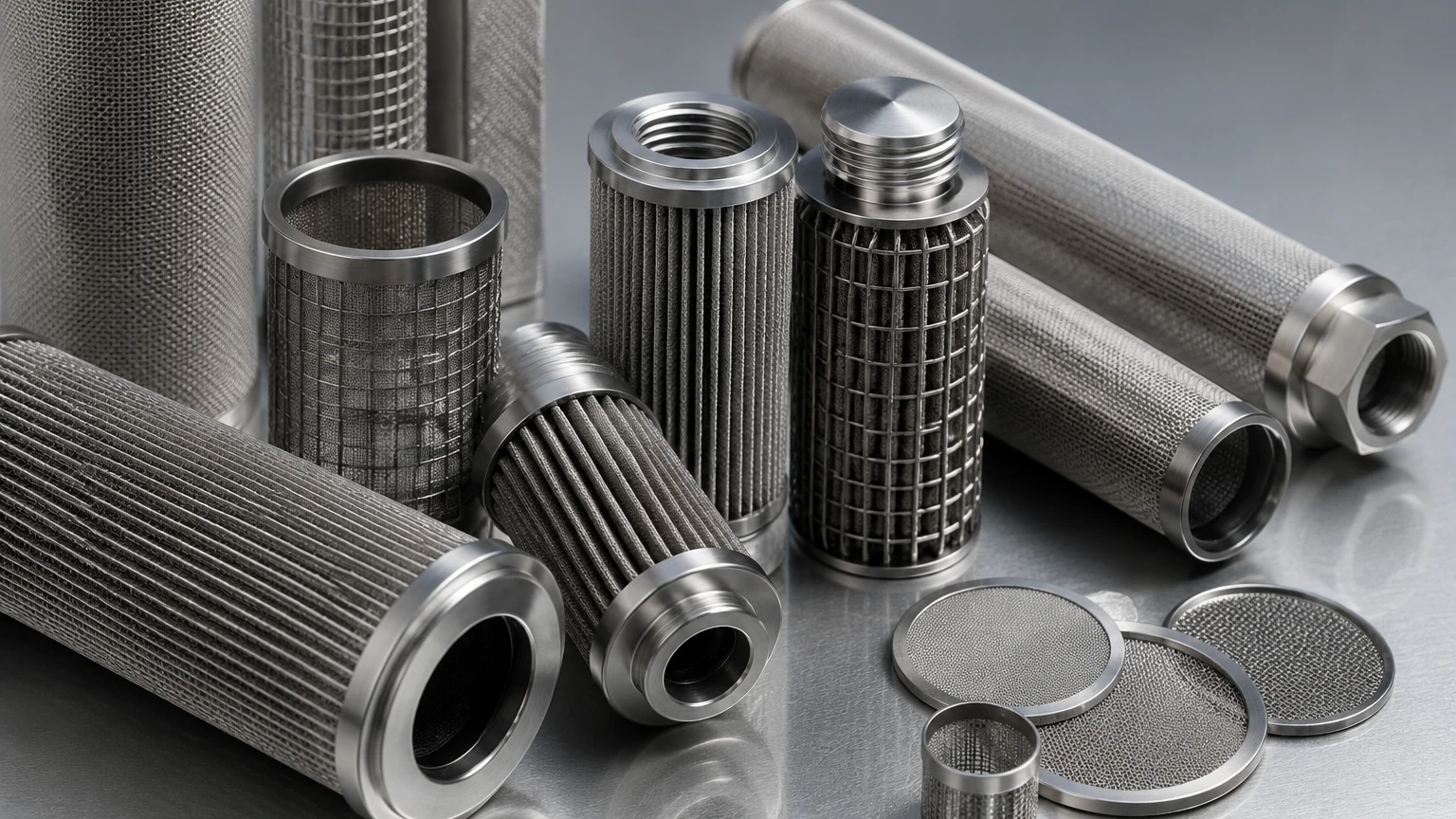
1. Woven Wire Mesh: This is a versatile media used for surface filtration. It is available in various weave patterns, such as plain, twill, and Dutch weave. Dutch weaves, in particular, offer a dense structure that provides excellent particle retention while allowing for effective backwashing.
2. Sintered Metal Mesh: By bonding multiple layers of wire mesh through a heat-and-pressure process (sintering), engineers create a porous material that is significantly stronger than a single layer of mesh. Sintered mesh is ideal for high-pressure applications where precise pore size control is required.
3. Sintered Metal Fiber: This media consists of non-woven stainless steel fibers. It offers high porosity (up to 80%), which translates to lower initial pressure drops and a higher dirt-holding capacity compared to woven mesh. It is frequently used in fine filtration stages for hydraulic oils and lubricants.
Performance Evaluation and Selection Criteria
Selecting a filter requires balancing several performance metrics. Engineers must look beyond the initial purchase price and evaluate how the filter will perform under actual operating conditions.
Micron Rating: Absolute vs. Nominal
In the petroleum industry, the distinction between nominal and absolute ratings is vital. A nominal rating refers to a filter's ability to retain a percentage of particles of a certain size, whereas an absolute rating indicates the diameter of the largest spherical particle that can pass through the media. For critical equipment protection, such as protecting high-pressure fuel injectors, an absolute-rated stainless steel filter is often required to ensure no damaging particles bypass the system.
Pressure Drop (Delta P)
Every filter introduces a resistance to flow. As the filter accumulates contaminants, the differential pressure increases. Engineers must calculate the "clean" pressure drop to ensure the pump system has sufficient head. Stainless steel filters, due to their precise geometry, allow for predictable flow characteristics, which simplifies system design.
Dirt-Holding Capacity
This metric defines how much contaminant a filter can retain before the pressure drop reaches a terminal level. A higher dirt-holding capacity results in longer service intervals. In petroleum filtration, where fluids can be heavily laden with solids, maximizing this capacity through pleated designs—which increase the effective surface area—is a common strategy.
Maintenance, Cleaning, and Total Cost of Ownership
One of the most significant advantages of stainless steel filtration components in B2B industrial settings is their cleanability. While the initial investment in a stainless steel cartridge is higher than a disposable glass fiber or paper element, the total cost of ownership is often lower over the life of the plant.
Cleaning Methods
Stainless steel filters can be cleaned using several methods, depending on the nature of the contaminant:
* Backwashing: Reversing the flow of fluid to dislodge particles from the surface of the mesh. This can often be automated for continuous operation.
* Ultrasonic Cleaning: Using high-frequency sound waves in a solvent bath to remove fine particles trapped deep within the media.
* Chemical Cleaning: Using acids, alkalis, or solvents to dissolve organic deposits or scale.
* Burn-off/Pyrolysis: Removing organic contaminants by heating the filter in a controlled atmosphere.
Sustainability and Waste Reduction
By moving away from disposable filters, petroleum facilities can significantly reduce their hazardous waste output. Used oil-soaked disposable filters require specialized disposal protocols that add to operational costs. Reusable metal filters eliminate this waste stream, aligning with modern environmental and corporate social responsibility (CSR) goals.
Customization and OEM Solutions
Standard off-the-shelf filters rarely meet the specific needs of complex petroleum installations. Customization is often necessary to accommodate unique housing dimensions, specific flow rates, or unusual chemical compositions.
When working with a manufacturer like Kaifil, engineers can specify exact parameters for their filtration components. This includes the selection of specialized end fittings (such as NPT, BSP, or flanged connections), the integration of internal support cores for high-collapse-strength requirements, and the optimization of pleat geometry to maximize surface area within a limited footprint. For more information on tailored industrial filtration, technical teams can visit the Main Page to explore specific material capabilities and design options.
Checklist for Purchasing Petroleum Filtration Systems
Before finalizing a filtration specification, technical professionals should confirm the following data points to ensure the selected solution is fit for purpose:
* Fluid Characteristics: Confirm the viscosity at both start-up and operating temperatures. High-viscosity fluids require larger surface areas to maintain acceptable pressure drops.
* Contaminant Profile: Identify the type of solids (e.g., hard sand vs. soft waxes) and the expected loading concentration (ppm).
* Operating Environment: Note the maximum operating pressure, potential pressure spikes, and the temperature range.
* Chemical Compatibility: Ensure all components, including seals and gaskets (e.g., Viton, PTFE, or EPDM), are compatible with the petroleum product and any cleaning chemicals used.
* Regulatory Compliance: Verify if the filter must meet specific industry standards, such as ASME pressure vessel codes or API (American Petroleum Institute) standards for fuel quality.
Conclusion
Effective petroleum filtration is a cornerstone of operational reliability in the energy sector. By selecting high-quality stainless steel and precision metal components, engineers can protect critical infrastructure, maintain product quality, and optimize maintenance cycles. Whether the application involves protecting a refinery's catalyst bed or ensuring the purity of hydraulic fluids in an offshore rig, the durability and performance of metal filtration media provide a technical and economic advantage that disposable alternatives cannot match. Through careful engineering and a focus on long-term performance, the challenges of petroleum contamination can be managed effectively, ensuring the continued efficiency of industrial processes.
