


Pool Filter Cartridge Dimensions
In industrial water treatment and large-scale aquatic facilities, the precision of pool filter cartridge dimensions is a critical factor that dictates the efficiency, longevity, and safety of the entire filtration system. While residential applications may tolerate minor dimensional variances, industrial-grade systems—often utilizing stainless steel components and high-pressure pumps—require exact specifications to prevent bypass and mechanical failure. For engineers and procurement specialists, understanding the nuances of these measurements is the first step in ensuring optimal system performance.
Selecting the correct filter requires more than a casual measurement. It involves a technical understanding of how the outer diameter, inner diameter, and overall length interact with the filter housing and the fluid dynamics of the system. This guide provides a technical overview of these dimensions, the risks associated with improper sizing, and the engineering considerations necessary for industrial applications.
The Core Components of Pool Filter Cartridge Dimensions
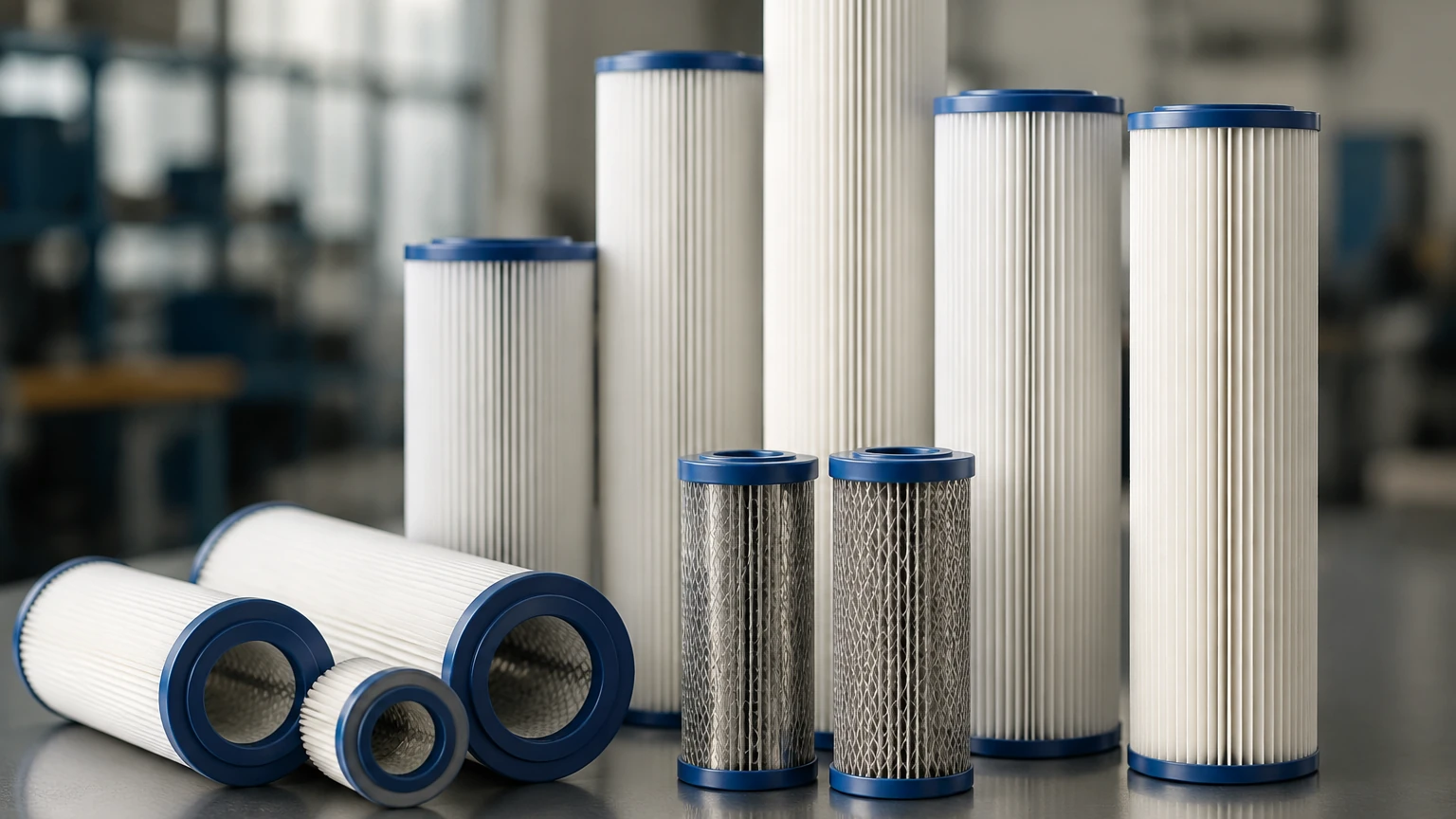
Accurate measurement is the foundation of effective filtration. In the context of industrial and commercial pool systems, three primary dimensions define the physical footprint of a cartridge: the Outer Diameter (OD), the Inner Diameter (ID), and the Length.
Outer Diameter (OD)
The outer diameter is measured across the widest part of the cartridge's end cap. In industrial systems, the OD must allow for sufficient clearance within the filter housing to ensure uniform flow distribution around the media. If the OD is too large, it may restrict the flow of water entering the pleats; if it is too small, the total surface area of the filtration media is reduced, leading to higher face velocities and shorter service life.
Inner Diameter (ID)
The inner diameter refers to the measurement of the center hole in the end caps. This dimension is arguably the most critical for preventing bypass. The ID must match the standpipe or the internal manifold of the filter housing precisely. In many industrial configurations, a gasket or O-ring is seated within or around this diameter to create a hermetic seal. Even a discrepancy of a few millimeters can allow unfiltered water to bypass the media, compromising the water quality of the entire system.
Length
The length is measured from end cap to end cap. This does not usually include any handles or specialized fittings unless they are integral to the sealing mechanism. In compression-sealed systems, the length must be exact. A cartridge that is too short will not be properly compressed by the housing lid, leading to a gap where water can bypass the filter. Conversely, a cartridge that is too long may prevent the housing from closing or, worse, result in structural damage to the cartridge core under the pressure of the housing bolts.
The Technical Impact of Dimensional Variance
In an industrial environment, filtration is a balance of pressure, flow, and particle retention. When pool filter cartridge dimensions are incorrect, this balance is disrupted, leading to several technical issues that can increase the total cost of ownership.
Fluid Bypass and Contamination
The primary function of a filter is to act as a barrier. If the dimensions—specifically the ID or the length—are off, the seal between the cartridge and the housing is compromised. Fluid will always follow the path of least resistance. A gap of even 1mm can allow a significant percentage of the flow to bypass the filter media entirely. In pharmaceutical or chemical processing applications where water purity is paramount, this can lead to batch contamination and significant financial loss.
Pressure Drop and Flow Resistance
Dimensions also dictate the available surface area of the filtration media. If a replacement cartridge has a smaller OD or a shorter length than the original design, the total square footage of the mesh or fabric is reduced. This results in a higher initial pressure drop ($ΔP$). High pressure drops force the pump to work harder, increasing energy consumption and potentially leading to cavitation or premature pump failure. Engineers must ensure that the dimensions provided by a manufacturer like Kaifil align with the flow rate requirements of the system.
Material Integrity and Dimensional Stability
One of the most significant differences between standard commercial filters and high-performance industrial filters is the material of construction. Standard cartridges often use plastic cores and polyester media, which are prone to "crushing" or dimensional deformation under high differential pressures.
Stainless Steel vs. Polymer Media
For demanding applications, stainless steel filter cartridges offer superior dimensional stability. Unlike polymers, stainless steel does not expand or contract significantly with temperature fluctuations, nor does it compress under the weight of accumulated debris or high-pressure surges. When reviewing the Main Page for technical specifications, it is evident that metal filtration components are engineered to maintain their exact dimensions throughout their service life. This rigidity ensures that the seals remain intact and the filtration efficiency remains constant, even as the filter reaches its terminal pressure drop.
Structural Support Cores
The internal core of the cartridge must be robust enough to support the media against the inward pressure of the water flow. In large-scale systems, the dimensions of this core are calculated based on the maximum expected flow rate. A core that is too thin may collapse, effectively changing the ID and length of the cartridge mid-operation, which leads to immediate system failure.
End Cap Configurations and Sealing Mechanisms
Dimensions are not limited to simple cylinders. The geometry of the end caps plays a vital role in how the cartridge integrates with the housing. Common industrial end cap styles include:
* Double Open End (DOE): Both ends have a hole, requiring gaskets on both sides to seal against the housing.
* Single Open End (SOE): One end is closed, often featuring a handle or a fin, while the other end has an opening with an O-ring (such as a 222 or 226 fitting).
* Threaded Connections: Some industrial pool filters utilize NPT or BSP threaded connections to ensure a mechanical lock and a leak-proof seal.
When specifying pool filter cartridge dimensions, it is essential to define the type of end cap. For example, a "222 O-ring" fitting has specific diameter requirements for the O-ring grooves that must be followed to ensure compatibility with the housing's receiver.
How to Accurately Measure a Filter Cartridge
To avoid procurement errors, engineers should follow a standardized measurement protocol. It is often better to measure the filter housing itself rather than a used cartridge, as used cartridges may have become distorted or swollen over time.
1. Measure the Housing Standpipe: Use a digital caliper to measure the outer diameter of the standpipe where the cartridge seats. This will determine the required ID of the cartridge.
2. Measure the Internal Housing Height: Measure the distance from the bottom seating surface to the top of the housing where the lid or compression plate sits. This helps determine the maximum and minimum allowable length.
3. Check for Clearance: Measure the internal diameter of the housing shell to determine the maximum allowable OD for the cartridge, leaving enough room for water to circulate.
4. Identify End Cap Style: Note whether the seals are flat gaskets, O-rings, or threaded. If O-rings are used, identify the code (e.g., Code 7, Code 3) as these have standardized dimensions.
Customization and OEM Solutions
Many industrial systems utilize proprietary or legacy housings that do not conform to standard off-the-shelf pool filter cartridge dimensions. In these instances, custom manufacturing is required. Working with a manufacturer that specializes in stainless steel filtration allows for the creation of cartridges that are tailor-made to the specific dimensions of the existing infrastructure.
Customization allows for the optimization of the filtration media (such as choosing specific wire mesh weaves) while ensuring the physical fit is perfect. This is particularly useful when upgrading a system from disposable polymer filters to permanent, cleanable stainless steel elements. By maintaining the exact dimensions of the original part, the transition can be made without any modifications to the expensive filter housing.
Common Risks and Selection Criteria
When evaluating suppliers for industrial filtration components, consider the following criteria to ensure dimensional accuracy and performance:
* Tolerance Levels: Ask the manufacturer about their machining tolerances. In high-precision environments, a tolerance of +/- 0.5mm may be necessary.
* Chemical Compatibility: Ensure that the materials (both the media and the gaskets) are compatible with the pool chemicals or industrial fluids. Swelling of a gasket due to chemical incompatibility can change the effective dimensions and cause a leak.
* Temperature Ratings: If the system operates at elevated temperatures, the thermal expansion of the materials must be accounted for in the dimensional design.
* Total Cost of Ownership: While custom stainless steel cartridges may have a higher upfront cost, their dimensional stability and cleanability often result in lower long-term costs compared to frequently replacing deformed polymer cartridges.
Conclusion
Precision in pool filter cartridge dimensions is not merely a matter of fitment; it is a fundamental requirement for industrial process integrity. Whether dealing with standard sizes or requiring a custom-engineered solution, the accuracy of the OD, ID, and length determines the effectiveness of the seal and the efficiency of the filtration. For engineers and technical teams, verifying these dimensions against the housing specifications is the most effective way to prevent bypass, reduce energy consumption, and extend the life of the filtration system. By choosing high-quality materials like stainless steel and working with experienced manufacturers, facilities can ensure their filtration systems operate at peak performance with minimal downtime.
