


Porous Disk
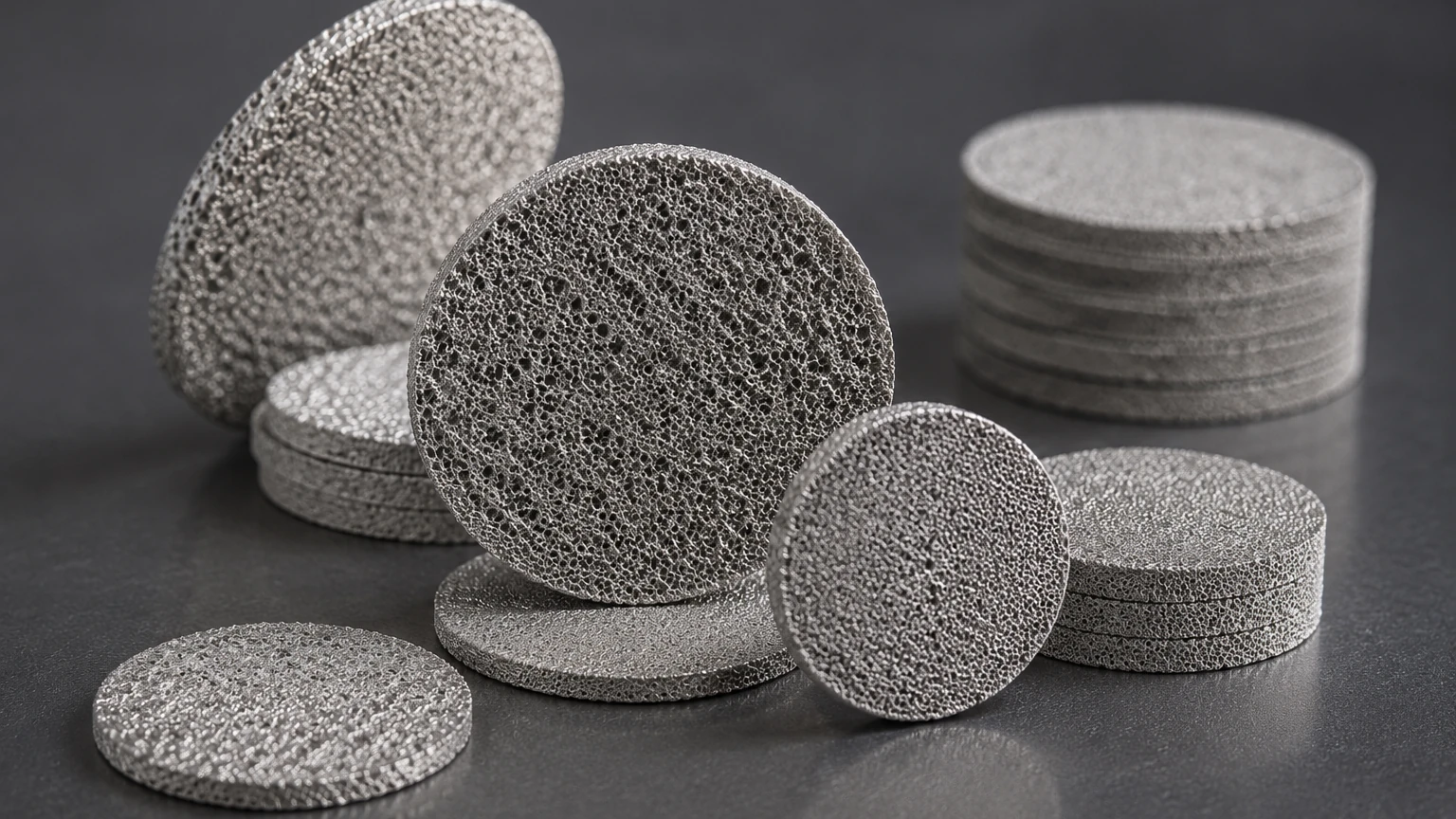
In the landscape of industrial filtration and fluid control, the porous disk serves as a critical component for ensuring process integrity, protecting downstream equipment, and achieving precise separation. These components, often manufactured from sintered metal powders or multi-layer wire mesh, are engineered to provide a controlled environment for gas and liquid flow. For engineers and procurement specialists, selecting the correct porous disk involves a deep understanding of material science, fluid dynamics, and the specific rigors of the application environment.
As a specialized manufacturer, Kaifil provides high-performance stainless steel filtration solutions designed to meet these demanding industrial standards. By focusing on precision engineering and durable materials, these components ensure that systems in chemical processing, pharmaceuticals, and hydraulic sectors operate at peak efficiency. For a comprehensive overview of available filtration technologies, professionals can visit the Kaifil Main Page to explore customized options.
Understanding Porous Disk Construction and Materials
The performance of a porous disk is fundamentally tied to its construction method and the materials used. In industrial settings, stainless steel—specifically grades 304, 316, and 316L—is the industry standard due to its exceptional corrosion resistance and mechanical strength.
Sintered Metal Powder Disks
Sintered metal porous disks are created by compacting stainless steel powder into a mold and then heating it in a controlled-atmosphere furnace. This process, known as sintering, bonds the metal particles at their contact points without melting them. The result is a rigid, highly porous structure with a tortuous path for fluids. The primary advantage of this method is the ability to achieve very fine filtration ratings, often down to 0.5 microns, while maintaining high structural integrity under high-pressure differentials.
Sintered Wire Mesh Disks
Alternatively, a porous disk can be fabricated from multiple layers of stainless steel wire mesh. These layers are laminated and sintered together to create a composite material that combines the fine filtration of a square weave mesh with the mechanical support of coarser backing layers. This construction is preferred in applications where high flow rates and easy cleanability are prioritized, as the pore structure is more uniform and less prone to deep-seated clogging than powder-based media.
Material Selection Criteria
When specifying a porous disk, engineers must consider the chemical environment. While 304 stainless steel is suitable for many general-purpose applications, 316L is often required for pharmaceutical and food-grade processes due to its superior resistance to pitting and crevice corrosion in the presence of chlorides. For extreme environments involving highly acidic or alkaline fluids, specialized alloys like Hastelloy or Monel may be utilized.
Critical Performance Metrics for Industrial Filtration
To ensure a porous disk meets the requirements of a specific system, several technical parameters must be evaluated. These metrics define how the disk will behave under operational stress and how effectively it will remove contaminants.
Filtration Accuracy (Micron Rating)
The micron rating determines the size of particles the disk will intercept. It is important to distinguish between "nominal" and "absolute" ratings. A nominal rating refers to the ability of the disk to retain a major percentage of particles of a certain size, whereas an absolute rating indicates the diameter of the largest spherical particle that can pass through the medium under specific test conditions. For high-precision applications, such as protecting sensitive laboratory instruments or fuel injectors, an absolute rating is usually required.
Permeability and Porosity
Porosity refers to the percentage of void space within the disk, while permeability measures how easily a fluid can pass through that space. A higher porosity typically leads to lower pressure drops and higher flow rates, but it may compromise the mechanical strength of the disk. Engineers must balance these factors to ensure the disk does not deform or fail under the system's operating pressure.
Mechanical Strength and Pressure Differential
In many industrial processes, the porous disk is subjected to significant pressure drops (delta P) as it accumulates contaminants. The disk must be thick enough and have sufficient structural support to withstand these forces without collapsing or bypassing. Sintered structures are inherently robust, but for large-diameter disks, additional support grids or thicker cross-sections may be necessary.
Engineering Considerations for System Integration
Integrating a porous disk into an existing industrial system requires more than just matching the diameter. Engineers must account for the physical housing, sealing mechanisms, and the fluid's rheological properties.
Pressure Drop Calculations
One of the most common challenges in filtration design is managing the pressure drop. According to Darcy’s Law, the pressure drop across a porous medium is proportional to the fluid viscosity, the thickness of the disk, and the flow velocity. If the initial pressure drop is too high, the system's pump or compressor will have to work harder, leading to increased energy costs and shorter component life. Selecting a porous disk with an optimized pore distribution can help minimize these losses.
Sealing and Housing Compatibility
A porous disk is only effective if the fluid is forced to pass through the media rather than around it. This requires precise tolerances and effective sealing. Common methods include:
* Welded Integration: The disk is TIG or laser welded directly into a stainless steel housing for a permanent, leak-proof connection.
* Mechanical Compression: The disk is held in place between two flanges with gaskets or O-rings. This allows for easier replacement but requires careful torque management to prevent bypass.
* Interference Fit: In some high-pressure hydraulic applications, the disk is press-fitted into a machined cavity.
Thermal Stability
Industrial processes often involve extreme temperatures. Unlike polymer-based filters, a stainless steel porous disk can operate in environments ranging from cryogenic temperatures to over 450°C (842°F). However, engineers must account for thermal expansion, especially if the disk is integrated into a housing made of a different material, to prevent stress fractures or seal failure.
Key Industry Applications for Porous Metal Disks
Due to their versatility and durability, porous disks are utilized across a broad spectrum of industries where precision and reliability are non-negotiable.
Chemical and Petrochemical Processing
In chemical reactors, porous disks are used for gas sparging—injecting gas into a liquid in the form of thousands of tiny bubbles. This increases the surface area for the reaction, improving efficiency. They also serve as catalyst recovery filters, ensuring that expensive catalytic materials are not lost in the product stream.
Pharmaceutical and Biotechnology
In these sectors, cleanliness and sterilizability are paramount. Stainless steel porous disks are ideal because they can withstand Autoclaving and Clean-in-Place (CIP) procedures. They are frequently used in venting applications to allow air to enter or exit a vessel while maintaining a sterile barrier against microbial contaminants.
Hydraulic and Pneumatic Systems
High-pressure hydraulic systems rely on porous disks to protect sensitive valves and actuators from particulate matter. Even a small amount of debris can cause a valve to stick or wear prematurely. A sintered porous disk provides a compact, high-strength solution that can be integrated directly into the fluid line.
Food and Beverage Production
From carbonating beverages to filtering steam used in food processing, porous disks provide a food-safe filtration medium. The use of 316L stainless steel ensures that the filter does not impart any metallic taste or contaminate the product with leachable substances.
Customization and OEM Capabilities
Standard off-the-shelf components rarely meet the exact needs of specialized industrial equipment. This is where the value of a custom manufacturer like Kaifil becomes evident. Customization options for a porous disk include:
* Geometry: Beyond simple circular disks, components can be manufactured in oval, rectangular, or complex 3D shapes to fit specific housing designs.
* Graded Porosity: It is possible to create a disk with layers of different micron ratings. This "depth filtration" approach allows larger particles to be trapped in the outer layers while the inner layers provide final polishing, significantly extending the service life of the filter.
* Surface Treatments: Specialized coatings or electropolishing can be applied to the disk to enhance corrosion resistance or reduce the adhesion of sticky substances.
* Integrated Fittings: For ease of installation, disks can be supplied pre-assembled with threaded fittings, flanges, or specialized connectors.
By working closely with an OEM partner, engineering teams can optimize the filtration component for the specific flow rates, contaminant loads, and space constraints of their project.
Maintenance, Cleaning, and Replacement Cycles
One of the primary advantages of a metal porous disk over disposable cartridges is its cleanability. However, a proper maintenance schedule is required to maximize the return on investment.
Cleaning Methods
Depending on the nature of the contaminant, several cleaning techniques can be employed:
1. Backwashing: Reversing the flow of fluid through the disk to dislodge particles from the surface. This is most effective for surface-loading contaminants.
2. Ultrasonic Cleaning: Using high-frequency sound waves in a cleaning solvent to create cavitation bubbles that scrub deep within the porous structure. This is the preferred method for sintered powder disks.
3. Chemical Cleaning: Using acids, alkalis, or specialized solvents to dissolve organic or mineral deposits. It is critical to ensure the cleaning agent is compatible with the stainless steel grade.
4. Heat Treatment/Burn-off: In cases where organic polymers have clogged the disk, controlled heating in an oven can carbonize and remove the material.
Identifying the Need for Replacement
While durable, a porous disk will eventually reach the end of its functional life. Signs that a disk needs replacement include an inability to restore the original flow rate after cleaning, visible deformation of the disk surface, or a breach in the media that allows larger particles to pass through. Regular bubble point testing can be used to verify the integrity of the micron rating over time.
Total Cost of Ownership (TCO)
When evaluating the cost of a porous disk, purchasing managers should look beyond the initial price. A high-quality stainless steel disk may have a higher upfront cost than a polymer equivalent, but its ability to be cleaned and reused hundreds of times, combined with its resistance to high temperatures and harsh chemicals, often results in a significantly lower total cost of ownership over the life of the equipment.
Selecting the Right Porous Disk for Your Project
Choosing the optimal filtration component requires a systematic approach. Before contacting a manufacturer, engineers should have the following information ready:
1. Fluid Characteristics: What is the fluid, its viscosity, and its chemical composition?
2. Operating Conditions: What are the maximum and minimum temperatures and pressures?
3. Filtration Goals: What is the target micron rating, and what is the allowable pressure drop?
4. Flow Rate: What is the required volume of fluid per minute or hour?
5. Dimensions: What is the available space for the disk and its housing?
By providing these details, you enable the manufacturer to recommend the most efficient material and construction method for your application. Whether you are designing a new system or looking to optimize an existing process, professional guidance is essential for achieving reliable results.
For more information on industrial filtration components, material specifications, and custom engineering support, please visit the Kaifil Main Page. Our team of experts is dedicated to providing the technical insights and high-quality manufacturing necessary to solve the most complex filtration challenges.
