


Porous Filter Disc
In industrial filtration, the selection of high-performance components is critical for maintaining process integrity, protecting downstream equipment, and ensuring the purity of the final product. Among the various geometries used in filtration systems, the porous filter disc stands out as a versatile and robust solution. These discs, typically manufactured from stainless steel or other high-performance alloys, are engineered to provide precise filtration under challenging conditions, including high temperatures, corrosive environments, and significant mechanical stress.
For engineers and procurement professionals, understanding the technical nuances of a porous filter disc—from material science and manufacturing methods to performance evaluation—is essential for optimizing filtration efficiency. As a specialized manufacturer, Kaifil provides custom stainless steel filtration solutions that address these complex industrial requirements. You can explore our full range of capabilities on our Main Page.
Understanding the Structure and Composition of Porous Filter Discs
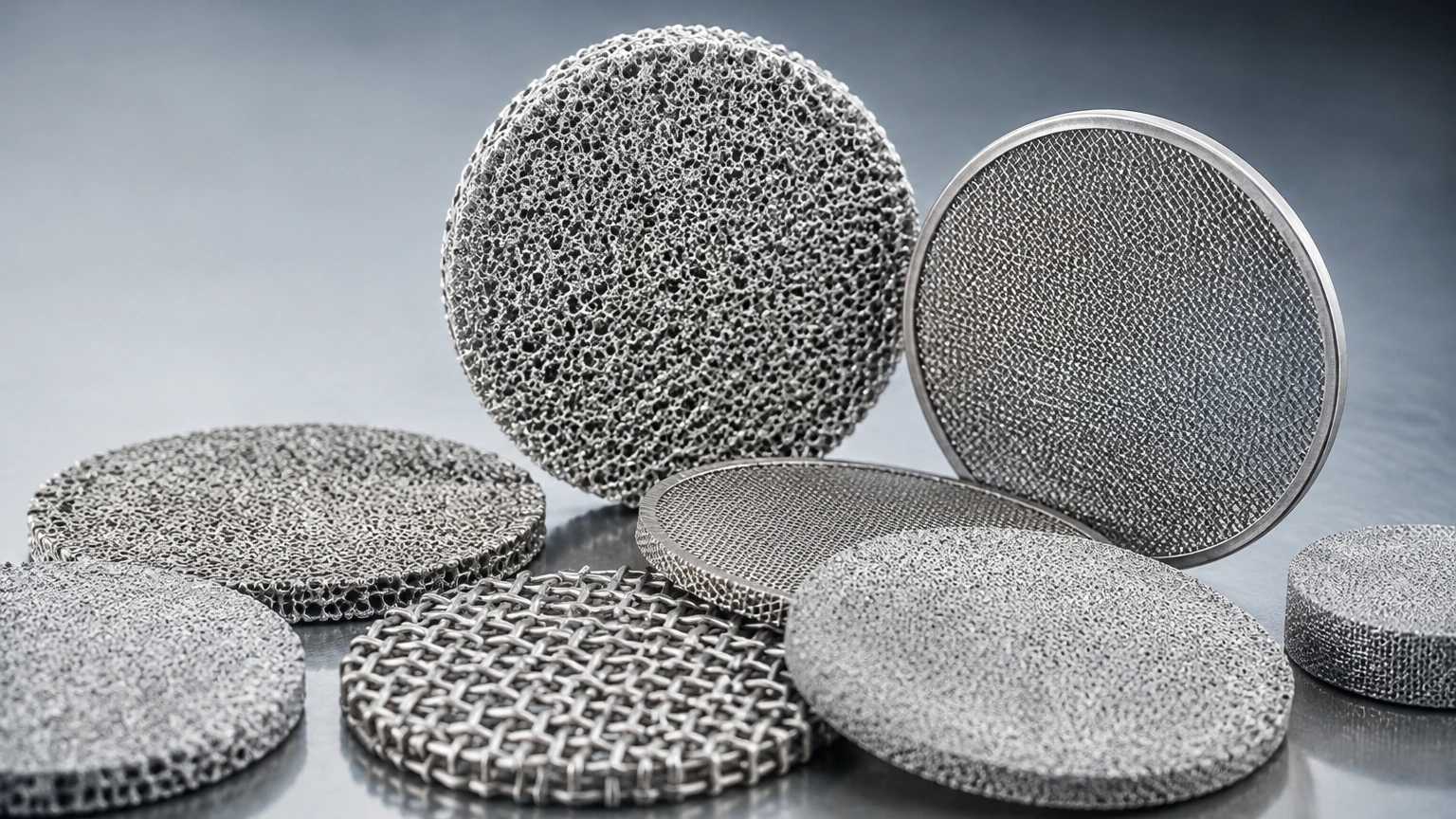
A porous filter disc is not a monolithic product but rather a precision-engineered component that can be manufactured using different technologies depending on the required filtration accuracy and mechanical strength. The two primary manufacturing methods are sintering wire mesh and sintering metal powder.
Sintered Wire Mesh Discs
Sintered wire mesh discs are created by layering multiple sheets of stainless steel wire cloth and bonding them together through a vacuum sintering process. This process involves heat and pressure, which causes diffusion bonding at every contact point of the wires without the use of binders. The result is a multi-layer structure that combines the fine filtration of the inner layers with the mechanical support and protection of the outer layers. These discs are known for their high permeability, ease of cleaning (backwashing), and predictable pore sizes.
Sintered Metal Powder Discs
In contrast, sintered metal powder discs are formed by compressing spherical or irregular metal powders into a disc shape and سپس sintering them. This creates a tortuous path for the fluid, facilitating depth filtration. These discs are particularly effective for capturing fine particles and are often used in applications where high filtration precision is required, although they generally have a higher pressure drop compared to mesh-based discs.
Key Performance Metrics for Industrial Filtration
When evaluating a porous filter disc for a specific application, several technical parameters must be analyzed to ensure the component will perform as expected within the system’s operational parameters.
Filtration Accuracy (Micron Rating)
The micron rating defines the size of particles the disc is designed to intercept. This is categorized as either "nominal" or "absolute." A nominal rating refers to the ability of the filter to retain a majority of particles of a certain size, while an absolute rating indicates the diameter of the largest spherical particle that can pass through the filter under specific test conditions. For critical pharmaceutical or chemical processes, absolute ratings are often mandatory.
Permeability and Pressure Drop
Permeability refers to the ease with which a fluid passes through the porous medium. A high-quality porous filter disc must balance filtration efficiency with a manageable pressure drop (delta P). If the initial pressure drop is too high, it reduces the operational lifespan of the filter before it requires cleaning or replacement, thereby increasing energy costs for pumps and compressors.
Mechanical Strength and Integrity
Industrial filters are often subjected to high-pressure differentials and mechanical vibrations. The sintering process ensures that the pore structure remains stable even under stress. Unlike fabric or polymer filters, a stainless steel porous filter disc will not deform or suffer from "media migration," where parts of the filter material break off and contaminate the filtrate.
Material Selection and Chemical Compatibility
The longevity of a porous filter disc is heavily dependent on its resistance to the chemical environment in which it operates. Stainless steel is the industry standard due to its balance of cost and performance, but specific grades must be chosen based on the application.
* 304 Stainless Steel: Suitable for general industrial applications where moisture is present but corrosive chemicals are minimal. It is widely used in food and beverage filtration.
* 316L Stainless Steel: Contains molybdenum, which provides significantly better resistance to chlorides and pitting corrosion. This is the preferred material for pharmaceutical and marine applications.
* High-Nickel Alloys: For extreme environments involving high-strength acids or exceptionally high temperatures, alloys like Hastelloy or Inconel may be utilized to prevent premature failure of the filter disc.
Engineers must also consider the operating temperature. While polymers fail at relatively low temperatures, stainless steel porous discs can maintain structural integrity at temperatures exceeding 400°C (752°F), depending on the atmospheric conditions and the specific alloy used.
Primary Applications in Demanding Industrial Environments
The unique properties of the porous filter disc make it suitable for a wide array of sectors where reliability is non-negotiable.
Chemical and Petrochemical Processing
In chemical manufacturing, filters are used to recover catalysts, remove impurities from raw materials, and protect sensitive instrumentation. The ability of sintered discs to withstand aggressive solvents and high pressures makes them ideal for monomer and polymer filtration, as well as oil and gas refining processes.
Pharmaceutical and Biotechnology
Sterility and precision are the hallmarks of pharmaceutical production. Porous filter discs are used in gas sparging, steam filtration, and the separation of active pharmaceutical ingredients (APIs). The smooth surface finish and cleanability of stainless steel ensure that these components meet stringent sanitary standards.
Food and Beverage Industry
From clarifying juices to filtering steam used in sterilization, these discs provide a hygienic solution that does not impart flavors or odors to the product. They are also highly resistant to the Clean-in-Place (CIP) chemicals used in food processing facilities.
Hydraulic and Aerospace Systems
In high-pressure hydraulic systems, even microscopic contaminants can cause catastrophic component failure. Porous filter discs act as last-chance filters, protecting valves and actuators from wear particles and ensuring the smooth operation of aerospace and heavy machinery systems.
Customization Options and Engineering Specifications
Standard off-the-shelf filters rarely meet the specific needs of complex industrial systems. Customization is often necessary to ensure the porous filter disc integrates seamlessly into existing hardware.
1. Geometry and Dimensions: Beyond standard circular discs, these components can be manufactured in various shapes, including oval, rectangular, or ring-shaped, with diameters ranging from a few millimeters to several hundred millimeters.
2. Edge Treatment: To facilitate installation and prevent bypass, discs can be supplied with welded or stamped edges, or integrated into custom housings and flanges.
3. Layer Configuration: For sintered mesh discs, the number of layers and the orientation of the mesh can be adjusted to optimize flow rates versus particle retention.
4. Surface Treatments: Options such as electro-polishing can be applied to enhance corrosion resistance and reduce the adhesion of particles, making the disc easier to clean.
When requesting a custom solution, it is vital to provide the manufacturer with the fluid type, flow rate, operating pressure, temperature, and the specific nature of the contaminants being removed.
Installation, Cleaning, and Maintenance Protocols
To maximize the ROI of a porous filter disc, proper handling and maintenance are required. Unlike disposable filters, stainless steel discs are designed for long-term reuse.
Installation Best Practices
Ensure that the sealing surfaces are clean and that the disc is oriented correctly if it has a directional flow design (common in multi-layer sintered mesh). Proper torque should be applied to housings to prevent bypass without deforming the filter media.
Cleaning Methods
The ability to regenerate a filter disc is a significant cost-saving advantage. Common cleaning methods include:
* Backwashing: Reversing the flow of fluid to dislodge particles from the surface.
* Ultrasonic Cleaning: Using high-frequency sound waves in a cleaning solvent to remove fine particles trapped deep within the pores.
* Chemical Cleaning: Using acids, alkalis, or specialized detergents to dissolve organic or inorganic deposits.
* Thermal Cleaning: Burning off organic contaminants in a controlled furnace environment (burn-out).
Monitoring Replacement Cycles
While durable, no filter lasts forever. Maintenance teams should monitor the differential pressure across the disc. A consistent increase in baseline pressure after cleaning cycles indicates that the filter is reaching the end of its functional life due to permanent fouling or pore constriction.
Evaluating Total Cost of Ownership in Filtration Procurement
When purchasing a porous filter disc, the initial unit price is only one part of the economic equation. Procurement teams should focus on the Total Cost of Ownership (TCO), which includes:
* Operational Lifespan: A high-quality sintered disc may cost more upfront than a lower-grade alternative but can last years longer, reducing the frequency of procurement cycles.
* Downtime Reduction: Reliable filtration components reduce the risk of unscheduled maintenance and process interruptions.
* Cleaning Costs: The ease with which a disc can be cleaned directly impacts labor and chemical costs.
* Waste Disposal: Unlike disposable polymer filters that contribute to landfill waste and require specialized disposal if contaminated, stainless steel discs are reusable and ultimately recyclable.
By partnering with a manufacturer that understands these engineering challenges, businesses can secure filtration solutions that enhance both process efficiency and bottom-line profitability. For more information on how custom metal filtration components can support your specific industrial application, visit the Kaifil Main Page.
