


Porous Metal Examples
In industrial engineering, porous metals represent a specialized category of materials designed with controlled porosity to allow the passage of fluids or gases while retaining solid particles. Unlike standard woven wire cloth, these materials are often engineered for high-pressure environments, extreme temperatures, and corrosive chemical processing. Understanding the various porous metal examples available is essential for engineers and procurement teams tasked with selecting the right filtration media for demanding applications.
Porous metals are typically characterized by their pore size distribution, permeability, and mechanical strength. These properties are determined by the manufacturing process, which can range from sintering metal powders to laminating multiple layers of wire mesh. This article provides a technical overview of common porous metal examples and their specific roles in industrial filtration and fluid control.
Sintered Wire Mesh Laminates
Sintered wire mesh is one of the most versatile porous metal examples used in modern industry. It is produced by layering multiple sheets of woven wire cloth and bonding them together through a process called diffusion bonding (sintering). This process involves heat and pressure in a vacuum furnace, which fuses the contact points of the wires without melting them, preserving the precise geometry of the mesh.
Multi-Layer Configurations
A common configuration is the five-layer sintered mesh, which typically consists of a fine filtration layer, two protection layers, and two drainage/support layers. This structure provides a unique combination of high mechanical strength and fine filtration accuracy. Because the layers are fused, the mesh does not shift under high pressure, ensuring consistent pore sizes throughout the service life of the filter.
Engineers often specify sintered wire mesh for applications requiring high flow rates and easy cleaning. The surface-loading nature of the mesh allows for effective backwashing or ultrasonic cleaning, making it a cost-effective long-term solution compared to disposable media. For those evaluating specific mesh patterns and layer counts for custom projects, the Main Page offers comprehensive data on available configurations and material grades.
Sintered Metal Fiber Felt
Sintered metal fiber felt, also known as non-woven metal fiber, is a porous metal example composed of fine stainless steel fibers that are randomly laid and then sintered together. This results in a highly porous, three-dimensional structure that differs significantly from the two-dimensional nature of woven mesh.
High Porosity and Dirt-Holding Capacity
The primary advantage of metal fiber felt is its high porosity, which can reach up to 80%. This high void volume translates to a very low pressure drop and an exceptional dirt-holding capacity. Because the fibers form a complex labyrinth, the material acts as a depth filter, trapping particles within the thickness of the media rather than just on the surface.
Metal fiber felt is frequently used in polymer filtration, hydraulic systems, and gas-solid separation in refineries. Its ability to maintain high permeability while providing fine filtration makes it ideal for high-viscosity fluids where minimizing differential pressure is critical for system efficiency.
Sintered Powder Metal Components
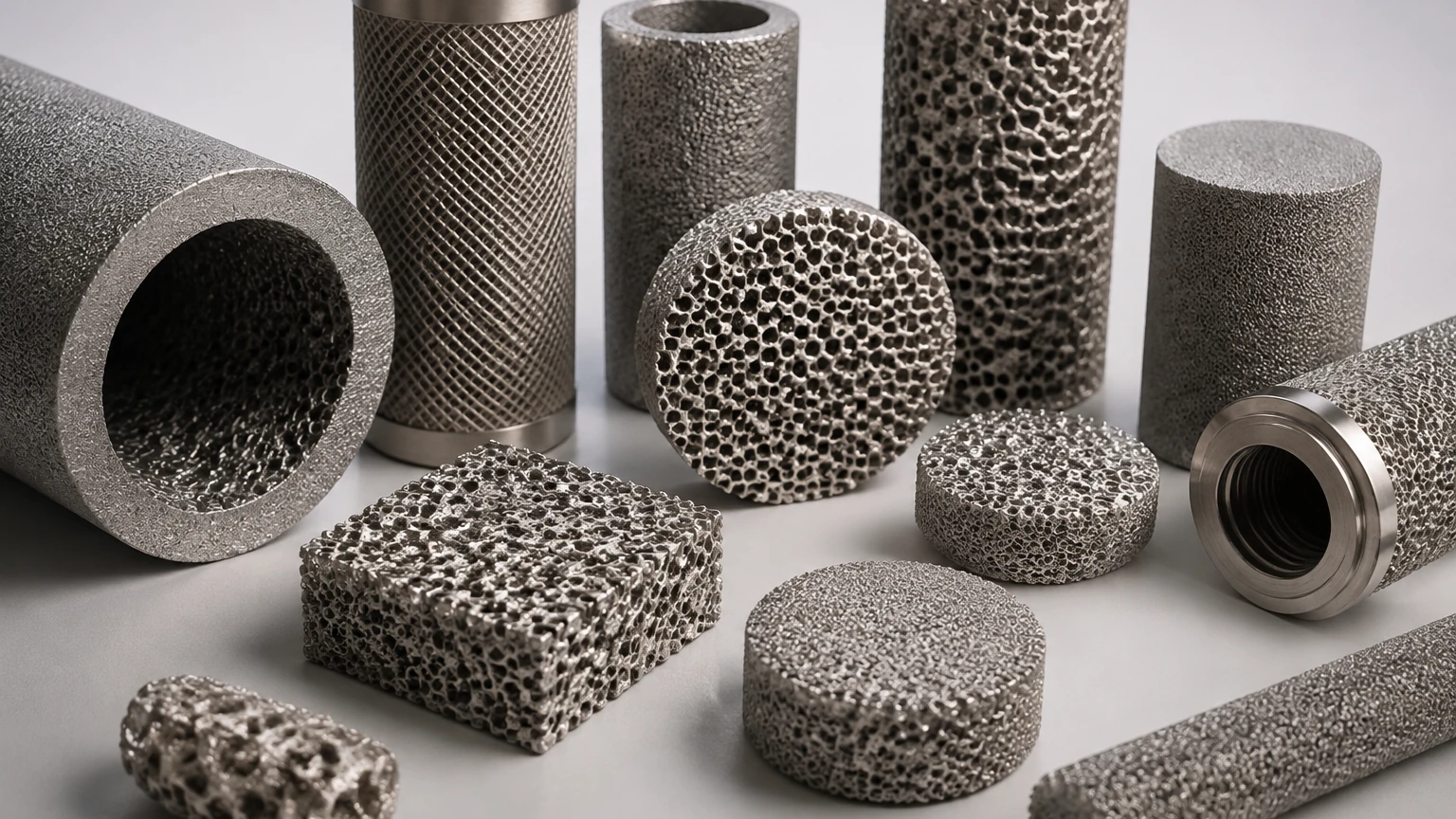
Sintered powder metal is created by compacting metal powders—such as stainless steel, bronze, or titanium—into a mold and then sintering them. This process creates a rigid, porous structure with a highly tortuous path for fluid flow. It is one of the most robust porous metal examples, capable of withstanding extreme mechanical stress and thermal shock.
Precision and Depth Filtration
Powder metal filters are known for their precise pore size distribution. By controlling the size of the metal particles used in the manufacturing process, manufacturers can produce filters with absolute micron ratings ranging from 0.5 to 100 microns.
These components are often produced in the form of porous tubes, discs, or custom-molded shapes. They are widely used in the pharmaceutical and chemical industries for sparging (introducing gas into liquid), flame arrestors, and steam filtration. The rigid structure ensures that the pore geometry remains stable even when subjected to high-pressure pulses during cleaning cycles.
Wedge Wire and Profile Screen Structures
While not always categorized as "porous" in the same sense as sintered media, wedge wire is a critical porous metal example used in heavy-duty industrial separation. It is constructed by welding V-shaped profile wires onto support rods, creating a continuous slot that widens inwardly.
Mechanical Durability and Clog Resistance
The V-shaped opening is designed to minimize clogging; particles that pass through the initial slot width are unlikely to get stuck in the widening gap. Wedge wire is exceptionally strong and is used in applications involving high torque or heavy loads, such as rotary screens, salt diversions, and water intake systems.
In the food and beverage industry, wedge wire is often the preferred choice for mash tuns or juice extraction due to its sanitary design and ease of mechanical cleaning. It provides a high open-area ratio while maintaining the structural integrity required for large-scale industrial vessels.
Engineering Considerations for Material Selection
When evaluating these porous metal examples, engineers must look beyond the initial filtration rating. The success of a filtration system depends on several technical factors that influence the total cost of ownership and operational reliability.
Chemical and Thermal Compatibility
The choice of alloy is paramount. While 304 and 316L stainless steel are the standards for general industrial use, more aggressive environments may require specialized alloys:
* 316L Stainless Steel: Offers excellent corrosion resistance and is suitable for most organic and inorganic chemical applications.
* Inconel or Hastelloy: Used in high-temperature environments (up to 1000°C) or in the presence of highly corrosive acids and chlorides.
* Monel: Preferred for applications involving hydrofluoric acid or seawater.
Pressure Drop and Flow Rates
Every porous metal structure introduces a degree of resistance to flow, known as pressure drop (ΔP). Engineers must calculate the clean pressure drop based on fluid viscosity, flow velocity, and the permeability of the porous metal. A common mistake is selecting a filter that is too fine for the application, which leads to rapid clogging and frequent maintenance cycles. Balancing filtration efficiency with the required flow rate is essential for optimizing system performance.
Maintenance and Regeneration Methods
One of the primary reasons B2B buyers choose porous metal over polymer or paper filters is the ability to clean and reuse the components. The durability of metal allows for several aggressive regeneration methods:
1. Backwashing/Backpulsing: Using a reverse flow of fluid or gas to dislodge particles from the surface of the filter.
2. Ultrasonic Cleaning: Using high-frequency sound waves in a cleaning solution to remove fine particles trapped deep within the pores.
3. Chemical Cleaning: Utilizing acids, alkalis, or solvents to dissolve specific contaminants without damaging the metal structure.
4. Thermal Burn-off: Heating the filter in a controlled atmosphere to carbonize organic contaminants, which are then washed away.
Regular maintenance schedules and proper cleaning protocols can extend the life of a porous metal filter for several years, significantly reducing the long-term cost of filtration compared to disposable alternatives.
Industrial Applications and Performance Expectations
The practical application of these porous metal examples spans across almost every sector of heavy industry. In the chemical processing industry, sintered powder and mesh filters are used to protect downstream equipment from catalyst fines. In the pharmaceutical sector, they ensure the sterility of process steam and gases used in fermentation.
In hydraulic systems, metal fiber felt filters protect sensitive valves and actuators from metallic wear particles, even under the high-pressure surges typical of heavy machinery. For water treatment, wedge wire screens provide the first line of defense in removing large debris from intake sources, protecting pumps and finer filtration stages.
When sourcing these components, it is vital to confirm the specific manufacturing tolerances and quality certifications required for your industry. For detailed product specifications and to explore custom engineering options for your specific filtration challenges, you can consult the resources available on the Main Page.
Conclusion
Selecting the appropriate porous metal example requires a deep understanding of both the material properties and the operational environment. Whether the priority is the high dirt-holding capacity of sintered fiber felt, the mechanical rigidity of sintered powder, or the cleanability of sintered wire mesh, each material offers distinct advantages. By focusing on technical parameters such as permeability, alloy compatibility, and regeneration potential, engineers can implement filtration solutions that enhance process efficiency and reduce operational downtime.
