


Porous Metal
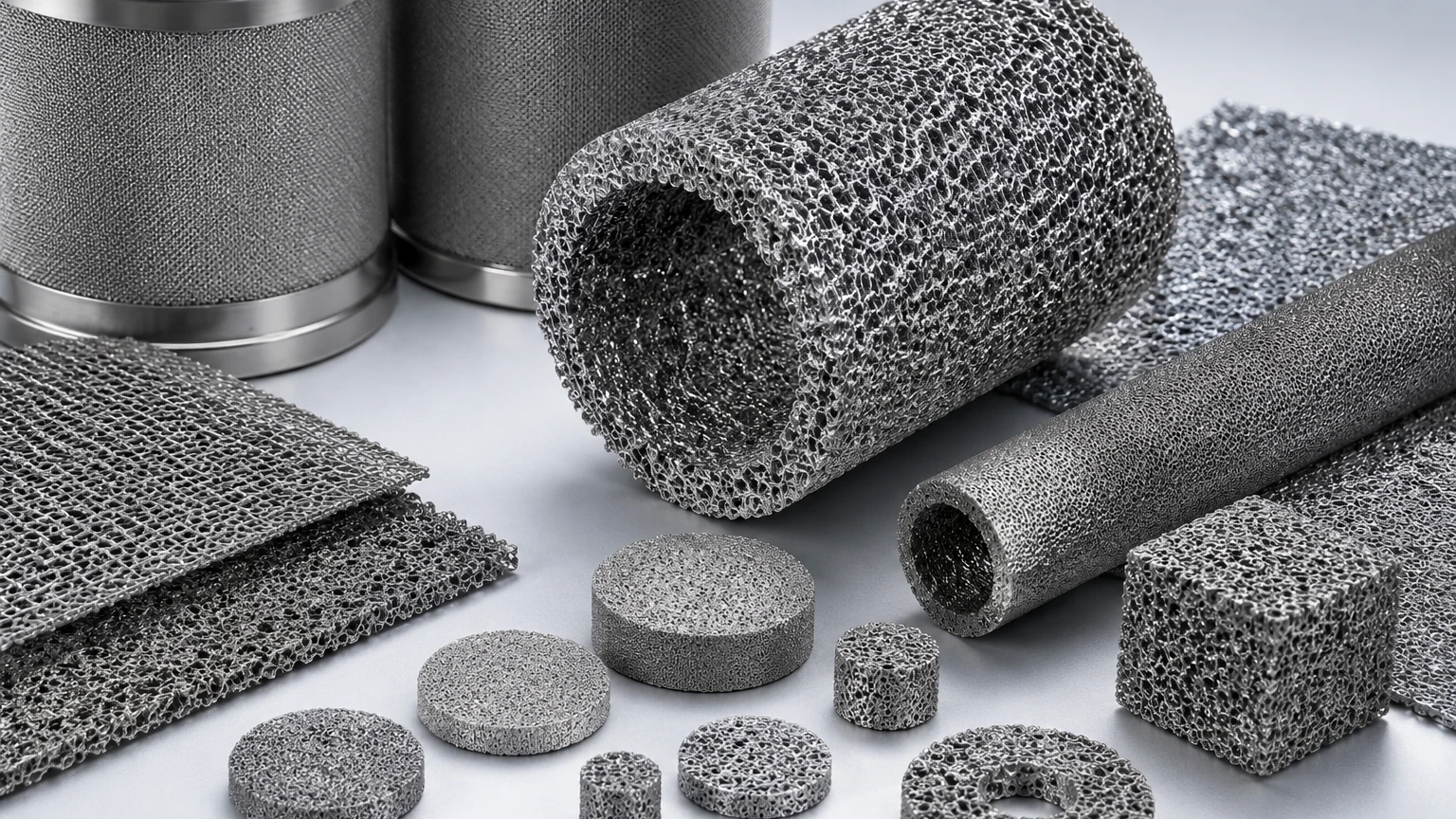
In the landscape of industrial filtration and fluid control, porous metal stands as a critical material category defined by its engineered permeability and structural integrity. Unlike traditional fibrous or polymeric media, porous metal components are manufactured through advanced metallurgical processes—primarily sintering—to create a rigid, interconnected network of pores. This structure allows for the precise passage of fluids or gases while effectively retaining particulate matter. For engineers and procurement teams, selecting the right porous metal solution requires a deep understanding of material science, fluid dynamics, and the specific rigors of the application environment.
As a professional manufacturer specializing in custom stainless steel filtration solutions, Kaifil provides high-performance components designed to meet the demanding requirements of chemical processing, pharmaceuticals, and hydraulic systems. Understanding the technical nuances of porous metal is essential for optimizing filtration efficiency and ensuring long-term operational reliability.
Understanding Porous Metal Structures in Industrial Filtration
Porous metal is characterized by its "void volume" or porosity, which typically ranges from 30% to 85% depending on the manufacturing method and intended use. The primary advantage of using metal as a porous medium is its mechanical robustness. While polymer filters may deform or fail under high pressure or extreme temperatures, porous metal maintains its geometric stability.
There are three primary forms of porous metal used in industrial settings:
1. Sintered Metal Powder: Created by compacting and sintering metallic powders. The resulting structure features a tortuous path for fluids, providing excellent depth filtration and high particle retention accuracy.
2. Sintered Wire Mesh: Comprised of multiple layers of stainless steel wire cloth that are diffusion-bonded through sintering. This creates a filter medium with high permeability and precise pore sizes, often used for surface filtration.
3. Sintered Metal Fiber Felt: Produced from non-woven stainless steel fibers that are sintered into a three-dimensional metallic web. This form offers the highest porosity and the lowest pressure drop, making it ideal for high-flow applications.
Each of these structures offers distinct advantages. For instance, sintered powder is often preferred for gas sparging and flame arrestors, while sintered mesh is the standard for high-pressure hydraulic and polymer filtration.
Primary Manufacturing Processes for Porous Metal Components
The performance of a porous metal filter is dictated by how it is manufactured. Sintering is the foundational process, involving the heating of metal particles, fibers, or mesh layers to a temperature just below their melting point. In a controlled atmosphere furnace, molecular diffusion occurs at the contact points, fusing the metal elements into a solid, integrated structure without the need for binders or adhesives.
The Sintering Advantage
Sintering ensures that the pore geometry remains fixed even under significant mechanical stress. For B2B buyers, this translates to a product that does not suffer from "media migration"—a common failure in fibrous filters where fragments of the filter material break off and contaminate the downstream fluid. Furthermore, the absence of chemical binders makes porous metal inherently compatible with high-purity applications in the food, beverage, and pharmaceutical sectors.
Customization and Geometry
Manufacturing capabilities at Kaifil allow for the production of porous metal in various geometries, including seamless tubes, flat discs, conical shapes, and complex custom-engineered components. By adjusting the grain size of the powder or the weave pattern of the mesh, manufacturers can fine-tune the filtration rating from sub-micron levels up to several hundred microns.
Key Technical Specifications and Selection Criteria
When evaluating porous metal for an industrial project, engineers must look beyond simple micron ratings. The following specifications are critical for determining the suitability of a filter:
Pore Size and Distribution
Filtration accuracy is defined by the pore size. However, because no porous medium has perfectly uniform pores, manufacturers distinguish between "Mean Pore Size" (the average) and "Absolute Rating" (the size of the largest pore). In critical applications, such as pharmaceutical sterile venting, an absolute rating is mandatory to ensure no particles above a specific size can pass through.
Permeability and Flow Resistance
Permeability refers to the ease with which a fluid passes through the porous metal. It is influenced by the thickness of the material, the porosity percentage, and the tortuosity of the pore paths. A higher permeability results in a lower initial pressure drop, which reduces the energy requirements for pumps and compressors within the system.
Mechanical Strength and Burst Pressure
In hydraulic and high-pressure gas systems, the porous metal component must withstand significant differential pressures. Engineers should confirm the collapse pressure and burst pressure ratings, especially if the filter will be subjected to pressure surges or back-pulsing during cleaning cycles.
Material Selection for Challenging Operating Environments
The choice of alloy is as important as the pore structure. While stainless steel is the most common material for porous metal, different grades offer varying levels of protection against corrosion and thermal degradation.
* 316L Stainless Steel: The industry standard for most filtration tasks. The low carbon content improves weldability, while the addition of molybdenum provides excellent resistance to pitting and crevice corrosion in chloride-rich environments.
* 304 Stainless Steel: A cost-effective alternative for less aggressive environments, commonly used in food processing and general industrial water treatment.
* Specialty Alloys: For extreme conditions, porous components can be manufactured from Inconel, Monel, or Hastelloy. These are reserved for high-temperature applications (up to 1000°C) or highly acidic chemical processing where standard stainless steel would fail.
Selecting the correct material ensures that the filter does not become a point of failure due to chemical attack or oxidation, thereby extending the service life and reducing the total cost of ownership.
Performance Dynamics: Permeability and Pressure Drop
In any filtration system, the relationship between flow rate and pressure drop is governed by Darcy’s Law. For porous metal, this relationship is relatively linear at low velocities but becomes non-linear as turbulence increases within the pore structure.
Engineers must calculate the "Clean Pressure Drop" to ensure the system has enough head pressure to maintain the required flow as the filter begins to load with contaminants. A well-designed porous metal filter optimizes the balance between filtration surface area and thickness. By using pleated sintered mesh or high-porosity fiber felt, it is possible to maximize the surface area within a compact housing, thereby significantly lowering the pressure drop and extending the time between cleaning intervals.
To explore specific technical data and configuration options for these systems, professionals can visit the Main Page of our technical resource center.
Industrial Applications and Case Scenarios
Porous metal’s versatility allows it to serve in diverse roles beyond simple liquid filtration. Its unique properties are leveraged across several high-stakes industries:
Chemical and Petrochemical Processing
In these sectors, porous metal is used for catalyst recovery. The ability to withstand high temperatures and aggressive solvents allows the metal filters to capture expensive catalyst particles from process streams, which are then recovered via backwashing. This not only protects downstream equipment but also provides significant cost savings through material recovery.
Food and Beverage Industry
Steam filtration is a primary application here. "Culinary grade" steam requires the removal of rust, pipe scale, and other particulates. Sintered stainless steel filters are ideal for this because they can be sterilized in place (SIP) and do not shed fibers into the food-grade steam.
Aerospace and Hydraulics
Precision hydraulic systems rely on porous metal to protect sensitive valves and actuators. The high fatigue resistance of sintered mesh ensures that the filter remains intact despite the high-frequency pressure pulsations common in aerospace hydraulic circuits.
Maintenance and Life Cycle Management
One of the most significant advantages of porous metal over disposable media is that it is cleanable and reusable. This characteristic drastically reduces the environmental impact and the long-term cost of filtration operations.
Cleaning Methodologies
Depending on the nature of the contaminant, several cleaning methods can be employed:
* Backpulsing/Backwashing: Using a reverse flow of fluid or gas to dislodge particles from the surface of the filter.
* Ultrasonic Cleaning: Using high-frequency sound waves in a cleaning solvent to break down and remove deep-seated particulates within the pore structure.
* Chemical Cleaning: Using acids, alkalis, or surfactants to dissolve organic or inorganic deposits.
* Thermal Burn-off: Heating the filter in a controlled furnace to oxidize organic contaminants, a common practice in polymer filtration.
Determining Replacement Cycles
While porous metal is durable, it is not infinite. Over many cleaning cycles, the structural integrity may eventually diminish, or "permanent fouling" may occur where pores become irreversibly blocked. Monitoring the pressure drop after cleaning is the best way to determine the end-of-life for a component. If the "restored" pressure drop is significantly higher than the original clean pressure drop, replacement is likely necessary.
Conclusion: Selecting a Reliable Filtration Partner
Choosing a porous metal solution is a technical decision that impacts the efficiency, safety, and profitability of an industrial process. It requires a balance of material science and mechanical engineering. By focusing on precise pore control, material compatibility, and cleanability, engineers can implement filtration systems that outperform and outlast traditional alternatives.
Kaifil remains committed to delivering high-performance, customized filtration components. Whether you require a standard sintered cartridge or a complex OEM metal filter design, our expertise ensures that your application requirements are met with precision. For more information on our manufacturing capabilities and to review product options, please visit our Main Page.
