


Jet Pulse Filter
In industrial air pollution control and process gas filtration, the jet pulse filter—also known as a pulse-jet baghouse or pulse-clean filter—stands as the most prevalent technology for high-efficiency dust collection. Its primary function is to separate dry particulate matter from a gas stream, ensuring that industrial emissions meet environmental standards and that valuable process materials are recovered. Unlike older shaker or reverse-air systems, the jet pulse filter allows for continuous operation without the need to shut down the airflow during the cleaning cycle.
For engineers and procurement specialists, selecting the right filtration configuration involves a deep understanding of the mechanical stresses, chemical environments, and thermal demands of the specific application. While traditional fabric bags are common, demanding industrial processes often require specialized stainless steel filter elements to withstand corrosive gases or extreme temperatures. As a professional manufacturer, Kaifil provides the technical expertise and custom manufacturing capabilities needed to optimize these systems through precision-engineered metal filtration components.
Understanding the Pulse Jet Filtration Mechanism
The operation of a jet pulse filter is defined by its cleaning mechanism. In a typical configuration, dust-laden gas enters the filter housing and passes through the filter media from the outside to the inside. The particulate matter is trapped on the exterior surface of the filter element, forming what is known as a "dust cake." This cake actually assists in the filtration process by providing an additional layer of fine-mesh trapping, but it also increases the differential pressure (resistance) across the system.
To maintain optimal airflow, the system must periodically remove this dust cake. This is achieved through a high-pressure burst of compressed air (the "pulse") directed down the center of the filter element. This pulse creates a rapid expansion of the filter media, followed by a sudden contraction when the pressure dissipates. The resulting mechanical shock and the momentary reversal of airflow dislodge the accumulated dust, which then falls into a hopper for collection.
The Role of the Venturi
A critical component in many jet pulse filters is the Venturi. Positioned at the top of the filter element, the Venturi is a specially shaped nozzle that accelerates the compressed air pulse and induces additional surrounding air into the filter. This induction multiplies the volume of the cleaning air, ensuring that the pressure wave travels the full length of the filter element. For engineers designing systems for high-viscosity dust or long filter cartridges, the geometry and alignment of the Venturi are vital for ensuring uniform cleaning and preventing premature wear at the bottom of the filter.
Key Components of a Jet Pulse Filter System
A robust jet pulse filter system is comprised of several integrated mechanical and electronic parts. Failure in any one of these components can lead to a drop in filtration efficiency or a total system shutdown.
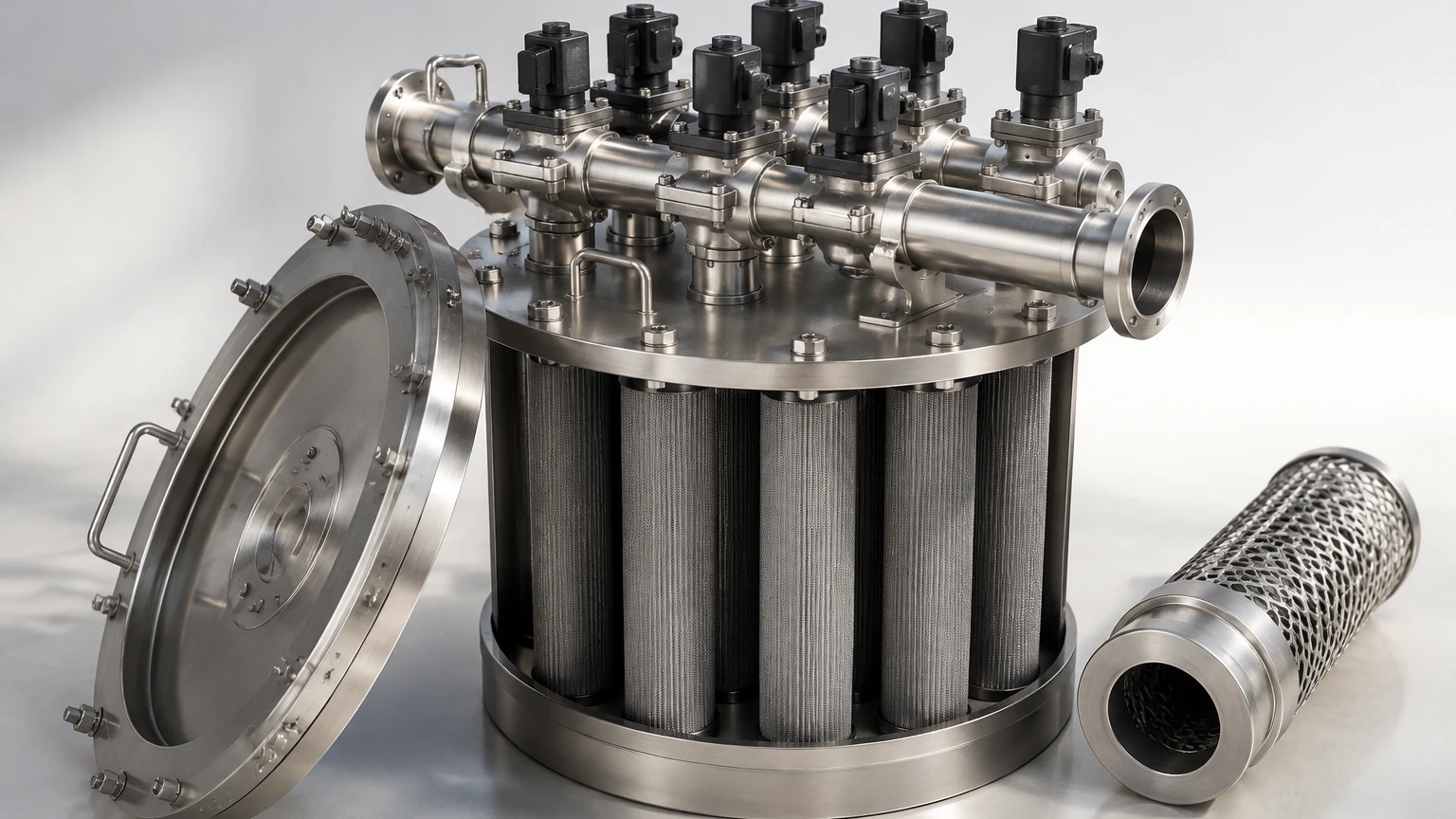
1. Filter Elements: These are the primary barriers. While many systems use needle felt or woven fabric bags, high-temperature or high-pressure applications often utilize stainless steel wire mesh or sintered metal cartridges. These metal elements offer superior structural integrity and chemical resistance.
2. Solenoid and Diaphragm Valves: These valves control the release of compressed air from the header tank (manifold). They must be capable of opening and closing within milliseconds to provide a sharp, effective pulse.
3. Blow Pipes: These tubes are mounted above the rows of filter elements. They feature precision-drilled orifices or nozzles aligned perfectly with the center of each filter element to deliver the cleaning air.
4. Timer Controller: The "brain" of the system, which triggers the pulse sequence based either on a fixed time interval or, more efficiently, on a differential pressure setpoint.
5. Housing and Hopper: The structural enclosure that directs the gas flow and collects the discharged dust. The hopper design must ensure that dust does not bridge or accumulate, which could lead to fire hazards or mechanical blockage.
Material Selection: Stainless Steel vs. Traditional Media
One of the most significant decisions for an engineer is the selection of the filter media material. In many chemical, pharmaceutical, and food processing applications, standard polyester or aramid bags are insufficient due to chemical incompatibility or the risk of fiber shedding.
Advantages of Stainless Steel Filter Elements
In a jet pulse filter environment, stainless steel wire mesh and sintered metal components offer distinct advantages:
* Thermal Stability: Standard fabric bags typically fail above 250°C. Stainless steel elements can operate reliably at temperatures exceeding 500°C, making them essential for kiln exhausts, smelting, and steam filtration.
* Chemical Durability: In environments containing acidic or alkaline vapors, synthetic fibers can degrade rapidly. Stainless steel (specifically 316L grade) provides excellent resistance to a wide range of corrosive agents.
* Mechanical Strength: The high-pressure pulses used in jet pulse filters can eventually cause mechanical fatigue in fabric. Metal elements are rigid and can withstand thousands of cleaning cycles without stretching or tearing.
* Cleanability: For food and beverage or pharmaceutical applications, the ability to thoroughly clean and sterilize the filter media is paramount. Stainless steel elements are compatible with CIP (Clean-in-Place) processes.
For those seeking specialized metal filtration solutions, you can Review product options and application support on our main page to understand how custom-engineered components can be integrated into your existing jet pulse systems.
Engineering Design Parameters for High Performance
Designing or specifying a jet pulse filter requires careful calculation of several variables to ensure the system does not become a bottleneck in the production process.
Air-to-Cloth Ratio (Filtration Velocity)
The Air-to-Cloth (A/C) ratio is the volume of gas passing through the filter divided by the total active filtration area. It is usually expressed in meters per minute (m/min) or feet per minute (fpm). A lower A/C ratio generally leads to higher filtration efficiency and longer filter life but requires a larger, more expensive housing. For fine or abrasive dust, engineers typically specify a conservative A/C ratio to prevent particles from being driven too deeply into the media pores, a condition known as "depth loading" or "blinding."
Can Velocity and Re-entrainment
Can velocity refers to the upward velocity of the gas between the filter elements. If the can velocity is too high, the dust dislodged during the pulse cleaning cycle will not fall into the hopper; instead, it will be swept back onto the adjacent filter elements. This "re-entrainment" leads to high differential pressure and wasted compressed air. Proper spacing between filter elements and optimized housing geometry are required to keep can velocities within acceptable limits.
Pulse Pressure and Duration
The cleaning pulse usually ranges from 4 to 7 bar (60 to 100 psi). If the pressure is too low, the dust cake remains on the media. If it is too high, it can damage the media or cause "bleed-through," where fine particles are forced through the filter during the pulse. The duration of the pulse is typically very short—between 50 and 150 milliseconds—to ensure a sharp mechanical shock rather than a sustained flow of air.
Troubleshooting and Maintenance of Pulse Jet Systems
Even a well-designed jet pulse filter requires regular monitoring to maintain peak performance. The most common indicator of trouble is an unexpected rise in differential pressure (DP).
Managing High Differential Pressure
If the DP remains high even after cleaning, potential causes include:
* Moisture Blinding: If the gas stream drops below the dew point, moisture can condense on the filter media, turning the dust into a mud-like consistency that the pulse cannot remove.
* Compressed Air Issues: Low pressure in the header tank, leaking diaphragm valves, or moisture in the compressed air lines can all reduce cleaning effectiveness.
* Overloading: An increase in the upstream dust load or gas volume can exceed the system's design capacity.
Replacement Cycles
In a jet pulse filter, the filter elements are considered consumables, though their lifespan varies greatly. Fabric bags may last 1 to 3 years depending on the application, while high-quality stainless steel elements can last significantly longer if maintained correctly. Regular inspections for holes, wear at the contact points of the support cages, and signs of chemical attack are essential for preventing "dust leaks" that could result in environmental non-compliance.
Selecting the Right Filtration Partner for Custom Solutions
Every industrial process has unique requirements, from the specific micron rating needed to capture hazardous particles to the unique dimensions of the filter housing. Off-the-shelf solutions often fail to address the nuances of specialized chemical or high-temperature processes. This is where custom manufacturing becomes a strategic advantage.
Kaifil specializes in the production of high-performance stainless steel filtration components designed for demanding industrial environments. By focusing on precision manufacturing and material integrity, we help engineers solve complex filtration challenges that standard equipment cannot handle. Whether you are designing a new jet pulse filter system or looking to upgrade an existing installation with more durable metal elements, understanding the technical requirements of your media is the first step toward operational efficiency.
When evaluating a supplier for jet pulse filter components, engineers should confirm:
* Material Certification: Ensuring the stainless steel grades (e.g., 304, 316, 316L) meet the required specifications for corrosion resistance.
* Filtration Accuracy: Verification of the micron rating and the consistency of the wire mesh or sintered structure.
* Structural Integrity: The ability of the filter element to withstand the repeated mechanical stress of high-pressure pulsing.
* Customization Capabilities: The supplier’s ability to manufacture bespoke sizes, end-cap configurations, and reinforcement structures.
By prioritizing these technical factors, purchasing teams can reduce the total cost of ownership through extended filter life, reduced downtime, and improved process consistency. For more information on our full range of stainless steel filtration solutions and how they can be applied to your specific industrial needs, visit our Main Page.
