


Porous Plastic
In the landscape of industrial filtration and fluid handling, porous plastic serves as a versatile material engineered for specific mechanical and chemical requirements. Unlike standard solid polymers, porous plastics are characterized by an omni-directional, interconnected pore structure that allows for the controlled passage of gases and liquids while retaining particulate matter. For engineers and procurement specialists, understanding the technical nuances of these materials is essential for optimizing system performance, particularly when evaluating them against alternative media like stainless steel.
As a specialized manufacturer of high-performance filtration solutions, Kaifil provides technical insights into the selection and application of porous media. While our core expertise lies in stainless steel filtration, the principles of fluid dynamics and particle retention remain consistent across material types. This guide examines the engineering properties, manufacturing methods, and industrial applications of porous plastic to assist technical teams in making informed design decisions.
Understanding the Structure of Porous Plastic
Porous plastic is typically produced through a process known as sintering. In this manufacturing method, polymer resins in powder or pellet form are placed into a mold and heated to a temperature just below their melting point. Under controlled pressure, the surface of the particles softens and fuses at contact points, creating a robust, self-supporting structure.
The resulting material is not a foam but a sintered matrix with a "tortuous path." This means that a fluid passing through the material must navigate a complex, multi-directional route. This structure is highly effective for depth filtration, where particles are trapped not just on the surface, but throughout the thickness of the media.
Key Material Types
Several thermoplastic polymers are commonly used to create porous components, each offering distinct advantages:
* High-Density Polyethylene (HDPE): Known for its excellent chemical resistance to acids and alkalis, HDPE is a cost-effective choice for general-purpose filtration and venting. It typically operates effectively at temperatures up to 82°C (180°F).
* Polypropylene (PP): Offering slightly higher temperature resistance than HDPE (up to approximately 100°C), PP is frequently used in water treatment and chemical processing due to its hydrophobic nature and durability.
* Polytetrafluoroethylene (PTFE): For extreme environments, porous PTFE provides near-universal chemical compatibility and can withstand temperatures up to 260°C (500°F). It is naturally hydrophobic, making it an industry standard for gas venting and moisture barriers.
* Polyvinylidene Fluoride (PVDF): This material is selected for its high purity and resistance to halogens and strong oxidants, often found in pharmaceutical and semiconductor applications.
Technical Performance Metrics and Engineering Considerations
When specifying porous plastic for an industrial application, engineers must evaluate several critical performance metrics to ensure the component meets the operational demands of the system.
Pore Size and Distribution
Pore size is usually measured in microns (µm). In porous plastics, pore sizes typically range from 5 µm to 200 µm. However, unlike precision-woven wire mesh, sintered plastic has a distribution of pore sizes. Engineers must distinguish between "nominal" ratings (the ability to retain a percentage of particles of a certain size) and "absolute" ratings. Understanding the pore size distribution is vital for predicting filtration efficiency and pressure drop.
Porosity and Void Volume
Porosity refers to the percentage of the total volume that is open space. Most industrial porous plastics maintain a void volume between 30% and 50%. Higher porosity generally leads to lower pressure drops and higher flow rates, but it may compromise the mechanical strength of the component. Balancing structural integrity with permeability is a primary challenge in porous part design.
Flow Resistance and Permeability
Permeability is a measure of how easily a fluid can pass through the porous matrix. It is influenced by the pore size, the thickness of the material, and the viscosity of the fluid. In pneumatic applications, such as silencers or breathers, low flow resistance is critical to prevent backpressure that could damage sensitive equipment.
Industrial Applications: Beyond Simple Filtration
While filtration is a primary use case, the unique properties of porous plastic allow it to solve various engineering challenges across different sectors.
1. Venting and Pressure Equalization
Porous plastics, particularly those made from hydrophobic materials like PTFE, are used in protective vents for electronic enclosures and automotive components. They allow air to pass through to equalize pressure while blocking water, dust, and contaminants. This prevents seal failure and internal condensation.
2. Fluidization and Powder Handling
In the bulk solids industry, porous plastic plates are used to create fluidizing beds. By passing compressed air through a porous bottom plate, powders and granulates can be "fluidized," allowing them to flow like a liquid. This is essential for efficient silo discharge and powder coating processes.
3. Wicking and Controlled Release
Due to capillary action, certain porous plastics can act as wicks. This is utilized in medical diagnostics for liquid transport in lateral flow assays or in industrial settings for the controlled release of lubricants or fragrances. The pore structure can be engineered to provide specific wicking speeds based on the fluid's surface tension.
4. Sparging and Aeration
Porous plastic diffusers are used to introduce fine gas bubbles into liquids. In wastewater treatment or bioreactors, small, uniform bubbles increase the surface area for gas-liquid interaction, improving oxygenation efficiency or carbonation processes.
Comparing Porous Plastic with Stainless Steel Filter Media
For many industrial applications, engineers must choose between porous plastic and stainless steel filter media. While porous plastic offers advantages in terms of weight and initial cost, stainless steel—such as the solutions found on the Kaifil Main Page—is often required for more demanding environments.
| Feature | Porous Plastic | Stainless Steel (Sintered/Mesh) |
| :— | :— | :— |
| Temperature Limit | Generally < 100°C (except PTFE) | Up to 500°C+ depending on alloy |
| Chemical Resistance | Excellent for specific acids/bases | Superior for solvents and high-temp organics |
| Mechanical Strength | Moderate; prone to creep under load | High; resistant to high differential pressures |
| Cleanability | Often considered disposable | Highly cleanable (ultrasonic, backwash) |
| Precision | Nominal pore distribution | Absolute micron ratings available |
| Cost | Lower initial unit cost | Higher initial cost; lower TCO over time |
In high-pressure hydraulic systems or chemical reactors involving high-temperature steam, the structural rigidity of stainless steel is indispensable. Porous plastic may deform or lose its pore structure under extreme mechanical stress, whereas sintered metal maintains its geometry. However, for disposable medical filters or cost-sensitive consumer appliances, plastic remains the preferred choice.
Selection Criteria for Technical Procurement
To select the correct porous media, procurement and engineering teams should confirm the following parameters before finalizing a specification:
1. Operating Temperature: Determine both the continuous and peak operating temperatures. If the process involves steam sterilization (SIP), ensure the polymer can withstand 121°C or consider transitioning to metal.
2. Chemical Compatibility: Review the Material Safety Data Sheet (MSDS) of the process fluid. Some plastics may swell or degrade when exposed to specific hydrocarbons or concentrated solvents.
3. Differential Pressure (ΔP): Calculate the maximum allowable pressure drop across the filter. If the system operates at high pressures, the housing and the porous element must be designed to avoid collapse.
4. Regulatory Compliance: For food, beverage, or pharmaceutical applications, ensure the material is FDA-compliant or meets USP Class VI standards for biocompatibility.
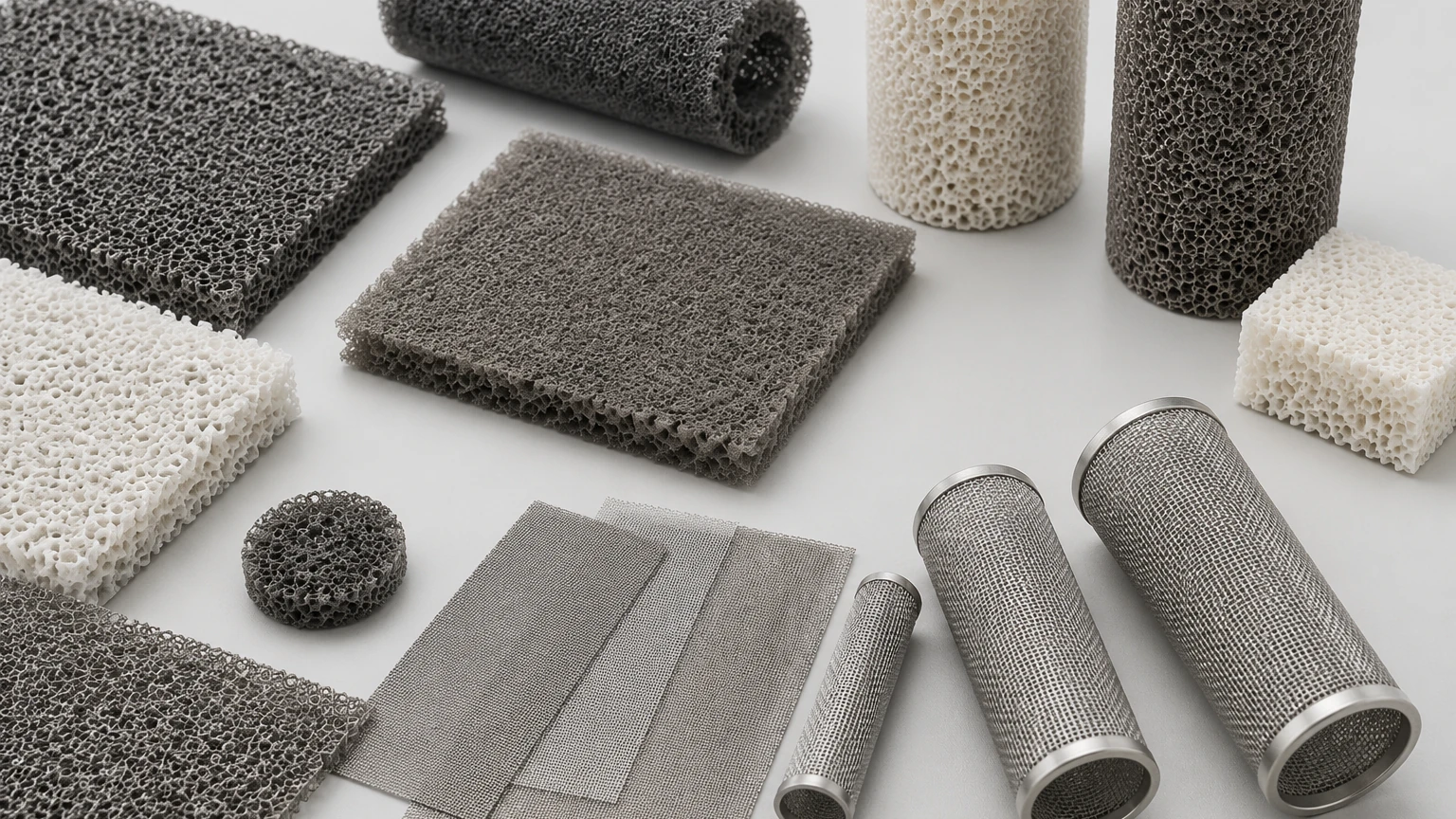
5. Customization Requirements: Porous plastics can be molded into complex shapes, including tubes, discs, and cones. Determine if a standard geometry suffices or if a custom-engineered component is necessary for the assembly.
Operational Longevity and Maintenance
The lifespan of a porous plastic component is largely dictated by the contaminant load and the nature of the particles being filtered. Because porous plastics utilize depth filtration, they eventually become saturated with trapped particles. Unlike stainless steel filters, which can often be returned to a "like-new" state through rigorous cleaning cycles, porous plastics are frequently treated as consumables.
In applications where the cost of downtime exceeds the cost of the filter, implementing a scheduled replacement cycle based on pressure drop monitoring is recommended. If a process requires frequent cleaning or involves hazardous materials where disposal is difficult, upgrading to a cleanable stainless steel solution from a manufacturer like Kaifil may reduce the Total Cost of Ownership (TCO) by eliminating the need for recurring purchases and reducing waste.
Conclusion
Porous plastic is a vital material for modern industrial engineering, offering unique capabilities in venting, fluidization, and depth filtration. Its lightweight nature and chemical versatility make it suitable for a wide range of low-to-medium temperature applications. However, for critical processes involving high pressures, extreme temperatures, or the need for reusable components, technical teams must carefully weigh these benefits against the robust performance of metal filtration media.
By analyzing the specific demands of the operating environment—including flow rates, chemical exposure, and mechanical stress—engineers can determine whether a sintered polymer or a precision-engineered stainless steel component is the optimal choice for their system. For those seeking high-durability alternatives or custom metal filtration designs, exploring the technical resources on the Kaifil Main Page can provide the necessary guidance for complex industrial applications.
