


Porous Polypropylene
In the landscape of industrial filtration and fluid handling, material selection is the primary determinant of system longevity and process efficiency. Porous polypropylene (PP) stands as a critical thermoplastic medium, utilized extensively across chemical processing, pharmaceutical manufacturing, and water treatment sectors. Characterized by its high strength-to-weight ratio and exceptional chemical inertness, this material provides a versatile solution for applications requiring controlled porosity, gas diffusion, or liquid filtration.
For engineers and procurement specialists, understanding the technical nuances of porous polypropylene—from its manufacturing morphology to its mechanical limitations—is essential for optimizing filtration systems. While Kaifil specializes in high-performance stainless steel filtration solutions, providing a comprehensive technical overview of polymer-based media like porous polypropylene helps technical teams make informed decisions regarding material compatibility and total cost of ownership.
Material Characteristics and Chemical Resistance
Polypropylene is a linear hydrocarbon polymer, and in its porous form, it retains the fundamental properties of the base resin. One of the most significant advantages of porous polypropylene is its broad chemical compatibility. It is naturally resistant to most aqueous solutions, including strong acids and alkalis, making it a preferred choice for harsh chemical environments where metallic components might suffer from galvanic corrosion or pitting.
Chemical Inertness
At ambient temperatures, porous polypropylene is virtually unaffected by most inorganic acids and bases. It remains stable in the presence of salts and many organic solvents. However, it is susceptible to strong oxidizing agents, such as concentrated nitric acid or chlorinated hydrocarbons, which can cause swelling or structural degradation. When evaluating this material for chemical processing, engineers must consult compatibility charts specifically for the operating temperature, as the polymer’s resistance profile shifts significantly as it approaches its glass transition and melting points.
Hydrophobic Nature
Naturally, polypropylene is hydrophobic. This means that in its untreated state, porous polypropylene will resist the passage of water until a specific "water entry pressure" (WEP) is reached. This characteristic is highly valued in venting applications, where the goal is to allow gases to pass through while blocking liquid moisture. For liquid filtration applications involving aqueous streams, the material must often be chemically treated or manufactured with surfactants to become hydrophilic, ensuring consistent flow rates at lower differential pressures.
Manufacturing Processes and Pore Morphology
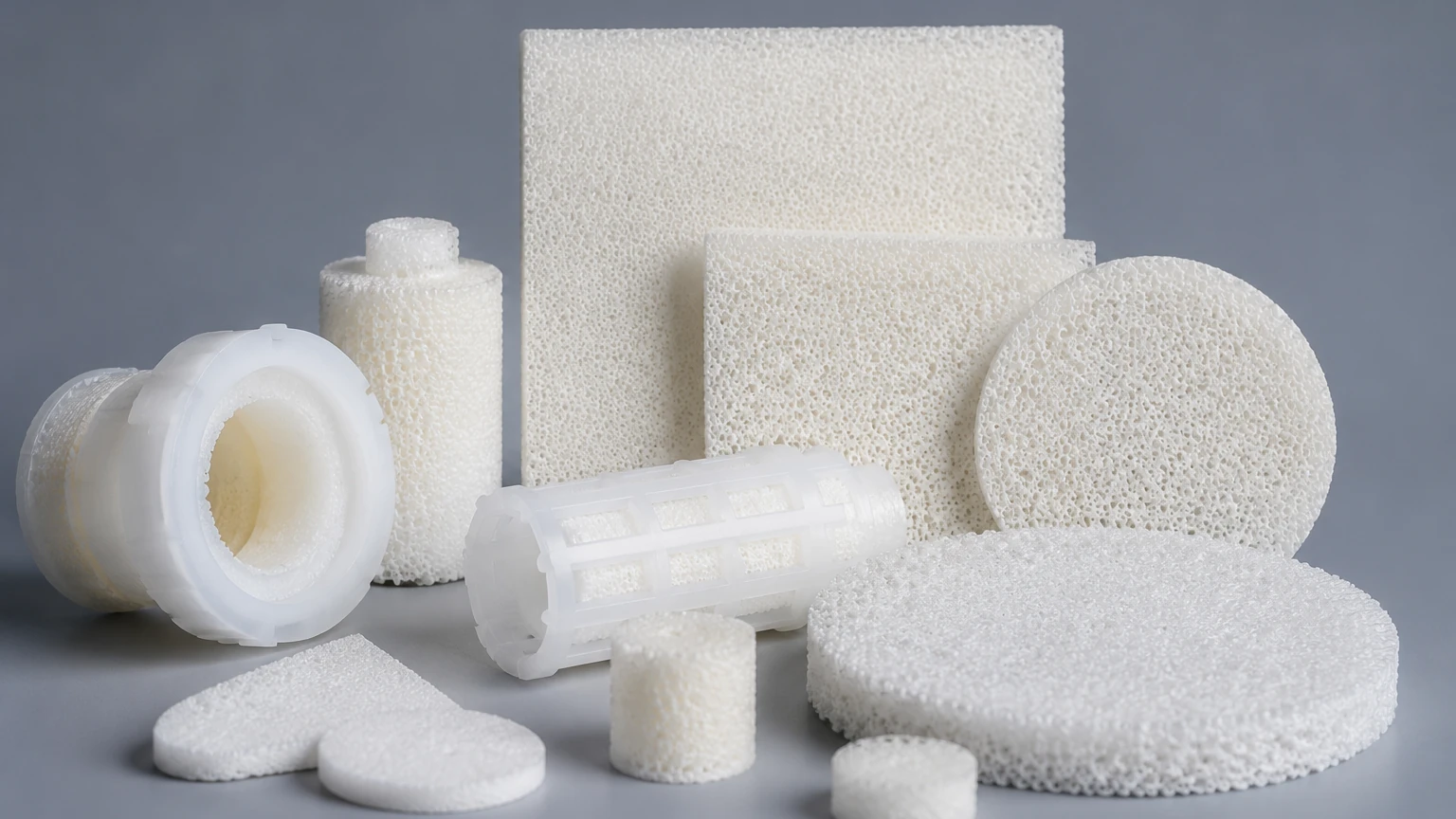
The performance of porous polypropylene is dictated by its internal structure, which is typically created through a sintering process. Unlike woven mesh, which relies on a precise geometric pattern, sintered porous plastics feature an omni-directional, tortuous path.
Sintering Technology
Sintering involves taking polypropylene granules or powders of specific sizes and heating them under controlled pressure. The temperature is raised just enough to cause the surface of the particles to fuse at their contact points without completely melting the polymer. This results in a structurally sound, self-supporting part with a network of interconnected voids.
Pore Size Distribution
The size of the initial granules determines the resulting pore size. Industrial porous polypropylene typically offers pore sizes ranging from 5 microns to 150 microns. Because the process creates a tortuous path, these filters act as "depth filters." Particles are trapped not just on the surface, but within the complex internal matrix of the material. This provides a higher dirt-holding capacity compared to simple surface-based membranes, although it can make the media more difficult to clean once fully fouled.
Engineering Considerations for Filtration Performance
When integrating porous polypropylene into an industrial system, several engineering metrics must be evaluated to ensure the component meets the required performance specifications. These include permeability, mechanical strength, and thermal stability.
Permeability and Pressure Drop
Permeability is a measure of how easily a fluid (liquid or gas) can pass through the porous structure. It is inversely proportional to the thickness of the material and the density of the pore structure. Engineers must calculate the expected pressure drop (ΔP) across the filter. A high initial pressure drop may indicate that the pore size is too restrictive for the desired flow rate, leading to premature fouling and increased energy consumption by pumps or compressors.
Mechanical Strength and Structural Integrity
While polypropylene is durable, it does not possess the mechanical strength of stainless steel. Under high-pressure conditions, porous polypropylene components may undergo deformation or "creep." In high-pressure hydraulic or industrial liquid lines, the material is often housed within a rigid support cage or replaced with a metal alternative to prevent structural failure. For applications requiring the highest levels of durability and pressure resistance, exploring advanced metal filtration options on the Main Page is often the recommended course of action.
Thermal Limitations
The thermal ceiling for polypropylene is relatively low compared to fluoropolymers or metals. The typical continuous operating temperature for porous polypropylene is limited to approximately 80°C to 90°C (176°F to 194°F). Beyond these temperatures, the material begins to soften, leading to a collapse of the pore structure and a total loss of filtration efficacy. For high-temperature steam sterilization or hot gas filtration, stainless steel remains the industry standard.
Industrial Applications of Porous Polypropylene
The unique combination of hydrophobicity and chemical resistance allows porous polypropylene to serve in diverse roles across multiple industries.
1. Industrial Venting: Used in chemical storage tanks and battery housings to allow for pressure equalization while preventing the escape of liquids or the entry of contaminants.
2. Fluidization: In powder handling and bulk solids transport, porous PP plates are used to distribute air evenly, "fluidizing" the powder to allow it to flow like a liquid.
3. Medical and Laboratory: Used in pipette tip filters to prevent cross-contamination and in diagnostic equipment for gas-liquid separation.
4. Water Treatment: Acts as a pre-filter for reverse osmosis (RO) systems, removing larger particulates that could damage sensitive membranes.
5. Pneumatic Silencing: Utilized in pneumatic exhaust ports to reduce noise levels by diffusing the high-velocity air stream through the porous matrix.
Comparison: Porous Polypropylene vs. Stainless Steel Filters
For many engineering teams, the choice between a polymer-based filter like porous polypropylene and a metal-based filter like stainless steel wire mesh or sintered metal is a matter of balancing cost, environment, and reusability.
Cost-Effectiveness vs. Longevity
Porous polypropylene is significantly less expensive to manufacture than stainless steel. For single-use or disposable applications where the cost of cleaning exceeds the cost of replacement, PP is often the superior choice. However, in permanent installations, the frequent replacement of plastic filters can lead to higher long-term costs and increased environmental waste.
Cleanability and Maintenance
Stainless steel filters are prized for their ability to be cleaned and reused. Through backwashing, ultrasonic cleaning, or chemical stripping, a stainless steel cartridge can be restored to near-original performance multiple times. Porous polypropylene, due to its depth-filtration nature and lower thermal resistance, is much harder to clean effectively. Once the internal tortuous path is clogged with fine particulates or biological growth, the filter must generally be discarded.
Precision and Customization
While both materials can be customized, stainless steel allows for much higher precision in filtration ratings, especially in the sub-10-micron range using specialized weaves or sintered fibers. If your application demands extreme precision, high-pressure tolerance, or the ability to withstand aggressive cleaning cycles, reviewing the technical specifications for metal components on the Main Page will provide the necessary engineering data for a more robust solution.
Selection Criteria and Risk Mitigation
To ensure the successful implementation of porous polypropylene in an industrial process, engineers should confirm several factors with their suppliers before procurement:
* Pore Size vs. Particle Size: Ensure the "nominal" or "absolute" rating of the PP media aligns with the smallest particle that must be removed. Note that PP often uses nominal ratings due to the variability of the sintering process.
* Flow Requirements: Define the maximum allowable pressure drop at the required flow rate. This will determine the necessary surface area of the filter media.
* Environmental Exposure: Beyond the primary fluid, consider exposure to UV light, cleaning agents, or ambient ozone, all of which can accelerate the aging of polypropylene.
* Regulatory Compliance: For food, beverage, or pharmaceutical applications, ensure the polypropylene resin is FDA-compliant and meets USP Class VI standards for biocompatibility.
Conclusion
Porous polypropylene remains a foundational material in the filtration industry, offering a unique set of benefits for chemical resistance and cost-sensitive applications. Its ability to be molded into complex shapes and its inherent hydrophobic properties make it indispensable for venting and low-pressure liquid filtration.
However, the limitations regarding temperature, pressure, and reusability mean that it is not a universal solution. For demanding industrial environments where downtime is costly and filtration integrity is paramount, stainless steel and other precision metal components offer the durability required for 24/7 operations. By understanding the strengths and weaknesses of porous polypropylene, technical professionals can better navigate the complexities of filter selection, ensuring that every component in their system is optimized for its specific role. For those seeking high-durability alternatives or custom-engineered metal filtration components, the resources available at Kaifil's Main Page provide the technical depth needed to support advanced industrial applications.
