


Porous Ptfe
In the landscape of industrial filtration and material science, porous PTFE (Polytetrafluoroethylene) stands as a critical component for applications requiring extreme chemical resistance, thermal stability, and precise permeability. Unlike standard high-density PTFE, which is prized for its non-stick and insulating properties, porous PTFE is engineered to allow the controlled passage of gases and liquids while maintaining the core structural integrity of the fluoropolymer. For engineers and procurement specialists, understanding the nuances of this material is essential when designing systems for aggressive chemical environments, high-purity pharmaceutical processes, or specialized venting requirements.
As a manufacturer specializing in high-performance filtration, Kaifil recognizes that the selection of filter media—whether metallic or polymer-based—depends entirely on the specific mechanical and chemical demands of the application. While stainless steel remains the gold standard for high-pressure and high-temperature mechanical filtration, porous PTFE offers a unique set of characteristics that solve challenges where metals might fail due to corrosion or where specific surface energies are required. For a comprehensive look at how these technologies integrate into broader industrial systems, technical teams often refer to the Main Page for a deeper dive into customized filtration solutions.
Engineering Fundamentals of Porous PTFE
Porous PTFE is primarily produced through two distinct manufacturing processes: sintering and expansion. Each method results in a different internal structure, which dictates the material’s performance in industrial settings.
Sintered Porous PTFE
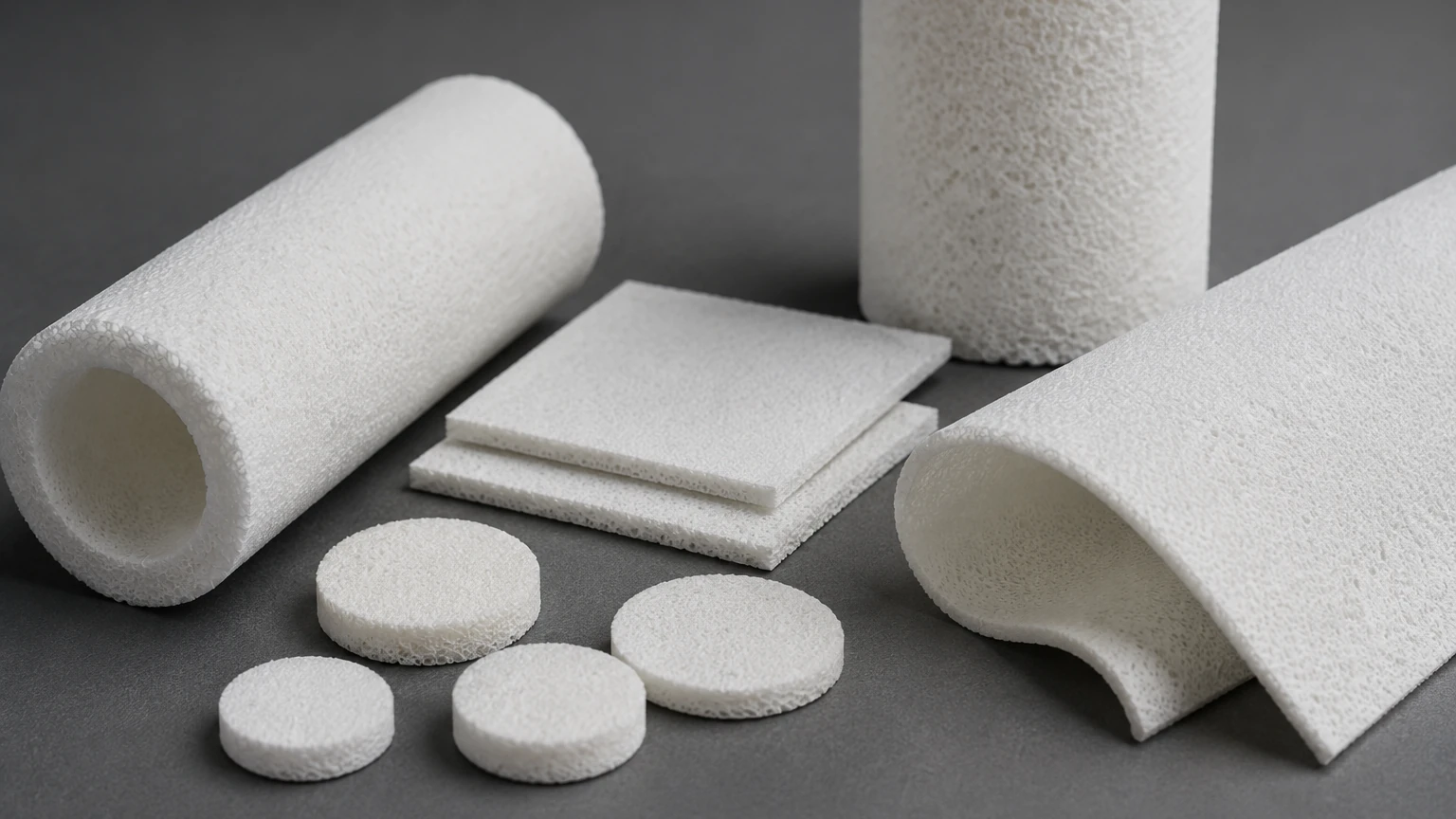
Sintered PTFE is created by compressing PTFE powder and then heating it below its melting point. This process causes the particles to fuse at their contact points, creating a rigid, omnidirectional pore structure. Sintered components are typically thicker and more robust than their expanded counterparts, making them suitable for structural filter elements, silencers, and fluidizing plates. The pore size in sintered PTFE is generally larger and more varied, often ranging from 1 micron to over 100 microns.
Expanded PTFE (ePTFE)
Expanded PTFE is produced by rapidly stretching PTFE under specific temperature conditions. This creates a unique "node-and-fibril" microstructure. The resulting membrane is highly porous, often exceeding 80% air volume, yet remains extremely strong. ePTFE is characterized by very fine pore sizes—often in the sub-micron range (0.1 to 3.0 microns)—and is the preferred choice for high-efficiency gas filtration and sterile venting applications.
Performance Characteristics and Material Properties
The adoption of porous PTFE in B2B industrial sectors is driven by its nearly universal chemical inertness. It is one of the few materials capable of withstanding exposure to concentrated acids, strong bases, and aggressive organic solvents without degradation.
Chemical and Thermal Stability
PTFE maintains its structural integrity across a pH range of 0 to 14. This makes it indispensable in chemical processing plants where stainless steel alloys, even high-grade 316L, might eventually succumb to localized pitting or stress corrosion cracking. Thermally, porous PTFE can operate continuously at temperatures up to 260°C (500°F). While this is lower than the thermal limits of specialized metal filters, it far exceeds the capabilities of most other thermoplastic filter media like polypropylene or polyester.
Hydrophobicity and Surface Energy
One of the most valuable engineering traits of porous PTFE is its natural hydrophobicity. The low surface energy of the material prevents water from wetting the pores, allowing it to act as an effective moisture barrier. In gas venting applications, this ensures that air can pass through the medium while liquid water is repelled, even under moderate pressure. Conversely, for liquid filtration of aqueous solutions, the material can be chemically modified to be hydrophilic, allowing water to pass through freely while retaining the chemical resistance of the PTFE backbone.
Applications in Industrial Filtration and Venting
Because of its versatile nature, porous PTFE is utilized across a broad spectrum of industries, often serving as the primary barrier in critical process stages.
Chemical Processing and Solvent Recovery
In the production of fine chemicals and semiconductors, the purity of solvents is paramount. Porous PTFE filters are used to remove particulate matter from aggressive etching acids and high-purity solvents. Because the material does not leach contaminants into the fluid stream, it ensures that the chemical integrity of the process remains uncompromised.
Pharmaceutical and Medical Venting
Sterile venting is a common requirement in pharmaceutical manufacturing, where tanks must "breathe" during filling and emptying without allowing microbial contamination to enter. Porous PTFE membranes, particularly ePTFE, provide a reliable microbial barrier. Their ability to be autoclaved or sterilized with Steam-In-Place (SIP) protocols makes them ideal for repeated use in regulated environments.
Industrial Gas Filtration and Sensor Protection
In environmental monitoring and industrial gas analysis, sensors must be protected from dust, liquid droplets, and corrosive aerosols. Porous PTFE discs or tubes act as protective breathers. They allow the gas to reach the sensor for accurate measurement while shielding the sensitive electronics from the harsh external environment.
Comparing Porous PTFE with Metallic Filtration Media
When engineers evaluate filtration options, the choice often comes down to a trade-off between the chemical versatility of polymers and the mechanical strength of metals. As a provider of custom stainless steel filtration solutions, Kaifil often assists clients in determining which material best suits their total cost of ownership (TCO) goals.
1. Mechanical Strength: Stainless steel filters, such as those found on the Main Page, offer significantly higher burst and collapse pressures. In high-pressure hydraulic systems or high-viscosity polymer filtration, metal is usually the only viable option. Porous PTFE, while strong for a plastic, requires structural support (like a stainless steel cage or core) when subjected to high differential pressures.
2. Cleanability: Metal filters are highly cleanable and can be restored through ultrasonic cleaning, chemical baths, or burnout processes. Porous PTFE is often treated as a disposable or limited-use component, especially in sub-micron applications where the pores can become deeply fouled.
3. Corrosion vs. Oxidation: While stainless steel is resistant to oxidation and many chemicals, it can be vulnerable to specific ions like chlorides. PTFE is virtually immune to these chemical attacks, making it the preferred choice for handling hydrochloric acid or bleach solutions.
Selection Criteria for Engineering and Procurement
Selecting the right grade of porous PTFE requires a detailed analysis of the operating environment. Engineers should confirm the following parameters before finalizing a specification:
* Pore Size and Distribution: Is the requirement for absolute filtration (e.g., 0.2 microns for sterilization) or nominal filtration for general particulate removal? The distribution of pore sizes will affect both the retention efficiency and the flow rate.
* Air Permeability and Pressure Drop: For venting applications, the "Gurley" number or air permeability rating is critical. This defines how much air can pass through the material at a given pressure. A higher porosity usually results in a lower pressure drop but may compromise mechanical strength.
* Water Entry Pressure (WEP): For hydrophobic vents, the WEP indicates the minimum pressure required to force water through the pores. This is a vital safety metric for equipment exposed to rain, spray, or pressurized washdowns.
* Compliance and Certification: In food, beverage, and pharmaceutical sectors, the material must meet FDA (Food and Drug Administration) and USP Class VI (U.S. Pharmacopeia) standards for biocompatibility and extractables.
Maintenance, Integrity Testing, and Service Life
In a B2B context, the reliability of a filtration component is measured by its service life and the ease of verifying its performance. For porous PTFE membranes used in critical sterile applications, integrity testing is a standard procedure.
Integrity Testing Methods
The most common method is the "Bubble Point" test. This involves wetting the pores with a specific liquid and gradually increasing air pressure until a continuous stream of bubbles is observed. The pressure at which this occurs is inversely proportional to the pore size, allowing engineers to verify that the filter has not been damaged and still meets its micron rating.
Replacement Cycles
While PTFE is chemically durable, the physical clogging of pores by contaminants is inevitable. In industrial gas filtration, pressure drop monitoring is the most effective way to determine replacement cycles. Once the differential pressure reaches a pre-defined limit, the filter should be replaced to prevent system inefficiency or potential membrane rupture.
Conclusion: Strategic Integration of Filtration Materials
Porous PTFE is a high-performance material that fills a specific and vital niche in industrial filtration. Its ability to handle the most demanding chemical environments while providing precise control over gas and liquid flow makes it a staple in modern engineering. However, successful filtration design often requires a hybrid approach, combining the chemical advantages of PTFE with the structural robustness of stainless steel components.
For organizations looking to optimize their filtration processes, it is essential to work with manufacturers who understand the interplay between different materials and application requirements. Whether you are seeking precision metal components or specialized polymer solutions, starting with a clear understanding of your process parameters—temperature, pressure, chemical composition, and required purity—will ensure the most cost-effective and reliable outcome. For more information on industrial filtration standards and custom manufacturing capabilities, please visit the Main Page.
