


What Is Backwash Filter
In industrial fluid management, maintaining continuous operation while ensuring high levels of fluid purity is a significant engineering challenge. Traditional filtration systems often require manual intervention, leading to process downtime and increased labor costs. This is where the backwash filter becomes an essential component. Understanding what is backwash filter technology involves looking at how these systems automate the cleaning process to ensure consistent flow and pressure across a variety of demanding industrial applications.
A backwash filter is a specialized filtration system designed to clean its own filter media without necessitating a complete system shutdown. By reversing the flow of the fluid or using a localized pressure differential, the system dislodges accumulated contaminants from the surface of the filter element and flushes them out through a dedicated discharge valve. This capability makes backwash filters indispensable in sectors such as chemical processing, water treatment, and power generation, where process continuity is critical.
Understanding the Fundamental Mechanism of Backwash Filtration
The core principle of a backwash filter lies in its ability to transition between a filtration mode and a cleaning mode. During the standard filtration phase, the process fluid enters the filter housing and passes through the filter medium—typically a stainless steel wire mesh or wedge wire element. Contaminants larger than the filter's micron rating are trapped on the upstream side of the media, eventually forming a "filter cake."
As this cake builds up, it creates resistance, leading to an increase in differential pressure (DP) between the inlet and the outlet. When this pressure reaches a pre-set threshold, or after a specific time interval, the backwash cycle is initiated.
During the backwash cycle, a portion of the filtered fluid (or an external cleaning agent like compressed air or clean water) is directed in the reverse direction through the filter media. This reversal of flow creates a high-velocity stream that lifts the particles off the mesh. In many automatic systems, a rotating backwash arm or nozzle focuses this reverse flow on a small section of the filter element at a time, ensuring that the entire surface is cleaned thoroughly while the rest of the filter continues to provide filtered fluid to the downstream process.
Key Components and Structural Engineering
To understand what is backwash filter performance, one must examine the engineering of its internal components. The efficiency of the system depends heavily on the quality of the filter element and the precision of the cleaning mechanism.
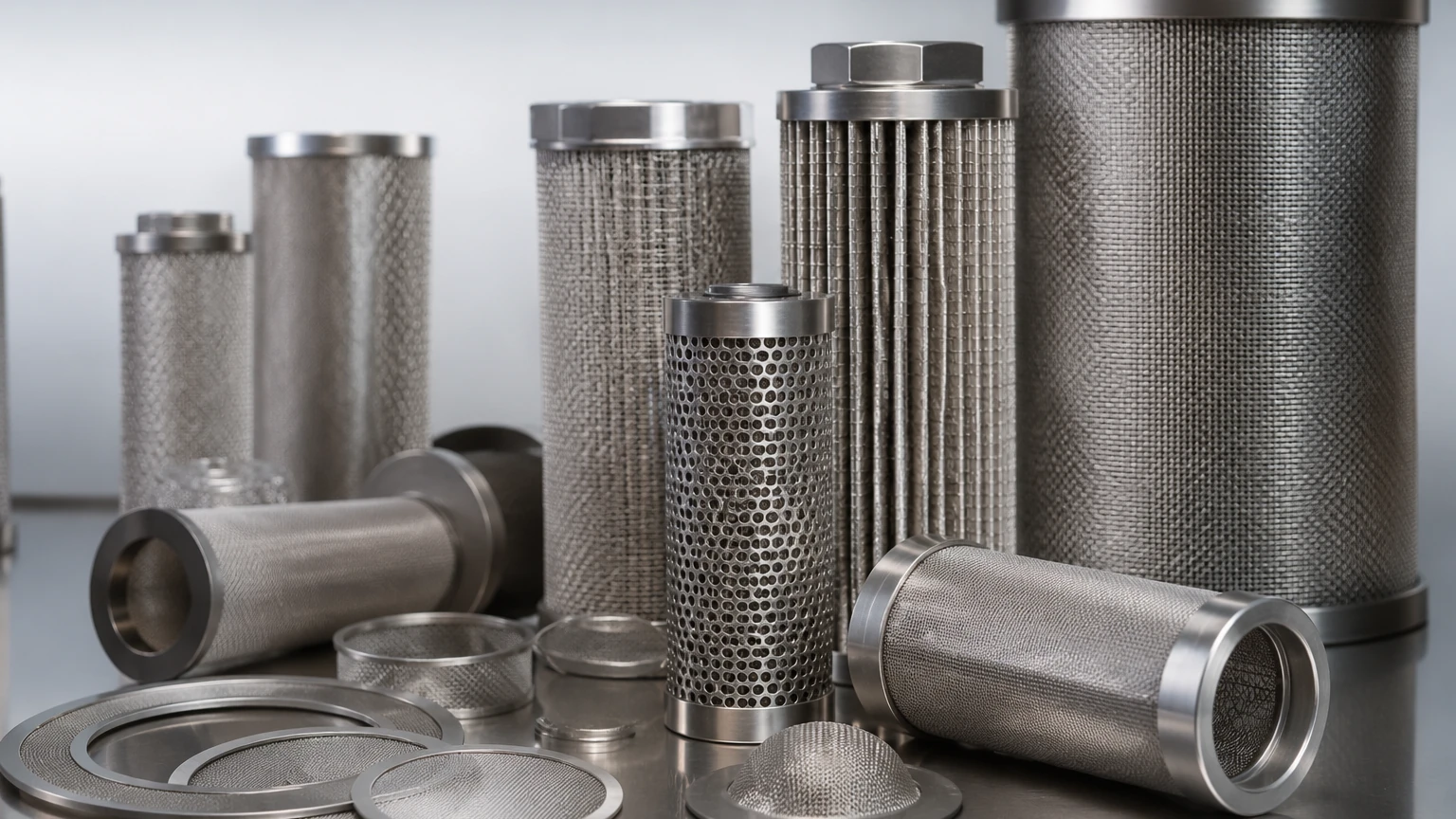
1. Filter Element: Usually constructed from high-strength materials like AISI 316L stainless steel. These elements may consist of multi-layered sintered wire mesh or wedge wire screens. Sintered mesh provides excellent depth filtration and mechanical stability, while wedge wire is preferred for its non-clogging surface and high structural integrity under high-pressure backwash pulses.
2. Backwash Valve/Arm: This component directs the cleaning flow. In automatic systems, a motorized arm rotates across the internal surface of the filter element to ensure 100% coverage during the cleaning cycle.
3. Control System: Modern backwash filters are equipped with PLC-based controllers that monitor differential pressure sensors. These systems allow engineers to fine-tune the trigger points for cleaning, optimizing fluid loss and energy consumption.
4. Housing: The outer vessel must be rated for the specific operating pressures and temperatures of the industrial environment. For corrosive applications, specialized coatings or high-grade alloys are utilized.
For technical professionals evaluating different filter element structures and their compatibility with specific backwash mechanisms, the Main Page of the manufacturer’s site provides detailed specifications on custom stainless steel filtration solutions.
Technical Selection Criteria for Industrial Applications
Selecting the right backwash filter requires a deep dive into the specific parameters of the process fluid and the desired outcome. Engineers must consider several factors to ensure the system does not become a bottleneck or a source of frequent maintenance issues.
Micron Rating and Filtration Accuracy
The micron rating determines the size of particles the filter will retain. However, in backwash systems, it is vital to balance filtration fineness with the frequency of cleaning. A filter that is too fine for the particulate load will trigger backwash cycles too frequently, leading to excessive fluid loss and wear on moving parts.
Flow Rate and Pressure Drop
Every filter introduces a pressure drop (Delta P). The "clean pressure drop" must be low enough to allow for sufficient process pressure downstream. Furthermore, the system must be sized to handle the peak flow rate of the facility. If the flow velocity is too high, particles can become embedded so deeply in the mesh that the backwash flow cannot dislodge them.
Fluid Viscosity and Temperature
Viscosity significantly impacts the ease with which a fluid can be reversed through the media. High-viscosity fluids may require specialized backwash assist mechanisms, such as mechanical scrapers or high-pressure steam injection. Temperature also dictates the material selection for seals, gaskets, and the filter media itself.
Material Considerations: The Role of Stainless Steel
In the context of what is backwash filter durability, material choice is paramount. Stainless steel is the industry standard for several reasons:
* Corrosion Resistance: In chemical processing and water treatment, filters are often exposed to aggressive media. Using 304 or 316L stainless steel prevents premature degradation of the filter mesh.
* Mechanical Strength: The backwash process involves sudden changes in flow direction and pressure. The filter element must withstand these stresses without deforming. Sintered metal and wedge wire designs offer the necessary rigidity.
* Cleanability: Unlike disposable fabric or paper cartridges, stainless steel mesh can be cleaned and reused thousands of times, significantly reducing the total cost of ownership.
Industrial Applications and Performance Expectations
Backwash filters are employed across diverse sectors, each with unique requirements:
* Cooling Water Systems: In power plants and refineries, backwash filters remove debris from river or sea water used for cooling, protecting heat exchangers from fouling.
* Oil and Gas: They are used in produced water injection and refinery feedstock filtration to protect downstream catalysts and equipment.
* Food and Beverage: Ensuring the purity of process water or liquid ingredients while maintaining a sterile environment. Stainless steel construction is vital here for compliance with hygiene standards.
* Pulp and Paper: Handling high volumes of water with significant fiber content, where manual cleaning would be impossible.
In these environments, the performance expectation is not just about particle removal, but about "uninterrupted flow." A well-engineered backwash filter should operate for months or even years without requiring a manual teardown for deep cleaning.
Maintenance Protocols and Total Cost of Ownership (TCO)
While backwash filters are designed for automation, they are not "set and forget" systems. A proactive maintenance schedule is essential for long-term reliability. Engineers should regularly inspect the discharge valves for leaks and verify that the differential pressure sensors are calibrated correctly.
One of the primary questions when asking what is backwash filter value is the Total Cost of Ownership. While the initial capital expenditure (CAPEX) for an automatic backwash filter is higher than that of a simple basket strainer or bag filter, the operational expenditure (OPEX) is significantly lower.
TCO factors include:
1. Labor Savings: Eliminating the need for technicians to manually change bags or clean baskets.
2. Product Yield: Reducing the amount of process fluid lost during cleaning cycles.
3. Media Replacement: Stainless steel elements have a long service life compared to consumables.
4. Uptime: Preventing costly shutdowns in continuous manufacturing lines.
Conclusion
Understanding what is backwash filter technology allows engineering and purchasing teams to make informed decisions that enhance process efficiency. By automating the cleaning cycle and utilizing durable materials like stainless steel, these systems provide a robust solution for managing particulate loads in critical industrial fluids. Whether the goal is protecting sensitive downstream equipment or ensuring the purity of a final product, the backwash filter remains a cornerstone of modern industrial filtration strategy.
For those looking to integrate these systems into a specific industrial process, reviewing the engineering capabilities and customized options on the Main Page is a recommended next step to ensure the hardware meets the precise demands of the application.
