


Porous Sparger
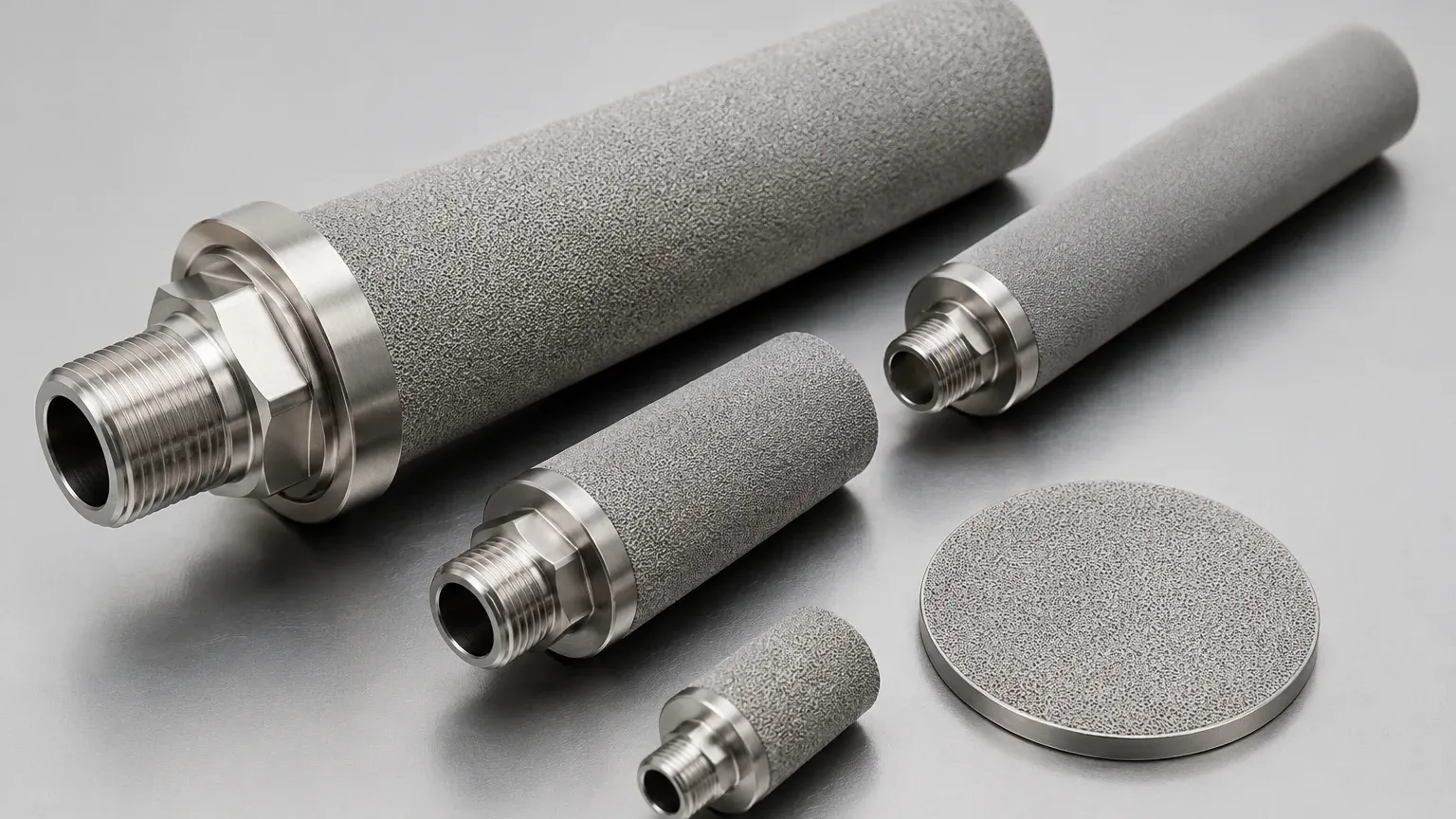
In industrial gas-liquid processing, the efficiency of mass transfer is the primary determinant of system performance and operational cost. A porous sparger serves as a precision-engineered component designed to introduce gases into liquids through millions of microscopic pores. Unlike traditional drilled-pipe spargers, which produce large, buoyant bubbles that rise rapidly to the surface, a porous sparger utilizes sintered metal technology to create a vast population of fine bubbles. This significantly increases the interfacial surface area between the gas and the liquid, accelerating reaction rates and reducing gas consumption.
For engineers and procurement specialists at Kaifil, selecting the correct sparging technology involves a deep understanding of fluid dynamics, material science, and the specific requirements of the application environment. Whether the goal is oxygenation in a bioreactor, carbonation in a beverage line, or hydrogen injection in a chemical plant, the porous sparger is a critical interface that dictates the success of the process.
Fundamentals of Porous Sparger Design
The performance of a porous sparger is rooted in the manufacturing process of sintering. Sintering involves taking stainless steel powder—typically 316L for its superior corrosion resistance—and subjecting it to high heat and pressure below its melting point. This process fuses the metal particles together, creating a rigid structure with a highly controlled, interconnected network of pores.
Pore Size and Bubble Dynamics
The most critical specification for a porous sparger is its micron rating. This rating defines the mean pore size within the sintered matrix. Common ratings range from 0.5 microns to 100 microns.
* Fine Pores (0.5 – 5 microns): These produce the smallest bubbles, maximizing the surface-area-to-volume ratio. They are ideal for applications requiring high gas absorption rates, such as aerobic fermentation or delicate chemical reactions.
* Medium Pores (10 – 40 microns): These offer a balance between gas flow rate and bubble size, often used in general water treatment or pH adjustment via CO2 injection.
* Coarse Pores (50+ microns): These are utilized when high gas volumes must be moved quickly and the liquid's viscosity might otherwise lead to rapid clogging of finer pores.
As gas is forced through these pores, the surface tension of the liquid and the gas flow rate determine the size of the departing bubble. In a well-designed system, the bubbles produced by a porous sparger are often several orders of magnitude smaller than those from a standard orifice, leading to a massive increase in the total surface area available for gas transfer.
Engineering Considerations for Mass Transfer Efficiency
The primary objective of using a porous sparger is to optimize the Mass Transfer Coefficient (Kla). Several engineering factors influence this efficiency:
1. Gas Flux: This refers to the volume of gas passing through a unit area of the sparger surface over time. If the flux is too high, bubbles may coalesce (merge) near the surface of the sparger, negating the benefits of the fine pores. Engineers must calculate the total surface area required to maintain a laminar or transition flow regime.
2. Differential Pressure: A porous sparger requires a specific "bubble point" pressure to overcome the capillary forces within the pores. Once this threshold is met, the pressure drop across the media must be managed to ensure consistent gas distribution across the entire length of the sparger element.
3. Liquid Velocity: In many industrial tanks, the liquid is in motion. The shear force provided by the moving liquid can help detach bubbles from the sparger surface earlier, resulting in even smaller bubbles and higher efficiency.
Material Selection and Industrial Durability
Industrial environments are often harsh, involving high temperatures, high pressures, and corrosive chemicals. Kaifil specializes in stainless steel filtration and sparging solutions because of the material’s inherent robustness.
Stainless Steel 316L
316L stainless steel is the industry standard for porous spargers. Its low carbon content makes it resistant to sensitization during welding, and its molybdenum content provides excellent resistance to chlorides and organic acids. In pharmaceutical and food applications, 316L is preferred for its biocompatibility and ability to withstand rigorous cleaning protocols.
Alternative Alloys
For applications involving extreme conditions, other materials may be utilized:
* Hastelloy®: Used in highly acidic or high-temperature environments where even 316L might fail.
* Inconel®: Selected for high-temperature oxidation resistance.
* Titanium: Often used in applications involving seawater or highly oxidizing acids where weight and specific corrosion resistance are factors.
Key Applications Across Industries
The versatility of the porous sparger allows it to be integrated into various industrial sectors. Each application requires specific design adjustments to the sparger's geometry and porosity.
Bioprocessing and Fermentation
In bioreactors, maintaining dissolved oxygen (DO) levels is vital for cell growth and product yield. A porous sparger provides the necessary oxygenation without the high-shear mechanical agitation that can damage sensitive cells. Furthermore, these components must be compatible with Steam-in-Place (SIP) and Clean-in-Place (CIP) cycles to ensure sterility.
Chemical Processing
Chemical reactors often require the injection of reactive gases like hydrogen, oxygen, or chlorine. The fine bubbles produced by a porous sparger ensure that the gas reacts quickly with the liquid phase, reducing the amount of unreacted gas that must be recycled or scrubbed. This improves safety and reduces raw material waste.
Food and Beverage
Carbonation and nitrogenation are staple processes in the beverage industry. A porous sparger allows for precise control over the amount of CO2 or N2 dissolved in the product. Because the bubbles are so small, they dissolve almost instantly, allowing for in-line carbonation during high-speed bottling or canning operations.
Water and Wastewater Treatment
In aeration tanks, spargers are used to introduce air or oxygen to support aerobic bacteria that break down organic matter. They are also used for ozone injection, where the high efficiency of the porous media ensures that the expensive ozone gas is fully utilized for disinfection and oxidation.
Maintenance, Cleaning, and Replacement Cycles
While a porous sparger is a durable component, its performance can degrade over time due to fouling. Fouling occurs when particulates from the gas stream or precipitates from the liquid phase block the microscopic pores.
Cleaning Protocols
1. Backwashing: Reversing the flow of gas or using a clean liquid to push contaminants out of the pores from the inside out.
2. Chemical Cleaning: Soaking the sparger in specialized solvents, acids, or caustic solutions to dissolve organic or inorganic deposits. This is highly effective for stainless steel components.
3. Ultrasonic Cleaning: Using high-frequency sound waves in a cleaning bath to dislodge stubborn particulates from deep within the sintered matrix.
Monitoring Performance
Engineers should monitor the differential pressure across the sparger. A steady increase in the pressure required to maintain a constant gas flow rate is a clear indicator of pore clogging. If the pressure drop exceeds the design limits of the system or if the mass transfer efficiency drops significantly, the sparger must be pulled for deep cleaning or replacement.
Customization and Selection Criteria for Engineers
When sourcing a porous sparger, a one-size-fits-all approach is rarely successful. Customization is essential to match the sparger to the specific vessel geometry and process conditions. At Kaifil, we work with technical teams to define several key parameters:
* Geometry: Spargers can be manufactured as simple rods, circular rings, or complex manifold arrays. The shape should ensure uniform gas distribution throughout the liquid volume.
* Connection Type: Options include NPT/BSP threaded fittings, flanges, or sanitary tri-clamp fittings to ensure leak-free integration into existing piping.
* Structural Reinforcement: In high-flow or high-vibration environments, the porous element may require internal or external supports to prevent mechanical fatigue.
To explore the full range of custom stainless steel filtration and sparging solutions, technical professionals are encouraged to visit the Main Page for detailed product specifications and engineering support.
Total Cost of Ownership (TCO)
When evaluating the purchase of a porous sparger, engineers must look beyond the initial acquisition cost. The total cost of ownership includes:
* Gas Savings: Higher mass transfer efficiency means less gas is wasted. Over the lifespan of the equipment, this can save thousands of dollars in industrial gas costs.
* Energy Efficiency: Improved reaction rates can reduce the time required for a batch process, leading to lower energy consumption for heating and agitation.
* Longevity: A high-quality sintered stainless steel sparger can last for years with proper maintenance, whereas cheaper alternatives may require frequent replacement due to corrosion or structural failure.
Conclusion
The porous sparger is an indispensable tool in modern industrial processing, offering a level of gas-liquid contact efficiency that traditional methods cannot match. By selecting the appropriate material, micron rating, and configuration, engineers can significantly optimize their processes, improve product quality, and reduce operational overhead. As a specialized manufacturer, Kaifil provides the technical expertise and manufacturing precision required to deliver reliable filtration and sparging components for the most demanding industrial environments. For more information on our capabilities and to review product options, please visit our Main Page.
