


Porous Stainless Steel Filter
In industrial filtration, the selection of media is often dictated by the severity of the operating environment. While polymer-based or disposable paper filters are suitable for ambient conditions and low-pressure applications, they frequently fail when exposed to high temperatures, aggressive chemicals, or significant mechanical stress. This is where the porous stainless steel filter becomes an essential component. Manufactured through advanced sintering processes, these filters provide a combination of mechanical strength, chemical resistance, and precise filtration accuracy that is required in sectors ranging from chemical processing to pharmaceutical manufacturing.
As a specialized manufacturer, Kaifil produces a wide array of custom stainless steel filtration solutions designed to meet the rigorous demands of global industrial applications. Understanding the technical nuances of porous metal media—from pore morphology to pressure drop characteristics—is critical for engineers and purchasing teams tasked with optimizing system performance and longevity.
Understanding the Sintering Process and Pore Structure
The performance of a porous stainless steel filter is primarily determined by its manufacturing method, most commonly sintering. Sintering involves taking stainless steel media—either in the form of metal powder, fine wire mesh, or metal fibers—and heating it in a controlled-atmosphere furnace to a temperature just below its melting point. Under these conditions, molecular diffusion occurs at the contact points of the material, fusing them into a rigid, interconnected structure.
This process creates a "tortuous path" for the fluid. Unlike a simple screen that provides surface filtration, the internal geometry of a sintered porous filter forces the fluid to navigate a complex network of pores. This depth filtration mechanism allows for the capture of particles not just on the surface, but within the thickness of the media itself. The resulting structure is highly stable; the pores do not shift or enlarge under pressure, ensuring consistent filtration efficiency throughout the filter's service life.
Key Engineering Parameters for Filter Selection
When specifying a porous stainless steel filter for an industrial system, engineers must evaluate several technical parameters to ensure the component meets the application's requirements without causing system inefficiencies.
Micron Rating: Absolute vs. Nominal
Micron ratings define the size of particles the filter can remove. It is vital to distinguish between nominal and absolute ratings. A nominal rating refers to a filter's ability to retain a major percentage (e.g., 90% or 95%) of particles of a specific size. In contrast, an absolute rating indicates the diameter of the largest spherical particle that can pass through the filter under specific test conditions. For critical applications like catalyst recovery or sterile gas filtration, absolute-rated porous stainless steel filters are generally preferred to prevent downstream contamination.
Permeability and Pressure Drop
Permeability refers to the ease with which a fluid passes through the porous medium. In any filtration system, there is an inherent trade-off between filtration fineness and pressure drop. A filter with smaller pores will provide higher efficiency but will also result in a higher initial differential pressure. Engineers must calculate the Clean Pressure Drop (CPD) to ensure that the pump or compressor system can handle the resistance. Over-specifying a filter (choosing a 1-micron filter when 10 microns would suffice) can lead to premature clogging and increased energy consumption.
Porosity and Void Volume
Porosity is the measure of the void space within the filter material, typically expressed as a percentage. Higher porosity generally leads to better flow rates and lower pressure drops. However, increasing porosity can reduce the mechanical strength of the filter. High-quality porous stainless steel filters are engineered to achieve an optimal balance between high void volume for flow efficiency and structural integrity to withstand high-pressure differentials.
Material Considerations: 304 vs. 316L Stainless Steel
The choice of alloy is fundamental to the durability of the filter. While several grades of stainless steel are available, 316L is the industry standard for most porous metal applications.
* 316L Stainless Steel: The "L" stands for low carbon, which improves weldability and reduces the risk of sensitization (carbide precipitation at grain boundaries) during the sintering or welding process. 316L contains molybdenum, which significantly enhances resistance to pitting and crevice corrosion in chloride-rich environments.
* 304 Stainless Steel: This is a cost-effective alternative for less demanding environments where high corrosion resistance is not the primary concern. It is often used in basic water treatment or hydraulic oil filtration where the fluid is non-corrosive.
For specialized chemical processes involving high concentrations of acids or bases, other alloys such as Hastelloy, Inconel, or Monel may be used in the sintering process, though 316L remains the most versatile and widely used material for a standard porous stainless steel filter.
Customization and OEM Integration
Industrial systems rarely accommodate "off-the-shelf" filtration components without some level of modification. Customization is a core strength of Kaifil’s manufacturing capabilities. Engineers often require specific geometries and fittings to integrate filters into existing pipelines or specialized machinery.
Geometric Configurations
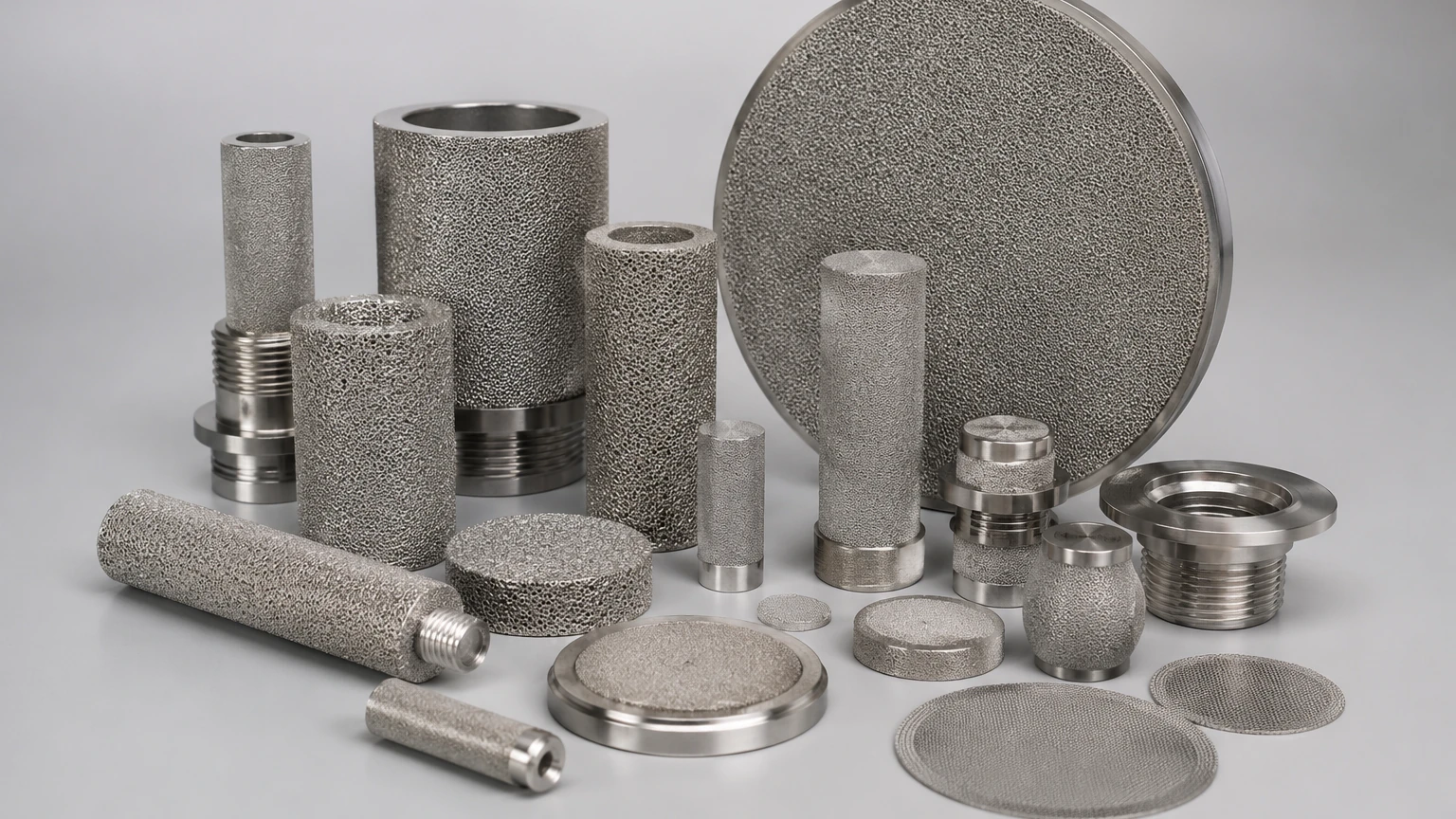
Porous stainless steel can be fabricated into various shapes, including:
* Cylindrical Cartridges: The most common form for liquid and gas filtration in housings.
* Porous Discs and Plates: Used in sparging applications, fluidization beds, or as flame arrestors.
* Tubes and Cones: Often used in high-velocity gas streams or specialized sampling probes.
Connection Interfaces
To ensure a leak-proof seal and ease of maintenance, filters can be equipped with various end-fittings, such as NPT or BSP threaded connections, flange mounts, or specialized sanitary fittings (Tri-Clamp) for food and pharmaceutical applications. Proper integration ensures that the filter can be easily removed for cleaning or replacement without disrupting the entire system architecture. For more details on available configurations, you can visit the Main Page of our technical resource center.
Applications Across Demanding Industries
The versatility of the porous stainless steel filter allows it to serve critical roles across diverse industrial sectors:
Chemical and Petrochemical Processing
In chemical manufacturing, filters are used for catalyst recovery, where expensive precious metal catalysts must be captured from a process stream. The high thermal stability of stainless steel allows these filters to operate at temperatures exceeding 400°C, where polymer filters would melt.
Food and Beverage Production
Stainless steel filters are ideal for steam filtration (culinary steam) used in the direct heating of food products. Because they are non-shedding and resistant to the chemicals used in Clean-in-Place (CIP) cycles, they meet the stringent hygiene standards required by the industry.
Pharmaceutical and Biotechnology
In these sectors, porous metal media are used for gas sparging—introducing oxygen or carbon dioxide into bioreactors. The controlled pore size ensures the creation of fine, consistent bubbles, which optimizes mass transfer rates for cell culture growth.
Hydraulic and Power Generation
High-pressure hydraulic systems require filters that can withstand sudden pressure surges without collapsing. Sintered stainless steel provides the necessary burst strength to protect sensitive valves and actuators from particulate contamination.
Cleaning and Maintenance for Extended Service Life
One of the primary economic advantages of a porous stainless steel filter is that it is cleanable and reusable. Unlike disposable depth filters, which must be discarded once they reach their terminal pressure drop, stainless steel filters can be restored to near-original performance through several cleaning methods:
1. Backwashing/Backpulsing: In liquid or gas systems, a reverse flow of fluid can be used to dislodge cake buildup from the surface of the filter.
2. Ultrasonic Cleaning: Using high-frequency sound waves in a cleaning solvent to remove fine particles trapped deep within the pore structure.
3. Chemical Cleaning: Soaking the filter in caustic or acidic solutions (compatible with 316L) to dissolve organic or inorganic deposits.
4. Hydrodynamic Cleaning: High-pressure water jets can be used for surface-loaded contaminants.
Establishing a regular cleaning schedule based on differential pressure readings can significantly extend the lifecycle of the filter, often spanning several years, which reduces the total cost of ownership compared to frequent disposable filter purchases.
Total Cost of Ownership (TCO) Considerations
While the initial purchase price of a porous stainless steel filter is higher than that of a plastic or paper alternative, the Total Cost of Ownership (TCO) is often lower in industrial settings. When calculating TCO, purchasing teams should consider:
* Reduced Downtime: Longer service intervals and the ability to clean in place reduce the frequency of system shutdowns.
* Waste Reduction: Eliminating the disposal of contaminated filter cartridges supports environmental sustainability goals and reduces waste handling costs.
* Process Protection: The high structural integrity of sintered metal prevents media migration (the release of filter fibers into the downstream fluid), protecting sensitive equipment and final product quality.
* Energy Efficiency: A well-designed filter with optimized porosity maintains lower pressure drops over time, reducing the energy required by pumps and compressors.
By focusing on these technical and economic factors, engineers can select a filtration solution that not only meets immediate process requirements but also contributes to long-term operational efficiency. Kaifil remains committed to providing the engineering support and manufacturing precision necessary to deliver these high-performance components to the global market.
