


Self Cleaning Filter Market
The global self cleaning filter market is experiencing a period of sustained growth, driven by the increasing need for operational efficiency, automation, and environmental sustainability across industrial sectors. As manufacturing facilities move away from manual maintenance processes, the demand for filtration systems that can operate continuously without human intervention has become a priority for plant engineers and procurement teams.
Self-cleaning filters are designed to remove solids from liquids automatically, using various mechanical or hydraulic methods to clean the filter element while the system remains online. This capability is critical in industries where downtime is costly or where the fluid being processed is hazardous, making manual cleaning impractical. For professionals evaluating solutions in this space, understanding the technical nuances of the market—from material selection to cleaning mechanisms—is essential for optimizing long-term performance.
The Evolution of Automated Industrial Filtration
The transition toward automated filtration is largely a response to the limitations of traditional bag and cartridge filters. In a manual system, when a filter reaches its dirt-holding capacity, the process must be paused, the housing opened, and the media replaced or cleaned. This results in lost production time, labor costs, and the disposal of spent filter media.
In the current self cleaning filter market, the focus has shifted toward "zero-leakage" and "zero-downtime" configurations. Modern systems utilize advanced sensors to monitor differential pressure (DP). Once the pressure drop across the filter element reaches a pre-set threshold, the cleaning cycle is triggered automatically. This ensures that the flow rate remains consistent and the filtration efficiency is maintained without interrupting the downstream process. This evolution is particularly visible in high-volume applications such as cooling water loops, chemical processing, and wastewater treatment.
Core Technologies Driving the Self Cleaning Filter Market
The market is generally categorized by the mechanism used to clean the internal filter element. Each technology offers distinct advantages depending on the viscosity of the fluid, the nature of the contaminants, and the required micron rating.
Mechanical Scraper Filters
These systems use a physical blade or brush to scrape the surface of a cylindrical filter element. The scraper moves either linearly or rotationally, pushing the collected solids to a collection chamber at the bottom of the housing, where they are periodically purged. Scraper filters are highly effective for high-viscosity fluids, such as resins, paints, and food products (like chocolate or oils), where suction-based cleaning might fail.
Backwash Filtration Systems
Backwashing involves reversing the flow of a portion of the filtered fluid (or an external clean fluid) through the filter media. This reverse flow dislodges particles trapped in the mesh or wedge wire. These systems are common in water treatment and low-viscosity chemical applications. The efficiency of a backwash system depends heavily on the precision of the filter element's pore structure; if the mesh is not uniform, particles can become permanently wedged, a phenomenon known as "blinding."
Suction Scanner Technology
Suction scanners use a rotating nozzle that moves across the inner surface of the filter screen. The nozzle creates a localized low-pressure zone, vacuuming the debris off the screen and discharging it through a flush valve. This method uses significantly less flush water than traditional backwashing, making it a preferred choice in the self cleaning filter market for large-scale water filtration where conservation is a priority.
Engineering Selection Criteria for Automated Systems
When specifying a system within the self cleaning filter market, engineers must look beyond the initial purchase price. The reliability of the system is fundamentally tied to the quality of the internal filtration component.
Micron Rating and Open Area
The micron rating determines the size of the particles the filter will capture. However, engineers must also consider the "open area" ratio. A higher open area reduces the initial pressure drop and extends the time between cleaning cycles. Precision-manufactured stainless steel wire mesh or wedge wire elements are typically used to provide the necessary structural integrity to withstand the mechanical stresses of the cleaning cycle while maintaining precise aperture sizes.
Material Compatibility
Industrial fluids can be highly corrosive or abrasive. The self cleaning filter market relies heavily on 304 and 316L stainless steel for general applications, but specialized alloys like Duplex or Hastelloy may be required for aggressive chemical environments. The durability of the filter element is the most common point of failure; if the mesh tears or the wedge wire deforms, the entire automated process is compromised.
Flow Rate and Pressure Dynamics
Designing a system requires an accurate assessment of the minimum and maximum flow rates. If the flow is too low, some backwash mechanisms may not have enough pressure to clear the screen effectively. Conversely, excessive flow can lead to high face velocities that drive particles deep into the media, making them difficult to remove during the cleaning cycle.
Material Science and Component Durability
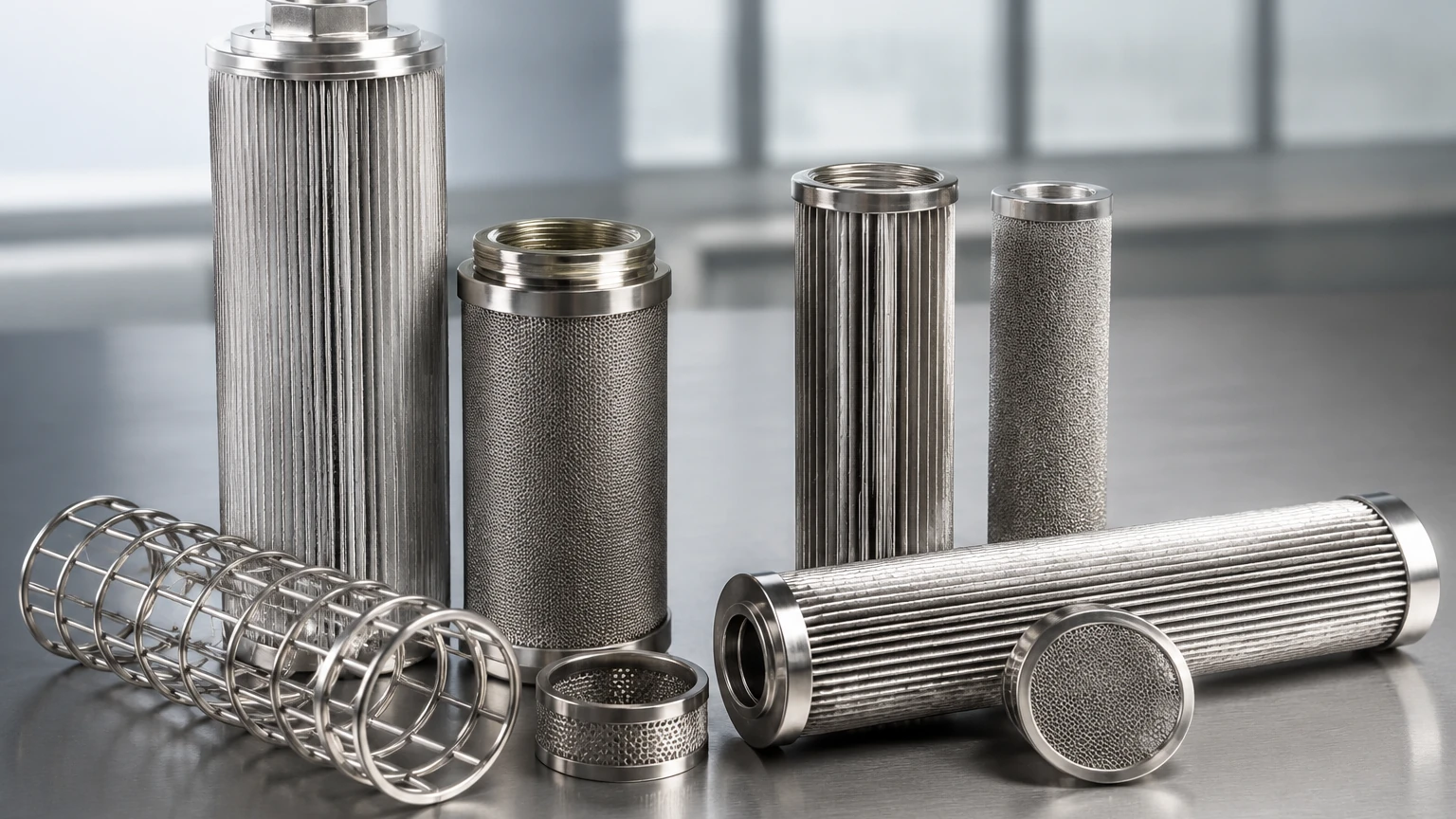
At the heart of every self-cleaning system is the filter element. In the context of the self cleaning filter market, the move toward stainless steel components has been driven by the need for longevity and cleanability. Unlike disposable polymer cartridges, stainless steel elements can be cleaned thousands of times without losing their structural properties.
Customized filtration solutions often involve specialized weaves or sintered layers. Sintered mesh, for example, involves bonding multiple layers of wire cloth together through a heat-treatment process. This creates a robust, multi-layered filter medium that offers excellent mechanical strength and heat resistance, which is vital for high-pressure self-cleaning cycles. For those seeking technical specifications on these components, you can Review product options and application support on the Kaifil Main Page to understand how different mesh structures impact filtration performance.
Industry-Specific Applications and Performance Standards
The requirements for self-cleaning technology vary significantly across different industrial sectors. The market has adapted by offering specialized designs tailored to these unique demands.
* Food and Beverage: In this sector, hygiene is the primary concern. Self-cleaning filters must be designed with "dead-leg" free housings and polished stainless steel surfaces to prevent bacterial growth. They are used to filter everything from process water to syrups and fruit juices.
* Chemical and Petrochemical: Here, the focus is on safety and containment. Automated systems eliminate the need for operators to open housings and be exposed to potentially toxic or flammable chemicals. The filter elements must be resistant to a wide range of pH levels and temperatures.
* Power Generation and Cooling Water: These applications involve massive volumes of water. The self cleaning filter market provides large-scale suction or backwash filters to protect heat exchangers from fouling caused by sand, algae, and silt.
* Pharmaceutical: High-precision filtration is required to ensure product purity. Sintered metal filter elements are often preferred here due to their ability to provide absolute filtration ratings and their compatibility with Clean-in-Place (CIP) protocols.
Total Cost of Ownership and ROI Analysis
While the capital expenditure (CAPEX) for an automated self-cleaning filter is higher than that of a manual housing, the Total Cost of Ownership (TCO) is generally lower over a 3-to-5-year period. Purchasing teams should evaluate the following factors when calculating Return on Investment (ROI):
1. Labor Savings: Calculate the man-hours currently spent on changing manual filters, including the time required for system shutdown and restart.
2. Waste Reduction: Self-cleaning systems significantly reduce the volume of liquid lost during the cleaning process compared to manual cleaning or disposable media.
3. Disposal Costs: Eliminating disposable cartridges or bags removes the cost of purchasing new media and the environmental fees associated with disposing of contaminated waste.
4. Energy Efficiency: By maintaining a lower average differential pressure, self-cleaning filters reduce the load on pumps, leading to measurable energy savings over time.
Addressing Common Risks in Automated Filtration
Despite the benefits, there are risks associated with the self cleaning filter market that engineers must mitigate through proper design and component selection. The most common issue is "short-cycling," where the filter enters a cleaning mode too frequently. This is often caused by an undersized filter or an incorrect micron rating for the particle load.
Another risk is mechanical wear on the cleaning assembly. In scraper-style filters, the blades must be made of materials that are hard enough to clean the screen but soft enough not to damage it. Regular inspection of the internal components—specifically the wire mesh or wedge wire element—is necessary to ensure that the cleaning mechanism has not caused abrasive wear that could bypass contaminants.
Future Outlook and Market Trends
The self cleaning filter market is increasingly intersecting with Industry 4.0. We are seeing the integration of IoT-enabled controllers that not only trigger cleaning cycles but also analyze the frequency and duration of those cycles to predict upstream process upsets. For example, a sudden increase in cleaning frequency can alert operators to a failure in an upstream clarifier or a change in raw material quality.
Furthermore, there is a growing trend toward customization. Manufacturers are moving away from "off-the-shelf" units in favor of bespoke filtration components designed for specific flow geometries and particle characteristics. This shift highlights the importance of working with manufacturers who understand the metallurgical and mechanical requirements of precision filtration.
In conclusion, the self cleaning filter market offers a robust solution for modern industrial challenges. By automating the removal of solids, these systems protect downstream equipment, reduce operational costs, and support sustainable manufacturing practices. For engineers and procurement professionals, the key to success lies in selecting high-quality, durable filtration media and ensuring that the system design aligns with the specific physical and chemical properties of the process fluid. For more information on custom stainless steel filtration components and engineering support, visit the Main Page.
