


Porous Tubes
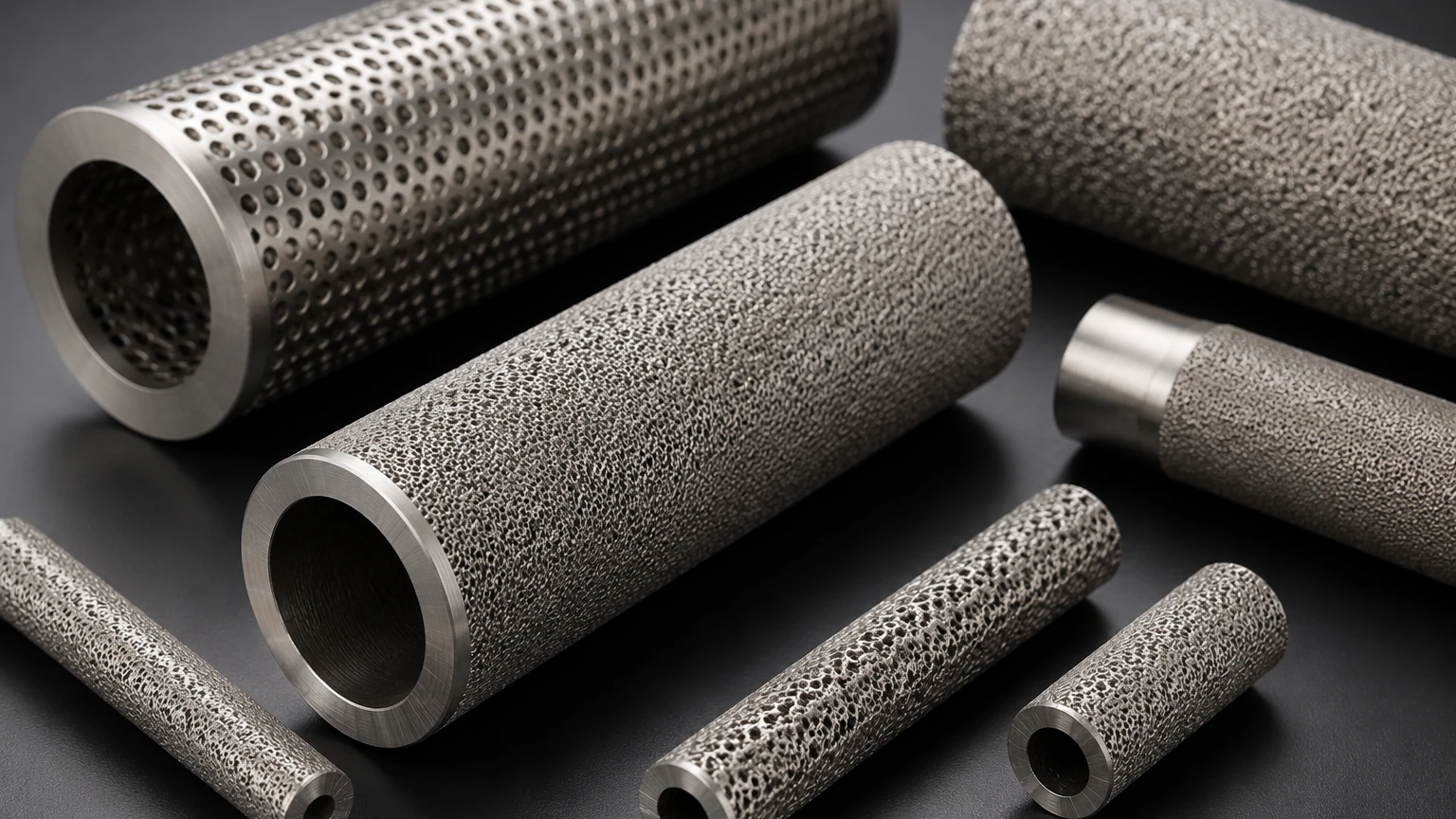
In industrial filtration and fluid processing, porous tubes represent a critical class of components engineered for durability, precision, and efficiency. Unlike disposable polymer filters, these metallic structures are designed to withstand extreme temperatures, corrosive chemicals, and high-pressure differentials. As a specialized manufacturer of stainless steel filtration solutions, Kaifil provides these components to industries ranging from chemical processing to pharmaceutical manufacturing, where the integrity of the filtration medium is non-negotiable.
Understanding the technical nuances of porous tubes—including their material composition, manufacturing methods, and performance characteristics—is essential for engineers and procurement teams tasked with optimizing industrial systems. This guide examines the engineering principles behind these components and provides a framework for selection and application.
Understanding Porous Tubes: Materials and Manufacturing
Porous tubes are typically fabricated from metallic materials, with stainless steel 316L being the industry standard due to its superior corrosion resistance and mechanical strength. Other alloys, such as Hastelloy, Inconel, or Monel, may be utilized for highly specialized environments involving extreme acidity or high-temperature oxidation.
The manufacturing process primarily involves sintering, a powder metallurgy technique where metal particles or multiple layers of wire mesh are heated below their melting point. Under controlled atmosphere and pressure, the contact points of the metal fuse together, creating a rigid, self-supporting structure with a complex network of interconnecting pores.
There are two primary types of metal porous tubes:
1. Sintered Metal Powder Tubes: These are formed by compacting spherical or irregular metal powders into a cylindrical shape before sintering. They offer high filtration precision and a uniform pore distribution, making them ideal for gas sparging and fine liquid filtration.
2. Sintered Wire Mesh Tubes: These consist of multiple layers of stainless steel wire mesh—ranging from coarse support layers to fine filtration layers—sintered together. This construction provides excellent permeability and is easier to clean (backwash) compared to powder-based structures.
Key Engineering Specifications and Performance Metrics
When evaluating porous tubes for a specific application, engineers must look beyond simple dimensions. The performance of a porous medium is defined by several interrelated physical properties.
Filtration Rating (Micron Rating)
The micron rating indicates the size of particles the tube is designed to retain. It is categorized into "Absolute" and "Nominal" ratings. An absolute rating implies that 99.9% of particles of a specific size will be captured, whereas a nominal rating indicates a lower efficiency (typically 60-90%). For critical pharmaceutical or chemical processes, absolute-rated porous tubes are required to ensure process consistency.
Porosity and Permeability
Porosity refers to the percentage of void space within the tube wall, while permeability measures the ease with which a fluid can flow through that space. High porosity generally leads to higher permeability and lower pressure drops, but it must be balanced against the mechanical strength of the tube. In gas sparging applications, controlled porosity is vital to ensure the formation of fine, uniform bubbles.
Mechanical Strength and Pressure Differential
Industrial porous tubes must maintain their structural integrity under high differential pressures. Sintered stainless steel tubes are naturally robust, but the maximum allowable pressure drop ($ΔP$) before deformation or failure must be calculated based on the wall thickness and the operating temperature. As temperature increases, the tensile strength of the metal decreases, which must be factored into the system design.
Industrial Applications and Performance Expectations
Porous tubes serve diverse functions across multiple sectors, often performing roles that polymer or ceramic filters cannot sustain.
Gas Sparging and Aeration
In the food and beverage and pharmaceutical industries, porous tubes are used as spargers to introduce gases (like oxygen, carbon dioxide, or nitrogen) into liquids. The microscopic pores create millions of tiny bubbles, vastly increasing the surface area for gas-liquid mass transfer. This is essential for carbonation, fermentation processes, and pH adjustment in water treatment.
Steam and High-Temperature Gas Filtration
In power generation and chemical refining, steam must be filtered to remove pipe scale and particulates that could damage downstream equipment. Stainless steel porous tubes can operate at temperatures exceeding 400°C (750°F), making them the preferred choice for culinary steam and high-temperature process gas filtration.
Catalyst Recovery and Chemical Processing
In many chemical reactions, expensive catalysts are used in slurry forms. Porous tubes act as high-efficiency barriers to recover these catalysts from the product stream. The chemical compatibility of 316L stainless steel ensures that the filter does not leach impurities into the chemical batch or degrade when exposed to aggressive solvents.
Selection Criteria for Engineers and Procurement
Selecting the correct porous tube requires a comprehensive analysis of the operating environment. Failure to account for a single variable can lead to premature clogging, structural failure, or product contamination.
1. Chemical Compatibility: While stainless steel is highly resistant, certain halogenated compounds or strong acids can cause pitting or stress corrosion cracking. Engineers should verify the compatibility of the alloy with the entire range of fluids, including cleaning agents.
2. Temperature Extremes: Consider both the operating temperature and potential thermal shock. Sintered metal tubes handle thermal cycling better than ceramics, but rapid changes can still stress the welds or end-fittings.
3. Flow Rate vs. Pressure Drop: A common mistake is undersizing the filter area, leading to high initial pressure drops. This shortens the service life and increases energy costs for pumps or compressors. Increasing the length or diameter of the porous tube can provide more surface area to lower the flux rate.
4. End-Fitting Integration: Porous tubes must be integrated into existing piping. Options include NPT threads, flange connections, or plain ends for welding. Ensuring a leak-proof seal is critical, especially in high-pressure hydraulic or gas systems.
For those evaluating specific configurations or seeking technical data sheets for industrial projects, the Main Page of the Kaifil website provides detailed insights into custom manufacturing capabilities and material specifications.
Maintenance, Cleaning, and Total Cost of Ownership
One of the primary advantages of stainless steel porous tubes is their cleanability. Unlike disposable cartridges, these components are a long-term capital investment. The total cost of ownership (TCO) is often lower than disposables when the costs of frequent replacements, downtime, and waste disposal are considered.
Cleaning Methods
* Backwashing/Backpulsing: This involves reversing the flow of fluid to dislodge particles trapped on the surface or within the pores. It is the most common in-situ cleaning method for liquid filtration.
* Ultrasonic Cleaning: For deep-seated contaminants, removing the tube and placing it in an ultrasonic bath with a suitable detergent can restore permeability to near-original levels.
* Chemical Cleaning: Soaking the tubes in caustic or acidic solutions (depending on the contaminant and the tube material) can dissolve organic or mineral scale.
Regular maintenance intervals should be established based on the pressure drop trend. Waiting until the tube is completely blinded can make cleaning difficult and may risk structural damage during high-pressure backpulsing.
Customization and OEM Solutions
Standard off-the-shelf filtration products often fall short in specialized industrial environments. Customization is frequently required to meet specific spatial constraints or unique filtration requirements.
Kaifil specializes in the engineering and production of bespoke porous tubes, offering variations in wall thickness, pore size distribution, and specialized alloy selections. From the initial material selection to the final welding of precision end-fittings, custom solutions ensure that the filtration component is perfectly matched to the system's demands. This collaborative approach allows engineers to optimize the balance between filtration efficiency and mechanical longevity.
In conclusion, porous tubes are indispensable components in modern industrial processes. By focusing on material integrity, precise engineering specifications, and proper maintenance protocols, facilities can achieve reliable and cost-effective filtration performance. For more information on custom stainless steel filtration components, visit the Kaifil Main Page to review product options and application support.
