


Portable Oil Filtration Systems
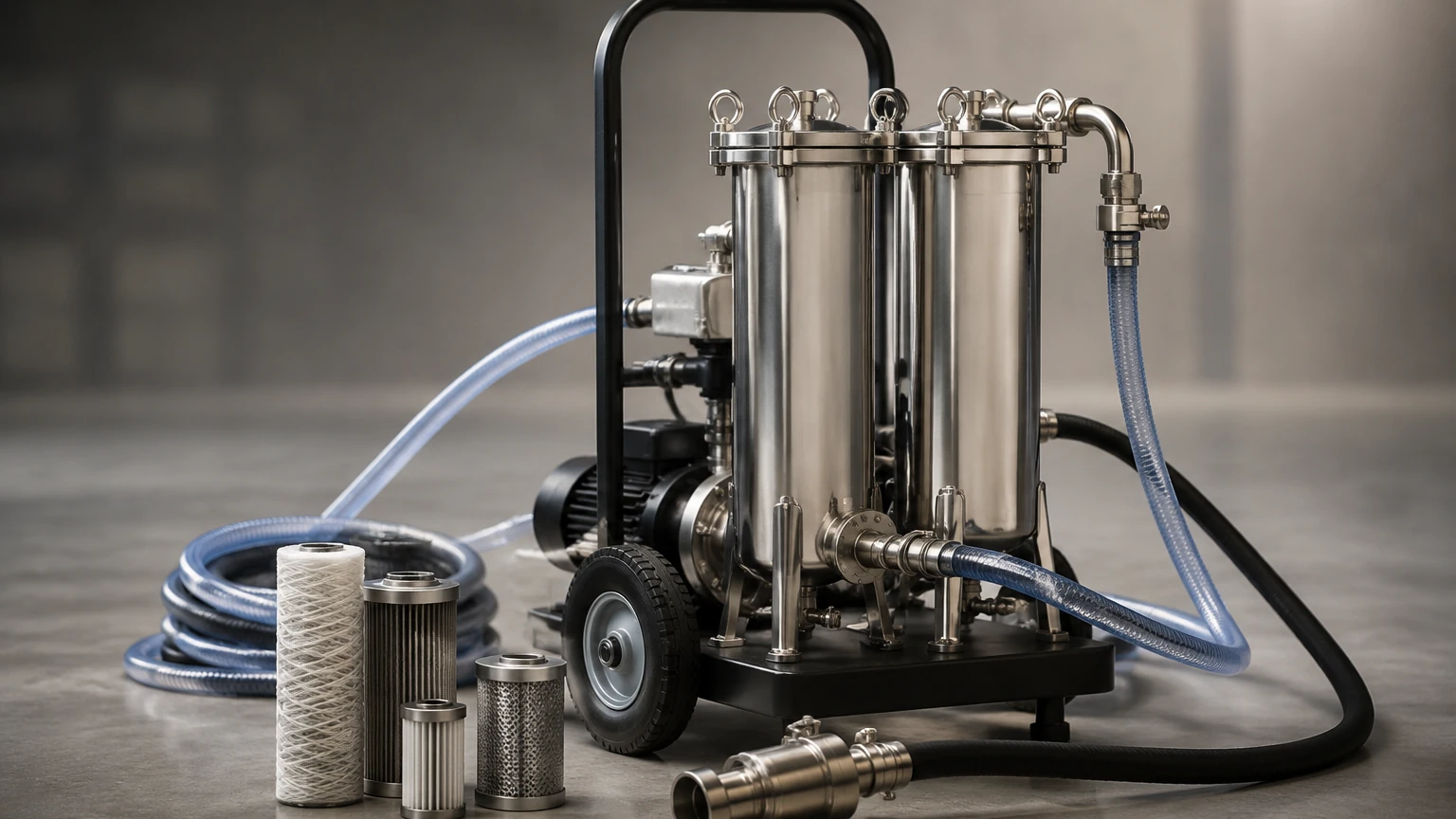
In modern industrial environments, the reliability of hydraulic and lubrication systems is directly tied to the cleanliness of the fluid. Contamination is the primary cause of component failure in high-pressure systems, leading to unplanned downtime and significant repair costs. Portable oil filtration systems, often referred to as filter carts or kidney-loop systems, have become essential tools for maintaining fluid integrity. These mobile units allow for off-line filtration, moisture removal, and fluid transfer without interrupting the primary operation of the machinery.
For engineers and maintenance managers, selecting the right portable filtration solution requires a deep understanding of fluid dynamics, contaminant types, and the structural requirements of the filter media. As a specialist in custom stainless steel filtration solutions, Kaifil provides the precision-engineered components that ensure these portable systems perform reliably under demanding industrial conditions.
The Role of Portable Oil Filtration in Industrial Maintenance
Portable oil filtration systems serve three primary functions in an industrial setting: fluid conditioning, fluid transfer, and emergency cleanup. Unlike fixed filtration systems integrated into a machine’s circuit, portable units operate independently. This "kidney-loop" configuration allows the system to pull oil from a reservoir, pass it through high-efficiency filter elements, and return it to the tank.
One of the most critical applications for these systems is the pre-filtration of new oil. It is a common misconception that new oil delivered in drums is clean enough for high-performance hydraulic systems. In reality, new oil often exceeds the ISO 4406 cleanliness codes required by modern servo-valves and high-pressure pumps. Utilizing portable oil filtration systems to transfer oil from the drum to the reservoir ensures that only conditioned fluid enters the machine.
Furthermore, these systems are used for periodic "polishing" of the oil. Over time, internal wear and environmental ingress introduce particulate matter and moisture. Portable units can be deployed to specific machines showing signs of increased contamination, providing a cost-effective alternative to frequent oil changes.
Engineering Considerations for Filter Element Selection
The heart of any portable filtration system is the filter element. When designing or specifying a system, engineers must evaluate several technical parameters to ensure the unit meets the application's cleanliness targets.
Flow Rate and Viscosity
Portable oil filtration systems must balance flow rate with filtration efficiency. If the flow rate is too high for the oil's viscosity, the differential pressure across the filter element will rise rapidly, potentially triggering a bypass valve and allowing unfiltered oil back into the system. High-viscosity oils, such as gear oils (ISO VG 220 or 320), require lower flow rates or specialized high-surface-area filter elements to maintain effective filtration without excessive pressure drop.
Particulate Capture and Retention
Industrial oils are subject to various contaminants, from hard metallic particles to soft sludge and varnish. The filter media must be capable of capturing these particles while maintaining structural integrity. Stainless steel wire mesh and sintered metal components are often preferred in industrial portable systems because they offer superior resistance to pressure surges and can be cleaned and reused in certain applications, reducing the long-term waste associated with disposable fiberglass elements.
Material Science: Why Stainless Steel Mesh is Critical
In many B2B industrial sectors, such as chemical processing or food and beverage production, the material of the filtration component is as important as its micron rating. Kaifil specializes in stainless steel filter cartridges and wire mesh filters that address the limitations of standard synthetic media.
Chemical Compatibility and Temperature Resistance
Portable oil filtration systems are often used in environments where fluids may be chemically aggressive or operate at elevated temperatures. Stainless steel (typically 304 or 316L) provides excellent resistance to corrosion and thermal degradation. Unlike cellulose or polymer-based filters, stainless steel elements do not soften or leach chemicals into the fluid, ensuring the purity of the process.
Structural Integrity under High Differential Pressure
As a filter captures contaminants, the pressure difference (Delta P) between the inlet and outlet increases. In portable systems where pumps may continue to push fluid, the filter element must resist collapsing. Stainless steel wire mesh filters, supported by perforated metal cores, offer the high mechanical strength required to withstand these forces. This durability is essential for portable units that may be used across multiple machines with varying contamination levels.
Evaluating Performance: Micron Ratings and Beta Ratios
When sourcing components for portable oil filtration systems, technical professionals must look beyond simple "micron ratings." A 10-micron filter from one manufacturer may perform very differently than a 10-micron filter from another if the Beta Ratio is not specified.
* Nominal vs. Absolute: A nominal rating indicates the filter can trap a percentage of particles of a certain size, but it is not a guarantee of efficiency. An absolute rating, typically defined by a Beta Ratio of 75 or higher (βx ≥ 75), indicates that the filter is 98.7% efficient at that specific micron size.
* Beta Ratio (β): This is the ratio of particles upstream of the filter to the particles downstream. For critical hydraulic systems, engineers often specify elements with a Beta Ratio of 200 or 1000 (99.5% or 99.9% efficiency).
At Kaifil, we focus on providing precision metal filter components that meet these rigorous standards, ensuring that portable filtration units can achieve the target ISO 4406 cleanliness codes (e.g., 16/14/11) required for sensitive equipment.
Customization and OEM Solutions for Oil Filtration
No two industrial applications are identical. A portable oil filtration system used in a pharmaceutical cleanroom has vastly different requirements than one used in a steel mill. Customization is often necessary to optimize performance and fitment.
Tailored Filtration Accuracy
Depending on the sensitivity of the downstream components, the filtration accuracy may need to be adjusted. Kaifil works with global customers to develop custom stainless steel wire mesh filters with specific aperture sizes. This allows for the removal of target contaminants while maintaining an acceptable pressure drop for the portable unit’s pump.
Connection and Housing Compatibility
Portable systems often require specialized fittings, such as JIC, NPT, or quick-connect couplings, to interface with various machinery. Furthermore, the internal filter housing must be designed to accommodate the specific dimensions of the filter cartridge. OEM services allow for the production of filter components that integrate seamlessly into existing portable cart designs, ensuring a leak-free and efficient operation.
For more information on customized filtration components, visit the Main Page.
Maintenance Protocols and Total Cost of Ownership
While the initial purchase price of portable oil filtration systems is a factor, the total cost of ownership (TCO) is heavily influenced by maintenance requirements and the lifespan of the filter elements.
Monitoring Differential Pressure
Every portable filtration unit should be equipped with a differential pressure gauge or indicator. This allows operators to monitor the health of the filter element. Replacing an element too early leads to unnecessary costs, while replacing it too late risks system bypass or element failure.
Cleanability vs. Disposal
One of the primary advantages of stainless steel filtration components is their cleanability. In applications involving heavy particulate loading, such as metalworking or mining, the ability to ultrasonically clean or backwash a stainless steel mesh filter can result in significant savings over the life of the system compared to purchasing hundreds of disposable cartridges.
Fluid Analysis
To validate the effectiveness of portable oil filtration systems, regular fluid analysis is recommended. Comparing the ISO cleanliness code before and after a filtration cycle provides empirical evidence of the system’s performance and helps in refining maintenance schedules.
Application-Specific Requirements across Industries
Portable oil filtration systems are versatile, but their configuration must align with industry-specific standards:
* Food and Beverage: Systems must use food-grade lubricants and stainless steel filtration components that meet sanitary standards. The filters must be easy to sterilize and resistant to the caustic cleaning agents used in washdown environments.
* Chemical Processing: Compatibility with synthetic esters, phosphate esters, or aggressive solvents is paramount. Stainless steel 316L is the standard here due to its superior corrosion resistance.
* Hydraulic Systems: High-pressure hydraulic circuits require extremely fine filtration (often 3 to 5 microns absolute) to protect sensitive servo-valves. Portable units used here must have high-efficiency elements with high dirt-holding capacity.
* Power Generation: In turbine oil applications, moisture removal is as important as particulate filtration. Portable systems for this sector often combine particulate filters with water-absorbing elements or vacuum dehydration technology.
Conclusion
Portable oil filtration systems are an indispensable asset for maintaining industrial fluid cleanliness and extending the life of expensive machinery. By understanding the technical requirements of filter media, flow dynamics, and material compatibility, engineers can select systems that provide maximum protection.
High-quality components are the foundation of any effective filtration strategy. As a professional manufacturer, Kaifil is committed to delivering reliable, custom stainless steel filtration solutions that meet the most demanding industrial standards. Whether you are looking for specific wire mesh filters or custom filter cartridges for your portable units, focusing on precision and durability will ensure long-term operational success.
To explore our full range of industrial filtration capabilities and discuss your specific application needs, please refer to our Main Page.
