


Power Generation Filtration System
In the demanding environment of a power plant, the integrity of a power generation filtration system is a primary factor in determining operational uptime and equipment longevity. Whether the facility utilizes gas turbines, steam cycles, or hydroelectric generators, the presence of particulate matter, moisture, and chemical contaminants can lead to catastrophic component failure, reduced thermal efficiency, and unplanned outages. For engineers and procurement teams, selecting the correct filtration media—specifically stainless steel wire mesh and precision metal cartridges—is essential for maintaining the rigorous standards required by modern energy production.
Industrial filtration in this sector is not a singular process but a multi-stage strategy designed to protect high-value assets such as turbine blades, bearings, fuel injectors, and boiler tubes. By implementing a robust power generation filtration system, facilities can ensure that fluids and gases meet ISO cleanliness standards, thereby extending the service life of the machinery and reducing the total cost of ownership.
The Critical Role of Filtration in Power Plant Infrastructure
Power plants rely on the continuous movement of fluids and gases to convert energy. Each of these streams requires specific filtration protocols to prevent erosion, corrosion, and fouling. A comprehensive power generation filtration system typically addresses several key areas:
1. Lubricating Oil Filtration
Turbines and generators operate at high rotational speeds, necessitating a constant supply of clean lubricating oil. Contaminants such as metal shavings from wear, dust, and water can compromise the oil film, leading to bearing failure. Stainless steel filter cartridges are often preferred here due to their ability to withstand high pressures and their compatibility with various synthetic and mineral oils.
2. Fuel Gas and Liquid Fuel Filtration
For gas turbines, the purity of the fuel is paramount. Solid particles can erode fuel nozzles and turbine blades, while liquid droplets can cause hot-spot corrosion. Filtration systems must remove particles down to the low micron range to prevent damage to the combustion chamber. In liquid fuel systems, removing water and sediment is critical to preventing microbial growth and injector clogging.
3. Cooling Water and Process Water
Power plants use vast amounts of water for cooling and steam generation. Raw water from natural sources often contains sand, biological matter, and debris. A power generation filtration system utilizing coarse and fine wire mesh filters protects heat exchangers and condensers from fouling, which would otherwise significantly decrease heat transfer efficiency.
Technical Engineering Considerations for Metal Filters
When designing or upgrading a power generation filtration system, the choice of material and construction method for filter elements is a decisive factor. Stainless steel filtration solutions, such as those detailed on the Kaifil Main Page, offer distinct advantages over disposable polymer or paper media in industrial energy applications.
Material Selection: 304 vs. 316L Stainless Steel
Most industrial filters are constructed from AISI 304 or 316L stainless steel. 304 stainless steel provides excellent strength and general corrosion resistance. However, for applications involving high-temperature steam, aggressive chemical treatment, or saline environments (such as coastal power plants), 316L is the standard. The "L" denotes low carbon content, which improves weldability and prevents intergranular corrosion in the heat-affected zones of the filter structure.
Sintered vs. Woven Wire Mesh
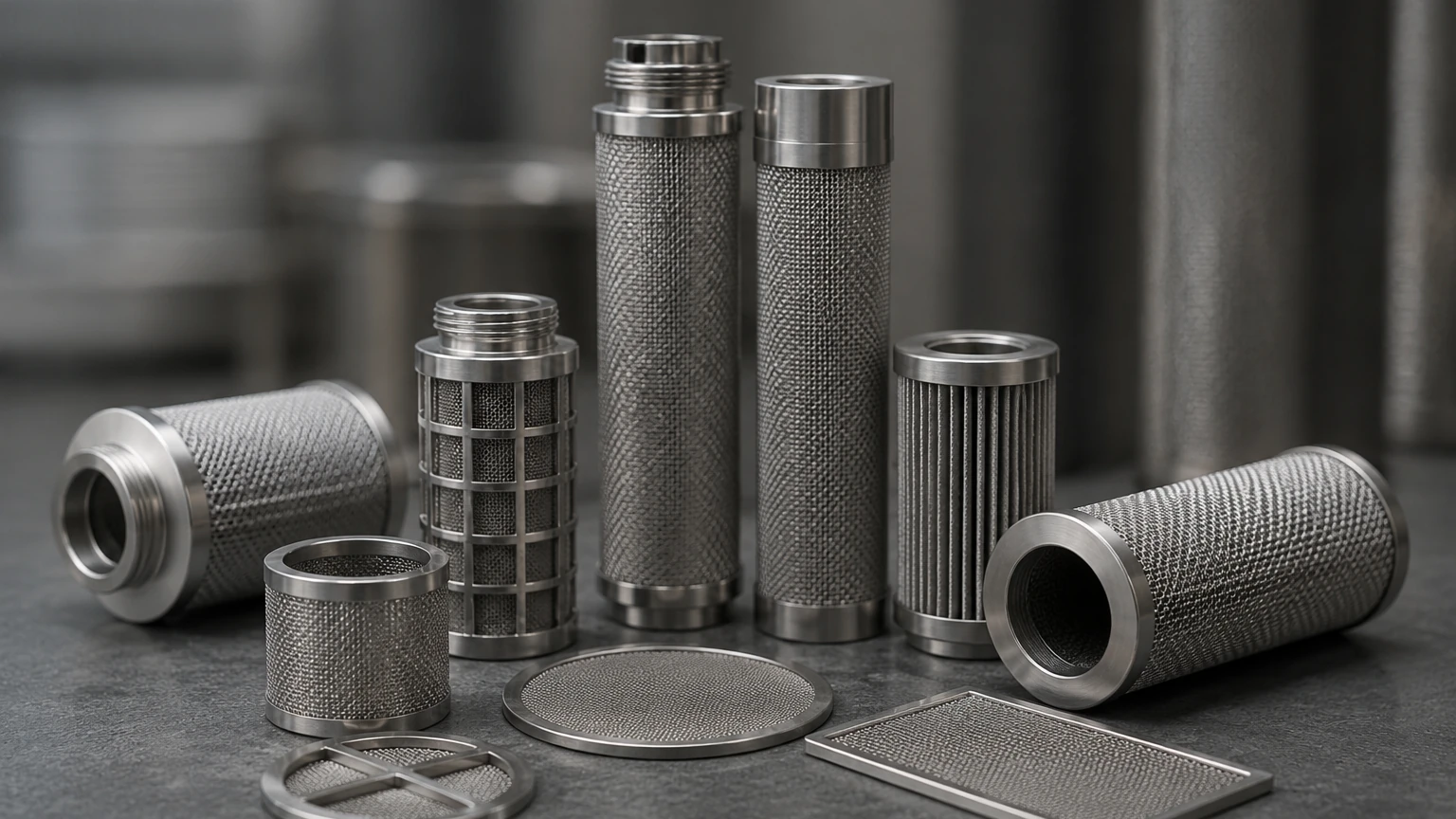
Woven wire mesh is highly effective for surface filtration, providing precise pore sizes and high flow rates. For more demanding applications within a power generation filtration system, sintered metal mesh is often employed. Sintering involves bonding multiple layers of wire mesh through heat and pressure without the use of binders. This creates a robust, porous structure that can withstand extreme pressure differentials and backwashing cycles without deforming.
Micron Ratings and Filtration Efficiency
Engineers must distinguish between nominal and absolute micron ratings. A nominal rating indicates the filter's ability to retain the majority of particles of a certain size, whereas an absolute rating guarantees the retention of all particles above that size. In critical turbine applications, absolute-rated stainless steel cartridges are necessary to ensure that no damaging particles bypass the system.
Performance Metrics: Pressure Drop and Flow Rates
A common challenge in any power generation filtration system is balancing filtration fineness with the allowable pressure drop (ΔP). An excessively fine filter may provide superior cleanliness but will clog rapidly, leading to high maintenance costs and potential system bypass.
Calculating Allowable Pressure Drop
The initial pressure drop across a clean filter element is a function of the fluid's viscosity, the flow velocity, and the open area of the filter media. In power generation, where flow rates are often massive, maximizing the effective filtration area is key. This is frequently achieved through pleating. Pleated stainless steel cartridges can offer three to five times the surface area of a standard cylindrical element, significantly extending the time between cleaning or replacement cycles.
Viscosity and Temperature Effects
In lube oil systems, oil viscosity changes significantly with temperature. A power generation filtration system must be sized for the "cold start" condition, where higher viscosity leads to higher pressure drops. Stainless steel elements are particularly well-suited for these fluctuations because they maintain their structural integrity under the high mechanical stress of cold starts, unlike paper-based filters which may collapse or burst.
Operational Risks and Mitigation Strategies
Failure to maintain an effective power generation filtration system introduces several operational risks that can impact a facility's bottom line.
* Erosion and Surface Fatigue: In steam and gas turbines, fine particulates act as abrasives. Over time, this erodes the aerodynamic profile of turbine blades, leading to a drop in power output and increased fuel consumption.
* Cavitation in Pumps: If suction-side filters are clogged or improperly sized, they can cause a significant pressure drop, leading to cavitation in feed pumps. This not only damages the pump impellers but also introduces air into the system, which can cause erratic control behavior.
* Chemical Degradation: In nuclear or high-pressure thermal plants, the chemical purity of the condensate is vital. Filters must not only remove physical particles but also resist leaching any contaminants into the ultra-pure water stream. High-grade stainless steel ensures that the filter itself does not become a source of contamination.
Maintenance, Cleaning, and Total Cost of Ownership
One of the primary advantages of incorporating stainless steel components into a power generation filtration system is the ability to clean and reuse the filter elements. While the initial capital expenditure (CAPEX) for stainless steel is higher than for disposable media, the long-term operational expenditure (OPEX) is often much lower.
Cleaning Methods for Stainless Steel Filters
Depending on the contaminant, stainless steel filters can be cleaned using several methods:
1. Ultrasonic Cleaning: High-frequency sound waves create cavitation bubbles that dislodge fine particles from deep within the mesh.
2. Backwashing: Reversing the flow of the process fluid can clear surface-loaded contaminants, a process that can often be automated.
3. Chemical Cleaning: Soaking the elements in specific solvents or acids can remove scale or organic buildup without damaging the metal structure.
By choosing cleanable media, power plants reduce the environmental impact associated with disposing of oil-soaked filters and minimize the inventory costs of keeping thousands of replacement cartridges on hand.
Customization Requirements for Specialized Applications
No two power plants are identical, and legacy facilities often require bespoke solutions to integrate modern filtration technology into existing piping. Customization is a core strength of manufacturers like Kaifil, who provide tailored filtration components that meet specific dimensional and performance requirements.
When ordering components for a power generation filtration system, engineers should confirm the following specifications:
* End Cap Configurations: Compatibility with existing filter housings (e.g., DOE, 222, 226, or threaded connections).
* Seal Materials: Selection of O-rings (Viton, EPDM, PTFE) based on the chemical composition and temperature of the fluid.
* Reinforcement: For high-pressure applications, internal support cores or external shrouds may be necessary to prevent pleat deformation.
Conclusion: Selecting the Right Partner
An optimized power generation filtration system is a safeguard for the entire energy production process. By focusing on technical specifications—such as material grade, micron rating, and structural design—engineers can ensure their systems remain efficient and reliable.
Before moving forward with a procurement or retrofit project, it is essential to verify the manufacturer's capabilities in precision welding and mesh selection. For those seeking detailed product specifications and engineering support for custom filtration components, visiting the Kaifil Main Page provides access to a wide range of industrial solutions designed for the most demanding power generation environments. Prioritizing quality in these critical components ensures that the power generation filtration system performs its role effectively, protecting both the equipment and the facility's operational continuity.
