


Pp Filter Cartridge
In the landscape of industrial liquid processing, the pp filter cartridge remains one of the most ubiquitous and essential components for achieving precise fluid clarity. Polypropylene (PP), a thermoplastic polymer known for its chemical inertness and versatility, serves as the primary material for these depth and surface filtration solutions. For engineers and procurement specialists, selecting the correct pp filter cartridge involves more than just matching a micron rating; it requires a deep understanding of material science, fluid dynamics, and the specific thermal and chemical constraints of the application environment.
Industrial filtration systems often rely on a tiered approach to contamination control. While high-performance stainless steel filters—such as those developed by specialized manufacturers like Kaifil—are critical for high-temperature and high-pressure environments, the pp filter cartridge frequently serves as the first line of defense. These cartridges are designed to remove suspended solids, sediment, and organic impurities from water, chemicals, and food-grade liquids. By effectively managing the initial sediment load, they protect downstream equipment and more expensive high-precision filtration stages.
Understanding the Fundamentals of PP Filter Cartridges
A pp filter cartridge is essentially a disposable filtration element constructed from 100% pure polypropylene fibers or membranes. The primary appeal of polypropylene in industrial settings is its broad chemical compatibility. It is resistant to a wide range of acids, bases, and organic solvents, making it suitable for everything from municipal water treatment to complex chemical processing.
Unlike surface filters, which trap particles on a single plane, many PP cartridges function as depth filters. In a depth filtration mechanism, the filter media possesses a certain thickness, and particles are trapped throughout the entire cross-section of the material. This is achieved through a tortuous path where the fluid must navigate through a dense network of fibers. The result is a high dirt-holding capacity, which translates to longer service intervals and lower operational downtime. For technical teams, understanding the distinction between nominal and absolute filtration in these cartridges is paramount for ensuring process integrity.
Manufacturing Processes: Melt-Blown vs. Pleated vs. String-Wound
The performance characteristics of a pp filter cartridge are largely dictated by its manufacturing method. There are three primary types used in industrial applications: melt-blown, pleated, and string-wound.
Melt-Blown Cartridges
Melt-blown cartridges are produced by extruding molten polypropylene through high-velocity air, which creates fine fibers that are collected on a rotating mandrel. This process allows for the creation of a "gradient density" structure. The outer layers of the cartridge are typically less dense to trap larger particles, while the inner core is more compressed to capture finer contaminants. This graduated structure prevents the surface from blinding prematurely, maximizing the use of the entire filter volume.
Pleated PP Cartridges
Pleated cartridges utilize a thin PP membrane or microfiber sheet that is folded to increase the available surface area. Because the surface area is significantly higher than that of a standard depth filter, pleated cartridges offer much lower initial pressure drops and higher flow rates. They are often used in "polishing" stages where high-purity fluid is required, such as in the pharmaceutical or electronics industries. While they may have less total dirt-holding capacity by volume than a melt-blown filter, their efficiency at specific micron ratings is often superior.
String-Wound Cartridges
String-wound filters are a traditional form of depth filtration where polypropylene yarn is wound around a central core. The winding pattern creates diamond-shaped openings that become progressively smaller toward the center. These are highly valued in heavy industrial applications where large volumes of coarse sediment must be removed economically.
Technical Specifications: Micron Ratings and Efficiency
When evaluating a pp filter cartridge, engineers must look beyond the label's micron size. The efficiency of a filter is often described by its Beta Ratio, which compares the number of particles of a given size in the influent versus the effluent.
1. Nominal Rating: This indicates that the filter will trap a certain percentage (often 60% to 80%) of particles at the specified micron size. Nominal filters are best suited for pre-filtration where absolute precision is not the primary goal.
2. Absolute Rating: An absolute-rated pp filter cartridge is designed to remove 99.9% or more of particles at the specified micron size. These are critical in applications where even trace amounts of contamination can compromise product quality or damage sensitive equipment.
Furthermore, the pressure drop (Delta P) across the cartridge is a critical metric. A high initial pressure drop suggests that the filter is either too restrictive for the pump capacity or that the flow rate exceeds the cartridge's design limits. Monitoring the differential pressure is the standard method for determining when a cartridge has reached its terminal dirt-holding capacity and requires replacement.
Chemical Compatibility and Operating Temperatures
Polypropylene is a robust material, but it has defined physical limits that must be respected to avoid structural failure or fluid contamination. One of the primary advantages of a pp filter cartridge is its resistance to biological growth and its lack of binders or adhesives, which minimizes the risk of "extractables" leaching into the process fluid.
However, temperature sensitivity is a key constraint. Standard polypropylene filters are generally rated for temperatures up to 60°C (140°F), with some reinforced versions handling up to 80°C (176°F). Beyond these temperatures, the polymer begins to soften, leading to pore enlargement or even structural collapse. In high-temperature applications, or where aggressive steam sterilization is required, engineers often transition to stainless steel filtration solutions. For more comprehensive filtration solutions and technical specifications regarding high-temperature alternatives, professionals can visit the Main Page to review product options and application support.
In terms of chemical resistance, PP excels in:
* Acids: Excellent resistance to sulfuric, hydrochloric, and phosphoric acids.
* Alkalies: Highly resistant to sodium hydroxide and potassium hydroxide.
* Salts: Compatible with most aqueous salt solutions.
Conversely, PP should be used with caution or avoided when dealing with strong oxidizing agents, aromatic hydrocarbons (like benzene), or chlorinated solvents, as these can cause the material to swell or degrade.
Industrial Applications: From Pre-filtration to Final Polishing
The versatility of the pp filter cartridge allows it to serve multiple roles across various sectors:
* Water Treatment: In Reverse Osmosis (RO) systems, PP cartridges are used as pre-filters to protect the delicate RO membranes from silt, sand, and scale. This extends the life of the expensive membranes and ensures consistent water quality.
* Food and Beverage: FDA-compliant polypropylene is used to filter bottled water, juices, and beer. The material's inert nature ensures that the flavor profile of the beverage is not altered.
* Chemical Processing: PP filters are used for the clarification of reagents, acids, and plating solutions. Their ability to withstand corrosive environments makes them an economical choice for batch processing.
* Pharmaceuticals: While stainless steel is preferred for many sterile processes, PP pleated cartridges are often used for pre-filtration of buffers and process water due to their low extractable profile.
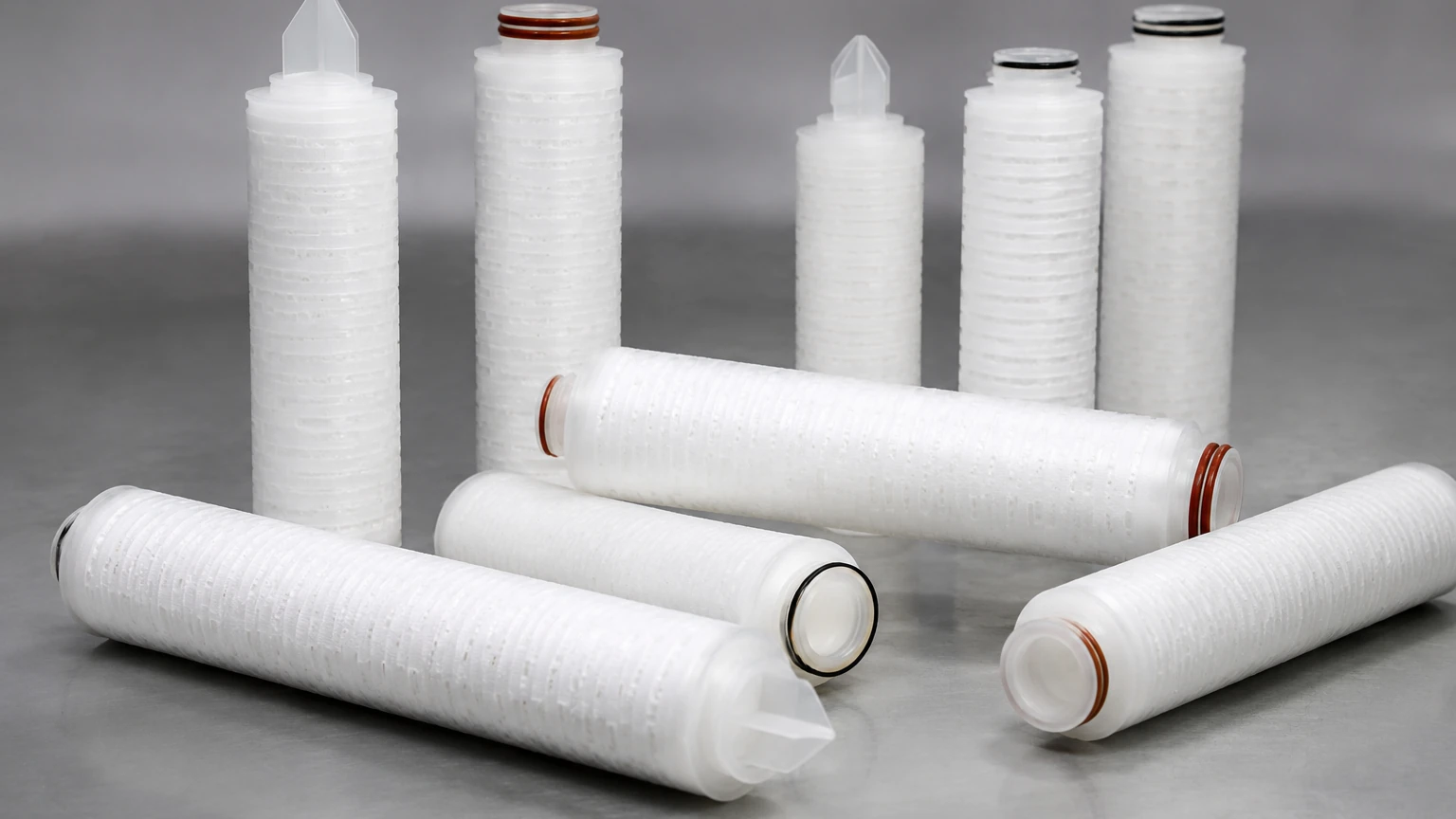
Comparative Analysis: PP Filter Cartridges vs. Stainless Steel Filters
A common challenge for plant engineers is deciding between disposable pp filter cartridges and cleanable stainless steel filters. The decision usually hinges on the total cost of ownership (TCO) and the specific physical demands of the process.
| Feature | PP Filter Cartridge | Stainless Steel Filter (Kaifil) |
| :— | :— | :— |
| Initial Cost | Low | High |
| Reusability | Disposable | Cleanable and Reusable |
| Temperature Limit | ~80°C | >250°C |
| Pressure Resistance | Moderate | Very High |
| Chemical Resistance | Broad (except oxidizers/aromatics) | Excellent (including solvents) |
| Filtration Type | Depth or Surface | Surface (Wire Mesh) |
While the pp filter cartridge is ideal for high-solids loading in non-critical or low-temperature environments, stainless steel filters are superior when the process involves high pressures, extreme temperatures, or fluids that would degrade polymers. Many sophisticated systems use a combination of both: a disposable PP cartridge for bulk contaminant removal followed by a precision stainless steel mesh filter for final safety or high-durability stages.
Engineering Selection Criteria and Procurement Considerations
When sourcing a pp filter cartridge, purchasing teams and engineers should confirm several technical details to ensure the product meets the operational requirements.
1. End-Cap Configuration
Cartridges come in various end-cap styles to fit different filter housings. Common configurations include Double Open End (DOE), Code 7 (226 O-rings with a locking fin), and Code 3 (222 O-rings). A proper seal is essential; if the end-cap does not seat correctly, fluid will bypass the filter media entirely, rendering the filtration system ineffective.
2. Length and Diameter
Standard lengths are usually 10, 20, 30, or 40 inches. However, custom diameters (such as Big Blue or Large Diameter cartridges) are used when higher flow rates are required without increasing the number of filter housings. Ensuring the cartridge dimensions match the internal support core of the housing is vital for structural integrity under pressure.
3. Compliance and Certification
For the food, beverage, and pharmaceutical industries, it is critical to confirm that the pp filter cartridge is manufactured from FDA-listed materials and meets USP Class VI plastics biological reactivity tests. This ensures that the filter does not introduce harmful contaminants into the product stream.
4. Dirt-Holding Capacity vs. Flow Rate
There is often a trade-off between how much dirt a filter can hold and how fast fluid can pass through it. A melt-blown filter might hold more sediment but require a slower flow rate to maintain efficiency compared to a pleated version. Engineers should request flow-vs-pressure-drop curves from the manufacturer to size their pumps and housings correctly.
Maintenance, Replacement Cycles, and Total Cost
The effective management of a pp filter cartridge system relies on proactive maintenance. Because these filters are depth-based, they cannot be effectively cleaned and reused. Attempting to backwash a melt-blown or pleated PP filter often results in "particle unloading," where trapped contaminants are forced through the media and into the clean stream.
The industry standard for replacement is based on differential pressure. Typically, when the pressure drop across the filter reaches 1.5 to 2.0 bar (20-30 psi), the cartridge is considered fouled and should be replaced. Operating beyond this point risks "channeling," where the pressure forces a path through the media, or structural failure of the cartridge core.
From a total cost of ownership perspective, the price of the cartridge is only one factor. Labor costs for replacement, disposal costs for contaminated filters, and the potential cost of product loss during downtime must all be factored in. In processes where cartridges must be changed daily or weekly, it may be more cost-effective to consult with a manufacturer like Kaifil to design a custom stainless steel filtration system that can be cleaned in place (CIP), reducing long-term waste and operational expenses.
Final Engineering Considerations
The pp filter cartridge remains a cornerstone of industrial filtration due to its balance of performance, chemical resistance, and cost-effectiveness. Whether used as a standalone solution for water sediment or as a pre-filter in a complex chemical plant, its role in protecting downstream assets is invaluable.
For technical professionals, the key to success lies in matching the cartridge's physical properties—such as its gradient density or pleated surface area—to the specific characteristics of the contaminant and the fluid. By understanding the limitations of polypropylene regarding temperature and specific chemicals, and by knowing when to transition to more robust materials like stainless steel, engineers can optimize their filtration processes for both purity and profit.
When evaluating your next filtration project, consider the full range of available technologies. For expert guidance on material selection and to explore high-performance metal filtration components that complement your existing systems, visiting the Main Page provides access to the engineering resources necessary for informed decision-making.
