


Pp Melt Blown Filter Cartridge
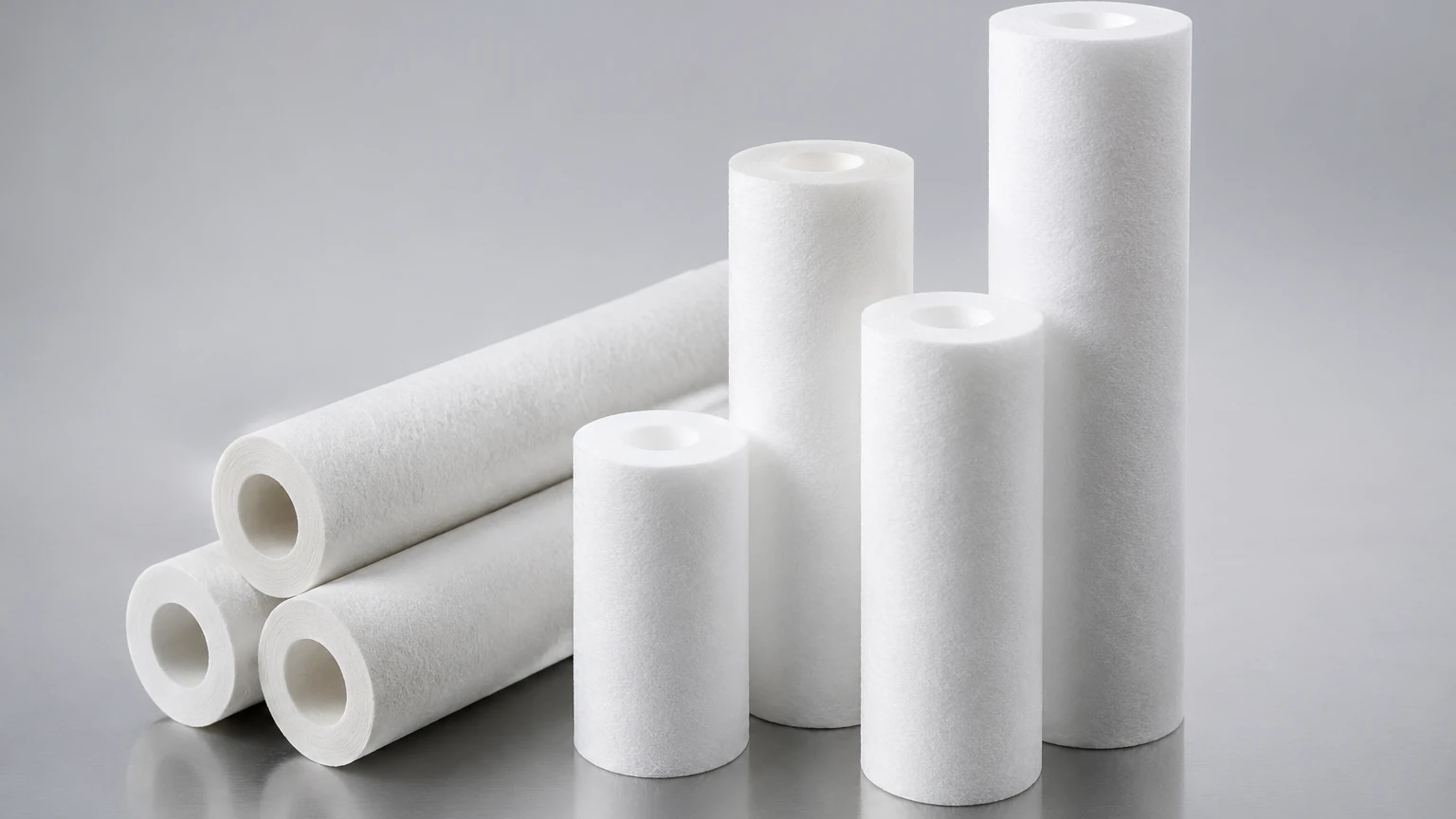
In industrial liquid filtration, the pp melt blown filter cartridge serves as a fundamental component for depth filtration. These cartridges are engineered through a continuous process where polypropylene resin is melted, extruded, and blown onto a rotating mandrel at high velocities. The result is a complex, three-dimensional fiber matrix that captures particles throughout the entire thickness of the filter wall, rather than just on the surface. For engineers and procurement teams, understanding the technical nuances of these components is essential for optimizing process efficiency and protecting downstream equipment.
As a specialized manufacturer, Kaifil provides a range of filtration solutions designed to meet the rigorous demands of chemical, pharmaceutical, and water treatment sectors. Detailed technical specifications and custom options can be explored on our Main Page.
The Engineering of Melt Blown Depth Filtration
The performance of a pp melt blown filter cartridge is primarily determined by its internal structure. Unlike surface filters, such as certain membranes or pleated media that stop particles at the interface, melt blown cartridges utilize "depth filtration."
Graded Density Structure
One of the most critical engineering features of high-quality melt blown filters is the graded density structure. During the manufacturing process, the fiber diameter and the density of the fiber packing are varied from the outer surface to the inner core.
* Outer Layers: Feature a coarser fiber structure with larger voids. This layer acts as a pre-filter, capturing larger particles and preventing the premature clogging of the inner media.
* Inner Layers: Feature finer microfibers and a denser matrix. This core layer provides the final filtration accuracy, capturing the target micron-sized contaminants.
This gradient ensures that the entire volume of the filter is utilized for contaminant storage, significantly increasing the dirt-holding capacity compared to single-density filters. For industrial applications with high suspended solids, this translates to longer service intervals and lower total cost of ownership.
Thermal Bonding and Purity
A significant advantage of the pp melt blown filter cartridge is that it is typically manufactured without the use of chemical binders, resins, or lubricants. The fibers are thermally bonded as they are blown onto the mandrel. This lack of additives is crucial for sensitive applications, such as in the pharmaceutical or food and beverage industries, as it eliminates the risk of extractables or surfactants leaching into the process fluid. Furthermore, the coreless design often used in standard melt blown filters relies on the structural integrity of the thermally bonded fibers themselves, though reinforced cores are available for high-pressure applications.
Technical Evaluation Criteria for Engineers
When selecting a pp melt blown filter cartridge for a specific industrial process, several technical parameters must be evaluated to ensure compatibility and performance.
Micron Rating: Nominal vs. Absolute
Engineers must distinguish between nominal and absolute micron ratings. Most standard melt blown cartridges are nominally rated, meaning they will intercept a high percentage (typically 80% to 95%) of particles at the specified micron size. For critical applications requiring 99.9% efficiency, absolute-rated pleated filters or specialized high-efficiency melt blown variants are required.
Flow Rate and Pressure Drop (Delta P)
The relationship between flow rate and differential pressure is a key design consideration. Every filter media introduces resistance to flow.
1. Clean Pressure Drop: The initial resistance when the filter is new.
2. Terminal Pressure Drop: The point at which the filter is considered blinded and must be replaced (typically between 1.5 and 2.5 bar, depending on the housing and pump specifications).
Over-sizing the filtration system—using more cartridges or larger diameters—can reduce the initial clean pressure drop, thereby extending the life of each cartridge and reducing energy consumption by the pumps.
Chemical and Thermal Compatibility
Polypropylene is widely favored in the chemical industry due to its broad chemical resistance. It is generally inert to most acids, bases, and many organic solvents. However, its thermal limits must be respected. Most pp melt blown filter cartridges are rated for continuous operation up to 60°C (140°F), with some reinforced versions capable of handling up to 80°C. Beyond these temperatures, the structural integrity of the polypropylene fibers may degrade, leading to "fiber migration" or bypass.
Industrial Applications and Use Cases
The versatility of the pp melt blown filter cartridge makes it a staple in various sectors. Its primary role is often as a pre-filter to protect more expensive downstream components.
Water Treatment and Desalination
In Reverse Osmosis (RO) systems, melt blown cartridges are used as the final stage of pre-filtration. They protect the RO membranes from silt, sand, and other suspended solids that could cause irreversible fouling. Given the high volume of water processed in these plants, the cost-effectiveness and high dirt-holding capacity of melt blown media are indispensable.
Chemical Processing
In the production of specialty chemicals and detergents, these cartridges are used to remove undissolved solids and impurities. The chemical inertness of polypropylene ensures that the filter does not react with the process fluid, maintaining the purity of the final product.
Food and Beverage Industry
For the filtration of bottled water, beer, and juices, melt blown cartridges are used to remove macroscopic particles before final sterilization or bottling. It is essential that these cartridges meet FDA requirements for food contact, ensuring that no harmful substances are introduced during the filtration process.
Comparison with Other Filter Types
To make an informed purchasing decision, it is helpful to compare the pp melt blown filter cartridge with other common industrial filter types.
| Feature | Melt Blown Cartridge | String Wound Cartridge | Pleated Filter |
| :— | :— | :— | :— |
| Filtration Type | Depth | Depth | Surface/Depth |
| Dirt Holding Capacity | High (Graded Density) | Moderate | Lower per unit area |
| Efficiency | Moderate (Nominal) | Lower (Nominal) | High (Absolute) |
| Fiber Migration | Low (Thermally Bonded) | Higher | Very Low |
| Cost | Economical | Lowest | Higher |
| Pressure Stability | Good | Moderate | Excellent |
While string wound filters are often cheaper, they are prone to "unloading" contaminants if the pressure surges, as the strings can shift. Melt blown cartridges offer a more stable pore structure due to thermal bonding. Pleated filters offer much higher surface area and efficiency but at a significantly higher price point, making them better suited for final polishing rather than bulk contaminant removal.
Customization and Sizing Considerations
Industrial filtration is rarely a one-size-fits-all scenario. Customization is often required to fit existing filter housings or to meet specific process flow requirements.
Dimensions and End-Caps
Standard lengths for industrial cartridges include 10", 20", 30", and 40". Diameters typically range from the standard 2.5" to the "Big Blue" 4.5" formats. Furthermore, the configuration of the end-caps is vital for ensuring a proper seal within the housing. Options include:
* DOE (Double Open End): Requires gaskets on both ends to seal against the housing seats.
* SOE (Single Open End) with 222 or 226 O-rings: Provides a more secure, leak-proof seal, often used in critical pharmaceutical or high-purity water applications.
* Fin or Flat Tops: Used to guide the cartridge into the housing during installation.
Core Selection
While many melt blown filters are self-supporting, applications involving high viscosity fluids or high differential pressures may require an internal polypropylene or stainless steel core. This prevents the cartridge from collapsing under the weight of the captured contaminants and the force of the fluid flow.
Total Cost of Ownership and Maintenance
When evaluating filtration costs, engineers should look beyond the purchase price of the pp melt blown filter cartridge. The Total Cost of Ownership (TCO) includes:
1. Frequency of Replacement: A cheaper filter that clogs twice as fast actually costs more in labor, downtime, and disposal fees.
2. Disposal Costs: Polypropylene is a thermoplastic that can often be incinerated or recycled, depending on the contaminants it has captured.
3. Labor and Downtime: Systems that require frequent filter changes increase the labor burden and may interrupt continuous production cycles.
To optimize maintenance, it is recommended to install differential pressure gauges across the filter housing. Changing the filters based on pressure drop rather than a fixed time schedule ensures that the maximum life is extracted from each cartridge without risking bypass or structural failure.
Conclusion
The pp melt blown filter cartridge remains one of the most reliable and cost-effective solutions for industrial depth filtration. By selecting the appropriate graded density, micron rating, and physical configuration, engineers can significantly improve the clarity of their process fluids while protecting sensitive downstream equipment.
For technical assistance in selecting the right filtration components or to request a quote for customized stainless steel housings and filter elements, please visit our Main Page. Kaifil’s engineering team is available to support your specific application requirements with precision-manufactured solutions.
