


Pressure Vessel and Tank Fabrication
In industrial fluid processing, the integrity of the containment system is as critical as the filtration media itself. Pressure vessel and tank fabrication represents a specialized field of engineering where mechanical design, material science, and fluid dynamics intersect. For engineers and procurement professionals in the chemical, pharmaceutical, and food and beverage sectors, understanding the technical nuances of how these vessels are constructed is essential for ensuring process safety, regulatory compliance, and operational efficiency.
Industrial pressure vessels are designed to hold gases or liquids at pressures substantially different from the ambient atmosphere. When these vessels house filtration systems—such as stainless steel cartridges or wire mesh elements—the fabrication process must account for internal hydraulic forces, thermal expansion, and the specific requirements of the filtration process. This guide examines the engineering considerations and fabrication standards necessary to produce reliable industrial vessels.
Engineering Standards and Compliance in Vessel Fabrication
The foundation of any pressure vessel and tank fabrication project is adherence to established international codes. The most widely recognized standard is the ASME (American Society of Mechanical Engineers) Boiler and Pressure Vessel Code (BPVC), specifically Section VIII. This code provides the rules for the design, fabrication, and inspection of pressure vessels.
From a technical perspective, designers must calculate the "Maximum Allowable Working Pressure" (MAWP) based on the material's tensile strength, the vessel's wall thickness, and the intended operating temperature. In Europe, the Pressure Equipment Directive (PED) 2014/68/EU serves a similar purpose, ensuring that equipment meets essential safety requirements. For B2B buyers, verifying that a fabricator follows these codes is the first step in risk mitigation. A vessel designed without proper safety factors or stress analysis poses a significant catastrophic failure risk, especially in high-pressure hydraulic or chemical applications.
Material Selection for Corrosive and High-Temperature Environments
Material selection is perhaps the most critical decision in the fabrication process. The choice of alloy dictates the vessel's longevity and its compatibility with the process fluid.
1. Stainless Steel 304/304L: The standard choice for general industrial applications. It offers good corrosion resistance and excellent fabrication characteristics. However, it is susceptible to chloride-induced stress corrosion cracking.
2. Stainless Steel 316/316L: Containing molybdenum, 316L provides superior resistance to pitting and crevice corrosion in chloride environments. It is the preferred material for pharmaceutical and food-grade vessels where cleanliness and corrosion resistance are paramount.
3. Duplex Stainless Steels: These alloys offer higher strength and better resistance to stress corrosion cracking than austenitic steels, making them ideal for high-pressure chemical processing.
4. Specialty Alloys: In extreme environments involving highly acidic or alkaline fluids, fabricators may utilize Hastelloy, Monel, or Inconel.
When fabricating tanks for filtration, the material of the vessel must be galvanically compatible with the internal filter elements. If a 316L stainless steel filter cartridge is housed within a lower-grade carbon steel vessel without proper isolation, galvanic corrosion can lead to premature failure of the filtration system.
Technical Aspects of Fabrication: Welding and Surface Finishing
The actual pressure vessel and tank fabrication process involves complex mechanical operations, including plate rolling, head forming, and precision welding. Because the welds are often the weakest points in a pressurized system, the welding methodology is strictly regulated.
Welding Protocols
Most high-quality industrial vessels utilize TIG (Tungsten Inert Gas) or MIG (Metal Inert Gas) welding. TIG welding is often preferred for the root pass in critical joints because it provides superior control and a cleaner weld bead, which is essential for maintaining a sanitary environment in food and pharma applications. All welders should be certified under ASME Section IX, which ensures they possess the technical skill to produce welds that meet the required penetration and strength standards.
Surface Finishing and Ra Values
In industries like biotechnology or semiconductor manufacturing, the internal surface finish of the vessel is as important as its structural integrity. Surface roughness, measured in micrometers (Ra), affects the ability to clean the vessel and prevents bacterial growth. Fabrication often includes electropolishing or mechanical polishing to achieve Ra values below 0.5 μm. This level of finish ensures that the vessel can be effectively processed through Clean-in-Place (CIP) or Steam-in-Place (SIP) cycles.
Integrating Filtration Components within Pressure Vessels
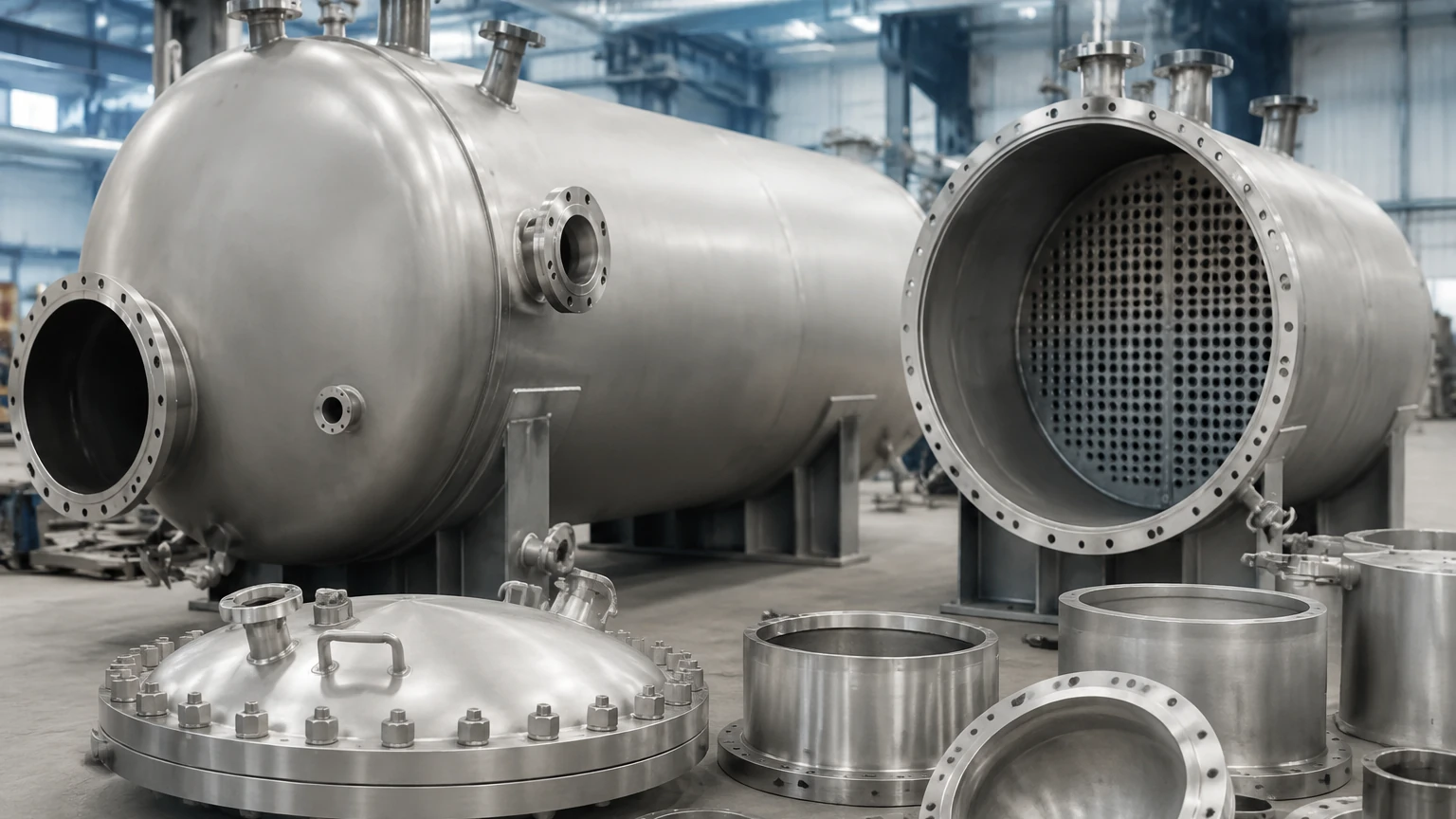
A pressure vessel designed for filtration is more than just a container; it is a functional component of the separation process. The internal layout must be engineered to support the weight and pressure differential of the filter media. For instance, when using wire mesh filters or stainless steel cartridges, the vessel must include precise mounting plates (tubesheets) and sealing mechanisms.
Engineers must evaluate the sealing interface—typically an O-ring or a flat gasket—to ensure it can withstand the operating pressure without bypassing. If the vessel fabrication does not maintain tight tolerances on the tubesheet holes, the filter elements may not seat correctly, leading to fluid bypass and downstream contamination. For technical teams reviewing their options, the Main Page of a specialized manufacturer provides insights into how these internal components are integrated into custom designs.
Performance Evaluation: Pressure Drop and Flow Distribution
Effective pressure vessel and tank fabrication must account for the fluid dynamics within the chamber. A poorly designed inlet can create turbulent flow that damages delicate filter media or causes uneven loading of the filter cake.
* Flow Distribution: Baffles or diffusers are often fabricated into the inlet of the vessel to distribute the incoming fluid evenly across the surface of the filter elements. This prevents "channeling," where fluid takes the path of least resistance, leading to premature clogging of specific areas of the filter.
* Pressure Drop (ΔP): The vessel's nozzle sizes (inlet and outlet) must be sized correctly to minimize parasitic pressure loss. If the nozzles are too small, the velocity of the fluid increases, leading to higher friction losses and increased energy consumption for the pumps. Engineers typically aim for a fluid velocity of 1-3 m/s in the nozzles to balance cost and performance.
Quality Control, Testing, and Documentation
Once the fabrication is complete, a rigorous testing phase begins. This is not merely a quality check but a legal requirement for pressurized equipment.
1. Hydrostatic Testing: The vessel is filled with water and pressurized to 1.3 or 1.5 times the design pressure. This test verifies the structural integrity of the shell and the tightness of all welded joints.
2. Non-Destructive Testing (NDT): Techniques such as Radiographic Testing (X-ray), Ultrasonic Testing, and Dye Penetrant Inspection are used to detect internal flaws in the welds that are not visible to the naked eye.
3. Positive Material Identification (PMI): This ensures that the alloy used in fabrication matches the material specifications provided in the design phase.
Documentation is a critical deliverable in the B2B procurement process. A complete "Manufacturer’s Data Report" should include material test reports (MTRs), weld maps, NDT reports, and certificates of compliance. This documentation is essential for future audits and for establishing a maintenance baseline.
Maintenance Protocols and Total Cost of Ownership (TCO)
While the initial cost of pressure vessel and tank fabrication is a significant factor, the Total Cost of Ownership (TCO) is driven by maintenance and durability. A vessel that is difficult to open for filter replacement or one that uses non-standard gaskets will increase operational costs over time.
Replacement Cycles and Inspection
Engineers should establish a regular inspection schedule to check for signs of erosion, corrosion, or fatigue. In vessels housing high-performance stainless steel filters, the internal support structures should be checked for deformation during every filter change-out. If the vessel was fabricated with high-quality 316L stainless steel and proper surface treatments, the shell itself may last decades, whereas the internal seals and filter media will require more frequent replacement.
Customization Options
Custom fabrication allows for the inclusion of features that simplify maintenance, such as quick-opening covers (swing bolts), davit arms for heavy lids, and specialized drainage ports. These features reduce the downtime required for filter servicing, directly impacting the facility's overall productivity.
Conclusion
Pressure vessel and tank fabrication is a high-stakes engineering discipline that requires a balance of safety, material science, and process optimization. By focusing on ASME compliance, appropriate material selection, and precision welding, manufacturers can provide containment solutions that protect both the process and the personnel. For those integrating complex filtration systems, the synergy between the vessel design and the internal filter media is the key to achieving long-term reliability. To explore specific filtration components that complement high-pressure vessel designs, engineers are encouraged to Review product options and application support to ensure their systems meet the highest industrial standards.
