


Pressure Vessels
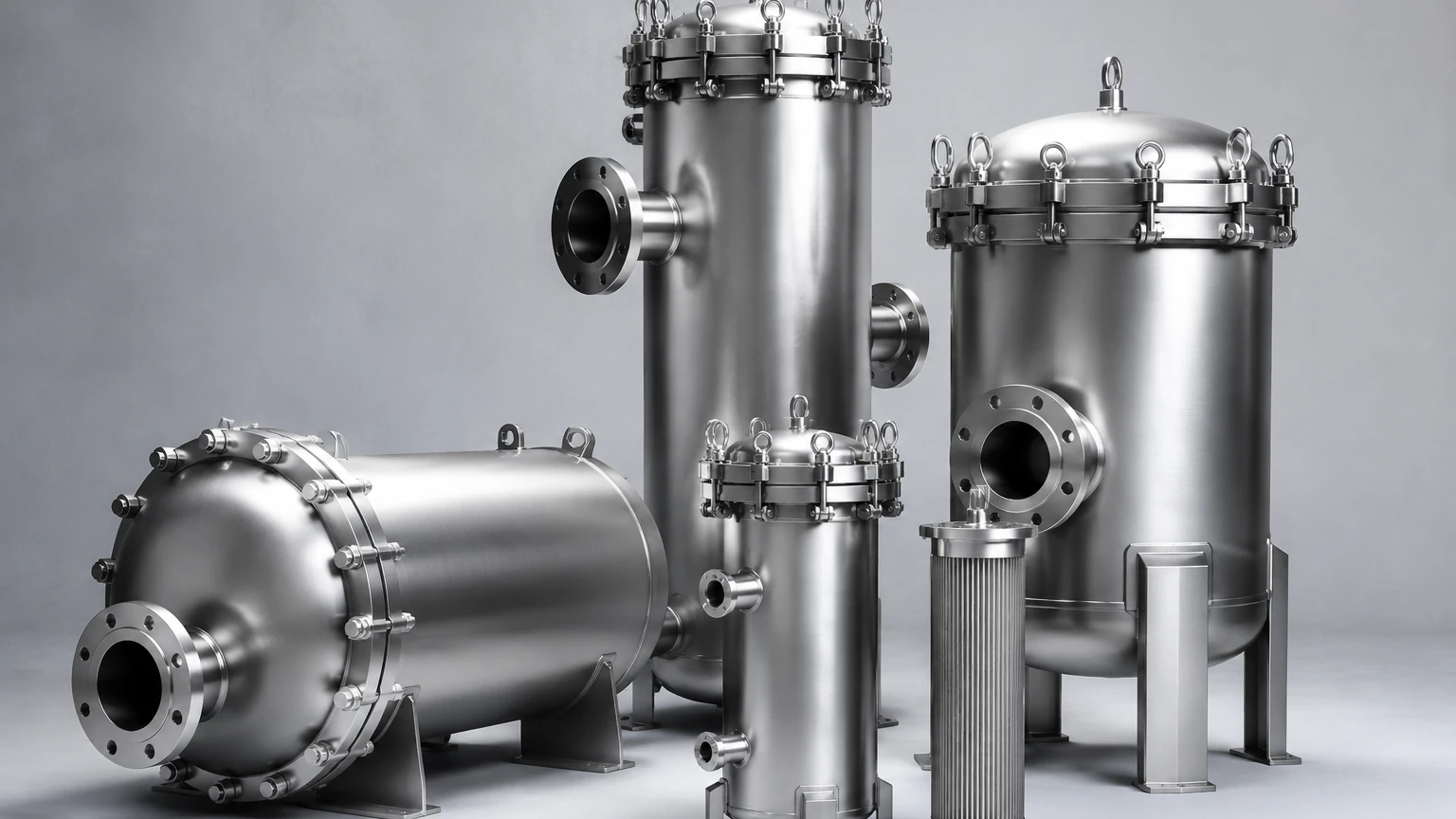
In the landscape of industrial fluid processing, pressure vessels serve as the primary containment structures for filtration and separation operations. These engineered containers are designed to hold gases or liquids at pressures substantially different from the ambient pressure. For engineers and procurement specialists in sectors such as chemical processing, pharmaceuticals, and oil and gas, understanding the interplay between the vessel housing and the internal filtration media is essential for ensuring system integrity, safety, and operational efficiency.
When integrated with high-performance filtration components, pressure vessels facilitate the removal of contaminants under high-flow and high-pressure conditions. The selection of a vessel is not merely a matter of volume; it involves rigorous engineering calculations regarding material fatigue, corrosion allowances, and thermal expansion. As a manufacturer specializing in stainless steel filtration solutions, Kaifil emphasizes the importance of matching the vessel's mechanical specifications with the precision of the internal wire mesh or cartridge elements to achieve optimal performance.
Engineering Standards and Design Considerations
The design and fabrication of pressure vessels are governed by strict international codes, most notably the ASME (American Society of Mechanical Engineers) Boiler and Pressure Vessel Code (BPVC), specifically Section VIII. These standards dictate the minimum requirements for design, materials, fabrication, inspection, and testing.
Key engineering considerations include:
* Design Pressure and Temperature: Vessels must be rated for the maximum expected operating pressure, including a safety margin for potential surges. Temperature ratings are equally critical, as the tensile strength of metals decreases at elevated temperatures, and thermal cycling can lead to stress-induced cracking.
* Wall Thickness and Corrosion Allowance: Engineers calculate the required wall thickness based on the internal pressure and the diameter of the vessel. A "corrosion allowance" is typically added to this thickness to ensure the vessel remains safe throughout its intended service life, even as the internal surface undergoes gradual chemical degradation.
* Closure Types: The method of accessing the internal filter elements significantly impacts maintenance downtime. Common closures include bolted flanges for high-pressure applications, swing-bolt covers for frequent access, and V-band clamps for lower-pressure, quick-change requirements.
Material Selection for Industrial Environments
Material compatibility is a primary factor in the longevity of pressure vessels and their internal components. In industrial filtration, stainless steel is the preferred material due to its mechanical strength and resistance to oxidation.
304 Stainless Steel
304 stainless steel is a versatile and cost-effective option for many water treatment and general industrial applications. It provides excellent resistance to atmospheric corrosion and many organic and inorganic chemicals. However, in environments with high chloride concentrations, it may be susceptible to pitting.
316L Stainless Steel
The "L" in 316L stands for low carbon, which minimizes carbide precipitation during welding, ensuring the integrity of the vessel’s seams. 316L contains molybdenum, which significantly enhances its resistance to chlorides and acetic acids. This makes it the standard choice for pharmaceutical, food and beverage, and marine applications where hygiene and corrosion resistance are paramount.
For specialized applications involving highly aggressive chemicals, other alloys such as Duplex stainless steel or Hastelloy may be required, though 316L remains the industry benchmark for the majority of high-performance filtration housings.
The Relationship Between Vessels and Filtration Media
A pressure vessel is only as effective as the filtration media it houses. The internal architecture of the vessel must support the filter elements—whether they are pleated cartridges, wedge wire screens, or multi-layered sintered mesh—to prevent fluid bypass.
Sealing Mechanisms
The interface between the filter element and the vessel must be hermetically sealed. Common sealing methods include double O-rings, knife-edge seals, or flat gaskets. Any failure in this seal allows unfiltered fluid to bypass the media, compromising the downstream process. Engineers must ensure that the sealing materials (such as Viton, EPDM, or PTFE) are chemically compatible with the process fluid.
Flow Distribution
Proper vessel design ensures even flow distribution across the entire surface area of the filter media. Uneven flow can lead to "channeling," where certain areas of the filter become blinded (clogged) prematurely, while others remain underutilized. This increases the differential pressure (ΔP) and reduces the overall service life of the filter element.
Performance Metrics: Flow Rate and Differential Pressure
When evaluating pressure vessels for a filtration system, two of the most critical metrics are the flow rate capacity and the clean differential pressure.
1. Flow Rate: This is determined by the vessel's port sizes and the total surface area of the internal filter elements. Oversizing a vessel can reduce the frequency of filter changes but increases initial capital expenditure.
2. Differential Pressure (ΔP): This is the difference in pressure between the inlet and the outlet of the vessel. A high initial ΔP indicates that the vessel or the filter media is undersized for the application. As contaminants accumulate, ΔP increases. Most industrial systems are designed with a "terminal ΔP"—the point at which the filter elements must be cleaned or replaced to prevent structural failure or pump strain.
By calculating the Reynolds number and considering fluid viscosity, engineers can predict how a specific fluid will behave within the vessel, allowing for the selection of a housing that minimizes turbulence and energy loss.
Maintenance, Safety, and Inspection Protocols
Pressure vessels are subject to rigorous safety inspections to prevent catastrophic failures. Regular maintenance schedules should include:
* Visual Inspections: Checking for external signs of corrosion, leakage at joints, or deformation of the shell.
* Hydrostatic Testing: Periodically, vessels may need to be pressure-tested with water to a level exceeding their operating pressure to verify structural integrity.
* Ultrasonic Thickness Testing: This non-destructive testing method measures the actual wall thickness of the vessel to ensure it has not dropped below the minimum required thickness due to internal corrosion.
* Internal Component Replacement: For reusable stainless steel filters, cleaning protocols (such as ultrasonic cleaning or backwashing) must be strictly followed to restore the media’s permeability without damaging the pore structure.
Safety relief valves are a mandatory component of any pressure vessel system. These valves are calibrated to open at a specific pressure, venting the system to prevent over-pressurization in the event of a process malfunction.
Custom OEM Solutions for Complex Applications
Standard off-the-shelf pressure vessels often fail to meet the specific spatial or technical constraints of advanced industrial plants. Customization allows for the optimization of port configurations (NPT, BSP, or Flanged), the addition of heating jackets for high-viscosity fluids, and the integration of specialized sensors for real-time monitoring of pressure and temperature.
Kaifil provides comprehensive OEM support, working from technical drawings to manufacture filtration components that fit seamlessly into existing or new pressure vessel designs. Whether the requirement is for high-precision micron ratings in a pharmaceutical grade housing or rugged durability for hydraulic oil filtration, custom engineering ensures that the vessel and its internals function as a unified, high-efficiency system.
Conclusion
Pressure vessels are the backbone of high-pressure industrial filtration, providing the necessary containment for critical separation processes. By focusing on robust engineering standards, appropriate material selection, and the precise integration of filtration media, operators can achieve long-term reliability and lower total cost of ownership. For technical specifications, engineering drawings, and further information on how custom stainless steel filtration components can enhance your system performance, please visit our Main Page.
Understanding the technical boundaries of vessel design and the nuances of fluid dynamics allows engineers to specify solutions that not only meet regulatory requirements but also drive process innovation. When selecting a partner for filtration components, prioritize those with the manufacturing expertise to deliver precision-engineered solutions tailored to the demanding environments of modern industry.
