


Best Heat Exchanger for Sanitary Processing
In the realms of pharmaceutical manufacturing, food and beverage production, and biotechnology, the thermal management of fluids is a critical process variable. Selecting the best heat exchanger for sanitary processing requires a deep understanding of fluid dynamics, metallurgy, and stringent regulatory standards. Unlike industrial-grade heat exchangers used in power plants or heavy chemical refining, sanitary units must prioritize cleanability, the prevention of cross-contamination, and the elimination of microbial growth environments.
For engineers and procurement teams, the decision-making process involves balancing heat transfer efficiency with the rigorous demands of Clean-in-Place (CIP) and Sterilize-in-Place (SIP) protocols. This guide examines the technical specifications, design architectures, and auxiliary components—such as high-precision filtration—necessary to maintain a sterile and efficient production line.
Understanding Sanitary Design Standards for Heat Transfer
The "best" heat exchanger is defined first by its compliance with global sanitary standards. In the United States, the 3-A Sanitary Standards are the benchmark, while in Europe, the European Hygienic Engineering & Design Group (EHEDG) provides the primary framework. These standards dictate specific design features that distinguish sanitary equipment from standard industrial hardware.
One of the most critical factors is surface finish. To prevent bacteria from adhering to the metal, internal surfaces must be polished to a specific roughness average (Ra), typically less than 0.8 μm (32 micro-inches). Furthermore, the design must be free of "dead legs"—areas where fluid can stagnate and allow for biofilm formation. Every internal corner must have a minimum radius to ensure that cleaning chemicals can reach and sanitize every square millimeter of the flow path.
Material selection is equally vital. Most sanitary heat exchangers utilize 316L stainless steel due to its superior corrosion resistance and ability to withstand the aggressive acids and bases used during CIP cycles. In highly corrosive environments involving high chloride concentrations, specialty alloys like AL-6XN or titanium may be required.
Comparing Plate and Frame vs. Shell and Tube Designs
When searching for the best heat exchanger for sanitary processing, the choice usually narrows down to two primary architectures: Plate and Frame (PHE) and Shell and Tube.
Plate and Frame Heat Exchangers
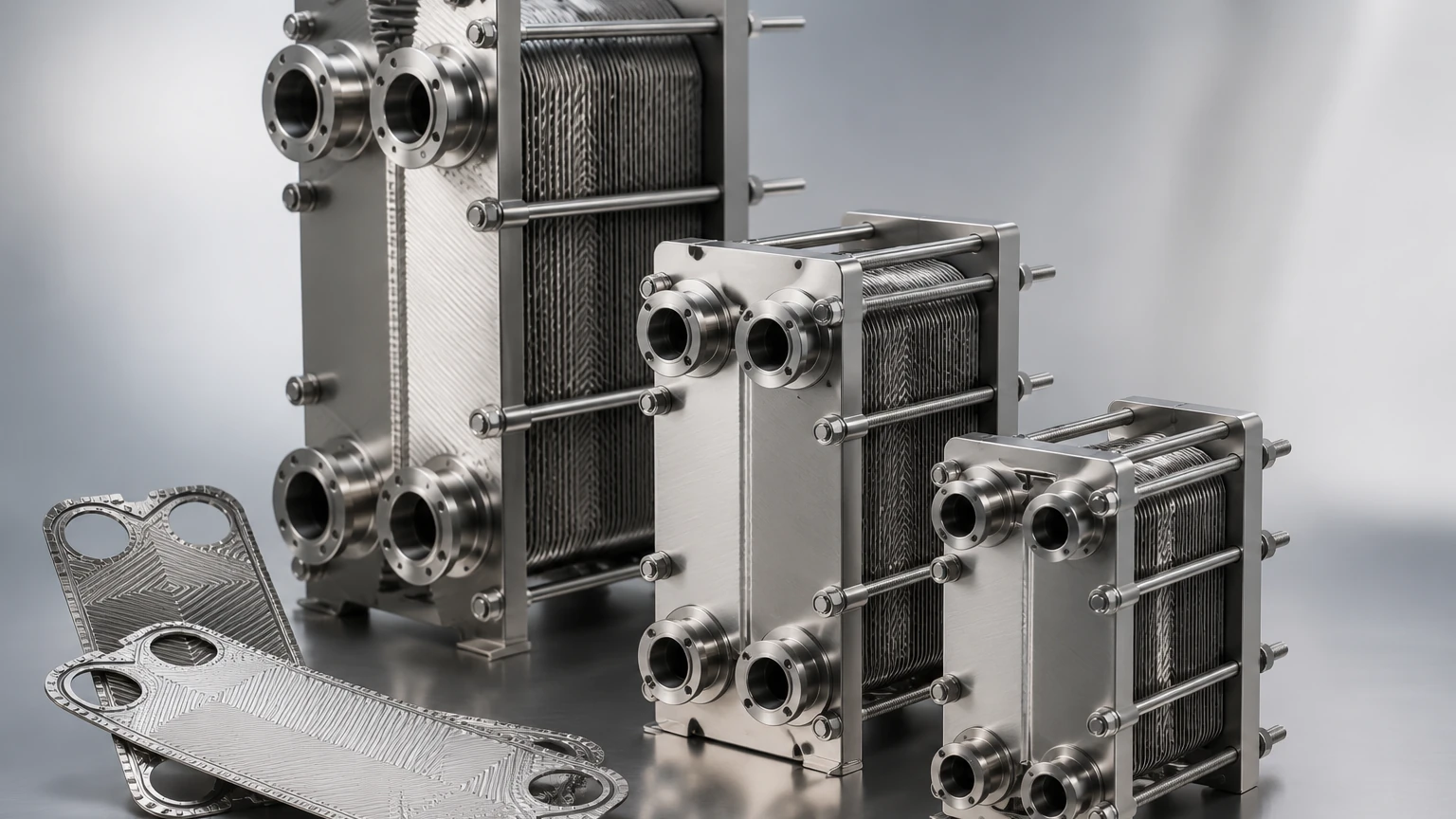
Plate heat exchangers are highly favored for their compact footprint and exceptional heat transfer coefficients. They consist of a series of thin, corrugated metal plates compressed together. The corrugations create high turbulence even at low flow rates, which maximizes the heat transfer rate and reduces the risk of fouling.
However, PHEs rely on gaskets to seal the channels. In sanitary applications, these gaskets must be made of FDA-compliant materials like EPDM or Viton. While efficient, the gaskets represent a potential point of failure and a site for microbial accumulation if not maintained correctly. For applications requiring complete isolation between the product and the utility fluid, wide-gap or double-wall plates are often employed.
Shell and Tube Heat Exchangers
Sanitary shell and tube heat exchangers, often designed as "double tube sheet" models, are the workhorses of the pharmaceutical industry. By using a double tube sheet, the design ensures that if a seal fails, the product and the heating/cooling media will leak to the atmosphere rather than cross-contaminating each other.
These units are preferred for high-pressure applications or when processing high-viscosity fluids and slurries that might clog the narrow channels of a plate heat exchanger. While they generally require more floor space than PHEs, their robust construction and ease of mechanical cleaning make them a reliable choice for critical sterile processes.
The Impact of Pre-Filtration on Heat Exchanger Efficiency
A common oversight in the selection of the best heat exchanger for sanitary processing is the management of particulates in the process stream. Even the most advanced heat exchanger will suffer from reduced efficiency if its surfaces become fouled by debris, scale, or undissolved solids. Fouling increases the thermal resistance, forcing the system to work harder to achieve the same temperature delta, which leads to increased energy costs and premature equipment wear.
To protect these sensitive components, integrating high-quality filtration is non-negotiable. Precision stainless steel wire mesh filters and filter cartridges are used to remove particulates before they enter the heat exchanger. By maintaining a clean fluid stream, these filters prevent the "baking on" of solids onto heat transfer surfaces, which is particularly problematic in food processing (e.g., milk pasteurization).
For those seeking reliable components to support their thermal systems, visiting the Main Page of a specialized manufacturer like Kaifil provides insights into custom-engineered filtration solutions designed to meet these exact industrial demands. High-performance filters not only protect the heat exchanger but also extend the intervals between intensive cleaning cycles, directly improving the facility's total uptime.
Material Selection: Why 316L Stainless Steel Dominates
In sanitary processing, the metallurgy of the heat exchanger is as important as its mechanical design. 316L stainless steel (the "L" standing for low carbon) is the industry standard for several technical reasons:
1. Corrosion Resistance: The addition of molybdenum in 316L provides better resistance to pitting and crevice corrosion in chloride-containing environments compared to 304 stainless steel.
2. Weldability: The low carbon content prevents sensitized areas during welding, which is crucial for maintaining the integrity of the sanitary finish at joints and connections.
3. Thermal Stability: It maintains its structural integrity across a wide range of temperatures, from cryogenic cooling to high-temperature sterilization.
In certain chemical processing applications where the media is exceptionally aggressive, engineers may specify electropolishing. This electrochemical process removes a microscopic layer of the metal, further reducing the surface roughness and creating a chromium-rich oxide layer that enhances corrosion resistance and cleanability.
Maintenance and Clean-In-Place (CIP) Considerations
The operational success of a sanitary heat exchanger is tied to its ability to be cleaned effectively without disassembly. A well-designed system must support high-velocity CIP flow to ensure the necessary shear stress is applied to internal surfaces to remove soils.
Key maintenance considerations include:
* Drainability: The heat exchanger must be mounted in a configuration (often vertical) that allows for full gravity drainage. Residual fluids can lead to microbial growth or the concentration of cleaning chemicals, which can cause localized corrosion.
* Gasket Replacement: In plate heat exchangers, gaskets have a finite lifespan. Engineers must establish a replacement schedule based on the temperature and chemical exposure of the process.
* Pressure Drop Monitoring: By monitoring the differential pressure (Delta P) across the heat exchanger, operators can detect the onset of fouling. An unexpected increase in pressure drop usually indicates that the pre-filtration system needs attention or that a CIP cycle is overdue.
Evaluating Total Cost of Ownership in Sanitary Systems
When determining the best heat exchanger for sanitary processing, the initial purchase price is often a small fraction of the Total Cost of Ownership (TCO). A lower-cost unit that is difficult to clean or prone to fouling will quickly become more expensive due to downtime and increased chemical usage.
Factors that influence TCO include:
* Energy Efficiency: Units with higher heat transfer coefficients require less utility fluid (steam or chilled water), leading to significant long-term energy savings.
* Downtime for Cleaning: A design that facilitates rapid CIP cycles allows for more production hours per year.
* Durability of Seals and Components: High-quality materials and precision manufacturing reduce the frequency of unplanned maintenance.
* Integration with Auxiliary Systems: The synergy between the heat exchanger and its protective filtration system is vital. Using durable, reusable stainless steel filters can significantly reduce the recurring costs associated with disposable filter elements.
Engineering the Optimal Solution
Selecting the best heat exchanger for sanitary processing is a multi-disciplinary task. It requires the coordination of process engineers, quality control specialists, and maintenance teams. By focusing on compliant sanitary design, appropriate material selection, and the integration of protective filtration, facilities can ensure consistent product quality and operational longevity.
Whether the application involves the delicate pasteurization of juices or the high-purity cooling of pharmaceutical buffers, the principles remains the same: prioritize cleanability, minimize fouling, and protect the heat transfer surfaces. For technical professionals looking to optimize their filtration and fluid handling setups, exploring the customized options available on the Kaifil Main Page can provide the necessary components to build a robust, high-performance sanitary system. Through careful selection and proactive maintenance, the heat exchanger becomes a reliable asset that supports the safety and efficiency of the entire production line.
Download Best Heat Exchanger for Sanitary Processing as a PDF
