


Pressure Vessle
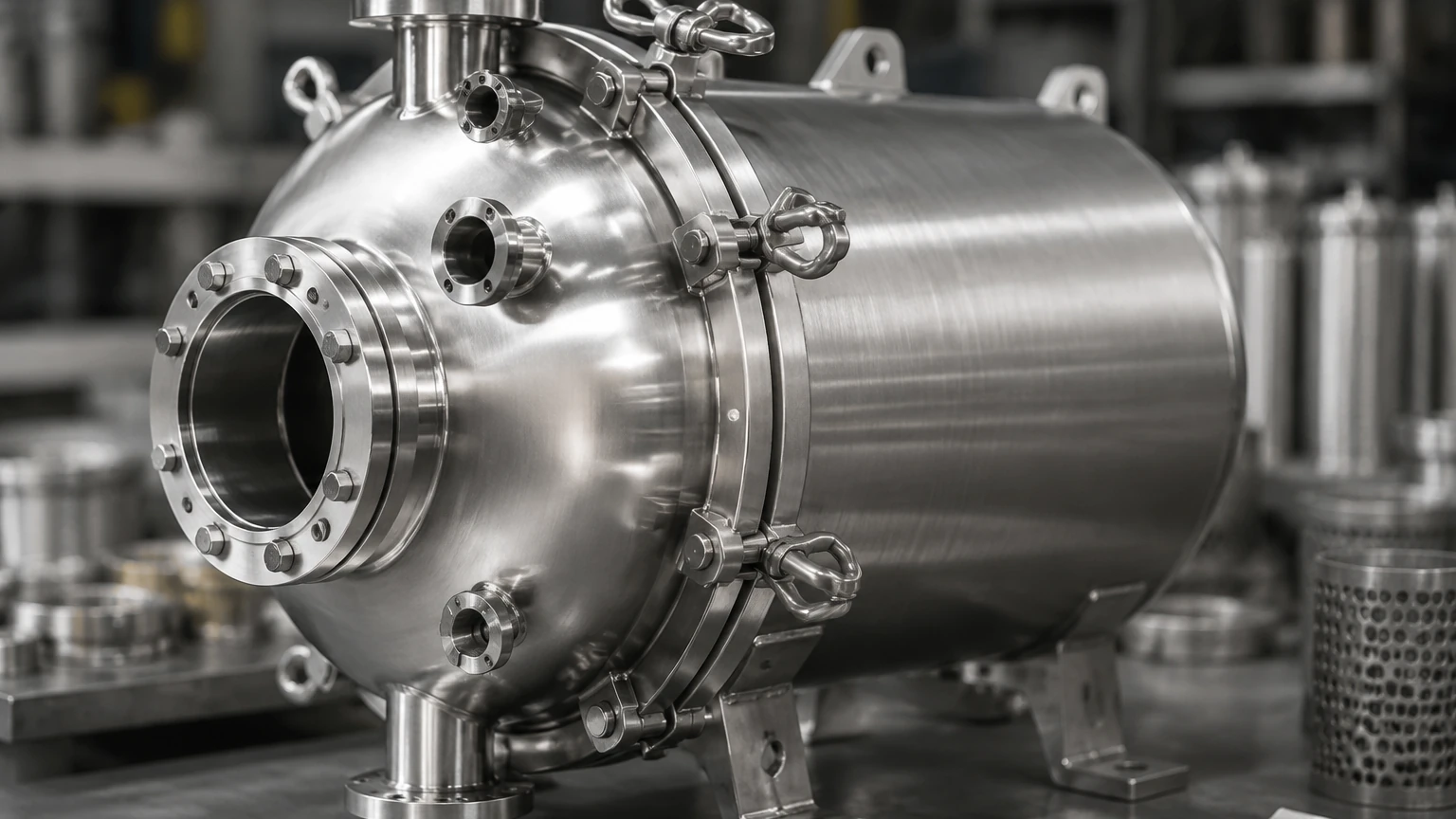
In the landscape of industrial filtration, the pressure vessle serves as the primary structural housing designed to contain fluids—liquids or gases—at pressures substantially different from the ambient atmosphere. For engineers and procurement teams sourcing filtration components, understanding the intersection between the vessel and the internal filter media is critical for system reliability, safety, and efficiency.
As a specialized manufacturer of stainless steel filtration solutions, Kaifil provides the precision-engineered elements that reside within these vessels. Whether the application involves high-viscosity chemical processing or sterile pharmaceutical manufacturing, the performance of the filtration system is dictated by how well the filter cartridge or wire mesh element integrates with the surrounding pressure vessle. To optimize these systems, technical professionals must evaluate material compatibility, pressure ratings, and flow dynamics within the housing.
Engineering Fundamentals of Filtration Vessels
A pressure vessle used in filtration is more than a simple container; it is a precision-engineered component that must withstand cyclic loading, thermal expansion, and chemical degradation. Most industrial filtration vessels are designed according to international standards, such as the ASME Boiler and Pressure Vessel Code (Section VIII), which ensures the wall thickness, weld integrity, and material properties are sufficient to prevent catastrophic failure.
Material Selection
Material selection is the first line of defense against system failure. In the industries Kaifil serves—including food and beverage, chemical, and hydraulic sectors—stainless steel is the industry standard.
1. SS304/304L: Suitable for general-purpose applications, providing good corrosion resistance and structural strength for water treatment and mild chemical processes.
2. SS316/316L: The preferred choice for more aggressive environments. The addition of molybdenum enhances resistance to pitting and crevice corrosion, particularly in chloride-rich environments or pharmaceutical applications where high-purity standards are mandatory.
3. Specialty Alloys: For extreme conditions involving highly acidic or alkaline fluids, vessels may be constructed from or lined with alloys like Hastelloy or Monel, though high-grade stainless steel remains the most cost-effective solution for the majority of industrial filtration needs.
Pressure and Temperature Ratings
The "Maximum Allowable Working Pressure" (MAWP) is a critical specification. Engineers must ensure the vessel is rated for the peak operating pressure of the pump system, including potential pressure spikes. Furthermore, the temperature of the process fluid affects the tensile strength of the metal. As temperature increases, the allowable stress of the stainless steel decreases, necessitating a derating of the pressure vessle's capacity.
Integration of Filter Elements and Vessel Design
The internal geometry of a pressure vessle directly impacts the efficiency of the filtration process. A poorly designed vessel can lead to uneven flow distribution, causing premature clogging of the filter media or "channeling," where the fluid bypasses the media entirely.
Flow Distribution and Turbulence
When fluid enters the vessel, it should ideally be distributed evenly across the surface of the stainless steel filter cartridges or wire mesh screens. If the inlet velocity is too high or the baffle design is inadequate, the resulting turbulence can cause mechanical wear on the filter elements. For those seeking high-performance filtration components, reviewing the technical specifications on the Main Page can help in selecting the right media to match the flow characteristics of a specific vessel.
Sealing Mechanisms
The interface between the filter element and the vessel is a common point of failure. Bypassing occurs when unfiltered fluid leaks through the seals, contaminating the downstream process. Common sealing methods include:
* Double Open End (DOE): Relies on compression gaskets at both ends of the filter.
* Single Open End (SOE) with O-rings: Typically utilizes 222 or 226 O-ring configurations to provide a high-integrity, leak-proof seal, which is essential in high-pressure or high-purity applications.
* Threaded Connections: Used in hydraulic or high-pressure gas filtration where mechanical stability is paramount.
Selection Criteria for Industrial Engineers
When specifying a pressure vessle for a new filtration system, or when upgrading existing hardware, several technical factors must be confirmed to ensure the system meets the total cost of ownership (TCO) goals.
Micron Rating vs. Pressure Drop
The relationship between the filtration accuracy (micron rating) and the initial pressure drop ($ΔP$) is a fundamental engineering trade-off. A tighter filter mesh will naturally increase the resistance to flow. However, if the pressure vessle is undersized for the required flow rate, the initial $ΔP$ will be high, leaving very little room for the pressure to build as the filter collects contaminants. This results in shorter filter life and increased downtime for replacements.
Surface Finish and Cleanability
In the food, beverage, and pharmaceutical industries, the internal surface finish of the vessel is as important as its pressure rating. Surfaces are often electropolished to achieve a specific Ra (Roughness Average) value, typically below 0.8 μm. This prevents bacterial growth and ensures that the vessel can be effectively cleaned through CIP (Clean-In-Place) or SIP (Steam-In-Place) protocols.
Operational Risks and Safety Considerations
Operating a pressure vessle involves inherent risks that must be mitigated through proper design and maintenance.
Fatigue and Stress Corrosion Cracking
Continuous pressure cycling—starting and stopping pumps—can lead to metal fatigue over time. Additionally, in the presence of specific chemicals and tensile stress, stainless steel can suffer from Stress Corrosion Cracking (SCC). Regular non-destructive testing (NDT), such as ultrasonic or radiographic inspection of welds, is necessary to identify these issues before they lead to vessel rupture.
Overpressure Protection
Every filtration pressure vessle must be equipped with overpressure protection, such as a safety relief valve (SRV) or a rupture disk. These devices are set to trigger at a pressure slightly above the MAWP but below the hydrostatic test pressure of the vessel. In filtration systems, these are often placed upstream of the filter to protect the vessel if the filter becomes completely blinded.
Maintenance and Replacement Cycles
To maintain optimal performance, a structured maintenance schedule is required. This includes not only the replacement of the internal filter elements but also the inspection of the vessel’s structural components.
1. Gasket and O-ring Inspection: Seals should be replaced every time the vessel is opened for filter maintenance. Elastomers can take a permanent set or degrade due to chemical exposure, leading to bypass leaks.
2. Corrosion Monitoring: Even stainless steel can corrode under the right conditions. Visual inspections should look for pitting, discoloration, or thinning of the vessel walls.
3. Differential Pressure Monitoring: Installing high-quality pressure gauges upstream and downstream of the vessel is the most effective way to monitor the health of the internal filter. A sudden drop in differential pressure may indicate a ruptured filter element or a failed seal, while a rapid increase indicates heavy contaminant loading.
Customization and OEM Solutions
Standard off-the-shelf vessels often fail to meet the specific requirements of complex industrial processes. Customization allows engineers to optimize the filtration system for space constraints, unique flow rates, or specific chemical compatibilities.
Kaifil specializes in providing the internal filtration architecture that makes these custom systems successful. By working closely with OEM partners, Kaifil ensures that the stainless steel wire mesh or sintered metal cartridges are designed to fit perfectly within the designated pressure vessle, maximizing the effective filtration area and extending the service interval.
Engineering Support for System Design
Before finalizing a purchase, engineers should confirm several key data points with their filtration partner:
* Fluid Properties: Viscosity, density, and chemical composition at operating temperature.
* Contaminant Profile: Type of solids, particle size distribution, and concentration.
* Operational Parameters: Continuous vs. batch processing, flow rate, and target effluent quality.
By addressing these factors during the design phase, companies can avoid the high costs associated with emergency maintenance and process contamination. For detailed technical data on filter element compatibility and performance expectations, technical teams are encouraged to Review product options and application support to ensure their filtration hardware is perfectly matched to their operational needs.
Conclusion
The pressure vessle is the silent workhorse of the industrial filtration world. While the filter media performs the actual separation, the vessel provides the necessary environment for that separation to occur safely and efficiently. By focusing on high-quality materials, adhering to strict design codes, and selecting precision-engineered internal components, industrial facilities can achieve reliable filtration performance that protects downstream equipment and ensures product consistency. Understanding the technical nuances of vessel-filter integration is the first step toward optimizing any industrial fluid process.
