


Produced Water Process
In the oil and gas industry, produced water represents the largest volume byproduct stream generated during the extraction of hydrocarbons. As reservoirs age, the ratio of water to oil typically increases, making the efficiency of the produced water process a critical factor in both operational profitability and environmental compliance. For engineers and facility managers, designing and maintaining an effective treatment train requires a deep understanding of fluid chemistry, filtration mechanics, and material science.
Produced water is not a uniform substance; its composition varies significantly based on the geographic location of the well, the geological formation, and the type of hydrocarbons being produced. However, it generally contains a complex mixture of dissolved inorganic salts, hydrocarbons (both dissolved and suspended), organic acids, heavy metals, and various chemical additives used during the drilling and production phases. Managing this stream through a robust produced water process is essential for either safe environmental discharge or successful reinjection into the reservoir for enhanced oil recovery (EOR).
Understanding the Stages of the Produced Water Process
A standard produced water process is typically divided into three or four distinct stages, each designed to target specific contaminants. The complexity of the system is dictated by the final destination of the water—whether it is being released into the ocean, sent to a municipal treatment plant, or reinjected into a disposal well.
Primary Treatment: Gravity Separation
The first stage focuses on the removal of bulk oil and large suspended solids. This is primarily achieved through gravity-based separation technologies such as API separators or corrugated plate interceptors (CPI). In these units, the difference in density between oil, water, and solids allows the oil to float to the surface and the heavier solids to settle at the bottom. While effective for large droplets, primary treatment rarely achieves the low oil-in-water (OIW) concentrations required by modern regulations.
Secondary Treatment: Enhanced Separation
To address smaller oil droplets (typically in the 10 to 50-micron range), secondary treatment methods are employed. Hydrocyclones and Dissolved Air Flotation (DAF) units are common at this stage. Hydrocyclones use centrifugal force to separate oil from water, while DAF units introduce micro-bubbles that attach to oil droplets and suspended solids, carrying them to the surface for skimming. Even after secondary treatment, the water may still contain fine particulates and emulsified oil that can damage downstream equipment or clog injection formations.
Tertiary Treatment: Fine Filtration and Polishing
This is the stage where precision filtration becomes paramount. Tertiary treatment is designed to remove the remaining fine solids and dispersed oil to meet stringent discharge limits or to protect the permeability of reinjection wells. This stage often utilizes media filters, nut shell filters, or high-performance stainless steel filter cartridges. For many industrial applications, the reliability of the Main Page filtration components determines the overall uptime of the produced water process.
The Role of Stainless Steel Filtration in Produced Water
In the demanding environment of an oilfield, filtration components must withstand extreme conditions, including high pressures, fluctuating temperatures, and highly corrosive fluids. Stainless steel wire mesh and sintered metal filters are often preferred over disposable polymer-based filters for several technical reasons.
Durability and Mechanical Strength
Produced water often carries abrasive sand and scale. Polymer filters can suffer from structural failure or "unloading" under high differential pressure. In contrast, stainless steel filter elements, such as those manufactured by Kaifil, provide the structural integrity required to maintain filtration accuracy even when the pressure drop across the filter increases due to cake build-up.
Chemical Compatibility
The presence of hydrogen sulfide (H2S), carbon dioxide (CO2), and high concentrations of chlorides makes produced water highly corrosive. While standard 304 stainless steel may suffice for some water treatment applications, the produced water process usually demands 316L stainless steel, Duplex, or even Super Duplex materials to prevent pitting and stress corrosion cracking. Selecting the correct alloy is a fundamental engineering decision that impacts the lifespan of the filtration system.
Cleanability and Reusability
Unlike disposable cartridges that contribute to the waste stream and require frequent manual intervention for replacement, stainless steel wire mesh filters can often be cleaned and reused. Whether through backwashing, ultrasonic cleaning, or chemical Clean-In-Place (CIP) procedures, reusable metal filters offer a lower long-term environmental impact and reduced operational expenditure.
Key Engineering Considerations for Filter Selection
When specifying filtration components for a produced water process, engineers must evaluate several variables to ensure the system performs as expected. Failure to account for these factors can lead to premature filter blinding, bypass leakage, or downstream contamination.
Micron Rating and Efficiency
The "micron rating" of a filter indicates the size of particles it is designed to remove. However, it is important to distinguish between nominal and absolute ratings. In produced water applications, an absolute rating is often necessary for protecting sensitive equipment like high-pressure injection pumps. If the goal is to protect a reservoir formation with small pore throats, the filtration system must consistently remove particles larger than a specific threshold (e.g., 2 or 5 microns).
Flow Velocity and Flux Rates
The rate at which water passes through the filter media, known as the flux, significantly affects filtration efficiency. High flux rates can force deformable oil droplets through the mesh or cause particles to bridge prematurely. Engineers must balance the footprint of the filtration vessel with a flux rate that allows for optimal contaminant capture and manageable pressure drops.
Differential Pressure (Delta P) Monitoring
Monitoring the pressure difference between the inlet and outlet of the filter housing is the primary method for determining when a filter requires cleaning or replacement. A well-designed produced water process includes automated sensors to trigger backwash cycles or alarms. Understanding the maximum allowable Delta P of a stainless steel cartridge is essential to prevent mechanical deformation of the pleats or the support core.
Common Risks and Mitigation in Produced Water Filtration
Operating a produced water process involves navigating several technical risks that can compromise water quality and equipment longevity.
Scaling and Mineral Deposition
As pressure and temperature change throughout the treatment train, dissolved minerals like calcium carbonate or barium sulfate can precipitate out of the water, forming scale on filter surfaces. This can rapidly increase pressure drop. Mitigation strategies include the use of chemical scale inhibitors or selecting filter media with surface treatments that discourage mineral adhesion.
Biological Fouling
Produced water often contains bacteria, including sulfate-reducing bacteria (SRB), which can form biofilms on filtration surfaces. Biofouling is notoriously difficult to remove and can lead to localized corrosion (Microbiologically Influenced Corrosion, or MIC). Regular biocide dosing and the use of robust metal filters that can withstand aggressive chemical cleaning are common solutions.
Oil Blinding
If the primary and secondary treatment stages fail to remove enough bulk oil, the tertiary filters can become "blinded" or coated in a layer of oil. This prevents water from passing through the media. In such cases, the filter must be cleaned with surfactants or replaced. Ensuring that the upstream produced water process is operating correctly is the best way to protect fine filtration stages from oil blinding.
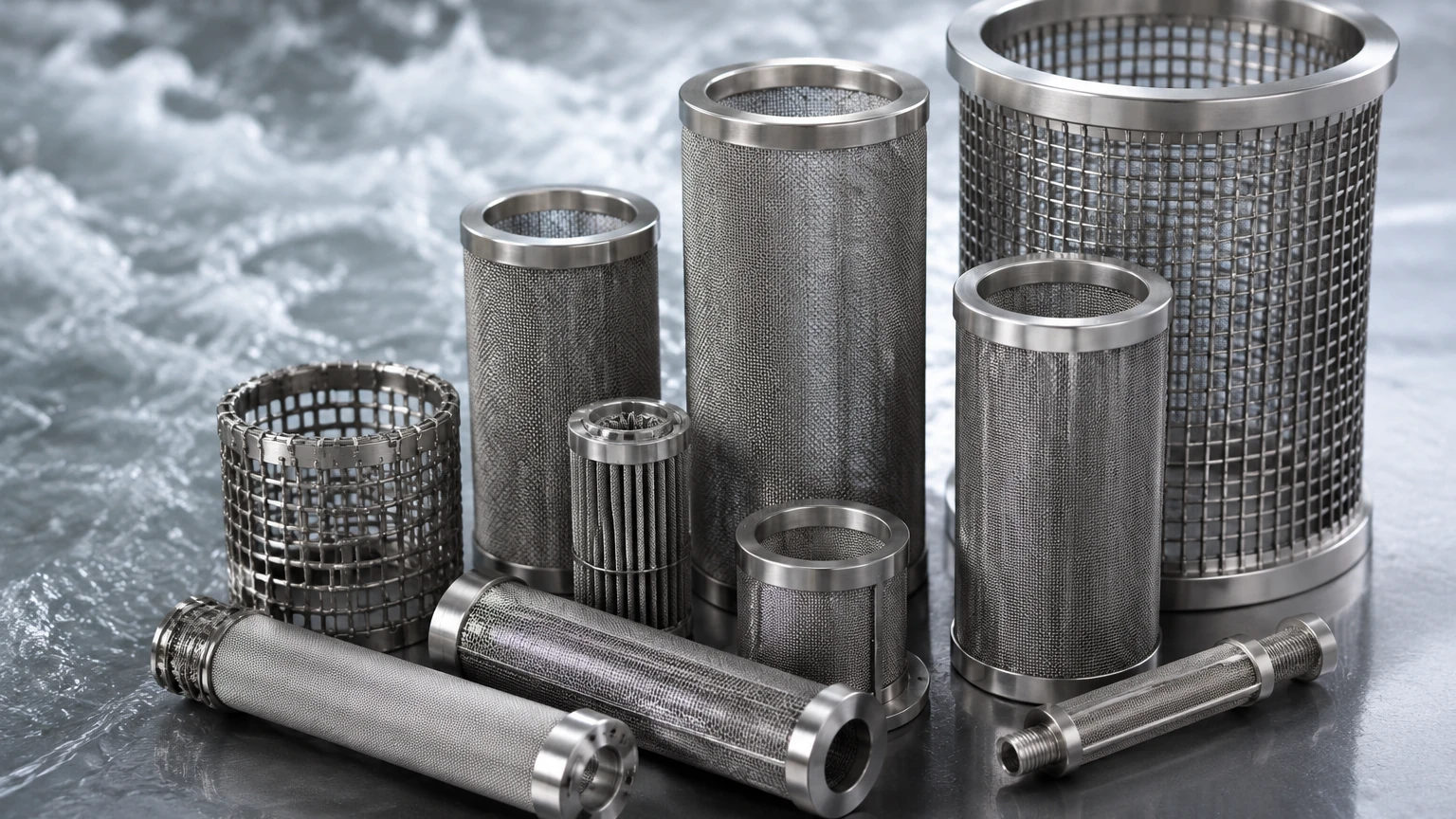
Customization and OEM Solutions in Filtration
No two oilfields are identical, and off-the-shelf filtration solutions often fall short of meeting specific site requirements. This is where custom engineering and OEM capabilities become vital. For many projects, the ability to customize the dimensions, end-cap configurations, and mesh layers of a filter cartridge allows for seamless integration into existing infrastructure.
Customization options typically include:
- Layering and Sintering: Combining multiple layers of wire mesh (e.g., a fine filtration layer protected by coarser support layers) through sintering to create a single, robust filter medium.
- Variable End-Caps: Designing specific gaskets or threaded connections to match proprietary housing designs.
- Reinforced Cores: Adding heavy-duty internal support cores for applications involving extreme pressure surges.
By working closely with a manufacturer like Kaifil, engineers can develop filtration components that are tailored to the specific particle size distribution and chemical profile of their produced water stream.
Optimizing Total Cost of Ownership (TCO)
While the initial capital expenditure (CAPEX) of high-quality stainless steel filtration systems may be higher than that of disposable systems, the Total Cost of Ownership is often significantly lower. When calculating TCO for a produced water process, several factors must be considered:
1. Replacement Frequency: How often must filters be replaced? Disposable filters may need changing weekly, whereas a stainless steel element may last for years with proper cleaning.
2. Labor Costs: The man-hours required to change out hundreds of disposable cartridges can be substantial, especially on offshore platforms where labor is expensive and space is limited.
3. Disposal Costs: Used filters contaminated with hydrocarbons are often classified as hazardous waste, incurring high disposal fees.
4. Downtime: Every hour the produced water process is offline for filter maintenance represents a potential bottleneck for oil production.
Investing in durable, cleanable metal filtration components reduces the frequency of interventions and ensures a more consistent water quality output.
Conclusion: Selecting the Right Partner for Produced Water Solutions
The produced water process is a complex engineering challenge that requires a balance of mechanical, chemical, and operational expertise. As environmental regulations tighten and the need for efficient water management grows, the role of precision filtration becomes even more critical. High-performance stainless steel filter cartridges and wire mesh components provide the reliability and durability necessary to handle the harsh conditions of the oilfield.
Before moving forward with a filtration upgrade or a new project design, technical professionals should confirm the specific chemical compatibility requirements, expected solids loading, and desired micron efficiency. Engaging with a specialist manufacturer can provide the technical insights needed to optimize the filtration stage of the produced water process, ensuring long-term operational success and environmental compliance.
