


Pu Filter Foam
In the landscape of industrial filtration, selecting the appropriate medium requires a deep understanding of fluid dynamics, chemical compatibility, and mechanical durability. Polyurethane (PU) filter foam, specifically reticulated open-cell foam, is a versatile material used across various sectors including HVAC, automotive, medical, and industrial manufacturing. Unlike standard upholstery foam, pu filter foam is engineered with a precise cellular structure designed to facilitate airflow and liquid permeability while capturing particulate matter.
For engineers and procurement professionals, the challenge lies in balancing the initial cost-effectiveness of foam media with the long-term performance requirements of the application. While Kaifil specializes in high-precision stainless steel filtration solutions, understanding how pu filter foam integrates into broader filtration systems—or when it should be replaced by more durable metal alternatives—is essential for optimizing system efficiency.
Understanding the Structure of Reticulated Polyurethane Foam
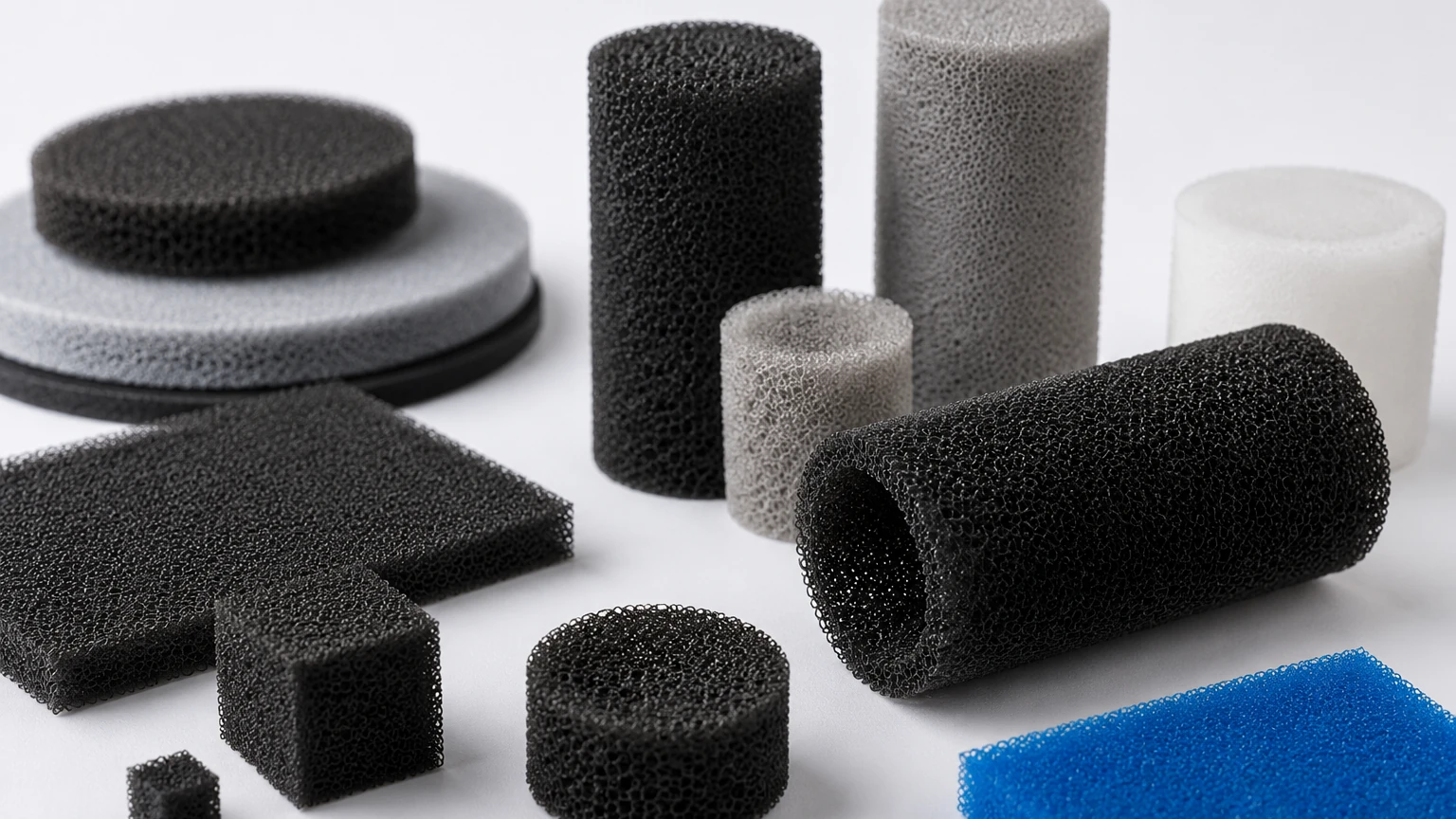
The defining characteristic of pu filter foam is its reticulated structure. Standard polyurethane foam contains "windows" or membranes between the cell struts. In the reticulation process—often achieved through a controlled thermal explosion (zapping) or a chemical etch—these membranes are removed. What remains is a three-dimensional skeletal structure of dodecahedron-shaped cells.
This open-cell architecture is critical for filtration because it creates a tortuous path for the fluid (gas or liquid) to pass through. As the fluid moves through the foam, particles are trapped by the struts via impingement and interception. Because the membranes are removed, the foam exhibits extremely low resistance to flow, which is vital for maintaining system pressure and reducing energy consumption in fans and pumps.
The Technical Significance of PPI (Pores Per Inch)
The most common metric used to specify pu filter foam is PPI, or Pores Per Inch. This value determines the filtration efficiency and the pressure drop across the medium. Industrial foam typically ranges from 10 PPI (very coarse) to 100 PPI (very fine).
* 10 to 30 PPI: These are coarse foams used primarily as pre-filters for large dust particles or in applications like pond filtration and ceramic foam filters for foundries. They offer the lowest pressure drop and the highest dust-holding capacity for large debris.
* 45 to 60 PPI: These mid-range foams are frequently found in small engine air filters and electronic equipment cooling systems. They provide a balance between particle capture and airflow.
* 80 to 100 PPI: Fine-pore foams are used for high-efficiency filtration, often in medical devices or precision instruments. While they capture much smaller particles, they also clog more quickly and create a higher initial pressure drop.
When specifying PPI, engineers must consider the face velocity of the fluid. A higher PPI foam used in a high-velocity stream will result in a significant pressure spike, potentially damaging the system or leading to bypass filtration where the fluid finds an alternative, unfiltered path.
Material Chemistry: Polyester vs. Polyether PU Foam
Not all pu filter foam is chemically identical. The two primary types used in industrial settings are polyester-based and polyether-based polyurethanes. Choosing the wrong type can lead to premature filter failure.
Polyester PU Foam
Polyester-based foams generally offer superior mechanical strength, tensile strength, and resistance to hydrocarbons like oil and gasoline. This makes them the standard choice for automotive air filters and industrial lubricant filtration. However, polyester foam is susceptible to hydrolysis—the breakdown of the polymer chain in the presence of moisture and heat. It is not recommended for high-humidity environments or water-based filtration.
Polyether PU Foam
Polyether-based foams are highly resistant to water and microbial growth. They do not hydrolyze as easily as polyester foams, making them ideal for water treatment, outdoor applications, and medical devices. While their physical strength and oil resistance are generally lower than polyester foams, their longevity in aqueous environments is significantly higher.
Key Performance Metrics for Industrial Foam Selection
Beyond PPI and base chemistry, several other technical parameters must be evaluated to ensure the pu filter foam meets the demands of the application:
1. Density: Measured in pounds per cubic foot (pcf) or kilograms per cubic meter (kg/m³). While density does not always correlate directly with PPI, it influences the foam's durability and its ability to maintain its shape under pressure.
2. Tensile Strength and Elongation: These metrics define how much stress the foam can withstand before tearing. This is particularly important for filters that undergo mechanical cleaning or are subjected to high-pressure pulses.
3. Compression Set: This measures the foam's ability to return to its original thickness after being compressed. If a filter is squeezed into a housing, it must maintain a proper seal against the walls to prevent "dirty air" bypass.
4. Thermal Stability: PU foams generally have a limited temperature range, typically up to 200°F (93°C). For applications exceeding these temperatures, engineers often transition to stainless steel wire mesh or sintered metal components, such as those found on the Main Page.
Industrial Applications and Hybrid Filtration Systems
Pu filter foam is rarely used in isolation in heavy industrial processes. Instead, it often serves as a component in a multi-stage filtration strategy.
* HVAC and Air Handling: Coarse foam is used as a primary pre-filter to protect more expensive HEPA or pocket filters from large particulate loading.
* Acoustic Filtration: Because of its open-cell structure, PU foam can serve a dual purpose: filtering intake air while dampening the noise generated by industrial blowers and compressors.
* Automotive and Small Engines: Foam filters are favored for their ability to be saturated with oil, which enhances their dust-trapping capabilities in off-road environments.
* Pre-filtration for Metal Media: In high-precision chemical processing, a pu filter foam layer may be used to remove the bulk of suspended solids before the fluid reaches a precision stainless steel filter cartridge. This extends the service life of the more expensive metal element.
Comparing PU Filter Foam with Stainless Steel Media
While pu filter foam is an excellent low-cost solution for many applications, it has distinct limitations compared to the metal filtration solutions manufactured by Kaifil. Engineers must decide between the disposability of foam and the permanence of metal.
| Feature | PU Filter Foam | Stainless Steel Wire Mesh |
| :— | :— | :— |
| Temperature Limit | Approx. 90°C – 120°C | Up to 800°C+ (depending on alloy) |
| Chemical Resistance | Limited (Sensitive to strong acids/bases) | Excellent (304, 316L, Hastelloy) |
| Cleanability | Limited (Disposable or limited wash) | Excellent (Ultrasonic, back-flushing) |
| Pressure Rating | Low (Compressible) | High (Structural rigidity) |
| Filtration Depth | Depth filtration | Surface or depth filtration |
For applications involving high-pressure hydraulics, corrosive chemicals, or steam, stainless steel is the mandatory choice. However, for low-pressure air intake or simple water debris removal, pu filter foam remains a viable, cost-effective option.
Engineering Checklist for Specifying PU Filter Foam
Before finalizing a purchase order for pu filter foam, technical teams should confirm the following details with their supplier to avoid operational failures:
* Fluid Compatibility: Will the foam be exposed to oils, water, or solvents? (Select Polyester for oil, Polyether for water).
* Operating Temperature: Will the continuous operating temperature exceed 90°C?
* Required Efficiency: What is the target micron rating? (Map this to the appropriate PPI).
* Pressure Drop Constraints: What is the maximum allowable clean pressure drop for the system?
* Fire Retardancy: Does the application require compliance with UL94 or other flame-retardant standards? Many PU foams require chemical additives to meet these codes.
* Dimensional Tolerances: Foam is flexible; ensure that the housing design accounts for a slight compression to ensure a bypass-free seal.
Conclusion
Pu filter foam serves as a fundamental building block in the world of industrial filtration. Its unique reticulated structure provides a high surface area for particle capture with minimal impact on flow rates. By understanding the nuances between PPI levels and the chemical differences between polyester and polyether bases, engineers can effectively implement foam media in a wide range of environments.
However, in demanding industrial environments where durability, high-temperature resistance, and precise filtration are non-negotiable, transitioning to custom metal filtration components is often the most cost-effective long-term strategy. For those looking to explore high-performance alternatives or integrated filtration assemblies, you can review product options and application support on the Main Page. Whether you are designing a new system or optimizing an existing process, selecting the right material—be it polymer or metal—is the key to achieving reliable and efficient filtration performance.
