


Pulse Dust Collector
In modern industrial environments, maintaining air quality and recovering valuable particulate matter are critical operational requirements. The pulse dust collector, also known as a pulse-jet baghouse or pulse-jet dust collector, has become the industry standard for high-efficiency air filtration. Unlike traditional vibration-based or reverse-air systems, the pulse-jet mechanism allows for continuous operation without shutting down the airflow during the cleaning cycle. For engineers and procurement professionals, understanding the technical nuances of these systems—specifically the role of high-performance filtration media—is essential for optimizing plant performance and ensuring regulatory compliance.
At its core, a pulse dust collector is a suction-based system designed to remove granular solids and dust from process air or exhaust gases. The efficiency of these systems is heavily dependent on the quality of the internal filter elements. While many standard applications utilize fabric bags, demanding industrial processes in the chemical, pharmaceutical, and food sectors often require more robust solutions. This is where specialized manufacturers provide critical support, offering precision-engineered components that can be found on the Main Page of technical filtration providers.
Understanding the Pulse-Jet Mechanism in Industrial Filtration
The defining characteristic of a pulse dust collector is its cleaning method. Dust-laden air enters the collector housing, where it is drawn through filter media (bags or cartridges). As air passes through the media, dust particles are trapped on the exterior surface, forming what is known as a "dust cake." This cake actually assists in filtration by catching smaller particles, but it eventually increases the pressure drop across the system, reducing airflow efficiency.
To manage this, the pulse-jet system utilizes a high-pressure burst of compressed air. A solenoid valve releases a "pulse" that travels through a manifold and into a venturi nozzle located above each filter element. This burst creates a shockwave that causes the filter media to expand rapidly and then snap back. The mechanical shock, combined with a brief moment of reverse airflow, dislodges the dust cake, which then falls into a collection hopper below.
This process happens in milliseconds and typically occurs in one row of filters at a time. Because only a small fraction of the total filtration area is being cleaned at any given moment, the rest of the system continues to process air, allowing for 24/7 continuous operation. For engineers, the reliability of this cycle depends on the structural integrity of the filter media and its ability to withstand repeated mechanical stress.
Critical Components of a Pulse Dust Collector System
A pulse dust collector is a complex assembly of mechanical and pneumatic components. Each part must be synchronized to maintain optimal filtration efficiency.
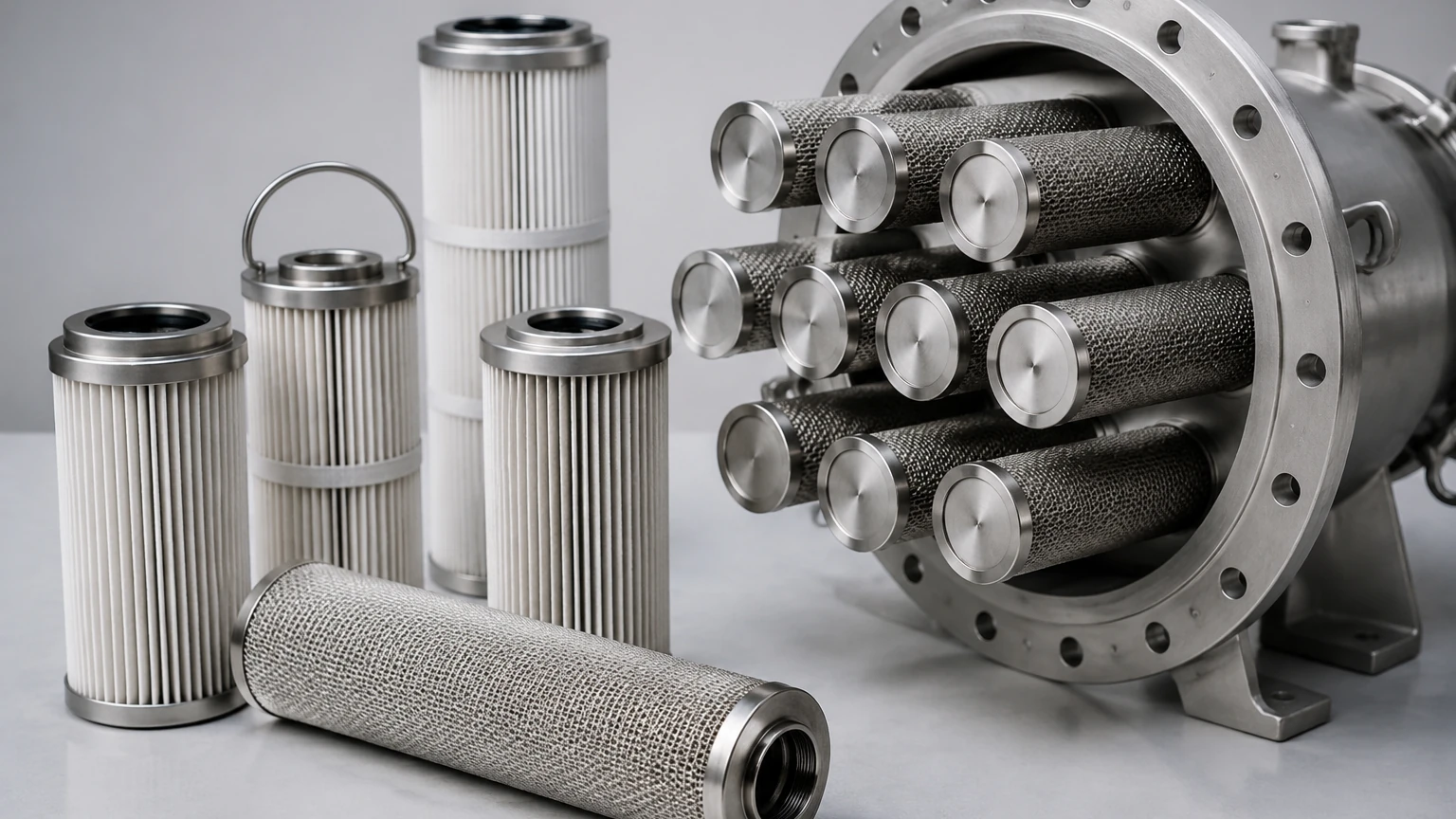
1. Filter Elements: These are the heart of the system. Depending on the application, these may be cylindrical bags, pleated bags, or rigid stainless steel filter cartridges. In high-temperature or corrosive environments, stainless steel wire mesh or sintered metal elements are preferred due to their thermal stability and chemical resistance.
2. Pulse Valves and Manifolds: These components control the delivery of compressed air. Precision is required to ensure the pulse is strong enough to clean the media but not so violent that it causes premature wear or "blinding" (forcing particles deep into the media pores).
3. Venturi Tubes: Located at the top of the filter, the venturi accelerates the compressed air pulse, creating the necessary pressure differential to flex the filter media effectively.
4. Timer Board/Controller: This electronic component manages the frequency and duration of the pulses. Modern systems often use "clean-on-demand" technology, where the pulse is only triggered when the differential pressure reaches a specific threshold, saving compressed air and extending filter life.
5. Housing and Hoppers: The structural shell must be airtight and capable of withstanding the vacuum or pressure generated by the system's fan. Hoppers are designed with specific angles to ensure dust flows freely into the discharge valve.
Selecting Filter Media: The Case for Stainless Steel and Metal Mesh
While polyester and aramid fabrics are common in general dust collection, many industrial applications involve conditions that destroy synthetic fibers. When dealing with high temperatures (above 250°C), abrasive dust, or aggressive chemical vapors, engineers often turn to stainless steel filtration solutions.
Stainless steel filter cartridges and wire mesh filters offer several advantages in a pulse dust collector environment:
* Thermal Resistance: Metal filters can operate in environments where synthetic bags would melt or ignite. This is crucial for metal smelting, cement production, and chemical incineration.
* Mechanical Strength: The pulse-jet action involves repetitive mechanical flexing. Stainless steel mesh, particularly sintered varieties, provides the structural rigidity to withstand thousands of pulses without losing its shape or filtration accuracy.
* Cleanability: Metal media can often be cleaned more thoroughly than fabric. In applications involving sticky or hygroscopic dust, the smooth surface of a stainless steel wire mesh prevents the "cake" from bonding permanently to the media.
* Longevity: Although the initial investment in metal filtration components is higher, the extended replacement cycle—often years compared to months for fabric—significantly reduces the total cost of ownership.
When selecting media, it is vital to consult with a manufacturer that understands the specific demands of your industry. Detailed specifications for these high-performance materials are available on the Main Page of specialized filtration manufacturers.
Engineering Design Parameters: Air-to-Cloth Ratio and Pressure Drop
To ensure a pulse dust collector operates efficiently, engineers must calculate several critical design parameters. The most important of these is the Air-to-Cloth (A/C) ratio, also known as the filtration velocity. This is the ratio of the volume of air being filtered (in CFM) to the total surface area of the filter media (in square feet).
An A/C ratio that is too high will force dust particles into the media, leading to rapid clogging and high pressure drops. Conversely, a ratio that is too low results in an oversized, unnecessarily expensive system. For pulse-jet systems, typical A/C ratios range from 3:1 to 6:1, though this varies significantly based on the dust type and particle size distribution.
Another key metric is the differential pressure (DP). This is the difference in pressure between the "dirty" side and the "clean" side of the filter. A rising DP indicates that the dust cake is building up. If the pulse-jet cleaning system is working correctly, the DP should stabilize within a specific range. If the DP continues to climb despite regular pulsing, it may indicate that the filter media is "blinded" or that the compressed air pressure is insufficient.
Evaluating Performance and Durability in Demanding Environments
When evaluating a pulse dust collector for a specific project, engineers must look beyond the initial purchase price. The true value of the system lies in its performance under stress and its long-term reliability.
Filtration Efficiency and Particle Size
Efficiency is usually measured by the percentage of particulate matter captured. For pharmaceutical or food processing applications, the system may need to meet HEPA-level standards or capture sub-micron particles. The choice of filter media—whether it is a standard weave or a precision-sintered mesh—will dictate the minimum particle size that can be effectively managed.
Chemical and Moisture Compatibility
In chemical processing, the air stream may contain acidic or alkaline vapors. If the filter media is not chemically compatible, it will degrade, leading to "leakage" or total system failure. Similarly, moisture in the air stream can cause dust to turn into a slurry, which is nearly impossible to remove with a pulse of air. In these cases, hydrophobic coatings or heated housings may be required, alongside stainless steel components that resist corrosion.
Maintenance, Troubleshooting, and Risk Mitigation
Even the best-designed pulse dust collector requires regular maintenance to prevent downtime. Common risks include:
* Pulse Valve Failure: If a solenoid valve fails, a section of the collector will stop cleaning, leading to a rapid rise in differential pressure.
* Compressed Air Contamination: If the compressed air used for pulsing contains oil or moisture, it will contaminate the filter media, causing dust to stick and eventually blinding the filters.
* Abrasion: High-velocity dust particles can act like sandpaper, wearing holes in filter bags or metal mesh. Proper baffle design is necessary to redirect heavy particles into the hopper before they hit the filters.
Regular inspections should focus on the integrity of the seals, the condition of the pulse valves, and the cleanliness of the compressed air supply. For systems using metal filter cartridges, periodic ultrasonic cleaning may be an option to restore the media to its original permeability, a significant advantage over disposable filters.
Customization and Technical Support for Industrial Applications
No two industrial processes are identical, and off-the-shelf filtration solutions often fall short in specialized applications. Customization is frequently required in terms of filter dimensions, alloy selection (such as 304 vs. 316L stainless steel), and micron ratings.
When sourcing components for a pulse dust collector, it is beneficial to work with a partner who offers OEM capabilities. This ensures that the replacement filters or custom components integrate seamlessly with existing housings while meeting the precise filtration requirements of the process. Whether you are designing a new system or upgrading an existing one, technical guidance on material selection and filtration accuracy is paramount. For a comprehensive overview of available filtration technologies and customized metal filter options, engineers can review the technical resources and product catalogs found on the Main Page.
By focusing on high-quality materials, precise engineering calculations, and a robust maintenance strategy, industrial facilities can ensure that their pulse dust collector remains a reliable asset, protecting both the environment and the bottom line.
