


Pulse Jet Bag Filter
In the landscape of industrial air pollution control and product recovery, the pulse jet bag filter stands as the most prevalent technology for high-efficiency dust collection. Engineered to handle high gas volumes and heavy dust loads, these systems are critical in industries ranging from chemical processing and pharmaceuticals to food production and metallurgy. For engineers and facility managers, understanding the technical nuances of pulse jet systems—from the mechanics of the cleaning cycle to the material science of the support structures—is essential for optimizing filtration performance and ensuring long-term operational reliability.
As a manufacturer specializing in precision stainless steel filtration solutions, Kaifil provides the high-performance components necessary to maintain these systems in demanding environments. By focusing on durability and filtration accuracy, industrial operations can achieve lower emission levels and reduced maintenance costs.
The Mechanics of Pulse Jet Filtration
A pulse jet bag filter, also known as a pressure-jet or reverse-jet baghouse, operates on a relatively simple yet highly effective principle. Unlike older shaker-style or reverse-air systems, pulse jet collectors clean the filter media without interrupting the primary airflow. This allows for continuous operation, which is a prerequisite for modern automated manufacturing lines.
The Filtration Cycle
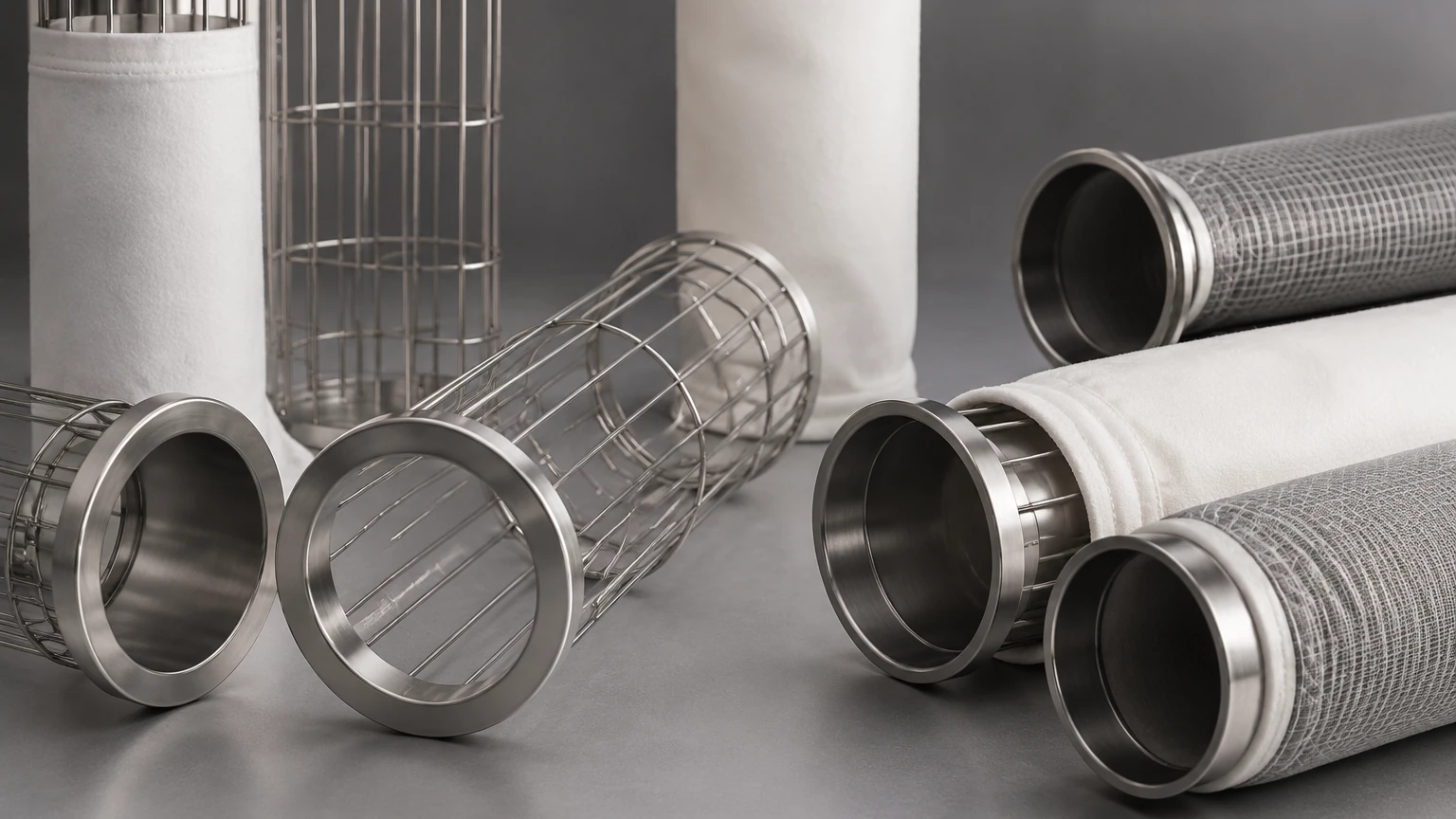
In a standard pulse jet configuration, dust-laden air enters the baghouse through an inlet manifold. The air is then directed into the filter chamber, where it passes through a series of cylindrical filter bags. These bags are supported internally by metal cages to prevent them from collapsing under the pressure of the airflow. As the air passes from the outside of the bag to the inside (outside-in filtration), the particulate matter is trapped on the exterior surface of the filter media.
The accumulation of this particulate matter forms what is known as a "dust cake." While the filter media itself provides the initial barrier, the dust cake eventually becomes the primary filtering agent, capable of capturing extremely fine particles that might otherwise pass through the clean fabric pores.
The Cleaning Cycle
As the dust cake thickens, the resistance to airflow—measured as differential pressure—increases. To maintain efficiency, the pulse jet bag filter employs a high-pressure burst of compressed air (typically 60 to 100 psi) to dislodge the accumulated dust.
A solenoid valve releases a short pulse of air (usually lasting 0.1 to 0.2 seconds) into a blowpipe located above the filter bags. This air is directed through a venturi nozzle at the top of each bag. The rapid expansion of air creates a shockwave that travels down the length of the bag, causing it to flex outward momentarily. This mechanical flex, combined with a brief reversal of airflow, causes the dust cake to fracture and fall into the collection hopper below.
Critical Engineering Parameters
When specifying a pulse jet bag filter for an industrial application, several engineering parameters must be calculated to ensure the system does not fail prematurely or consume excessive energy.
Air-to-Cloth (A/C) Ratio
The A/C ratio, also known as the filtration velocity, is the ratio of the volume of air entering the filter (CFM) to the total square footage of the filter media. A lower A/C ratio generally results in higher filtration efficiency and longer bag life but requires a larger, more expensive baghouse. For pulse jet systems, typical A/C ratios range from 3:1 to 6:1, depending on the dust characteristics. Fine, abrasive, or cohesive dusts require a lower ratio to prevent "blinding" of the media.
Interstitial and Can Velocity
Engineers must also consider the velocity of the air moving between the filter bags, known as the interstitial velocity or can velocity. If this velocity is too high, the dust dislodged during the pulse cleaning cycle will be re-entrained by the upward airflow before it can settle into the hopper. This leads to a continuous cycle of cleaning and re-deposition, which significantly increases the pressure drop and shortens the lifespan of the filter components.
Material Selection and the Role of Stainless Steel
The environment inside a pulse jet bag filter can be incredibly harsh. High temperatures, corrosive gases, and abrasive particles can quickly degrade standard carbon steel components. This is where material selection becomes the defining factor in the total cost of ownership.
Filter Cages
The filter cage is the structural backbone of the bag. If the cage corrodes or deforms, the filter bag will lose its shape, leading to poor cleaning and eventual fabric failure. In chemical processing and food-grade applications, stainless steel (Grade 304 or 316) is the preferred material for cages. Stainless steel provides superior resistance to chemical attack and prevents rust from contaminating the filtered product.
At Kaifil, we emphasize the importance of precision-engineered metal components. Our expertise in stainless steel fabrication ensures that the internal supports of a filtration system can withstand the mechanical stress of thousands of pulse cycles without compromising the integrity of the filter media. For more information on our manufacturing capabilities and product range, please visit our Main Page.
Specialized Metal Mesh Filters
While fabric bags (polyester, aramid, or PTFE) are common, certain high-temperature or high-pressure applications require the use of stainless steel wire mesh filters. These metal filter elements offer unparalleled durability and can be cleaned and reused far more effectively than traditional fabric media. In applications involving steam, hot oils, or volatile organic compounds (VOCs), metal filtration components provide the thermal stability required to prevent system meltdowns.
Operational Challenges and Maintenance
Maintaining a pulse jet bag filter requires a proactive approach to monitoring and troubleshooting. Because these systems are often the last line of defense before air is exhausted into the atmosphere, a failure can result in environmental non-compliance and heavy fines.
Differential Pressure Monitoring
The most effective way to gauge the health of a pulse jet system is by monitoring the differential pressure (DP) across the tube sheet. A steady DP indicates a stable dust cake and effective cleaning. A sudden drop in DP may indicate a torn bag or a failed seal, while a steady increase (pressure creep) suggests that the bags are becoming blinded or that the compressed air system is failing.
Compressed Air Quality
The pulse jet cleaning mechanism relies on clean, dry compressed air. If moisture or oil enters the pulse valves, it can cause them to stick or freeze. Furthermore, moisture in the pulse air can lead to "mudding" on the filter bags, where the dust reacts with water to form a hard crust that cannot be removed by pulsing. This necessitates the use of high-quality air dryers and filters in the compressed air supply line.
Bag Replacement Cycles
Even with optimal cleaning, filter bags are consumable items. Over time, the mechanical flexing of the pulse cycle will cause the fibers to weaken. In high-temperature applications, chemical degradation (hydrolysis or oxidation) can also occur. Establishing a regular inspection schedule to check for holes, abrasion at the cage contact points, and tensioning issues is vital for preventing unscheduled downtime.
Customization and OEM Solutions
No two industrial filtration requirements are exactly the same. Factors such as particle size distribution, gas chemistry, and moisture content vary significantly between a pharmaceutical cleanroom and a cement kiln. Consequently, a one-size-fits-all approach to pulse jet bag filter design often leads to inefficiency.
Customization options often include:
* Specialized Coatings: Applying oleophobic or hydrophobic treatments to filter media to handle oily or wet dust.
* Custom Cage Designs: Increasing the number of vertical wires in a cage to provide better support for thin or delicate filter fabrics.
* High-Precision Venturis: Optimizing the shape of the venturi to maximize the air entrainment during the pulse, allowing for effective cleaning at lower compressed air pressures.
Kaifil works closely with OEM partners and end-users to develop customized filtration components that meet these specific demands. By integrating advanced manufacturing techniques with engineering expertise, we help our clients achieve filtration solutions that are not only effective but also durable enough for the most demanding industrial environments.
Conclusion: Selecting the Right System
Investing in a pulse jet bag filter is a significant capital expenditure, and the long-term performance of the system depends heavily on the quality of its internal components. Engineers must look beyond the initial purchase price and consider factors such as energy consumption (fan power and compressed air usage), maintenance frequency, and the cost of replacement parts.
When evaluating a filtration solution, confirm the following with your supplier:
1. Material Compatibility: Are the cages and housings resistant to the specific chemicals and temperatures of your process?
2. Cleaning Efficiency: Is the pulse system designed to clean the bags thoroughly without causing excessive mechanical wear?
3. Customization: Can the manufacturer provide bespoke components that fit your existing baghouse dimensions and performance requirements?
By focusing on these technical details and partnering with a manufacturer committed to quality, such as Kaifil, industrial operations can ensure their pulse jet bag filter remains a reliable asset for years to come. For technical support and to explore our full range of stainless steel filtration products, visit our Main Page.
