


Pulse Jet Filter
In industrial air pollution control and process gas filtration, the pulse jet filter stands as the most prevalent technology for high-efficiency particulate collection. Known for its ability to operate continuously without interrupting the gas flow during cleaning cycles, this system relies on the precise interaction between filter media, compressed air delivery, and structural design. For engineers and facility managers, selecting the right components—particularly the filter elements and their metallurgical properties—is critical to ensuring long-term operational stability and compliance with emission standards.
As a manufacturer specializing in custom stainless steel filtration solutions, Kaifil understands that the performance of a pulse jet filter is only as reliable as the media used to capture particulates. Whether dealing with high-temperature exhaust, corrosive chemical vapors, or abrasive dust, the choice of filter material and construction dictates the system's efficiency and total cost of ownership.
Understanding the Mechanics of Pulse Jet Filtration
The fundamental operation of a pulse jet filter involves the separation of solid particulates from a gas stream as it passes through a filter medium. Unlike older shaker or reverse-air systems that require the filtration process to stop for cleaning, pulse jet systems utilize a high-pressure burst of compressed air to clean the filter elements while the system remains online.
The Filtration Cycle
During the normal filtration phase, dust-laden gas enters the filter housing. The gas passes through the filter media from the outside to the inside (in most baghouse configurations) or through the pleats of a cartridge. The particulates are trapped on the surface of the media, forming what is known as a "dust cake." This cake actually improves filtration efficiency by acting as a secondary filter bed, but it also increases the pressure drop across the system.
The Cleaning Pulse
To maintain a manageable pressure differential, a timer or a pressure sensor triggers the cleaning cycle. A solenoid valve opens momentarily, releasing a pulse of compressed air (typically 60 to 100 psi) into a blowpipe positioned above the filter elements. This pulse travels through a Venturi nozzle, which induces additional surrounding air into the filter. The resulting shockwave and momentary internal pressurization cause the filter medium to expand rapidly, dislodging the dust cake, which then falls into the collection hopper below.
Critical Components in Industrial Pulse Jet Systems
A pulse jet filter is a complex assembly of mechanical and pneumatic parts. For technical professionals, understanding the role of each component is essential for optimizing system performance.
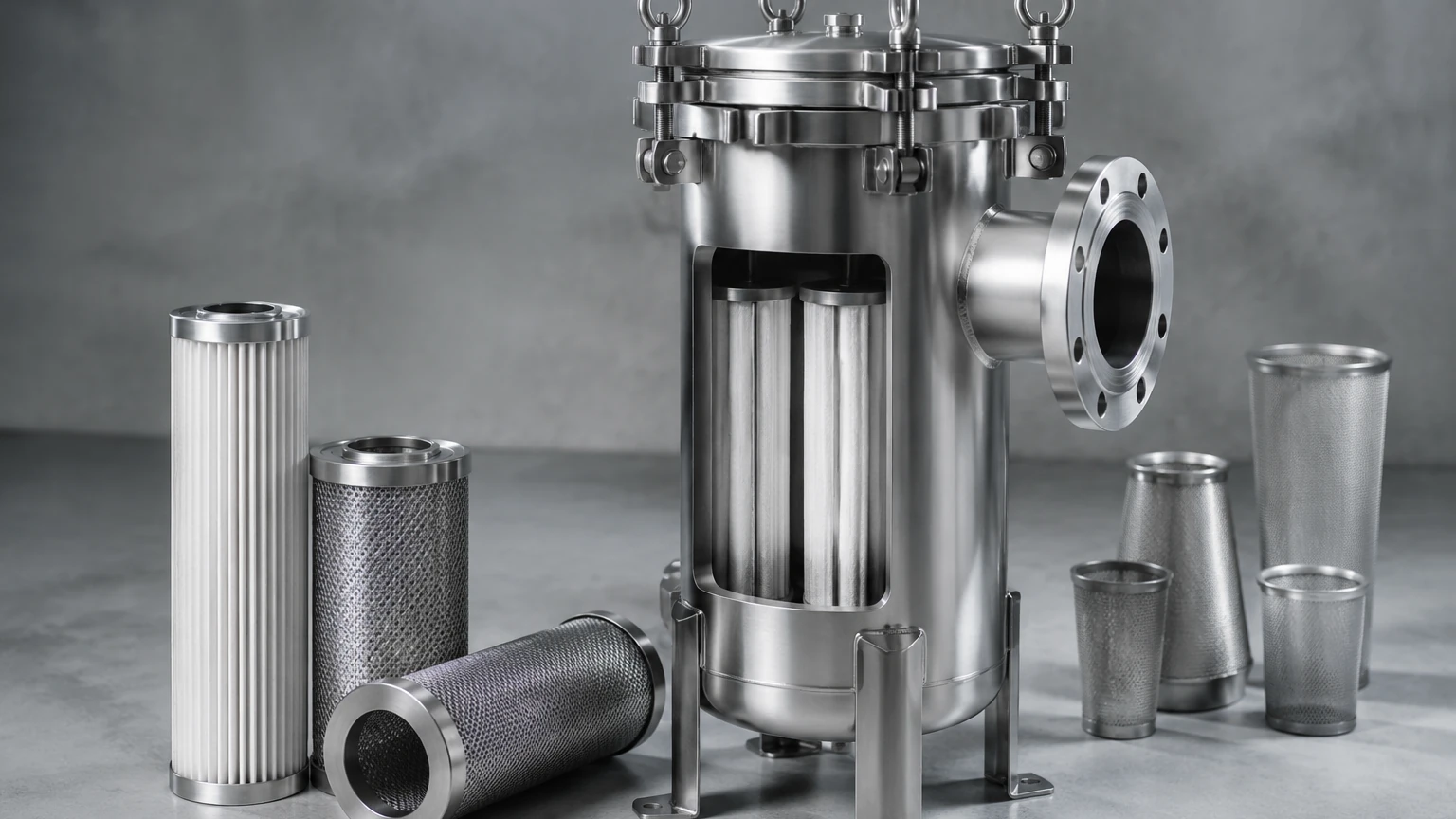
1. Filter Elements: These are the primary barriers against particulate matter. While many systems use fabric bags, high-performance industrial applications often require stainless steel wire mesh or sintered metal cartridges. These offer superior structural integrity and can withstand environments that would destroy synthetic fibers.
2. The Venturi: Located at the top of the filter element, the Venturi is designed to accelerate the compressed air pulse and maximize the volume of air moved during the cleaning cycle. A well-engineered Venturi ensures that the pulse reaches the bottom of the filter, providing uniform cleaning.
3. Pulse Valves and Headers: The header tank stores the compressed air, while the pulse valves control its release. The speed at which these valves open and close is vital; a sharp, crisp pulse is far more effective at dislodging dust than a slow, sluggish release of air.
4. Support Cages: For bag-style filters, metal cages are required to prevent the fabric from collapsing under the pressure of the gas flow. In metal cartridge systems, the structure is often self-supporting or integrated into the pleated design.
Material Engineering for Demanding Environments
One of the most significant decisions in specifying a pulse jet filter system is the selection of the filter media material. While traditional needle-felt bags are suitable for ambient temperature and non-corrosive dust, many industrial processes demand more robust solutions.
The Advantage of Stainless Steel
In industries such as chemical processing, pharmaceuticals, and high-temperature power generation, standard fabric filters often fail due to thermal degradation or chemical attack. Stainless steel filtration components, such as those produced by Kaifil, provide several engineering advantages:
* Thermal Stability: Stainless steel can operate at temperatures exceeding 500°C (932°F), far beyond the limits of PTFE or Aramid fibers.
* Corrosion Resistance: In the presence of acidic or alkaline gases, 316L stainless steel offers the necessary resistance to prevent premature failure and media migration.
* Structural Rigidity: Metal filters do not sag or stretch, maintaining a consistent surface area and preventing the blinding that can occur when flexible media deforms over time.
* Cleanability: Sintered metal and wire mesh media are highly receptive to pulse cleaning, as the rigid structure allows the energy of the compressed air to be transferred directly to the dust cake without being absorbed by the stretching of a fabric.
For more information on material selection and technical specifications for metal filtration components, you can visit the Main Page to explore our engineering capabilities.
Performance Metrics: Efficiency and Pressure Drop
When evaluating a pulse jet filter, engineers focus on two primary performance indicators: the collection efficiency and the operating pressure drop.
Air-to-Cloth Ratio
The Air-to-Cloth (A/C) ratio, also known as the filtration velocity, is the volume of gas passing through a square foot of filter media per minute (CFM/ft²). A lower A/C ratio generally leads to higher efficiency and longer filter life but requires a larger, more expensive housing. For pulse jet systems, A/C ratios typically range from 3:1 to 6:1, depending on the dust characteristics and the media type.
Pressure Differential ($ΔP$)
The pressure drop is the resistance to flow across the filter. A high $ΔP$ indicates that the filters are dirty or that the cleaning system is not functioning correctly. Operating at a high pressure drop increases the energy consumption of the main fan and can lead to "bleeding," where particulates are forced through the media pores. Precise control of the pulse jet cleaning cycle is the primary method for managing $ΔP$.
Customization and OEM Solutions for Pulse Jet Filters
No two industrial processes are identical, and off-the-shelf filtration solutions often fall short in specialized applications. Customization is frequently required in the following areas:
Micron Rating and Pore Structure
The porosity of the filter media must be matched to the particle size distribution of the dust. For sub-micron particulates, sintered metal fibers or multi-layered wire mesh may be necessary to achieve the required capture rate without excessive clogging.
Geometric Configuration
In many retrofit scenarios, new filter elements must fit into existing housings with specific dimensional constraints. Custom-manufactured stainless steel cartridges can be designed with specialized end caps, flanges, or lengths to ensure a leak-proof fit in legacy pulse jet filter systems.
Surface Treatments
To improve dust release, metal filters can be electropolished or coated. A smoother surface finish reduces the mechanical bond between the dust cake and the media, allowing the pulse jet to clean the filter more effectively with lower air pressure.
Troubleshooting and Maintenance Protocols
To ensure the longevity of a pulse jet filter, a proactive maintenance schedule is essential. Engineers should monitor the following areas to prevent unexpected downtime:
* Compressed Air Quality: The air used for pulsing must be dry and oil-free. Moisture in the pulse air can lead to "mudding" on the filter surface, where the dust turns into a paste that cannot be removed by the air burst.
* Diaphragm Valve Integrity: If a pulse valve fails to close completely, it will leak compressed air, wasting energy and reducing the pressure available for cleaning other elements. If it fails to open, the associated filters will quickly blind.
* Particulate Bypass: Regular visual inspections or the use of broken bag detectors (triboelectric probes) can identify leaks. Even a small hole in a single filter element can cause a significant increase in stack emissions.
* Replacement Cycles: While stainless steel filters have a much longer service life than fabric bags, they are not infinite. Monitoring the "baseline" pressure drop (the $ΔP$ immediately after a cleaning pulse) will indicate when the media is reaching the end of its functional life due to depth loading.
Total Cost of Ownership Considerations
While the initial capital expenditure for a pulse jet filter equipped with stainless steel media is higher than that of a standard fabric system, the Total Cost of Ownership (TCO) is often lower in demanding environments. Reduced frequency of filter replacements, lower energy costs due to more efficient cleaning, and the prevention of process downtime contribute to a more favorable return on investment.
Furthermore, the ability to clean and reuse metal filter elements—often through ultrasonic cleaning or chemical baths—provides a sustainable alternative to the "disposable" nature of fabric bags, aligning with modern industrial environmental goals.
Conclusion
The pulse jet filter remains a cornerstone of industrial air management, providing a reliable and continuous method for particulate removal. However, the success of the system depends heavily on the engineering of the filter elements and the precision of the cleaning mechanism. By opting for high-quality stainless steel components and customized designs, facilities can achieve higher filtration accuracy and greater durability in the face of extreme temperatures and corrosive conditions.
For engineers seeking to optimize their filtration processes or develop custom OEM components, Kaifil offers the technical expertise and manufacturing precision required for high-performance industrial applications. Explore our full range of stainless steel filtration solutions by visiting our Main Page.
