


Pvc Screen Pipe
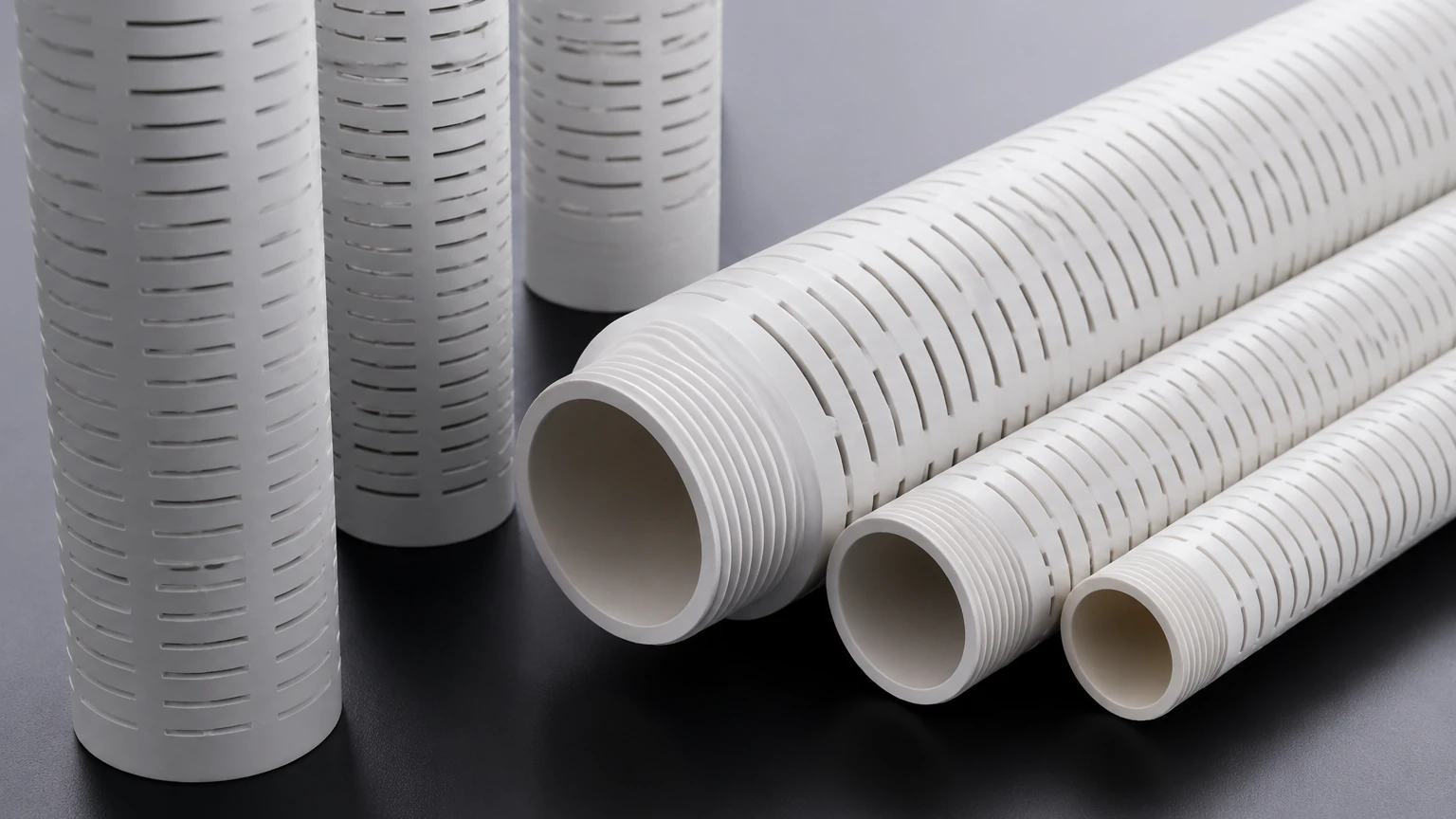
In the field of groundwater management, environmental monitoring, and industrial drainage, the selection of filtration media is a critical engineering decision. Among the most common materials used for these applications is the pvc screen pipe. Designed to allow the entry of fluids while excluding solid particulates such as sand, silt, and gravel, these components serve as the primary interface between a well or drainage system and the surrounding geological formation.
Understanding the technical specifications, mechanical limits, and application-specific requirements of PVC (polyvinyl chloride) filtration components is essential for engineers and procurement teams. While PVC offers distinct advantages in terms of cost and corrosion resistance in specific environments, industrial-grade filtration often necessitates a comparison with high-performance alternatives like stainless steel wire mesh and precision metal filters to ensure long-term system integrity.
Engineering Fundamentals of PVC Screen Pipe
PVC screen pipe is manufactured from thermoplastic resins, typically following standards such as ASTM D1785 for Schedule 40 and Schedule 80 dimensions, or ASTM F480 for water well applications. The material is favored in shallow-to-medium depth applications because it is chemically inert to most naturally occurring groundwater constituents and does not suffer from the galvanic corrosion that can plague low-grade carbon steel pipes.
The structural performance of a pvc screen pipe is governed by its wall thickness and the method used to create the intake openings. Schedule 80 PVC is frequently specified for deeper installations where higher collapse resistance is required. However, it is important to note that the mechanical properties of PVC are temperature-dependent. As temperatures rise, the tensile strength and collapse pressure rating of the pipe decrease significantly, a factor that must be accounted for in industrial processes involving warm effluents or geothermal activity.
Types of Screen Configurations: Slotted vs. Perforated
The efficiency of a pvc screen pipe is largely determined by the geometry and distribution of its openings. There are two primary configurations used in industrial and environmental sectors:
1. Slotted PVC Screens
Slotted screens are produced using precision saws or routers that cut horizontal or vertical openings into the pipe wall. These slots are measured in thousandths of an inch (often referred to as "slot size," e.g., 10-slot is 0.010 inches). Slotted configurations provide superior control over particle ingress compared to perforated designs. They are the standard choice for water wells where the slot size must be matched to the grain size analysis of the surrounding soil or the filter pack material.
2. Perforated PVC Pipes
Perforated pipes feature circular holes drilled at regular intervals. While these are easier to manufacture, they generally offer less precision in filtration. Perforated PVC is commonly used in leach field applications, gravity-fed drainage systems, and as a structural core for secondary filtration layers, such as geotextile wraps or stainless steel mesh overlays.
Key Performance Metrics for Industrial Selection
When specifying a pvc screen pipe for a project, engineers must evaluate several performance metrics to avoid premature system failure.
Open Area and Entrance Velocity
The "open area" refers to the total surface area of the openings relative to the total surface area of the pipe. A higher open area reduces the entrance velocity of the fluid. Lower entrance velocities are desirable because they minimize friction loss (well loss) and reduce the likelihood of encrustation and mechanical piping—a process where fine particles are pulled through the screen due to high-velocity flow.
Collapse Strength
Collapse strength is the ability of the pipe to withstand external hydrostatic and lithostatic pressure. For PVC, this strength is compromised by the introduction of slots or perforations. Engineering calculations must ensure that the "cut" pipe still maintains a safety factor sufficient for the installation depth and the expected drawdown levels during pumping.
Slot Uniformity
In precision filtration, the uniformity of the slot width is paramount. Inconsistent slotting can lead to localized high-velocity zones or the bypass of large particles, which can damage downstream pumps or contaminate the filtered fluid. High-quality manufacturing processes ensure that tolerances are strictly maintained across the entire length of the pipe.
Installation and Integration Guidelines
Proper installation of a pvc screen pipe is as important as the material specification. In most industrial and well-drilling contexts, the pipe sections are joined using either solvent welding or threaded connections.
* Solvent Welding: This creates a permanent, leak-proof bond. However, in environmental monitoring, the chemicals in the solvent cement can leach into the water, potentially skewing analytical results.
* Threaded Connections: Precision-machined threads (such as NPT or flush-joint threads) allow for mechanical assembly without chemical additives. This is the preferred method for monitoring wells and applications requiring high structural integrity at the joints.
Furthermore, the use of centralizers is recommended to ensure the screen is positioned in the center of the borehole. This allows for the even placement of the filter pack (usually graded silica sand) around the pvc screen pipe, which is essential for effective filtration and preventing the screen from coming into direct contact with the borehole wall.
Limitations and Risks in Demanding Environments
While PVC is a versatile material, it has clear boundaries that, if exceeded, lead to catastrophic failure. Engineers must be aware of the following risks:
1. Chemical Incompatibility: While resistant to many acids and bases, PVC can be degraded by certain organic solvents, hydrocarbons, and aromatic compounds. In industrial chemical processing, a compatibility study is required before selecting PVC over metallic alternatives.
2. Temperature Sensitivity: PVC begins to lose its structural rigidity at temperatures above 140°F (60°C). For high-temperature industrial filtration, stainless steel is almost always required.
3. Mechanical Fragility: Compared to metal, PVC is brittle. It can be easily damaged during transport, handling, or by the movement of heavy drilling equipment. Impact resistance is particularly low in cold weather.
4. Biofouling and Cleaning Challenges: PVC screens can be prone to biofouling (the buildup of iron bacteria or slime). While chemical cleaning (acidizing) can be performed, the mechanical methods used to rehabilitate wells—such as high-pressure jetting or surging—can easily rupture a PVC pipe if not executed with extreme care.
Comparing PVC with Stainless Steel Filtration Solutions
In many high-stakes industrial environments, the limitations of PVC lead engineers to seek more robust solutions. This is where the expertise of a professional manufacturer like Kaifil becomes invaluable. While a pvc screen pipe is a cost-effective solution for standard water drainage, demanding applications in chemical processing, pharmaceuticals, and high-pressure hydraulics often require the precision and durability of stainless steel.
Stainless steel filtration components, such as those found on the Kaifil Main Page, offer several advantages over PVC:
* Higher Open Area: Stainless steel wire mesh and wedge wire screens can achieve significantly higher open areas than slotted PVC, allowing for much higher flow rates in a smaller footprint.
* Extreme Durability: Stainless steel can withstand high pressures and temperatures that would cause PVC to collapse or melt.
* Precision Filtration: While PVC slots are typically limited to 0.010 inches or larger, stainless steel mesh can provide filtration down to the micron level, ensuring the protection of sensitive industrial equipment.
* Longevity: In aggressive chemical environments or deep-well applications, the total cost of ownership for stainless steel is often lower due to its extended service life and resistance to mechanical damage during maintenance.
Conclusion: Making an Informed Selection
The choice between using a pvc screen pipe and a more advanced metal filtration system depends on the specific demands of the application. For shallow, low-temperature water wells or basic site drainage, PVC remains a practical and economical choice. However, for industrial processes where reliability, chemical resistance, and high-pressure performance are non-negotiable, engineers must look toward customized stainless steel solutions.
Before finalizing a filtration design, it is recommended to confirm the chemical composition of the fluid, the maximum operating temperature, the required filtration accuracy (micron rating), and the mechanical loads the system will encounter. By evaluating these factors against the known properties of PVC and consulting with filtration experts, procurement teams can ensure they select the most efficient and cost-effective component for their specific industrial needs.
