


Stainless Steel Mesh Filters
In the landscape of industrial process engineering, the selection of filtration media is a critical decision that directly impacts product purity, equipment longevity, and operational overhead. Stainless steel mesh filters represent a cornerstone of high-performance filtration, offering a combination of mechanical strength, thermal stability, and chemical resistance that disposable polymer-based filters cannot match. For engineers and procurement specialists, understanding the technical nuances of these components is essential for optimizing system performance in demanding environments such as chemical processing, pharmaceutical manufacturing, and hydraulic systems.
As a specialized manufacturer, Kaifil provides a comprehensive range of custom filtration solutions designed to meet the rigorous standards of global industrial applications. By focusing on precision engineering and material integrity, these filters solve complex separation challenges while ensuring long-term reliability. To explore the full scope of available configurations, professionals can visit the Main Page for detailed product specifications and application support.
Understanding the Engineering of Stainless Steel Mesh
The performance of stainless steel mesh filters is fundamentally determined by the geometry of the weave and the physical properties of the wire used. Unlike depth filtration media, which rely on a tortuous path through a thick matrix, wire mesh primarily provides surface filtration. This allows for precise control over the size of particles retained and simplifies the cleaning process.
Weave Patterns and Their Functional Impact
The method by which the stainless steel wires are interlaced dictates the filter’s flow characteristics and mechanical durability. Common weave patterns include:
* Plain Weave: The most straightforward construction where each warp wire crosses over and under each shute wire. This pattern offers high transparency and low pressure drop, making it ideal for high-flow applications where coarse to medium filtration is required.
* Twill Weave: Each shute wire passes over and under two warp wires. This allows for the use of heavier wires in a given mesh count, providing greater strength and the ability to achieve finer filtration ratings than plain weave.
* Dutch Weave (Plain and Twill): These weaves utilize different wire diameters for the warp and shute. The result is a dense, compact mesh with small, triangular openings. Dutch weaves are preferred for high-pressure applications and fine particulate removal, as they offer superior mechanical stability.
* Reverse Dutch Weave: In this configuration, the positions of the heavy and fine wires are swapped compared to standard Dutch weave. This creates a mesh that is exceptionally strong in the direction of the warp, often used in continuous filtration systems like belt filters.
Micron Ratings: Nominal vs. Absolute
When specifying stainless steel mesh filters, engineers must distinguish between nominal and absolute micron ratings. A nominal rating refers to the ability of the mesh to retain a majority of particles of a specific size, whereas an absolute rating indicates the diameter of the largest spherical particle that can pass through the mesh under laboratory conditions. For critical applications in the pharmaceutical or aerospace sectors, absolute ratings are typically required to ensure consistent safety and quality standards.
Material Grades and Environmental Compatibility
The choice of alloy is as important as the weave pattern. Stainless steel mesh filters are typically fabricated from 300-series austenitic stainless steels, each offering distinct advantages based on the chemical and thermal profile of the process fluid.
Type 304 and 304L
Type 304 is the standard industrial grade, providing excellent corrosion resistance in many atmospheric and liquid environments. It is widely used in food and beverage processing due to its ease of cleaning and resistance to organic chemicals. The "L" variant (304L) features lower carbon content, which minimizes carbide precipitation during welding, preserving the corrosion resistance of the heat-affected zones in custom-fabricated filter housings.
Type 316 and 316L
For more aggressive environments, Type 316 is the preferred choice. The addition of molybdenum enhances resistance to pitting and crevice corrosion, particularly in chloride-rich environments or acidic conditions found in chemical processing. 316L is frequently specified for medical and pharmaceutical applications where high-purity standards and frequent sterilization are mandatory.
Specialty Alloys
In extreme cases involving high-temperature oxidation or highly corrosive reagents, specialty alloys such as 310S (for high-temperature stability) or 904L (for sulfuric acid resistance) may be utilized. Selecting the correct material ensures that the filter does not contribute to fluid contamination through corrosion products and maintains its structural integrity over thousands of operational hours.
Structural Variations: Single Layer vs. Sintered Mesh
While a single layer of wire mesh may suffice for simple straining tasks, complex industrial processes often require enhanced structural characteristics. This is achieved through different fabrication techniques.
Single and Multi-Layer Mesh
Single-layer filters are cost-effective and easy to clean, but they may lack the rigidity required for high-pressure differentials. Multi-layer mesh filters involve stacking several layers of mesh—often with different micron ratings—to provide a combination of fine filtration and robust mechanical support. The outer layers act as protective or drainage layers, while the inner layer performs the primary filtration.
Sintered Metal Mesh
Sintering is a process where multiple layers of stainless steel mesh are bonded together using heat and pressure in a vacuum furnace without the use of binders. This creates a monolithic structure that is exceptionally strong and permanent. Sintered stainless steel mesh filters offer several advantages:
1. Fixed Pore Geometry: The pores do not shift under high pressure or flow surges, ensuring consistent filtration accuracy.
2. High Permeability: Despite its strength, the sintered structure maintains high porosity, allowing for excellent flow rates.
3. Heat and Pressure Resistance: Sintered components can withstand extreme thermal cycling and high differential pressures that would deform or rupture standard mesh.
Performance Metrics: Micron Ratings and Flow Dynamics
Evaluating the performance of stainless steel mesh filters requires a balance between filtration efficiency and hydraulic capacity. Engineers must consider the "clean pressure drop"—the initial resistance the filter offers to the fluid flow. A filter with excessively fine mesh for the application will result in high energy consumption and frequent cleaning cycles.
Dirt Holding Capacity
Unlike depth filters, which can trap large volumes of contaminants within their matrix, surface filters like wire mesh have a finite surface area for particle accumulation. However, the use of pleated designs can significantly increase the effective filtration area within the same footprint. Pleating the mesh allows for a higher dirt-holding capacity, extending the time between maintenance intervals while maintaining a compact form factor.
Flow Velocity and Shear Stress
In hydraulic and lubrication systems, high flow velocities can create shear stress that might damage delicate filter media. Stainless steel mesh is naturally resistant to these forces. Furthermore, the rigid structure of metal mesh prevents "media migration," a common failure in fiber-based filters where fragments of the filter material break off and contaminate the downstream fluid.
Customization and OEM Engineering Support
No two industrial processes are identical, which is why customization is a core component of Kaifil’s service model. Standard off-the-shelf filters often require adapters or compromises in system design. Custom-engineered stainless steel mesh filters eliminate these inefficiencies.
Tailored Geometry and Fittings
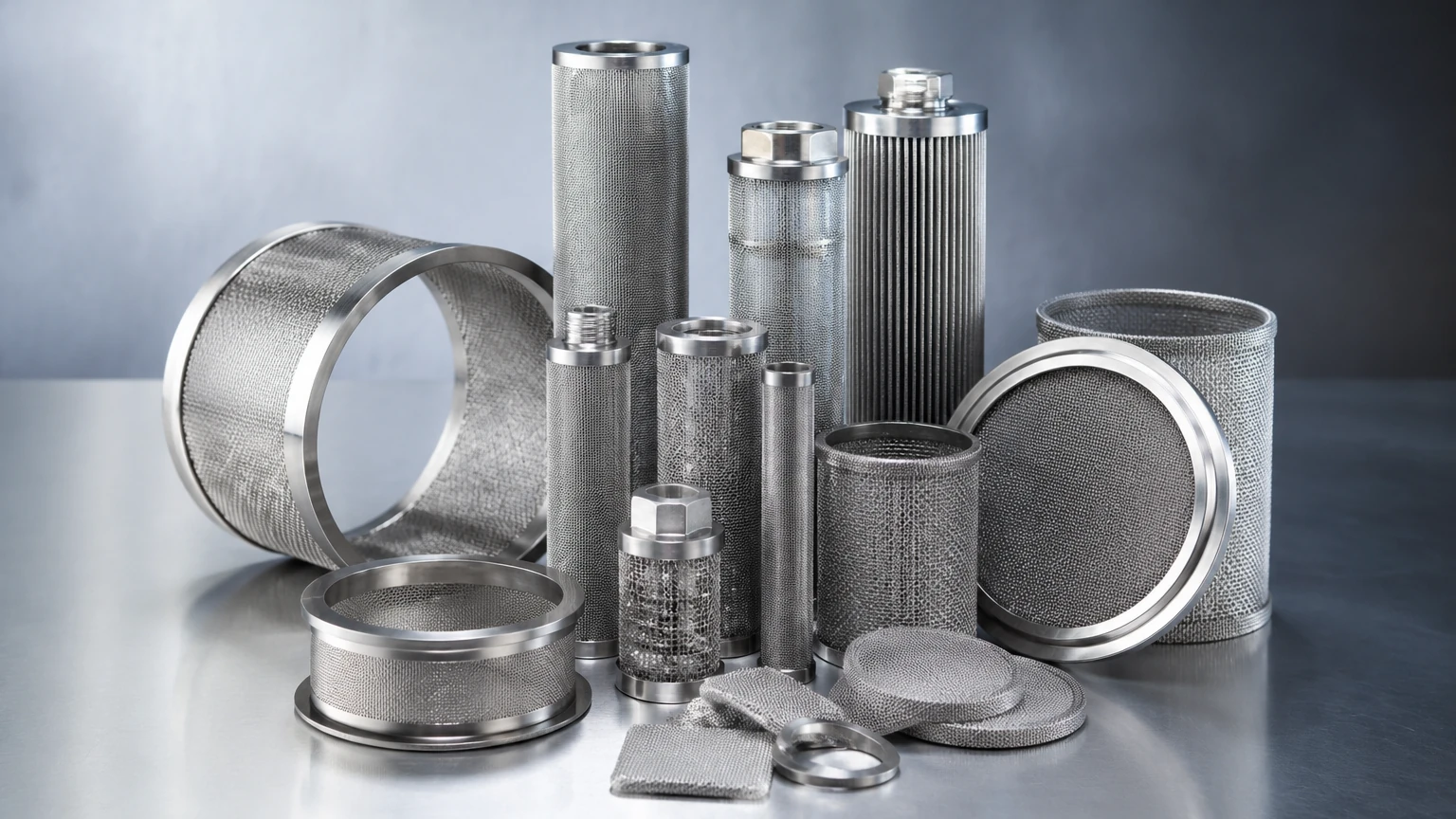
Filters can be manufactured in various shapes, including cylindrical cartridges, flat discs, conical strainers, and pleated elements. Integration into existing systems is facilitated by a wide range of fittings, such as NPT threads, flanged ends, or specialized quick-connect couplings. Precision machining ensures that these components fit seamlessly into filter housings, preventing bypass—a condition where unfiltered fluid leaks around the filter element.
Collaborative Design Process
When working with an OEM partner like Kaifil, engineers can provide specific parameters such as operating temperature, fluid viscosity, maximum allowable pressure drop, and target particle size. This data-driven approach allows for the development of a filtration solution that is purpose-built for the application, rather than a generic approximation. This level of customization is vital for industries like aerospace or specialty chemicals, where tolerances are exceptionally tight.
Operational Longevity and Maintenance Strategies
One of the most compelling arguments for adopting stainless steel mesh filters is their total cost of ownership (TCO). While the initial acquisition cost is higher than that of disposable cartridges, the ability to clean and reuse the elements provides significant long-term savings.
Cleaning Methodologies
Stainless steel mesh can be cleaned using several industrial methods, depending on the nature of the contaminant:
* Backwashing: Reversing the flow of fluid through the filter to dislodge accumulated particles from the surface.
* Ultrasonic Cleaning: Using high-frequency sound waves in a cleaning solvent to remove fine particulates trapped within the mesh interstices.
* Chemical Cleaning: Utilizing acids, alkalis, or specialized surfactants to dissolve organic or inorganic scaling without damaging the stainless steel substrate.
* Burn-off/Calcination: For organic contaminants, controlled heating can be used to carbonize and remove residues, provided the alloy's thermal limits are respected.
Replacement Cycles and Inspection
While reusable, stainless steel mesh filters are not infinite. Over time, repeated cleaning and mechanical stress can lead to work hardening or minor abrasions. Regular inspection for wire breaks, pore enlargement, or permanent deformation is necessary. However, in many applications, a well-maintained stainless steel filter can last for years, drastically reducing the waste stream and the logistical burden of stocking disposable replacements.
Conclusion
Stainless steel mesh filters are indispensable tools for modern industrial filtration. Their ability to provide precise, repeatable, and durable separation in the most challenging environments makes them a superior choice for engineers focused on system efficiency and product quality. By understanding the interplay between weave patterns, material grades, and structural configurations, technical professionals can select filtration components that offer the best balance of performance and value.
Whether the requirement is for a high-flow strainer or a high-precision sintered cartridge, the engineering expertise behind the manufacturing process is the ultimate guarantor of success. For those seeking to optimize their filtration processes with reliable, custom-manufactured metal components, reviewing the technical resources and product options on the Main Page is the recommended next step in the procurement and design phase.
