


Reboiler
In the landscape of industrial thermal separation, the reboiler stands as a foundational component, essential for the operation of distillation columns. As a specialized heat exchanger, its primary function is to provide the necessary heat to the bottom of a distillation tower to generate the vapors required for the separation process. For engineers and technical procurement teams, understanding the nuances of reboiler design, combined with the integration of high-performance filtration systems, is critical to ensuring operational efficiency, reducing downtime, and extending the service life of thermal equipment.
Industrial reboilers operate under demanding conditions, often involving high temperatures, varying pressures, and chemically aggressive fluids. The efficiency of heat transfer within these units is directly tied to the purity of the process fluid. Particulate contamination can lead to fouling, scaling, and localized overheating, which significantly compromises performance. Consequently, the selection of robust filtration components, such as those found on the Kaifil Main Page, becomes a vital engineering consideration in the design and maintenance of reboiler systems.
Understanding Reboiler Fundamentals and Design Variations
A reboiler functions by taking a liquid stream from the bottom of a distillation column and heating it until a portion of the liquid vaporizes. This vapor is then returned to the column to drive the mass transfer process. Depending on the specific requirements of the chemical process, several types of reboilers are commonly deployed.
Kettle Reboilers
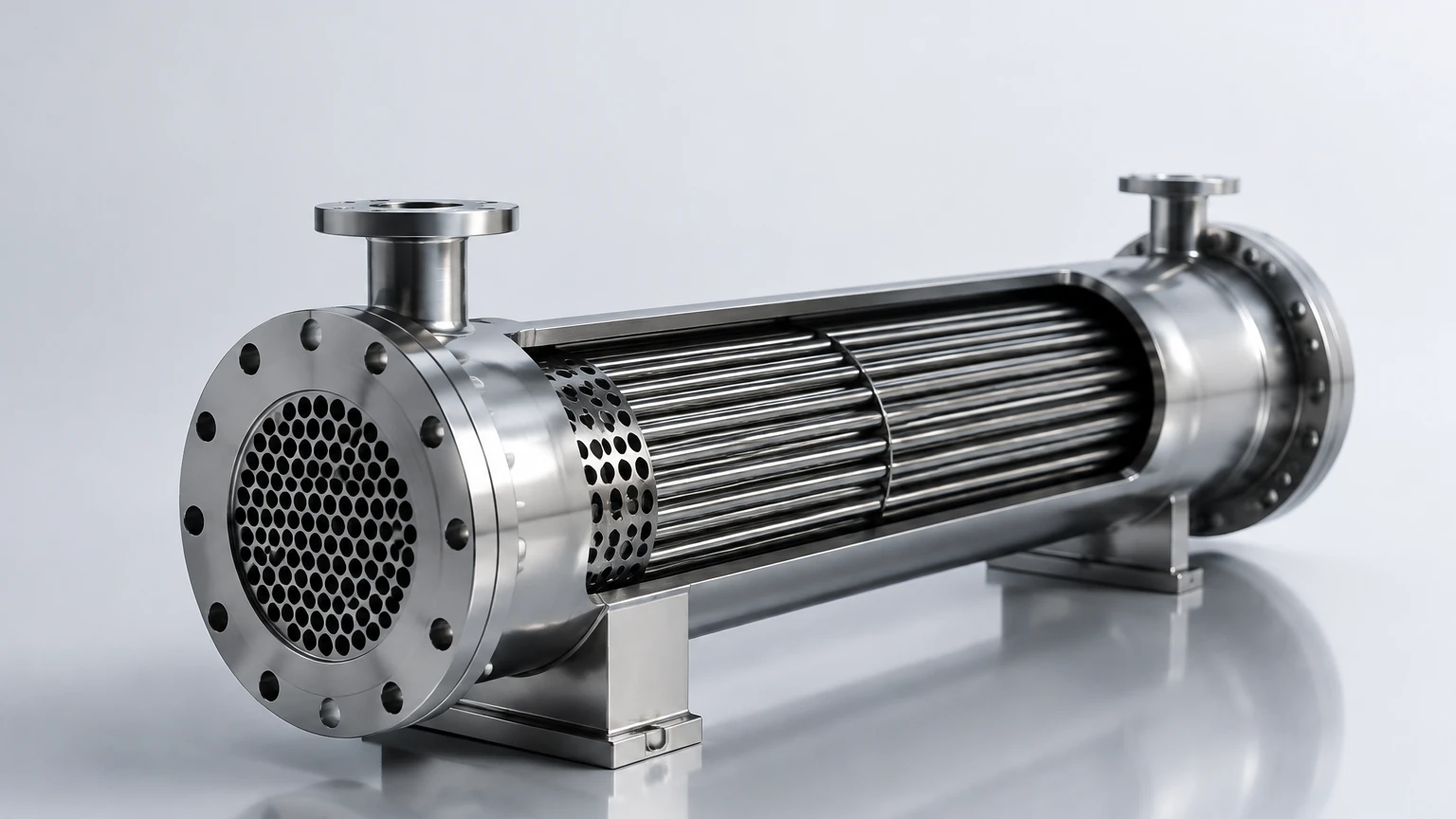
Kettle reboilers are perhaps the most straightforward design. They consist of a horizontal shell containing a tube bundle. The liquid from the column bottom enters the shell and covers the tubes, where it is heated and vaporized. The large shell volume allows for vapor-liquid separation to occur within the unit itself. While reliable, kettle reboilers are prone to fouling if the process fluid contains suspended solids, as the low-velocity environment allows particles to settle on the tube surfaces.
Thermosyphon Reboilers
Thermosyphon reboilers rely on natural circulation driven by the density difference between the liquid in the column and the two-phase (vapor-liquid) mixture in the reboiler. They can be oriented vertically or horizontally. Vertical thermosyphons are often preferred for their high heat transfer coefficients and smaller footprint. However, they require precise hydraulic balancing to maintain stable circulation. Any increase in pressure drop—often caused by clogged filtration stages or fouled heat exchange surfaces—can disrupt this natural flow.
Forced Circulation Reboilers
In applications involving highly viscous fluids or those with a high tendency for fouling, forced circulation reboilers are utilized. A pump is used to drive the liquid through the heat exchanger at high velocities. This high turbulence helps minimize the deposition of solids on the tube walls but increases the mechanical complexity and energy consumption of the system. In these setups, protecting the pump and the heat exchanger with precision wire mesh filters is essential to prevent mechanical wear and thermal inefficiency.
The Critical Role of Filtration in Reboiler Protection
Fouling is the single greatest challenge in reboiler operation. It refers to the accumulation of unwanted material on the heat transfer surfaces, which creates a thermal resistance layer. This layer forces the system to consume more energy to achieve the same level of vaporization and can eventually lead to complete system failure.
Mechanisms of Fouling
1. Particulate Fouling: The accumulation of suspended solids, such as rust, scale, or catalyst fines, on the heat exchanger tubes.
2. Chemical Reaction Fouling: High temperatures at the tube surface can trigger chemical reactions, leading to the formation of polymers or carbonaceous deposits.
3. Corrosion Fouling: Products of corrosion from upstream piping can settle within the reboiler, further accelerating degradation.
By implementing high-quality stainless steel filter cartridges at the reboiler inlet or within the bottoms recirculation loop, engineers can effectively capture these contaminants. Stainless steel wire mesh is particularly effective here due to its ability to maintain structural integrity under the high-temperature conditions typical of reboiler operations.
Engineering Considerations for Reboiler Filtration Systems
When specifying filtration for a reboiler circuit, several engineering parameters must be evaluated to ensure the filter does not become a bottleneck or a point of failure.
Temperature and Pressure Resistance
Reboilers often operate at temperatures exceeding 200°C and at significant pressures. Standard polymer-based filters are unsuitable for these environments. Stainless steel (typically 304 or 316L) is the material of choice due to its excellent thermal stability and resistance to thermal expansion stresses. Sintered metal or pleated wire mesh elements provide the necessary mechanical strength to withstand high differential pressures without collapsing.
Filtration Accuracy (Micron Rating)
The choice of micron rating depends on the clearance within the reboiler’s heat exchanger tubes or plates. If the reboiler utilizes narrow-gap plate heat exchangers, finer filtration (e.g., 10–50 microns) may be required. For shell-and-tube designs with larger tube diameters, a coarser mesh (e.g., 100–200 microns) might suffice to prevent tube plugging while minimizing pressure drop.
Pressure Drop (ΔP) Constraints
In thermosyphon systems, the available driving force for circulation is limited. Therefore, the filtration system must be designed with a low initial pressure drop. Engineers must calculate the "clean ΔP" and determine the "terminal ΔP" at which the filter must be cleaned or replaced to avoid stalling the reboiler's circulation.
Material Selection and Corrosion Resistance
The chemical composition of the process fluid dictates the material requirements for both the reboiler and its associated filtration components. In many chemical processing and pharmaceutical applications, 316L stainless steel is the standard due to its superior resistance to pitting and crevice corrosion, especially in the presence of chlorides or acidic compounds.
For highly corrosive environments, specialized alloys may be necessary, but for the majority of industrial applications, high-grade stainless steel wire mesh provides the optimal balance of performance and cost. The durability of stainless steel also allows for repeated cleaning cycles, which is a critical factor in the total cost of ownership (TCO) for industrial filtration.
Customization and OEM Solutions for Specialized Reboiler Systems
Every industrial process is unique, and standard off-the-shelf filtration products often fail to meet the specific spatial or hydraulic requirements of a custom-built reboiler skid. Customization options in filtration manufacturing allow for:
* Bespoke Dimensions: Tailoring the length and diameter of filter cartridges to fit existing housings or specialized reboiler inlets.
* End-Cap Configurations: Designing specific fittings (e.g., NPT, flange, or O-ring seals) to ensure a leak-proof interface with the piping system.
* Reinforced Structures: Adding internal support cores or external shrouds to filter elements that must withstand turbulent flow or high-pressure surges in forced circulation systems.
Working with a manufacturer that understands these engineering constraints allows for the development of filtration solutions that are integrated seamlessly into the reboiler's design rather than added as an afterthought.
Operational Maintenance and Cleaning of Metal Filter Elements
Unlike disposable filters, stainless steel filtration components used in reboiler applications are designed for longevity. However, their performance is dependent on a regular maintenance and cleaning regimen.
Cleaning Methods
1. Backwashing: In many automated systems, a portion of the clean filtrate is pulsed back through the filter to dislodge accumulated solids. This is highly effective for surface-loading wire mesh filters.
2. Ultrasonic Cleaning: For deep-seated contaminants or sintered metal media, ultrasonic baths can be used to vibrate particles loose from the complex pore structure.
3. Chemical Cleaning: Soaking elements in compatible solvents or acids can remove organic polymers or mineral scales that backwashing cannot reach.
Replacement Cycles
While stainless steel filters are durable, they are not infinite. Factors such as metal fatigue from pressure cycling or gradual erosion of the wire mesh can eventually necessitate replacement. Monitoring the rate of pressure drop increase over time provides the data needed to predict replacement cycles and prevent unplanned shutdowns.
Total Cost of Ownership (TCO) Considerations
When evaluating filtration for a reboiler system, purchasing teams should look beyond the initial acquisition cost. The TCO includes:
* Energy Costs: A cleaner reboiler operates more efficiently, reducing steam or hot oil consumption.
* Downtime Costs: High-quality filters reduce the frequency of reboiler tube cleaning, which often requires a full system shutdown.
* Disposal Costs: Unlike single-use cartridges, cleanable stainless steel filters significantly reduce waste streams and disposal fees.
By investing in precision-engineered filtration components, such as those detailed on the Main Page, industrial facilities can achieve a more sustainable and cost-effective thermal management strategy.
Conclusion: Optimizing Reboiler Performance
The reboiler is a critical asset in the chemical, pharmaceutical, and food processing industries. Its ability to maintain consistent vapor generation is the heartbeat of the distillation process. However, this performance is constantly threatened by the presence of particulates and the resulting fouling of heat transfer surfaces.
Through the strategic application of stainless steel wire mesh filters and custom filter cartridges, engineers can protect these vital components. By focusing on material compatibility, precise micron ratings, and robust mechanical design, Kaifil provides the filtration solutions necessary to keep reboilers operating at peak efficiency. Whether for a new installation or the retrofit of an existing distillation train, choosing the right filtration partner is an essential step in ensuring the reliability and longevity of industrial thermal systems.
