


Regenerators Heat Exchanger
In the landscape of industrial thermal management, the regenerators heat exchanger stands as a critical technology for energy recovery and process efficiency. Unlike recuperative heat exchangers, where heat is transferred continuously through a solid wall separating two fluid streams, a regenerative system operates by periodically storing heat in a thermal mass and then releasing it to a secondary fluid. This cyclic process allows for high thermal efficiency, particularly in high-temperature industrial applications such as glass manufacturing, steel production, and gas turbine cycles.
For engineers and procurement professionals, understanding the technical nuances of a regenerators heat exchanger is essential for optimizing system performance and ensuring long-term durability. The efficiency of these systems depends heavily on the design of the internal matrix—the component responsible for heat storage—and the materials used to withstand harsh operating conditions. As a specialized manufacturer of precision metal components, Kaifil provides the foundational materials, including stainless steel wire mesh and custom filtration elements, that often serve as the structural or functional core of these complex thermal systems.
Understanding Regenerators Heat Exchanger Principles
The fundamental operation of a regenerators heat exchanger is defined by its unsteady-state heat transfer. The process is divided into two distinct phases: the "hot blow" and the "cold blow." During the hot blow phase, a high-temperature waste gas stream passes through a porous matrix, transferring its thermal energy to the storage material. Once the matrix reaches its heat capacity or a predetermined temperature threshold, the flow is switched. During the cold blow phase, a cooler fluid (typically air or a process gas) passes through the same matrix, absorbing the stored heat and increasing its temperature before entering the next stage of the industrial process.
This cyclic nature offers several advantages over traditional shell-and-tube or plate heat exchangers. Because the same flow passages are used for both hot and cold fluids, regenerators are often self-cleaning to an extent, as the alternating flow can help dislodge particulate matter. Furthermore, the surface-area-to-volume ratio in a regenerators heat exchanger is significantly higher than in recuperative designs, allowing for more compact units that can handle massive thermal loads.
Key Components and Material Selection
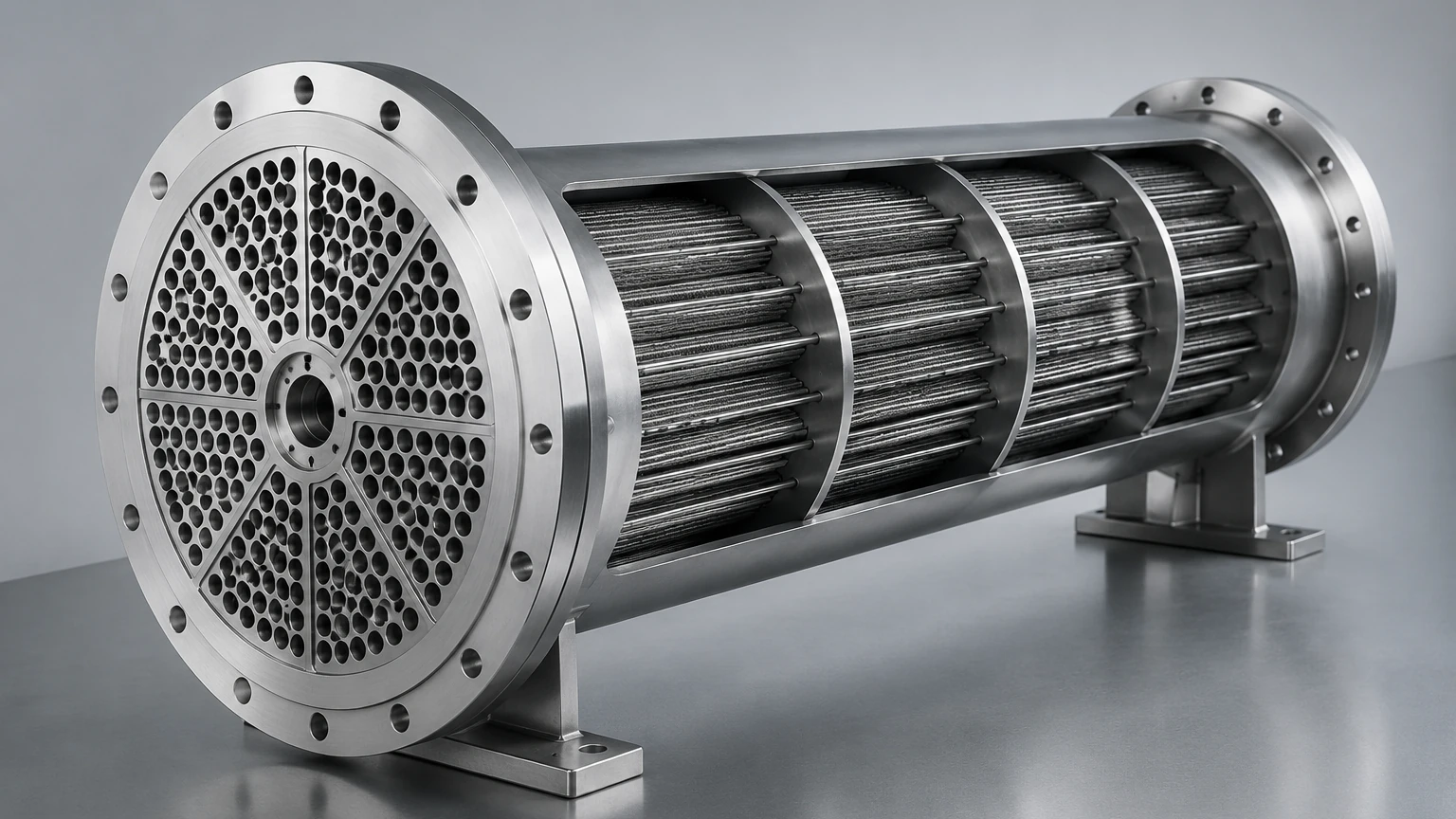
The heart of any regenerators heat exchanger is the heat storage matrix. The choice of material for this matrix is dictated by the operating temperature, the chemical composition of the fluids, and the required thermal capacity. Common materials include ceramics for ultra-high-temperature applications and various metals for moderate to high-temperature industrial processes.
The Role of Stainless Steel and Precision Alloys
In many industrial regenerators, stainless steel wire mesh and structured metal packings are preferred due to their excellent thermal conductivity, mechanical strength, and resistance to oxidation. Stainless steel alloys, such as 304, 316L, or high-nickel alloys, provide the necessary corrosion resistance for chemical processing or food-grade environments.
When designing the matrix, engineers must consider:
* Specific Heat Capacity: The ability of the material to store thermal energy.
* Thermal Conductivity: How quickly heat can move from the fluid to the center of the storage element.
* Porosity and Surface Area: A higher surface area facilitates faster heat transfer but may increase pressure drop.
For technical teams evaluating material options for heat exchanger internals or associated filtration components, the Kaifil Main Page offers a detailed overview of custom stainless steel solutions that meet these rigorous industrial standards.
Types of Regenerative Heat Exchangers
There are two primary configurations of regenerators heat exchanger systems used in modern industry: the fixed-bed regenerator and the rotary regenerator.
Fixed-Bed (Static) Regenerators
A fixed-bed system utilizes two or more stationary matrices. While one bed is being heated by the hot exhaust gas, the other is preheating the incoming cold air. A series of valves controls the flow, switching the streams once the beds have reached their thermal limits. These are commonly used in large-scale operations like blast furnaces (Cowper stoves) and glass melting tanks. The primary challenge here is the durability of the switching valves and the structural integrity of the stationary matrix under repeated thermal cycling.
Rotary (Dynamic) Regenerators
Also known as a Ljungström heat exchanger, the rotary regenerator features a rotating porous disk or drum that continuously moves through the hot and cold fluid streams. As the wheel rotates, each section of the matrix is alternately exposed to heat and then cooled. This design is highly efficient and compact, making it a staple in power plant air preheaters and HVAC energy recovery ventilation (ERV) systems. The critical engineering factor in rotary systems is the sealing mechanism, which must prevent cross-contamination between the two fluid streams while allowing the matrix to rotate freely.
Engineering Considerations for Industrial Applications
When integrating a regenerators heat exchanger into an industrial workflow, engineers must balance several competing performance metrics. The goal is to maximize heat recovery while minimizing the "parasitic" costs of the system, such as fan power required to overcome pressure drops.
1. Thermal Effectiveness
Thermal effectiveness is the ratio of the actual heat transfer to the maximum possible heat transfer. In a regenerators heat exchanger, this is influenced by the "switching time" (in fixed beds) or the rotational speed (in rotary units). If the cycle is too fast, the matrix does not have enough time to absorb or release heat effectively. If it is too slow, the temperature of the matrix plateaus, and efficiency drops.
2. Pressure Drop and Flow Resistance
The matrix of a regenerators heat exchanger must be porous enough to allow fluid flow without excessive resistance. However, high porosity often conflicts with the need for a high-density thermal mass. Engineers use wire mesh structures or corrugated foils to create narrow channels that promote turbulent flow (increasing heat transfer) while maintaining a manageable pressure drop. Precision in the manufacturing of these metal components is vital to ensure uniform flow distribution across the entire bed.
3. Carryover and Leakage
In applications where the two fluid streams must remain pure (e.g., pharmaceutical or food processing), leakage is a significant risk. In rotary regenerators, some "carryover" is inevitable as the fluid trapped in the matrix pores is transported from one side to the other. Purge sectors and advanced sealing gaskets are required to mitigate this, often utilizing precision-engineered metal frames to maintain seal integrity.
The Role of Precision Metal Components in Performance
The performance of a regenerators heat exchanger is only as reliable as the components that comprise its matrix. In many high-performance systems, the matrix is constructed from layers of precision-woven wire mesh or sintered metal fibers. These materials provide a predictable and repeatable surface area, which is essential for accurate thermal modeling.
Kaifil specializes in the production of these high-performance metal components. By providing custom-engineered stainless steel wire mesh and filtration elements, Kaifil supports the infrastructure of heat exchange systems. Whether the application requires a specific mesh count for optimal flow or a particular alloy for chemical resistance, the quality of the raw material directly impacts the total cost of ownership (TCO) of the heat exchanger. High-quality stainless steel components reduce the frequency of replacement and prevent system downtime caused by matrix degradation or clogging.
Maintenance, Fouling, and Replacement Cycles
Fouling is a common challenge for any regenerators heat exchanger, especially when dealing with industrial exhaust gases containing particulates, oils, or corrosive vapors. Over time, these substances can accumulate on the surface of the matrix, reducing the heat transfer coefficient and increasing the pressure drop.
Cleaning Protocols
One of the advantages of regenerative systems is their relative ease of cleaning compared to sealed recuperative units. Many systems incorporate "soot blowers" or high-pressure air jets to clean the matrix during operation. However, in cases of heavy fouling or chemical scaling, the matrix may need to be removed for ultrasonic cleaning or chemical baths. This is where the durability of stainless steel components becomes a major asset, as they can withstand aggressive cleaning cycles that would destroy inferior materials.
Monitoring Performance
Engineers should monitor the temperature differential across the exchanger and the pressure drop. A gradual increase in pressure drop usually indicates fouling, while a decrease in thermal effectiveness may suggest that the matrix material is thinning due to corrosion or that the switching valves/seals are failing. Establishing a clear replacement cycle for internal components ensures that the system continues to operate at peak energy efficiency.
Selection Guide: What to Confirm Before Purchasing
Before specifying components for a regenerators heat exchanger or selecting a new unit, technical teams should confirm the following data points to ensure compatibility and performance:
1. Fluid Characteristics: Are the gases or liquids corrosive, abrasive, or laden with particulates? This dictates the alloy selection (e.g., 316L vs. 304 stainless steel).
2. Temperature Range: What are the maximum and minimum operating temperatures? This affects the thermal expansion calculations for the matrix and the housing.
3. Filtration Requirements: Does the system require integrated filtration to protect the matrix from clogging? Kaifil’s expertise in custom filtration can be leveraged here to design pre-filters that extend the life of the heat exchanger.
4. Space Constraints: Is a compact rotary unit feasible, or does the application require the robust, valved nature of a fixed-bed system?
5. Total Cost of Ownership: Beyond the initial purchase price, consider the longevity of the matrix and the ease of obtaining replacement parts.
By focusing on these engineering realities, purchasing teams can move beyond generic marketing claims and select solutions that offer genuine technical value. The integration of high-quality metal components ensures that the regenerators heat exchanger remains a reliable part of the industrial facility's energy-saving strategy.
For more information on the technical specifications of stainless steel filtration and metal components used in industrial thermal systems, visit the Kaifil Main Page to explore our full range of manufacturing capabilities and custom engineering services.
