


Reverse Pulse Jet Dust Collector
In industrial environments where air quality, material recovery, and equipment longevity are paramount, the reverse pulse jet dust collector stands as a cornerstone of filtration technology. This system is designed to handle high dust loads while maintaining continuous operation, making it a preferred choice for sectors ranging from chemical processing to metal fabrication. Unlike traditional filtration systems that require downtime for cleaning, the pulse jet mechanism allows for "online" cleaning of filter media, ensuring that the manufacturing process remains uninterrupted.
For engineers and procurement teams, selecting the right components for a reverse pulse jet dust collector involves a deep understanding of fluid dynamics, material science, and the specific characteristics of the particulate matter being managed. This article examines the technical nuances of these systems, the critical role of stainless steel filter media, and the engineering considerations necessary for optimizing filtration performance.
Understanding the Mechanics of a Reverse Pulse Jet Dust Collector
The fundamental operation of a reverse pulse jet dust collector relies on a high-pressure burst of compressed air to dislodge dust cake from the exterior of the filter elements. In a typical configuration, dust-laden air enters the collector housing, where heavier particles drop into a hopper due to a loss of velocity. Finer particles are then drawn toward the filter cartridges or bags.
As the dust accumulates on the surface of the filter media, it creates a "dust cake." While this cake actually assists in filtration by capturing finer particles, it also increases the differential pressure across the system. To manage this, the reverse pulse jet system utilizes a timer or a pressure-sensing controller to trigger a solenoid valve. This valve releases a momentary blast of compressed air (typically 0.1 seconds in duration) into the top of the filter element.
This high-pressure pulse travels down the length of the filter, causing a rapid expansion of the media and a momentary reversal of airflow. The resulting shockwave and flow reversal effectively knock the accumulated dust into the hopper below. Because only a small row or section of filters is pulsed at any given time, the rest of the system continues to filter air, allowing for the continuous operation essential in high-volume industrial settings.
Key Components and Material Selection for Durability
The efficiency of a reverse pulse jet dust collector is heavily dependent on the integrity of its internal components. While the housing and ductwork provide the structure, the filter elements and their supporting cages are where the actual separation occurs.
Filter Media and Cartridges
In many demanding applications, traditional fabric bags are insufficient due to high temperatures, moisture, or corrosive gases. This is where stainless steel filtration solutions become critical. Sintered metal fiber or stainless steel wire mesh filter cartridges offer superior structural integrity and chemical resistance. These components, often sourced from specialized manufacturers like those found on the Main Page of industrial filtration experts, provide the durability needed to withstand the repetitive mechanical stress of the pulse jet cleaning cycle.
The Venturi and Blowpipe
The blowpipe is positioned above the filter elements, containing orifices aligned with the center of each filter. Often, a Venturi is used at the top of the filter to amplify the pulse. The Venturi creates a vacuum effect that pulls in additional ambient air along with the compressed air, increasing the volume and effectiveness of the cleaning pulse. Engineering these components with precision ensures that the pulse is distributed evenly across the entire surface of the filter media.
Performance Metrics: Air-to-Cloth Ratio and Differential Pressure
When specifying a reverse pulse jet dust collector, engineers must prioritize the air-to-cloth (A/C) ratio. This metric, also known as the filtration velocity, represents the volume of air passing through one square foot of filter media per minute (expressed in CFM/ft²).
An excessively high A/C ratio can lead to several operational failures:
1. Premature Blinding: Particles are driven so deep into the media that the pulse jet cannot dislodge them.
2. High Differential Pressure: The system requires more frequent pulsing, which increases compressed air consumption and accelerates wear on the filter media.
3. Reduced Filter Life: The mechanical stress of frequent cleaning cycles leads to fatigue and eventual failure of the filter elements.
Monitoring the differential pressure (the pressure drop between the dirty and clean sides of the collector) is the most effective way to gauge system health. A stable differential pressure indicates that the cleaning cycle is effectively balancing the dust loading rate. If the pressure continues to rise despite pulsing, it often indicates that the filter media has reached the end of its service life or that the dust characteristics have changed (e.g., due to moisture causing "mudding").
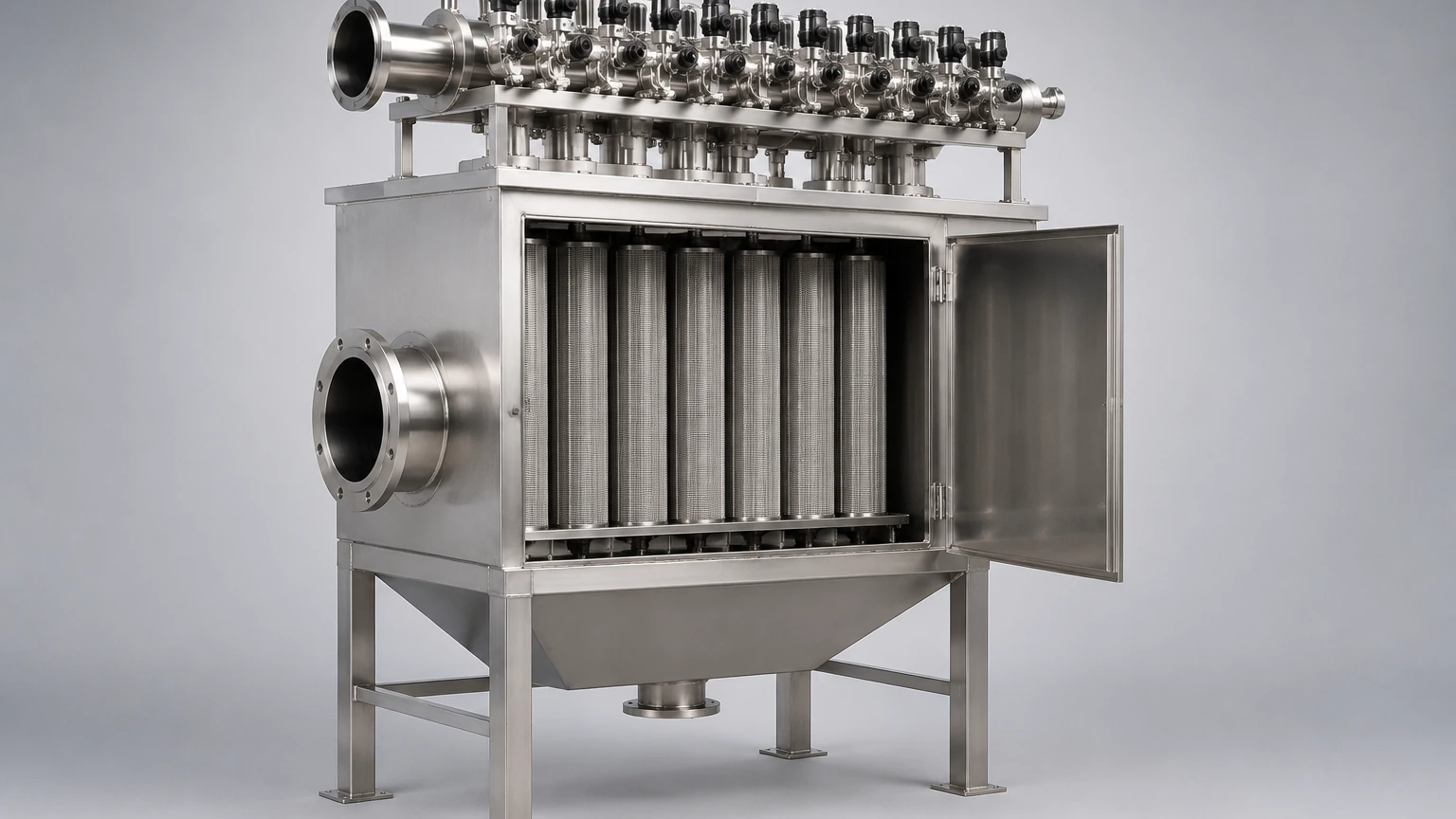
Why Stainless Steel Filter Media is Critical in Demanding Environments
In industries such as pharmaceutical manufacturing, food processing, and chemical refining, the environment within a reverse pulse jet dust collector can be extremely harsh. Standard polyester or aramid bags may fail when exposed to temperatures exceeding 400°F (204°C) or when subjected to acidic or alkaline vapors.
Stainless steel wire mesh and sintered metal filters provide several distinct advantages in these scenarios:
* Thermal Stability: Stainless steel can operate at significantly higher temperatures than synthetic fibers, eliminating the need for expensive air-cooling equipment upstream of the dust collector.
* Corrosion Resistance: For applications involving corrosive chemicals or high humidity, 304 or 316L stainless steel prevents the degradation of the filter structure, ensuring consistent pore size and filtration accuracy.
* Cleanability: Metal media is less prone to "depth loading" than felted fabrics. The smooth surface of stainless steel wire mesh allows for more efficient dust release during the pulse cycle, which can lower the overall compressed air requirements.
* Mechanical Strength: The rigid nature of metal filters allows them to withstand higher pressure differentials without collapsing, providing a safety margin during process upsets.
Maintenance and Optimization of Pulse Jet Systems
To ensure the longevity of a reverse pulse jet dust collector, a proactive maintenance schedule is required. The most common point of failure is not the filter media itself, but the pulse delivery system.
Compressed Air Quality
The compressed air used for pulsing must be dry and oil-free. Moisture in the air lines can cause dust to clump on the filter media, a condition known as mudding, which is nearly impossible to reverse through pulsing alone. Installing high-quality dryers and filters on the compressed air supply is a critical engineering requirement.
Diaphragm and Solenoid Valve Inspection
These valves are the moving parts that trigger the cleaning cycle. Over time, the diaphragms can wear out or become brittle. A leaking valve will result in a continuous bleed of air, reducing the pressure available for cleaning other filters and wasting significant energy. Regular acoustic monitoring or pressure drop testing can identify failing valves before they impact system performance.
Pulse Frequency and Duration
Optimizing the pulse frequency is a balance between maintaining low differential pressure and conserving compressed air. Many modern systems use "clean-on-demand" logic, where the pulse cycle only initiates when the differential pressure reaches a high setpoint. This reduces unnecessary mechanical stress on the filters and saves operational costs.
Engineering Checklist Before Procurement
Before selecting a reverse pulse jet dust collector or replacement filter elements, technical teams should confirm the following parameters to ensure application compatibility:
1. Particle Characteristics: What is the mean particle size, shape, and abrasiveness? This dictates the required filtration accuracy and media type.
2. Gas Chemistry: Are there corrosive elements or high moisture levels present in the gas stream? This will determine if stainless steel 316L or other specialized alloys are required.
3. Temperature Profile: What are the steady-state and peak excursion temperatures? This is the primary factor in choosing between synthetic and metal media.
4. Explosion Hazards: If the dust is combustible (e.g., sugar, flour, or certain metals), the system must be equipped with explosion vents, chemical suppression, and grounding to prevent static discharge.
5. Total Cost of Ownership (TCO): Beyond the initial purchase price, consider the cost of compressed air, filter replacement frequency, and potential downtime. High-performance stainless steel filters often provide a lower TCO due to their extended service life and durability.
By focusing on these technical variables, engineers can ensure that their reverse pulse jet dust collector operates at peak efficiency, providing a safe and productive environment for industrial operations. For those seeking specific component specifications and customized filtration designs, visiting the Main Page of a dedicated manufacturer can provide the necessary technical data and engineering support to make an informed decision.
