


Self Cleaning Filter Design
In modern industrial processing, the transition from batch operations to continuous flow systems has necessitated a shift in filtration technology. Manual filtration systems, while effective for low-solids applications, often introduce significant downtime, labor costs, and safety risks when handling hazardous chemicals or high-temperature fluids. A robust self cleaning filter design addresses these challenges by providing automated, uninterrupted debris removal, ensuring consistent flow rates and protecting downstream equipment without the need for manual intervention.
For engineers and procurement teams, understanding the technical nuances of self cleaning filter design is critical for optimizing system longevity and process efficiency. This guide explores the engineering principles, material considerations, and selection criteria essential for implementing effective automated filtration solutions.
Core Principles of Self-Cleaning Mechanisms
The fundamental objective of any self-cleaning filter is to remove accumulated solids from the filter medium while the system remains online. There are two primary mechanical approaches used in industrial settings: backwashing and mechanical scraping. The choice between these depends largely on the nature of the fluid, the particle load, and the required filtration accuracy.
Backwash Systems (Reverse Flow)
Backwash filters utilize a portion of the filtered fluid (or an external clean fluid source) to flush particles off the filter element in the reverse direction of the normal flow. During the cleaning cycle, an internal valve or rotating arm redirects the flow, creating a localized pressure drop that forces fluid through the mesh from the outside in (or inside out, depending on the configuration). This action dislodges the filter cake, which is then discharged through a drain port.
In backwash-based self cleaning filter design, the efficiency of the cycle is determined by the "backwash velocity." The velocity must be high enough to overcome the adhesive forces of the particles on the mesh. These systems are ideal for low-viscosity fluids like water, cooling fluids, and light oils where particles are relatively non-deformable.
Mechanical Cleaning Systems (Scraper and Brush)
For high-viscosity fluids or sticky contaminants—such as resins, paints, or food syrups—backwashing is often insufficient. Mechanical cleaning designs employ a scraper blade (made of metal or high-performance polymers) or a brush that moves across the surface of the filter element.
As the scraper traverses the element, it physically displaces the solids, pushing them toward a collection chamber at the bottom of the housing. This design is particularly effective because it maintains a clean surface even when dealing with gelatinous or fibrous materials that would otherwise blind a standard mesh. The structural integrity of the filter element is paramount here, as it must withstand the mechanical shear forces of the scraper.
Engineering Specifications for Self Cleaning Filter Design
Designing an automated filter requires a detailed analysis of the process parameters. A "one size fits all" approach often leads to premature failure or insufficient filtration. Engineers must evaluate the following technical specifications:
1. Filtration Accuracy and Media Selection
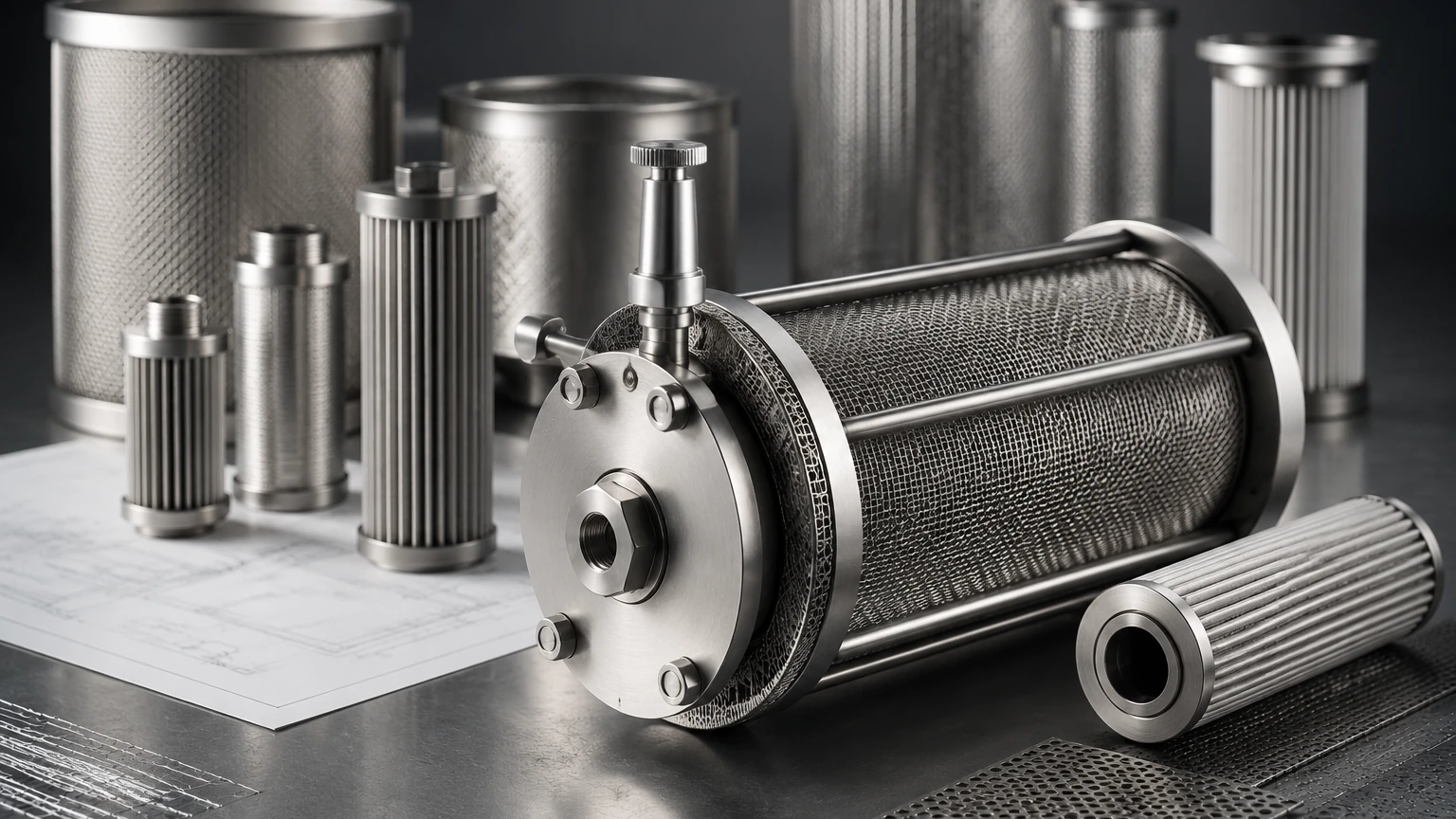
The heart of the self cleaning filter design is the filter element. Common materials include stainless steel wedge wire, sintered metal mesh, and perforated plates.
- Wedge Wire: Specifically engineered for mechanical cleaning, wedge wire features a V-shaped profile that provides a smooth surface for scrapers and minimizes the risk of particle entrapment (blinding).
- Sintered Mesh: Offers high precision and multi-layered strength, making it suitable for fine filtration in high-pressure backwash systems.
- Perforated Plates: Used primarily for coarse straining or as a support structure for finer meshes.
2. Flow Rate and Velocity
The internal geometry of the filter must be sized to maintain a specific fluid velocity. If the velocity is too high, particles may be forced through the mesh or deeply embedded, making the self-cleaning cycle less effective. Conversely, too low a velocity can lead to premature settling of solids in the housing before they even reach the filter element.
3. Differential Pressure (ΔP) Triggers
Most automated designs rely on differential pressure sensors to initiate the cleaning cycle. As the filter cake builds up, the pressure drop across the element increases. Once a pre-set threshold is reached, the PLC (Programmable Logic Controller) triggers the cleaning mechanism. Engineers must also program a time-based override to ensure cleaning occurs during periods of low solids loading to prevent the cake from hardening on the media.
Material Selection and Chemical Compatibility
Industrial filtration environments are often harsh, involving corrosive chemicals, extreme temperatures, and abrasive solids. Stainless steel is the industry standard for self cleaning filter design due to its mechanical strength and resistance to oxidation.
- SS304: Suitable for general industrial water and non-corrosive chemical applications.
- SS316L: Preferred for pharmaceutical, food and beverage, and marine environments due to its superior resistance to chlorides and organic acids.
- Duplex Stainless Steels: Utilized in high-pressure or highly corrosive environments where standard grades may suffer from stress corrosion cracking.
Beyond the housing and element, the selection of seals (O-rings and gaskets) is vital. Materials such as Viton, EPDM, or PTFE must be matched to the fluid's chemical profile and operating temperature to prevent leaks and bypass.
Performance Evaluation and Operational Efficiency
When evaluating a self cleaning filter design, the "recovery rate" or "yield" is a key performance indicator. This refers to the amount of process fluid lost during the cleaning and purge cycle. High-efficiency designs minimize the volume of fluid discharged with the waste, which is particularly important when processing expensive chemicals or oils.
Furthermore, the total cost of ownership (TCO) should be calculated beyond the initial purchase price. A well-engineered self-cleaning filter reduces TCO by:
- Eliminating Consumables: Unlike bag or cartridge filters that require frequent replacement and disposal, self-cleaning elements are permanent components.
- Reducing Labor: Automation removes the need for manual cleaning, allowing personnel to focus on higher-value tasks.
- Protecting Downstream Assets: By ensuring consistent filtration, these systems prevent the fouling of heat exchangers, spray nozzles, and sensitive instrumentation.
Addressing Common Risks and Engineering Challenges
Despite their advantages, self-cleaning filters are complex mechanical systems that face specific risks:
- Mechanical Wear: In scraper-style filters, the constant friction between the blade and the element can lead to wear. Designs should allow for easy inspection and replacement of wear parts without requiring a full system overhaul.
- Particle Deformability: Soft, organic particles can sometimes be "extruded" through the mesh during a cleaning cycle if the pressure is too high. This requires careful calibration of the cleaning trigger and potentially a larger filtration surface area to reduce face velocity.
- Seal Failure: The dynamic seals on the rotating or reciprocating shafts of the cleaning mechanism are common points of failure. High-quality mechanical seals or redundant O-ring configurations are necessary for long-term reliability.
Customization and OEM Integration
Every industrial facility has unique spatial and process constraints. A standard catalog filter may not fit into an existing piping layout or meet specific sanitary standards. Custom Main Page solutions allow for the integration of specific inlet/outlet configurations, specialized mounting brackets, and control systems that communicate directly with the facility's SCADA (Supervisory Control and Data Acquisition) system.
For OEM applications, the filter is often integrated as a component of a larger machine, such as a CNC coolant system or a large-scale water treatment skid. In these cases, the self cleaning filter design must be compact, reliable, and easy to service by the end-user.
Conclusion: Selecting the Right Filtration Partner
Implementing a self-cleaning filtration system is a significant capital investment that requires deep technical collaboration between the end-user and the manufacturer. Before proceeding, engineers should confirm the exact particle size distribution of their process fluid, the expected solids concentration, and the chemical nature of the contaminants.
At Kaifil, we specialize in the manufacturing of precision stainless steel filtration components that form the backbone of high-performance self-cleaning systems. Our expertise in wire mesh, wedge wire, and custom metal filter cartridges ensures that your filtration solution is engineered for durability and precision. To explore technical specifications and discuss your specific application requirements, visit our Main Page for detailed product information and engineering support.
By focusing on robust self cleaning filter design and high-quality material selection, industrial operators can achieve a balance of process continuity, environmental compliance, and long-term cost savings.
