


Sand Screen
In industrial fluid management and extraction, the integrity of a filtration system is often the thin line between operational efficiency and catastrophic equipment failure. A sand screen serves as a critical mechanical barrier designed to prevent the migration of formation sand and fine particulates into the production stream. Whether utilized in water well completion, oil and gas extraction, or specialized chemical processing, the selection of a sand screen is a high-stakes engineering decision that impacts flow rates, pump longevity, and the total cost of ownership.
For engineers and procurement specialists, understanding the nuances of sand screen design—ranging from material metallurgy to the geometric configuration of the filtration media—is essential. This guide explores the technical foundations of sand control, the various types of screens available, and the critical evaluation criteria necessary to optimize industrial filtration performance.
Understanding Sand Screen Technology in Industrial Filtration
The primary function of a sand screen is to provide a reliable interface between a fluid-bearing formation and the transport system. In many industrial applications, the presence of unconsolidated solids can lead to severe erosion of downstream components, such as valves, turbines, and high-pressure pumps. By implementing a high-precision sand screen, operators can effectively bridge the gap between the formation and the wellbore or intake, ensuring that only the desired fluids pass through while the solid matrix remains stabilized.
From a technical perspective, a sand screen must balance two competing requirements: high permeability and high filtration efficiency. High permeability is necessary to minimize the pressure drop across the screen, which preserves the energy of the fluid and maintains high production rates. Conversely, high filtration efficiency is required to ensure that even the smallest abrasive particles are retained. Achieving this balance requires a deep understanding of the particle size distribution (PSD) of the target environment and the mechanical stresses the screen will undergo during installation and operation.
Key Types of Sand Screens and Their Engineering Applications
Not all filtration challenges are identical, and as a result, several distinct types of sand screen technologies have evolved to meet specific industrial needs. Each configuration offers unique advantages regarding strength, flow area, and resistance to plugging.
Wire-Wrapped Screens (V-Wire)
Wire-wrapped screens are among the most common solutions in the water treatment and industrial sectors. These consist of a wedge-shaped wire (V-wire) wrapped helically around a series of longitudinal support rods. The V-shape creates a continuous slot that widens inwardly, a design feature that significantly reduces the risk of particle entrapment and "blinding." This self-cleaning property is vital for applications where consistent flow is required over long periods without frequent maintenance.
Premium Metal Mesh Screens
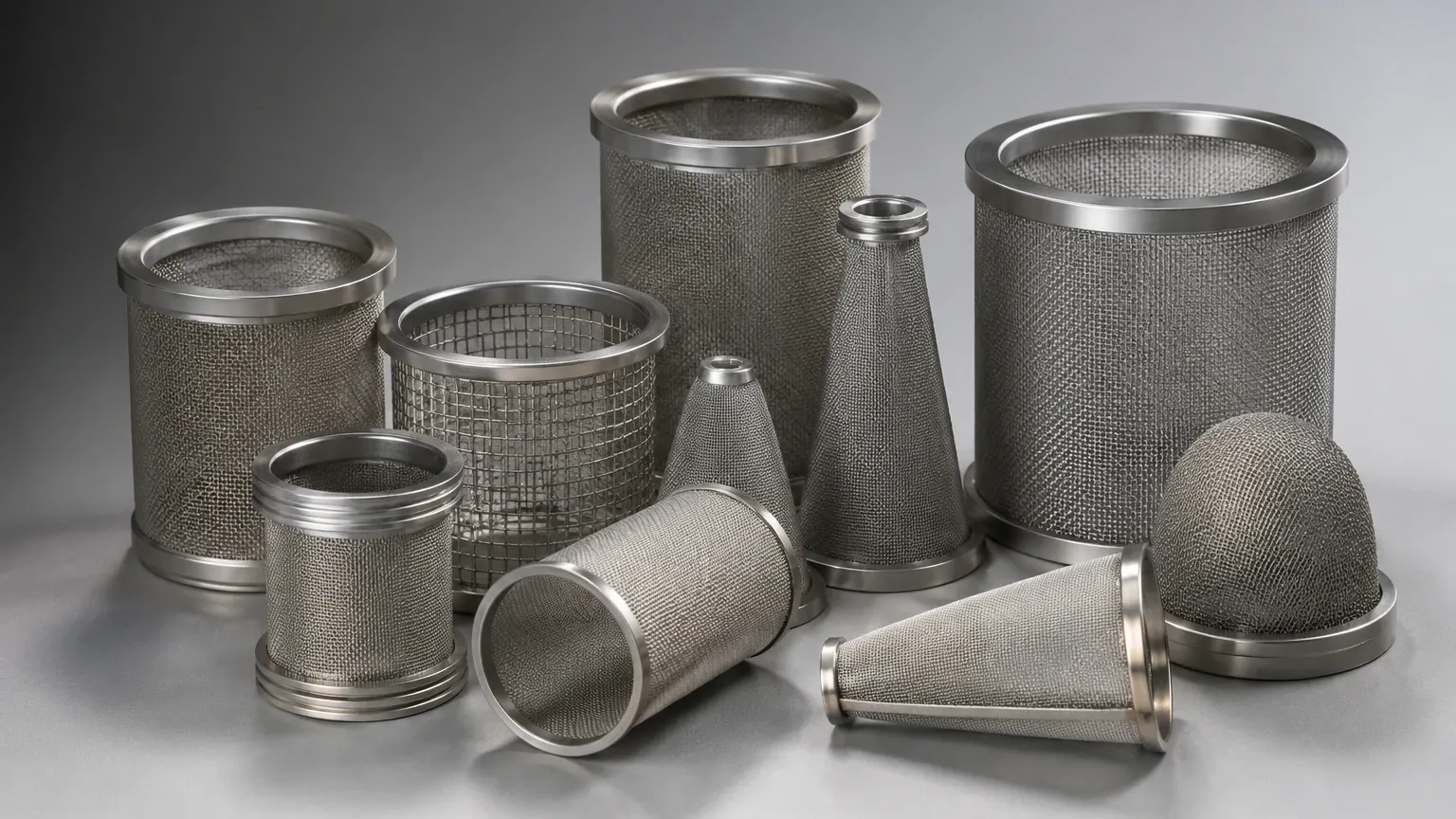
For more demanding environments, such as high-pressure hydraulic systems or chemical processing, premium metal mesh screens are often the preferred choice. These screens utilize multiple layers of stainless steel wire mesh—often sintered together for added structural integrity. The multi-layered approach allows for depth filtration, which can capture a wider range of particle sizes compared to the surface filtration provided by simple slotted designs. These are highly customizable in terms of micron ratings and are frequently used in OEM filtration components.
Pre-Packed Screens
In situations where the formation sand is exceptionally fine or where a traditional gravel pack is not feasible, pre-packed screens provide an integrated solution. These units feature an inner and outer screen with a layer of resin-coated or ceramic proppant sandwiched between them. This "built-in" filter medium provides an extra layer of protection, making them ideal for horizontal well completions or remediation projects where sand control has previously failed.
Material Selection and Corrosion Resistance
The longevity of a sand screen is dictated largely by its material composition. Because these components are often submerged in corrosive fluids or exposed to high temperatures, stainless steel is the industry standard. However, the specific grade of stainless steel must be matched to the chemical environment.
* Grade 304 Stainless Steel: Suitable for general industrial applications and fresh water treatment where corrosion risks are moderate.
* Grade 316L Stainless Steel: The "L" denotes low carbon, which improves weldability and resistance to intergranular corrosion. This grade is essential for chemical processing and environments with higher chloride concentrations.
* Duplex and Super Duplex Steels: For extreme environments involving high H2S or CO2 levels, duplex alloys offer superior yield strength and resistance to stress corrosion cracking.
When evaluating a manufacturer like Kaifil, engineers should confirm that the material selection aligns with the pH levels, temperature fluctuations, and chemical additives present in the fluid stream. Utilizing sub-par materials in a sand screen can lead to rapid pitting or mechanical failure, resulting in costly workovers and downtime.
Technical Evaluation Criteria for Engineers
Selecting the correct sand screen involves more than just choosing a micron rating. Engineers must perform a comprehensive analysis of the following technical parameters to ensure the component is fit for purpose.
Particle Size Distribution (PSD)
Before a screen can be designed, the formation solids must be analyzed via sieve analysis or laser diffraction. The sand screen slot size is typically determined using established engineering rules, such as the Saucier criteria, which suggest that the slot size should be approximately 5 to 6 times the median grain size (d50) of the formation sand for effective bridging. Incorrect sizing can lead to either total plugging (if the slots are too small) or excessive sand production (if the slots are too large).
Mechanical Strength and Collapse Resistance
In deep-well or high-pressure applications, the sand screen must withstand significant radial loads. The collapse strength of the screen is a function of the support rod density and the thickness of the wire. Engineers must calculate the expected differential pressure during both production and potential cleaning cycles (such as back-flushing) to ensure the screen does not deform or collapse under stress.
Effective Flow Area (EFA)
The Effective Flow Area refers to the percentage of the screen surface that is open to fluid flow. A higher EFA reduces the entrance velocity of the fluid, which in turn reduces the risk of erosion-corrosion on the screen surface. For high-volume industrial applications, maximizing EFA while maintaining structural integrity is a primary design goal.
Common Risks and Performance Challenges
Even a well-designed sand screen can face operational challenges. One of the most common risks is "plugging" or "scaling." This occurs when minerals (like calcium carbonate) or biological films accumulate on the screen surface, restricting flow. In such cases, the chemical compatibility of the screen material with acidizing or cleaning agents becomes a critical factor.
Erosion is another significant risk, particularly in high-velocity gas wells or systems with high abrasive content. If the fluid velocity exceeds the "critical velocity" for the chosen material, the sand particles will eventually wear through the screen, leading to a "hot spot" and eventual failure of the sand control system. Regular monitoring of differential pressure is the most effective way to detect the early stages of plugging or erosion.
Customization and OEM Solutions
In the B2B sector, off-the-shelf solutions rarely meet the specific requirements of complex industrial projects. Customization is often necessary to integrate a sand screen into existing infrastructure or to meet unique filtration targets. This includes customizing the length, diameter, end-fittings (such as NPT or BSP threads), and the specific weave pattern of the mesh.
Working with a manufacturer that understands the intersection of metallurgy and fluid dynamics is essential. For those looking to explore specific configurations or technical specifications for their next project, visiting the Main Page of a specialized manufacturer can provide the necessary technical documentation and engineering support to move from the design phase to implementation.
Conclusion: Optimizing Total Cost of Ownership
The initial purchase price of a sand screen is only a fraction of its total cost. The true value is found in its ability to operate reliably over its intended lifespan without requiring intervention. By focusing on high-quality materials, precise slot tolerances, and robust mechanical design, engineering teams can significantly reduce the frequency of equipment repairs and maximize the uptime of their industrial processes.
When sourcing a sand screen, it is vital to confirm the manufacturer’s quality control processes, including slot width verification and weld integrity testing. A commitment to these technical details ensures that the filtration system remains a robust asset rather than a point of failure. For further technical insights and to review product options and application support, engineers are encouraged to consult the resources available on the Main Page to ensure their filtration solutions are engineered for the most demanding industrial environments.
