


Sand Screener
In industrial processing, the efficiency of material separation determines the quality of the final product and the longevity of downstream equipment. A sand screener is a specialized piece of equipment designed to sort sand and other granular materials by size using a series of mesh screens. While the term is often associated with construction sites, industrial-grade sand screening is a precise engineering process used in chemical processing, water treatment, glass manufacturing, and hydraulic fracturing.
For engineers and procurement professionals, selecting the right sand screener components—specifically the wire mesh and filter media—is a critical decision that impacts throughput, filtration accuracy, and maintenance costs. As a professional manufacturer of custom stainless steel filtration solutions, Kaifil provides the technical expertise required to optimize these systems for demanding industrial environments.
The Fundamentals of Industrial Sand Screening
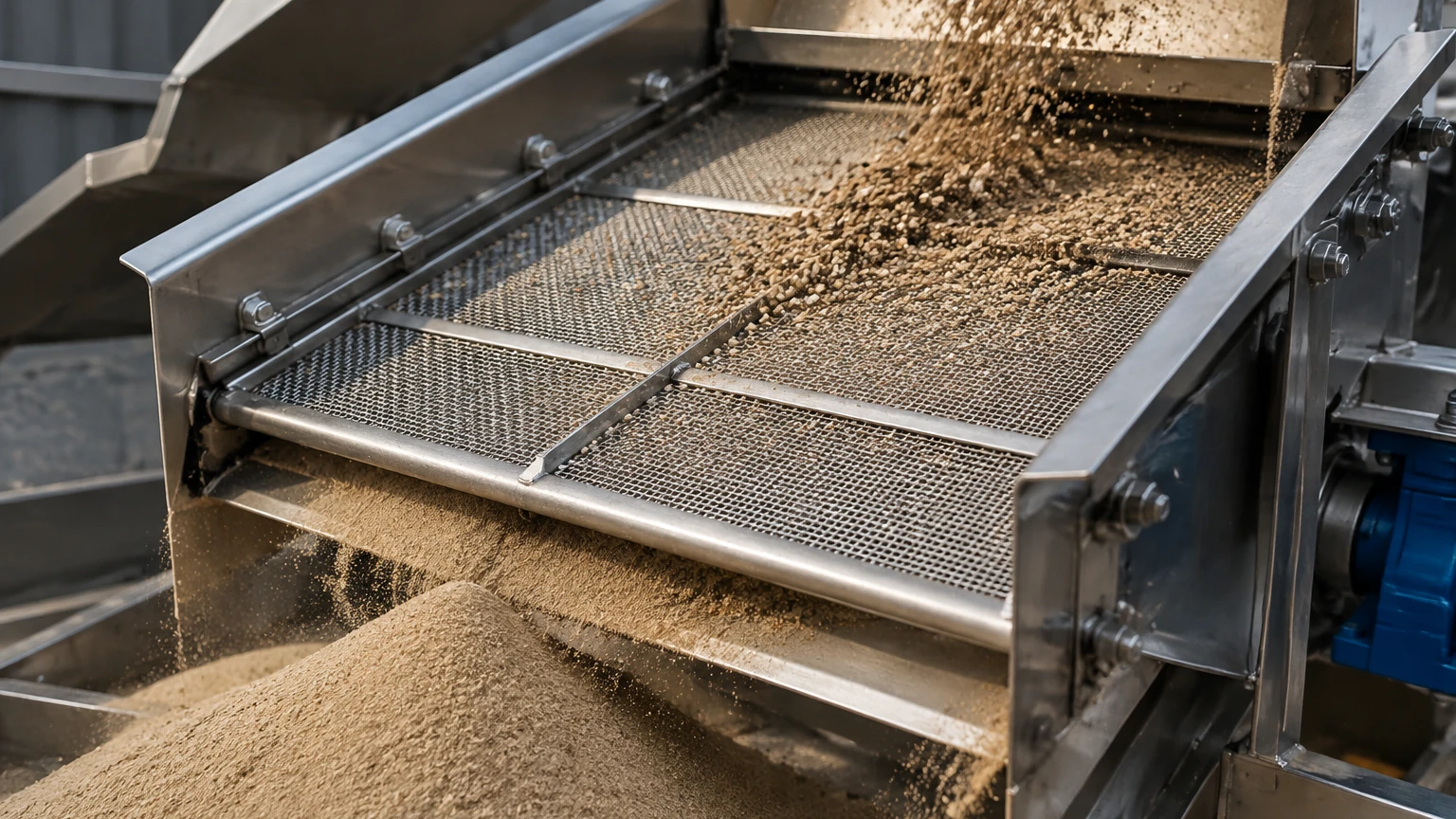
At its core, a sand screener operates on the principle of mechanical separation. The raw material is fed onto a screening surface, which is usually a woven wire mesh or a perforated plate. Through vibration, rotation, or gravity, particles smaller than the mesh openings pass through (the "undersize"), while larger particles are retained on the surface (the "oversize").
In industrial contexts, sand screening is rarely a single-step process. It often involves multiple decks of screens with progressively smaller apertures to achieve a specific particle size distribution (PSD). For instance, in the production of high-purity silica sand for glassmaking, the screener must remove both oversized contaminants and ultra-fine dust that could compromise the melting process.
Types of Screening Mechanisms
1. Vibratory Screeners: These are the most common in industrial settings. They use high-frequency vibrations to agitate the material, ensuring that particles frequently contact the mesh surface. This prevents "blinding" (clogging) and increases the probability of undersized particles passing through.
2. Rotary Screeners (Trommels): These consist of a rotating cylindrical drum. As the drum turns, the material is lifted and dropped, allowing the smaller particles to fall through the mesh. These are particularly effective for wet or sticky materials.
3. Gyratory Screeners: These use a circular motion in a horizontal plane. They are often preferred for fine-mesh applications where high precision is required without the aggressive impact of a vertical vibratory system.
The Role of Stainless Steel Wire Mesh in Sand Screening
The performance of any sand screener is fundamentally limited by its screening media. While high-carbon steel is common in heavy construction, industrial applications typically require stainless steel wire mesh due to its superior durability and resistance to environmental stressors.
Stainless steel provides several engineering advantages:
* Corrosion Resistance: In applications involving wet sand or chemical additives, standard steel meshes will oxidize and degrade rapidly. Stainless steel (specifically grades 304 and 316L) ensures the integrity of the mesh over long operational cycles.
* Tensile Strength: Sand is an abrasive material. The mesh must withstand the constant impact and friction of granular particles without deforming or breaking.
* Precision Aperture Control: Industrial processes often require exact micron ratings. Woven stainless steel wire mesh offers tighter tolerances than synthetic alternatives or perforated metals.
For those seeking high-performance filtration components for their screening equipment, visiting the Main Page of a specialized manufacturer like Kaifil provides access to a range of customized wire mesh and filter cartridge options tailored for industrial use.
Key Engineering Specifications for Screen Selection
When specifying a replacement mesh or designing a new sand screener system, engineers must evaluate several technical parameters to ensure the system meets performance expectations.
Mesh Count and Micron Rating
The mesh count refers to the number of openings per linear inch. As the mesh count increases, the size of the openings (aperture) decreases. In sand screening, the micron rating is the most accurate way to define the filtration capability. A common challenge is balancing the need for fine filtration with the requirement for high flow rates.
Wire Diameter and Open Area
The diameter of the wire used in the mesh significantly affects both the strength of the screen and the "open area" percentage. The open area is the ratio of the total area of the holes to the total area of the screen.
* Thicker Wire: Increases the lifespan and abrasion resistance but reduces the open area, which can lower throughput.
* Thinner Wire: Increases the open area and throughput but may lead to premature wear and mesh failure in high-load applications.
Engineers must calculate the optimal balance based on the abrasive nature of the sand and the required production volume.
Weave Types
For sand screening, the most common weave is the Plain Weave, where each shute wire passes alternately over and under each warp wire. However, for finer filtration or higher strength requirements, Twilled Weaves or Dutch Weaves may be employed. In high-vibration environments, a Crimp Weave (where the wires are pre-bent) is often used to ensure the wires remain locked in place, maintaining consistent aperture sizes.
Material Selection for Demanding Environments
Selecting the correct alloy is as important as the mesh geometry. In the context of a sand screener, the environment often dictates the material choice:
* AISI 304 Stainless Steel: The standard choice for most industrial applications. It offers excellent strength and good corrosion resistance at a cost-effective price point.
* AISI 316L Stainless Steel: Contains molybdenum, which provides enhanced resistance to chlorides and acids. This is the preferred choice for marine environments, chemical processing, or applications involving brackish water.
* Specialty Alloys: For extreme conditions involving high temperatures or highly corrosive slurries, alloys like Monel or Inconel may be used, though these are rare in standard sand screening.
Common Risks and Performance Issues
Operating a sand screener without proper technical oversight can lead to several operational risks that increase the total cost of ownership.
Blinding and Pegging
Blinding occurs when moisture or fine particles coat the mesh, blocking the openings. Pegging occurs when near-sized particles become wedged in the mesh openings. Both issues drastically reduce efficiency. Solutions include using self-cleaning meshes, ultrasonic vibration systems, or selecting a mesh with a higher open area percentage.
Mechanical Fatigue
Because sand screeners often rely on vibration, the mesh is subject to constant cyclic loading. If the mesh is not properly tensioned or if the wire gauge is insufficient, the metal will eventually suffer from fatigue cracking. This leads to "oversize" particles leaking into the "undersize" stream, necessitating immediate downtime for repairs.
Abrasion and Erosion
Sand is inherently abrasive. Over time, the wire diameter will decrease due to physical wear. As the wire thins, the aperture size effectively increases, leading to a loss of filtration precision. Regular inspection of the mesh thickness is required to predict replacement cycles accurately.
Maintenance and Replacement Cycles
A proactive maintenance strategy is essential for maximizing the ROI of a sand screener. Industrial users should establish clear protocols for:
1. Tension Monitoring: Ensuring the mesh is tight prevents unnecessary flexing and extends fatigue life.
2. Cleaning Protocols: Depending on the application, screens may need periodic cleaning via backwashing, ultrasonic baths, or chemical cleaning to remove accumulated debris.
3. Visual Inspections: Checking for broken wires, signs of corrosion, or uneven wear patterns can prevent catastrophic screen failure during production.
In most industrial settings, the cost of the replacement mesh is negligible compared to the cost of unplanned downtime. Therefore, maintaining a stock of custom-engineered replacement screens is a best practice for procurement teams.
Customization and OEM Solutions
Every industrial process has unique requirements. A standard off-the-shelf sand screener mesh may not provide the optimal results for a specific chemical slurry or a particular grade of industrial sand. This is where OEM and customized filtration solutions become invaluable.
Customization options include:
* Custom Dimensions: Tailoring the mesh size and shape to fit specific machine housings.
* Reinforced Edging: Adding specialized borders (such as hooks, grommets, or welded strips) to improve tensioning and durability.
* Multi-Layer Configurations: Sintering multiple layers of mesh together to combine fine filtration with high mechanical strength.
Kaifil specializes in these types of high-performance filter components, working closely with global customers to develop solutions that meet specific application requirements. From material selection to precise filtration accuracy, customized designs ensure that the filtration component is an asset rather than a bottleneck.
Conclusion: Making Informed Purchasing Decisions
Selecting a sand screener component is an engineering challenge that requires a deep understanding of material science and fluid dynamics. By focusing on high-quality stainless steel wire mesh, precise aperture control, and application-specific material grades, industrial users can achieve reliable and cost-effective filtration performance.
Before purchasing, engineers should confirm the exact particle size distribution required, the chemical nature of the process fluid, and the mechanical stresses the screen will endure. Partnering with a manufacturer that understands these technical nuances is the most effective way to optimize industrial screening processes. For more information on professional filtration products and technical support, explore the resources available on the Main Page of Kaifil’s industrial filtration site.
