


Sandblasting Dust Collection
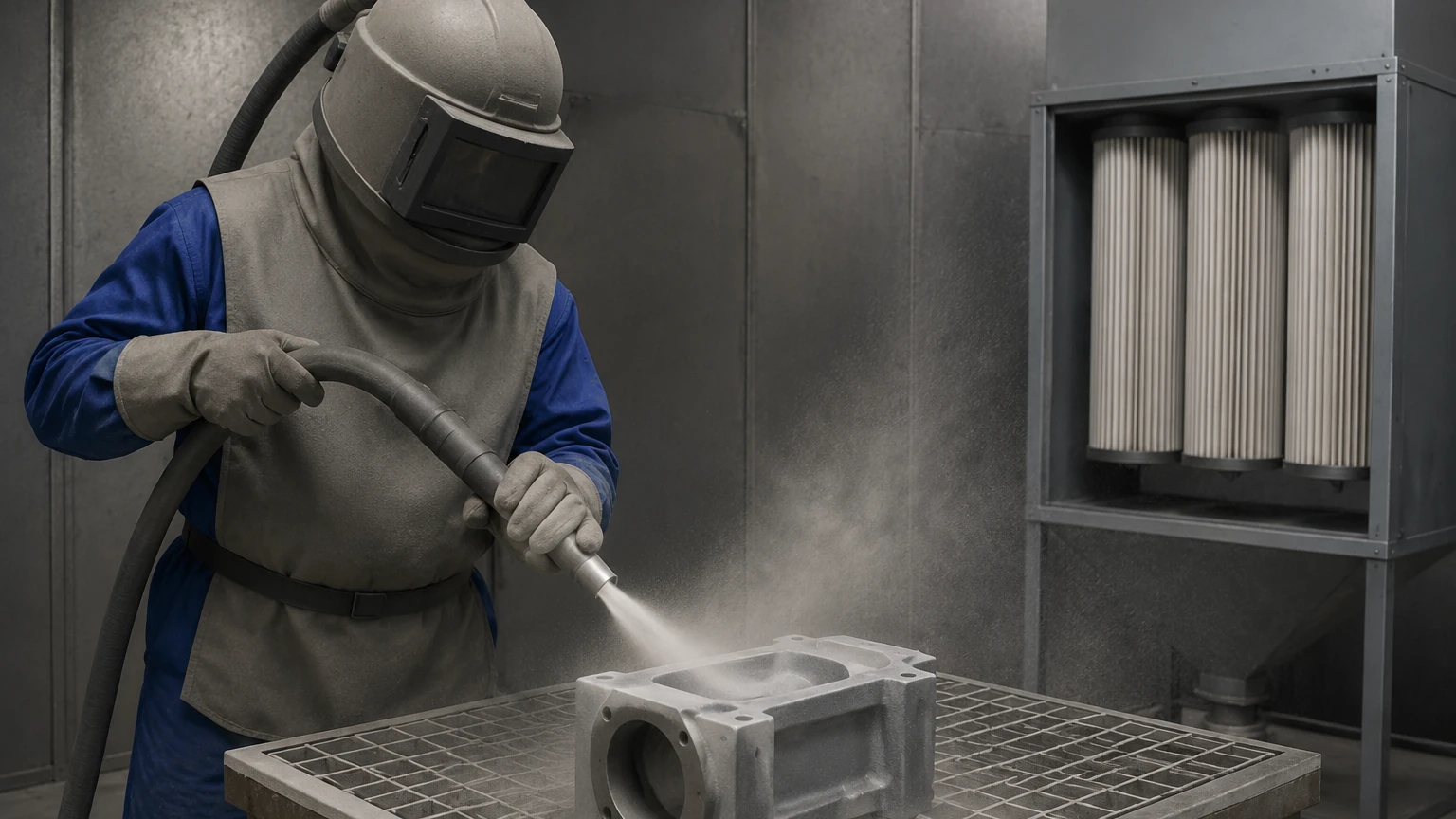
Sandblasting, or abrasive blasting, is a critical industrial process used for surface preparation, cleaning, and finishing. However, the process inherently generates a high volume of airborne particulates, consisting of both the broken-down abrasive media and the material removed from the substrate. Effective sandblasting dust collection is not merely a matter of workshop cleanliness; it is a fundamental requirement for operational safety, environmental compliance, and the longevity of the machinery involved. For engineers and facility managers, selecting the correct filtration components is the most decisive factor in maintaining a high-performance dust extraction system.
In industrial environments, the dust generated during blasting can range from coarse particles to sub-micron fumes. Without a robust collection strategy, these particles can obscure the operator's vision, lead to respiratory hazards, and cause premature wear on mechanical components through abrasion. This article examines the technical requirements of sandblasting dust collection, focusing on filter media selection, engineering parameters, and the advantages of customized metal filtration solutions.
The Critical Nature of Sandblasting Dust Collection
The primary objective of a sandblasting dust collection system is to maintain a negative pressure environment within the blast cabinet or room. This ensures that all liberated dust is drawn into the filtration system rather than escaping into the surrounding facility. The efficiency of this process depends heavily on the air-to-cloth ratio and the specific gravity of the dust being handled.
In sandblasting, the "dust" is often highly abrasive. Unlike wood dust or ambient atmospheric particulate, blasting dust can quickly erode standard cellulose or polyester filter media. Furthermore, the concentration of dust is typically much higher than in standard HVAC or light industrial applications. Therefore, the filtration system must be designed to handle high mass-loading without experiencing a rapid increase in pressure drop. Failure to manage this leads to "blinding," where the filter pores become permanently blocked, necessitating frequent and costly replacements.
Technical Principles of Particulate Separation
Effective sandblasting dust collection relies on several physical mechanisms to separate solids from the airstream. Understanding these principles helps engineers specify the correct filter cartridges or mesh components:
1. Inertial Impaction: Larger, heavier particles possess enough momentum that they cannot follow the streamlines of the airflow as it bends around a filter fiber. Instead, they strike the fiber directly and are captured.
2. Interception: Medium-sized particles follow the airflow but come close enough to a filter fiber to be captured by its surface.
3. Diffusion: Very fine particles (sub-micron) move erratically due to Brownian motion, increasing their likelihood of colliding with the filter media.
4. Sieving: This occurs when the gap between the filter media fibers is smaller than the particle itself. While effective, relying solely on sieving can lead to rapid surface loading.
In sandblasting applications, a combination of these mechanisms is employed. Often, a pre-filtration stage—such as a cyclone separator or a heavy-duty stainless steel wire mesh screen—is used to remove the bulk of the coarse abrasive before the air reaches the high-efficiency secondary filters. This staged approach significantly extends the service life of the more expensive precision filter elements.
Material Engineering: Why Stainless Steel and Metal Mesh?
While many dust collectors use disposable paper or synthetic cartridges, demanding industrial sandblasting operations often require the durability of metal filtration components. Stainless steel, particularly grades 304 and 316L, offers several engineering advantages in sandblasting dust collection:
* Abrasion Resistance: Metal mesh can withstand the high-velocity impact of abrasive particles far better than polymer-based fabrics. This is essential in systems where the filter is located close to the blasting zone.
* Structural Integrity: Under high vacuum or pressure conditions, thin-walled filters can collapse. Stainless steel filter cartridges provided by manufacturers like Kaifil are engineered with internal support cores to maintain their shape under extreme differential pressures.
* Temperature Stability: Some blasting processes, such as those involving hot workpieces or high-friction environments, generate heat. Metal filters remain stable at temperatures that would melt or degrade synthetic media.
* Chemical Compatibility: In specialized blasting (e.g., in the chemical or pharmaceutical sectors), the dust may be corrosive. Stainless steel provides the necessary resistance to prevent oxidation and structural failure.
For those seeking reliable components for these demanding environments, you can Main Page to review product options and application support provided by Kaifil.
Performance Metrics: Airflow, Static Pressure, and Filtration Accuracy
When designing or upgrading a sandblasting dust collection system, engineers must evaluate several key performance metrics to ensure the system meets the application's specific needs.
Airflow (CFM)
Cubic Feet per Minute (CFM) defines the volume of air moved through the system. For sandblasting, the CFM must be sufficient to provide a specific number of air changes per minute within the blast enclosure. If the CFM is too low, dust will linger, reducing visibility and increasing the risk of leakage.
Static Pressure and Pressure Drop
Static pressure is the resistance the fan must overcome to move air through the ductwork and the filters. The "pressure drop" (delta P) across the filter media is a critical indicator of filter health. A high initial pressure drop suggests the filter media is too restrictive for the required airflow, while a rapidly increasing pressure drop indicates that the cleaning system (such as pulse-jet) is not effectively removing the dust cake.
Filtration Accuracy (Micron Rating)
Sandblasting dust collection systems must balance airflow with filtration efficiency. A filter with a 1-micron rating will capture more dust but will also create more resistance. In many industrial blasting applications, a multi-stage approach is used: a coarse wire mesh for 50-100 micron particles, followed by a precision cartridge for 5-10 micron particles. This ensures that the air returned to the plant or exhausted outside meets local particulate matter (PM) standards.
Customization Options for OEM Dust Collection Systems
Standard off-the-shelf filters often fail to meet the unique constraints of specialized sandblasting equipment. OEM customization is frequently necessary to optimize performance. Engineering teams should consider the following customization variables:
* End Cap Configurations: Custom gaskets and end cap designs (e.g., flange, bolt-on, or bayonet mounts) ensure a leak-proof seal, which is vital for maintaining negative pressure.
* Pleat Geometry: Increasing the number of pleats in a cartridge increases the surface area, which lowers the air-to-cloth ratio and extends the time between cleaning cycles. However, pleats that are too tight can trap dust and prevent effective pulse-jet cleaning.
* Reinforcement: For high-vibration environments, adding external shrouds or internal cages to the filter element prevents mechanical fatigue.
Kaifil specializes in these types of custom stainless steel filtration solutions, working closely with global customers to develop high-performance components that meet specific industrial requirements. By focusing on material selection and precise filtration accuracy, these customized designs provide dependable performance in the most demanding sandblasting environments.
Maintenance Protocols and Filter Service Life
The longevity of a sandblasting dust collection system is directly tied to its maintenance regime. Because sandblasting generates such high volumes of dust, the filters must be cleaned regularly. Most modern systems utilize a pulse-jet cleaning mechanism, which sends a burst of compressed air through the filter in the reverse direction, knocking the accumulated dust cake into a collection hopper.
However, even with pulse-jet cleaning, filters eventually reach the end of their service life. Engineers should monitor the following signs to determine replacement cycles:
1. Sustained High Pressure Drop: If the differential pressure remains high even after multiple cleaning pulses, the media is likely "deep-loaded" or blinded.
2. Visible Dust Leakage: Any sign of dust on the "clean side" of the filter indicates a breach in the media or a failed seal.
3. Reduced Airflow at the Source: If the suction at the blast cabinet noticeably drops, it is often due to restricted airflow through the primary filters.
Using durable metal mesh or reinforced cartridges can significantly extend these replacement cycles compared to standard paper filters, reducing the total cost of ownership (TCO) by minimizing downtime and labor costs associated with filter changes.
Procurement Considerations: Selecting the Right Filtration Partner
Choosing a supplier for sandblasting dust collection components requires more than just looking at the unit price. Technical professionals must confirm several factors before finalizing a purchase:
* Material Certification: Ensure the stainless steel or alloy used meets the specified grade (e.g., 304 vs 316L) to prevent premature corrosion.
* Manufacturing Capabilities: Does the supplier have the ability to produce custom sizes and configurations, or are they limited to standard catalog items?
* Testing and Validation: Confirm that the filters are tested for filtration efficiency and structural integrity under simulated operating conditions.
* Technical Support: A reliable partner should provide engineering guidance on air-to-cloth ratios, material compatibility, and performance expectations.
By focusing on quality and durability, facilities can ensure their sandblasting operations remain productive and compliant. Investing in high-quality filtration components, such as those produced by Kaifil, helps achieve efficient and cost-effective performance over the long term. For more information on tailored industrial filtration, visit the Main Page to explore technical resources and product specifications.
Conclusion
Sandblasting dust collection is a complex engineering challenge that requires a deep understanding of fluid dynamics, material science, and particulate behavior. While the abrasive nature of the process presents significant risks to equipment and personnel, these risks can be mitigated through the selection of high-performance, durable filtration components. Whether through the use of heavy-duty stainless steel wire mesh for pre-filtration or custom-engineered cartridges for fine particulate capture, the right filtration strategy is essential for any modern industrial sandblasting operation. By prioritizing technical specifications and long-term durability over initial cost, engineers can ensure a safe and efficient working environment.
