


Scott Foam
In the landscape of industrial filtration and fluid management, reticulated polyurethane foam—commonly referred to by the industry-standard name Scott foam—represents a versatile and highly engineered material. Characterized by its unique open-cell structure, this material is utilized across a broad spectrum of applications, from air filtration in HVAC systems to acoustic damping and ceramic filter precursors. For engineers and procurement professionals, understanding the technical nuances of Scott foam is essential for optimizing system performance and ensuring long-term operational reliability.
While Kaifil specializes in high-precision stainless steel filtration solutions, we recognize that many industrial systems utilize a multi-stage approach where reticulated foams serve as critical pre-filtration or specialized media. This guide provides a technical deep dive into the properties, selection criteria, and engineering trade-offs associated with Scott foam in industrial environments.
Understanding the Structure of Reticulated Scott Foam
The defining characteristic of Scott foam is its "reticulated" structure. Unlike standard polyurethane foams, which contain a mix of open and closed cells (often separated by thin membranes or "windows"), reticulated foam undergoes a specific manufacturing process to remove these membranes.
The Reticulation Process
Most high-quality Scott foam is produced through a process known as thermal reticulation or "zapping." In this process, a standard foam block is placed in a vacuum pressure vessel. A combustible gas mixture is introduced and ignited. The resulting controlled explosion creates a heat wave that melts the thin cell membranes without damaging the thicker skeletal strands (struts). The result is a 100% open-cell structure that resembles a three-dimensional net or dodecahedron lattice.
Pores Per Inch (PPI)
The primary metric for classifying Scott foam is Pores Per Inch (PPI). This measurement dictates the coarseness or fineness of the media. Common industrial grades range from 10 PPI (large, visible pores) to 100 PPI (very fine, felt-like appearance).
* 10–30 PPI: Used for high-flow air filtration and large particle capture.
* 45–75 PPI: Standard for intermediate filtration and fluid management.
* 80–100 PPI: Utilized for fine filtration, medical applications, and acoustic damping.
Material Variants: Polyester vs. Polyether Scott Foam
When specifying Scott foam for industrial applications, the chemical base of the polyurethane is the most critical decision point. The choice between polyester and polyether bases determines the foam's compatibility with various fluids and environmental conditions.
Polyester-Based Scott Foam
Polyester-based foams are generally characterized by higher mechanical strength, superior tear resistance, and excellent resistance to hydrocarbons and chemicals. They are the preferred choice for air filtration, gasket applications, and systems involving oils or non-polar solvents. However, polyester foams are susceptible to hydrolysis—a chemical breakdown caused by exposure to high humidity or water over extended periods.
Polyether-Based Scott Foam
Polyether-based foams are engineered for environments where moisture is prevalent. They exhibit exceptional hydrolytic stability and resistance to microbial growth (fungus and mildew). While they may have slightly lower physical strength than polyester variants, they are the standard for water filtration, outdoor equipment, and medical devices where moisture contact is frequent.
Key Performance Metrics in Industrial Filtration
For an engineer, the performance of Scott foam is evaluated based on its ability to balance particle capture with system efficiency.
Pressure Drop and Permeability
Because Scott foam is 97% to 98% void space, it offers exceptionally low resistance to air and fluid flow. This low pressure drop (Delta P) is critical for maintaining high flow rates without overtaxing fans or pumps. The open-cell structure allows for "depth filtration," where particles are trapped throughout the thickness of the media rather than just on the surface.
Dust-Holding Capacity
The skeletal structure of reticulated foam provides a massive surface area for particle impingement. Unlike surface-loading filters, Scott foam can hold a significant volume of contaminants before the pressure drop increases to a critical level. This makes it an ideal pre-filter for more expensive, high-precision components like those found on our Main Page.
Efficiency Ratings
It is important to note that Scott foam is typically used for coarse to medium filtration. While it is highly effective at capturing large particulates (dust, lint, hair), it is not a HEPA-grade material. Its efficiency is often measured using the ASHRAE 52.2 standard, typically falling within the MERV 1 to MERV 4 range depending on the PPI and thickness.
Comparative Analysis: Scott Foam vs. Stainless Steel Wire Mesh
In many industrial settings, engineers must choose between flexible foam media and rigid metal media. Both have distinct roles in a filtration system.
| Feature | Scott Foam (Reticulated) | Stainless Steel Wire Mesh (Kaifil) |
| :— | :— | :— |
| Filtration Type | Depth Filtration | Surface/Precision Filtration |
| Durability | Limited; degrades over time | High; resistant to mechanical stress |
| Temperature Limit | Low (Typically < 120°C) | Very High (Up to 800°C+) |
| Cleanability | Limited (Washable a few times) | Excellent (Ultrasonic, backwash, chemical) |
| Chemical Resistance | Variable (Base dependent) | Exceptional (304/316L) |
| Precision | Nominal (Variable pore size) | Absolute (Precise micron ratings) |
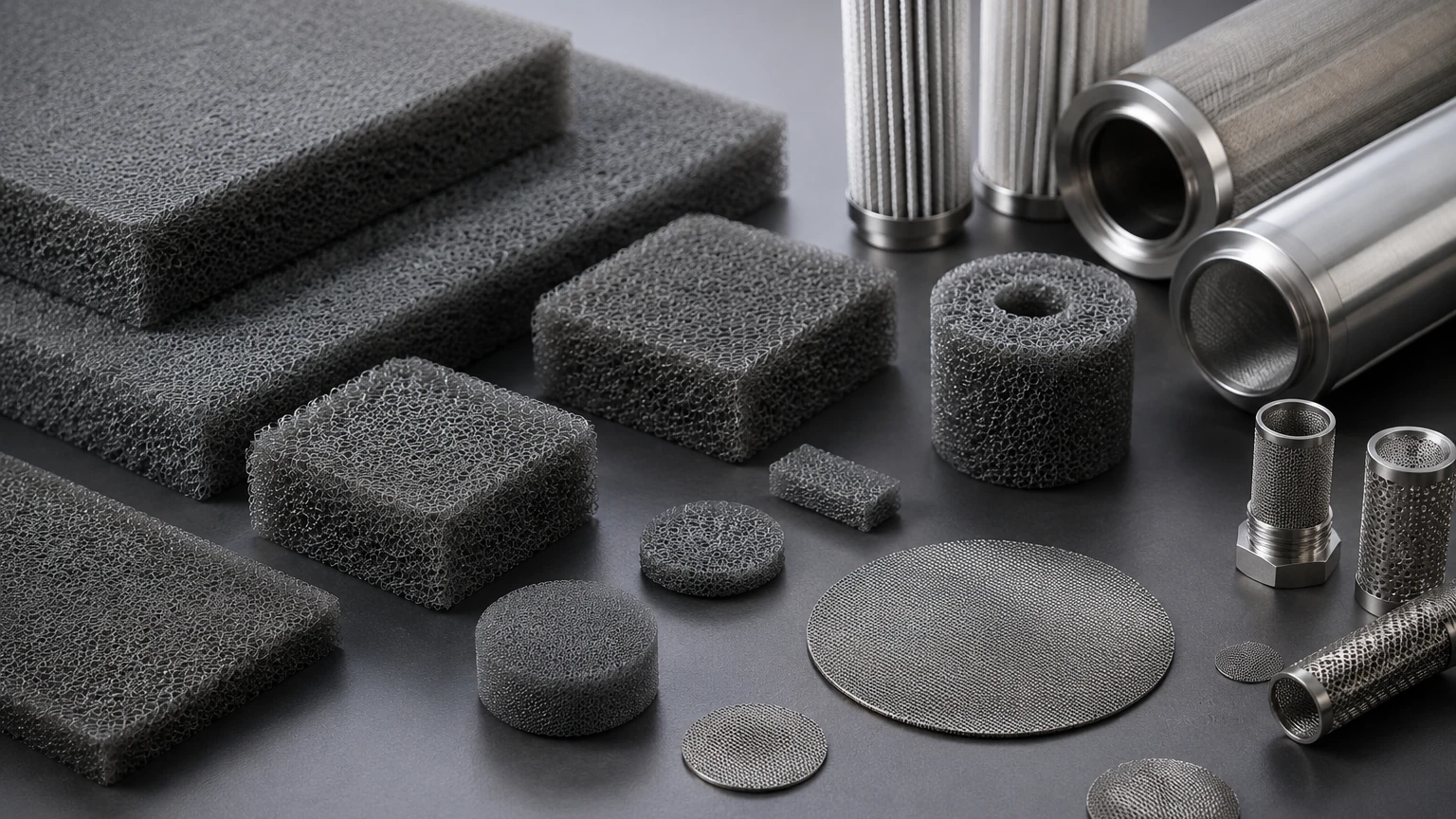
Scott foam is often used as a sacrificial pre-filter to protect high-value stainless steel filter cartridges. By capturing the bulk of large contaminants, the foam extends the service life of the precision metal filter, reducing the total cost of ownership for the system.
Engineering Considerations for System Integration
When integrating Scott foam into an industrial design, several environmental and mechanical factors must be considered to prevent premature failure.
Thermal Stability
Polyurethane is a thermoplastic material. Most Scott foam grades have a maximum continuous operating temperature of approximately 90°C to 120°C (194°F to 248°F). Exceeding these limits can cause the foam to soften, lose its skeletal integrity, or even melt. For high-temperature exhaust or steam applications, stainless steel alternatives are mandatory.
Chemical Compatibility
While polyester foams resist oils, they can swell or degrade when exposed to strong acids, bases, or certain polar solvents like ketones. Engineers should always request a chemical compatibility chart before specifying foam for fluid processing applications.
UV and Ozone Exposure
Standard polyurethane is sensitive to ultraviolet (UV) light and ozone. Prolonged exposure can lead to "dusting," where the foam struts become brittle and break apart, potentially introducing foam particles into the downstream flow. If the application is outdoors or near ozone-generating equipment (like high-voltage motors), UV-stabilized grades must be specified.
Maintenance and Replacement Protocols
One of the primary questions regarding Scott foam is whether it can be cleaned. While many reticulated foams are marketed as "washable," there are technical limits to this practice.
1. Cleaning Methods: Foam can be cleaned using compressed air (blow-off) or by washing with water and mild detergents. However, mechanical agitation (wringing) can tear the delicate struts.
2. Degradation: Even with careful cleaning, the polymer structure eventually undergoes oxidative aging. The foam will lose its elasticity and begin to crumble.
3. Replacement Cycles: In critical industrial applications, it is often more cost-effective to treat Scott foam as a consumable. Establishing a regular replacement schedule based on pressure drop readings is the most reliable way to ensure system protection.
Selecting the Right Filtration Media for Your Application
Choosing the correct Scott foam requires a balance of PPI, thickness, and material base. For example, a 30 PPI polyester foam might be perfect for an air intake on a generator, while a 60 PPI polyether foam is better suited for a water-cooling loop pre-filter.
However, in demanding environments involving high pressures, corrosive chemicals, or extreme temperatures, foam may reach its physical limits. In these cases, transitioning to a custom-engineered stainless steel solution is necessary. At Kaifil, we assist engineering teams in determining the optimal filtration strategy, whether that involves standalone metal filters or hybrid systems that utilize foam pre-filtration.
By understanding the strengths and limitations of Scott foam, engineers can design more resilient systems that maintain high flow rates and protect sensitive downstream components. For those seeking the highest levels of durability and precision, we invite you to explore our advanced metal filtration options on our Main Page to see how custom-manufactured stainless steel components can optimize your specific industrial process.
