


Gas Purifier Technology
In modern industrial processing, the requirement for ultra-high purity (UHP) gases has become a standard rather than an exception. Gas purifier technology encompasses the methods, materials, and engineering designs used to remove contaminants—such as moisture, oxygen, carbon monoxide, carbon dioxide, and sub-micron particulates—from process gases. For industries ranging from semiconductor manufacturing to pharmaceutical synthesis and chemical processing, the integrity of the gas purification system directly influences product yield and equipment longevity. Central to these systems are high-performance filtration components, often constructed from stainless steel, which provide the mechanical stability and chemical resistance necessary for demanding environments.
Fundamentals of Gas Purifier Technology
Gas purifier technology operates on several physical and chemical principles, depending on the target contaminants and the required purity level. The most common methods include adsorption, chemisorption, and mechanical filtration. Adsorption typically involves the use of molecular sieves or activated alumina to trap moisture and hydrocarbons. Chemisorption utilizes reactive metal beds (getters) to chemically bond with impurities like oxygen or nitrogen at elevated temperatures.
However, these chemical and molecular processes cannot function effectively without robust mechanical filtration. Particulate matter, whether introduced from the gas source or generated by the attrition of the purifier’s own reactive beds, must be captured to prevent downstream contamination. This is where precision-engineered stainless steel wire mesh and sintered metal filters become critical. These components ensure that the gas exiting the purifier meets stringent particle-count specifications, often requiring the removal of particles as small as 0.003 μm in specialized semiconductor applications.
The Role of Stainless Steel Filtration in Gas Purification
Stainless steel is the material of choice in gas purifier technology due to its exceptional mechanical properties and resistance to corrosion. In high-pressure gas systems, polymer-based filters often fail to provide the necessary structural integrity or may introduce contaminants through outgassing. Stainless steel components, particularly those manufactured by Kaifil, offer a clean, stable, and durable alternative.
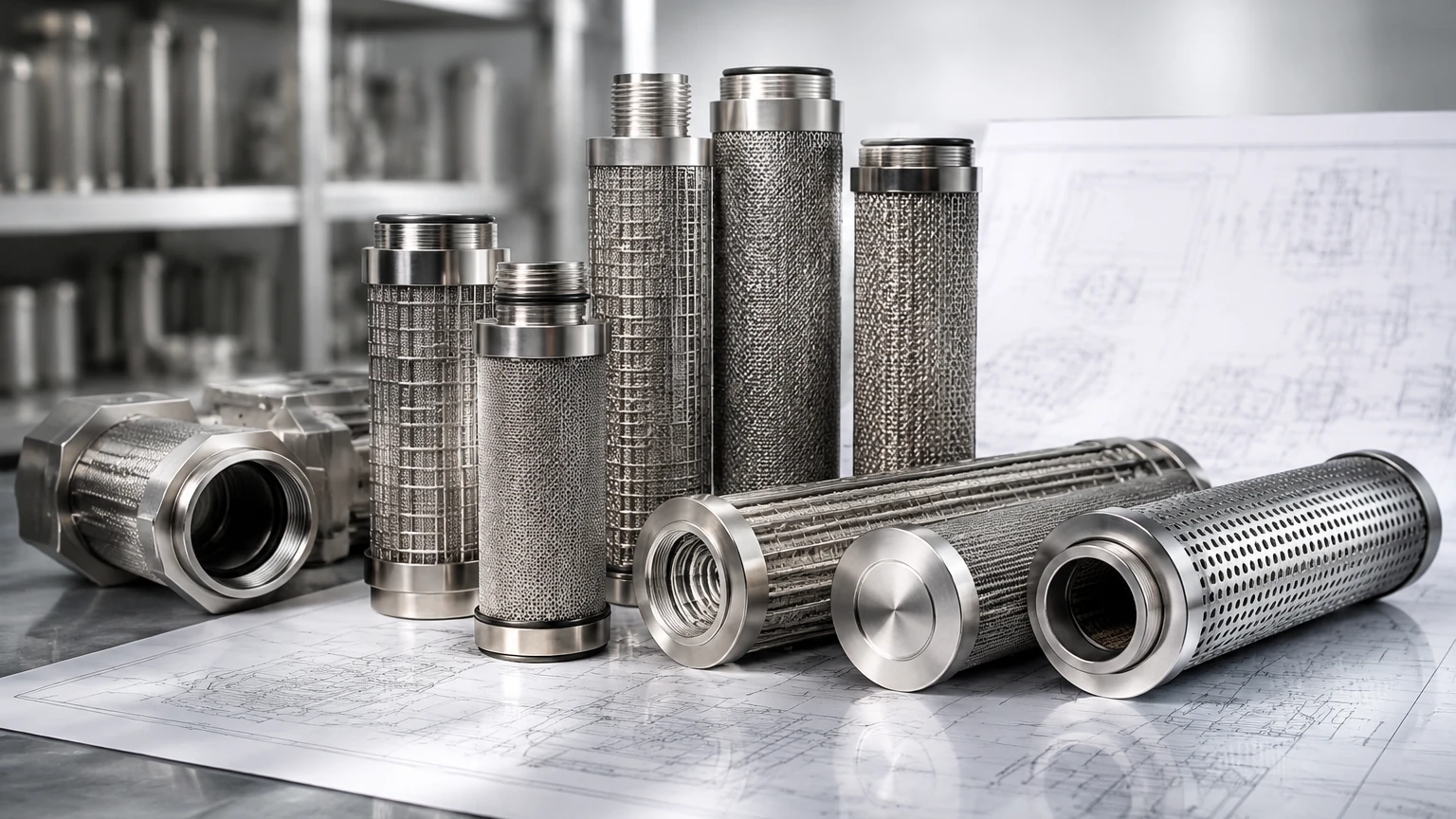
Sintered metal filter cartridges are frequently integrated into gas purifiers to serve as the final barrier. These filters are created by bonding layers of stainless steel wire mesh or metal powders through a high-temperature sintering process. This results in a porous structure that is highly uniform and structurally rigid. Unlike depth filters made of fibers, sintered metal does not suffer from media migration—the shedding of filter material into the gas stream—which is a critical failure mode in high-purity gas delivery.
Material Selection and Engineering for High-Purity Gas Systems
When selecting components for gas purifier technology, engineers must prioritize material compatibility and surface finish. The most common materials used are 304 and 316L stainless steel. 316L is specifically preferred for gas purification because its low carbon content and the addition of molybdenum enhance its resistance to pitting and crevice corrosion, especially when handling reactive or corrosive gases like hydrogen chloride or ammonia.
Another critical engineering consideration is the surface roughness of the internal components. In UHP gas systems, internal surfaces are often electropolished to achieve a mirror-like finish. This minimizes the surface area available for moisture adsorption and reduces the risk of particle entrapment, which could later be released as a "slug" of contamination. For OEM manufacturers, choosing a partner capable of providing custom-designed stainless steel filters that meet these specific metallurgical and surface requirements is essential for the overall performance of the gas purifier.
Performance Metrics: Pressure Drop and Filtration Efficiency
In the design of gas purification systems, two of the most critical performance metrics are differential pressure (ΔP) and filtration efficiency. Gas purifier technology must balance the need for high-efficiency particle removal with the requirement for low resistance to flow. High pressure drop across a filter can lead to reduced flow rates, increased energy consumption, and potential process instability.
Engineers calculate the required surface area of the filter media based on the maximum flow rate and the allowable pressure drop. Sintered wire mesh filters are particularly advantageous here because they offer high porosity, allowing for high flow velocities with minimal resistance. Furthermore, the filtration efficiency of these metal components is not just a function of pore size but also of the gas velocity and the physical properties of the particles. In gas-phase filtration, mechanisms such as Brownian diffusion, interception, and inertial impaction allow stainless steel filters to capture particles significantly smaller than their nominal pore rating.
Customization and OEM Integration in Gas Purifier Design
No two gas purification applications are identical. A system designed for a hydrogen fuel cell test bench will have vastly different requirements than one used in a chemical vapor deposition (CVD) chamber. Consequently, customization is a cornerstone of effective gas purifier technology. OEM manufacturers require filtration components that can be seamlessly integrated into unique housing designs, often with specific connection types like VCR fittings, NPT threads, or flange mounts.
Kaifil specializes in providing these customized solutions, working closely with engineering teams to develop filter cartridges that fit specific spatial constraints while meeting rigorous performance targets. This includes the development of multi-layered sintered mesh structures that provide graded filtration—capturing larger particles on the outer layers to prevent premature blinding of the inner, high-efficiency layers. Such customized designs extend the service life of the purifier and reduce the total cost of ownership for the end-user.
Thermal and Chemical Stability in Demanding Environments
Many gas purification processes, particularly those involving getter technology, operate at elevated temperatures, sometimes exceeding 400°C. At these temperatures, many standard filtration materials lose their structural integrity or begin to react with the gas stream. Stainless steel filters maintain their mechanical strength and oxidation resistance at high temperatures, ensuring that the purification process remains stable over long operational cycles.
Chemical stability is equally important. In the petrochemical and specialty gas industries, purifiers may be exposed to highly aggressive environments. The ability to specify the exact alloy—such as Hastelloy or Inconel for extreme cases, though 316L stainless steel suffices for most—allows engineers to design gas purifiers that can withstand chemical attack without degrading. This reliability is paramount in preventing catastrophic system failures that could lead to hazardous gas leaks or expensive production downtime.
Maintenance and Operational Longevity of Filter Components
While gas purifier technology is designed for long-term operation, the filtration components are eventually subject to loading. Monitoring the differential pressure across the purifier is the standard method for determining when maintenance is required. One of the primary advantages of stainless steel filter elements over disposable alternatives is their cleanability.
In many industrial applications, stainless steel filters can be regenerated using ultrasonic cleaning, chemical back-flushing, or thermal burnout. This ability to reuse components significantly reduces waste and long-term operational costs. However, in UHP applications, it is often recommended to replace the filter elements to ensure the highest possible purity standards are maintained. Engineers should establish clear replacement cycles based on the known contaminant loading of the source gas and the sensitivity of the downstream process.
Before finalizing a system design or selecting replacement components, it is vital to confirm the chemical compatibility of all seals and housings with the process gas. For a comprehensive overview of available filtration hardware and technical support for your specific application, you can visit our Main Page.
Conclusion: Selecting the Right Partner for Gas Purification
Gas purifier technology is a complex field that requires a deep understanding of fluid dynamics, material science, and chemical engineering. The filtration component is often the final safeguard in the system, protecting both the process and the environment from contamination. By selecting high-quality, custom-engineered stainless steel filtration solutions, manufacturers can ensure their gas purifiers deliver consistent, high-purity results.
When evaluating a supplier for these critical components, engineers should look for technical expertise in sintering processes, a wide range of available alloys, and the ability to provide detailed performance data. As a professional manufacturer, Kaifil provides the reliable OEM and customized filtration solutions necessary to meet the demanding requirements of today’s industrial gas applications. Whether you are designing a new purification system or optimizing an existing one, the right filtration technology is the foundation of gas purity and process efficiency.
