


Screened Well
In industrial water management, the integrity of a screened well is a fundamental determinant of operational efficiency, longevity, and water quality. A screened well is specifically designed to allow groundwater or process water to enter a wellbore while simultaneously preventing the ingress of sand, silt, and other formation materials. For engineers and procurement professionals in sectors such as chemical processing, food and beverage production, and large-scale water treatment, selecting the correct filtration components is not merely a matter of part replacement but a critical engineering decision that affects the total cost of ownership (TCO) and system reliability.
Industrial wells often operate under demanding conditions, including high flow rates, corrosive chemical environments, and significant hydrostatic pressure. The failure of a well screen can lead to catastrophic pump damage, sediment contamination of downstream processes, and eventually, the complete failure of the well itself. Understanding the technical nuances of screen design, material science, and hydraulic performance is essential for optimizing these systems.
The Role of the Screen in Industrial Well Systems
The primary function of a screened well is to serve as a structural stabilizer for the aquifer while acting as a high-efficiency filter. Unlike simple perforated pipes, modern industrial well screens are precision-engineered components designed to maximize fluid intake while minimizing resistance.
In an industrial context, the screen must perform two conflicting tasks: it must have enough open area to allow for high-volume flow, yet the openings must be small enough to retain the filter pack or the natural formation. This balance is achieved through specialized manufacturing techniques, such as the production of continuous-slot wedge wire screens or high-density woven wire mesh assemblies.
When a screened well is properly designed, it creates a stable zone around the wellbore. This stabilization prevents the migration of fine particles, which can cause "sand pumping." Sand pumping is a common industrial hazard where abrasive particles wear down impellers in submersible pumps and clog heat exchangers or membrane filtration units downstream. By ensuring the screen is matched to the geological characteristics of the site, engineers can significantly extend the interval between maintenance cycles.
Engineering Parameters: Slot Size and Open Area
The performance of a screened well is largely dictated by two geometric factors: slot size and the percentage of open area. These parameters are not arbitrary; they must be calculated based on a sieve analysis of the aquifer material or the specific gravel pack used in the well construction.
Slot Size Selection
Slot size refers to the width of the openings in the screen. In a professional engineering environment, slot size is typically determined by the "uniformity coefficient" of the surrounding soil. If the slot is too large, the well will pump sand; if it is too small, the screen will experience excessive pressure drops and may become prone to encrustation. Precision manufacturing allows for tolerances as tight as 0.05mm, ensuring that even the finest sediments are managed effectively.
Open Area and Entrance Velocity
The total open area is the sum of all the openings in the screen. A higher percentage of open area is generally preferred because it reduces the "entrance velocity" of the water. High entrance velocity is a primary driver of well degradation. When water moves too quickly through the screen openings, it can cause:
1. Accelerated Corrosion: Rapid fluid movement can strip away protective oxide layers on metal surfaces.
2. Encrustation: Pressure drops associated with high velocity can cause minerals like calcium carbonate to precipitate out of the water and clog the screen.
3. Frictional Loss: Higher velocity leads to greater energy consumption for the pumps.
To maintain a sustainable screened well, engineers typically aim for an entrance velocity of less than 0.1 feet per second (0.03 meters per second). Achieving this often requires the use of continuous-slot designs, which offer significantly more open area than traditional louvered or perforated pipes.
Material Selection: Why Stainless Steel is the Standard
For industrial applications, stainless steel has become the authoritative material for screened well components. While carbon steel or plastic (PVC) may be suitable for shallow, low-demand domestic wells, they often fail to meet the rigorous requirements of industrial environments.
Corrosion Resistance
Industrial groundwater often contains dissolved gases (like CO2 or H2S), high chloride levels, or varying pH levels that are aggressive toward carbon steel. Stainless steel, particularly Grade 304 and Grade 316L, provides the necessary resistance to oxidation and chemical attack. Grade 316L, with its addition of molybdenum, is specifically recommended for saline environments or applications involving harsh chemical cleaning agents.
Mechanical Strength
A screened well at depth is subject to immense hydrostatic and lithostatic pressure. The screen must resist collapse under these loads. Stainless steel offers a superior strength-to-weight ratio compared to polymers, allowing for thinner screen walls (which increases open area) without sacrificing structural integrity. This is particularly important in deep-well applications where the weight of the column and the pressure of the surrounding formation are substantial.
Longevity and Total Cost of Ownership
While the initial capital expenditure for a stainless steel screen is higher than for alternative materials, the lifecycle cost is significantly lower. A stainless steel screened well can remain operational for decades, whereas inferior materials may require costly rehabilitation or well abandonment within a few years. For more information on high-performance filtration components, professionals can visit the Main Page to review technical specifications and customization options.
Structural Integrity and Collapse Resistance
In the design phase of a screened well, calculating the collapse strength is a non-negotiable safety step. The screen is the weakest point in the well casing string because it is intentionally perforated. Therefore, the design must account for the maximum potential pressure differential that might occur during well development, pumping, or surging.
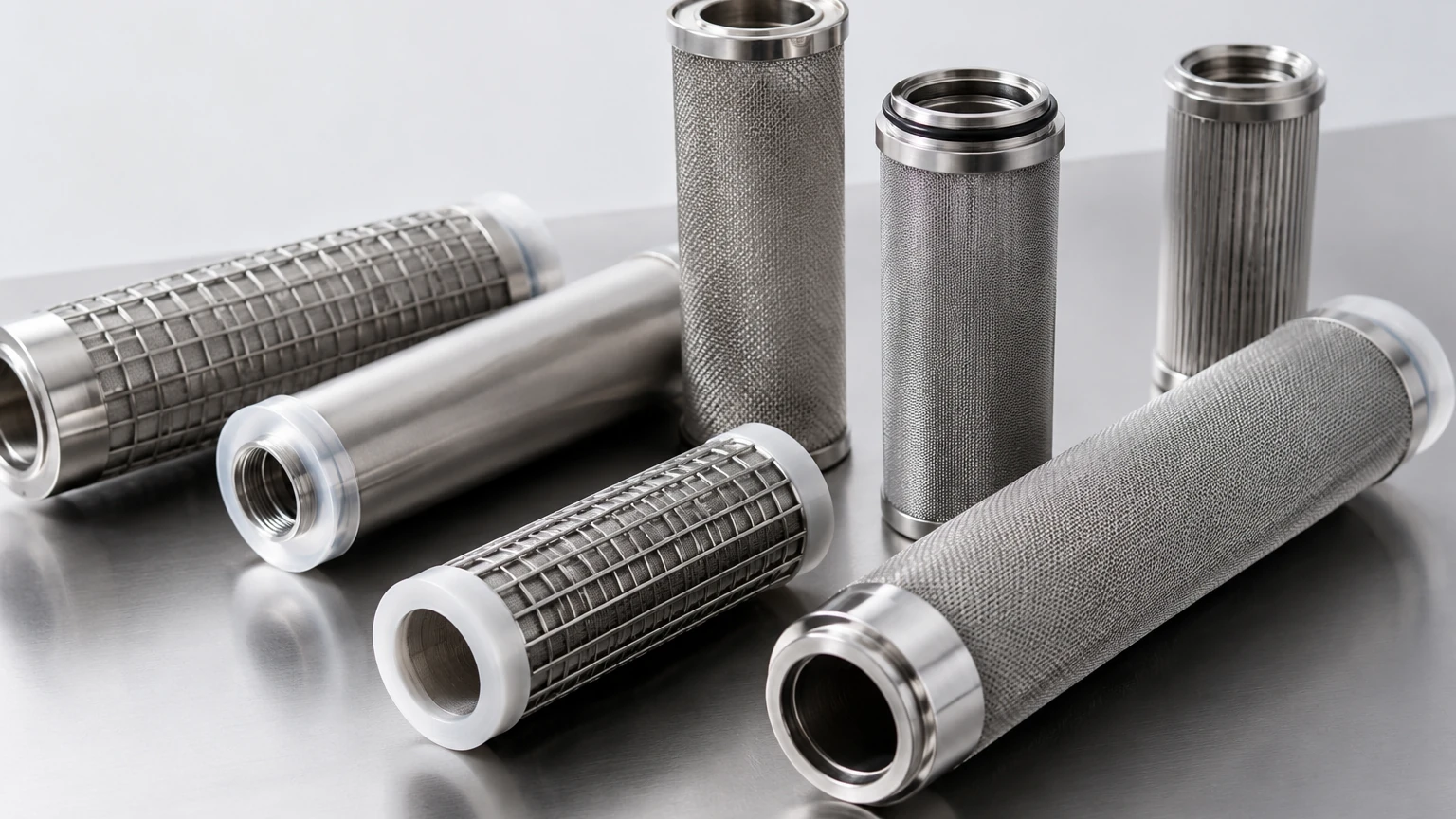
Manufacturers like Kaifil utilize advanced welding techniques to ensure that the longitudinal support rods and the outer wire (whether wedge wire or mesh) form a single, robust unit. The frequency and diameter of the support rods determine the screen's ability to withstand axial loading and external pressure. In high-pressure industrial applications, heavy-duty screen designs are employed, featuring thicker wires and reinforced internal structures to prevent deformation.
Furthermore, the method of attachment—whether through NPT threaded couplings, weld rings, or specialized flanges—must be engineered to match the strength of the screen body. A failure at the connection point is just as damaging as a failure of the screen itself.
Managing Operational Risks: Clogging and Sand Infiltration
Even a perfectly designed screened well faces operational risks over time. The two most common issues are physical clogging (silting) and biological or chemical encrustation.
Biofouling and Encrustation
In many industrial settings, bacteria such as iron-reducing bacteria can thrive in the well environment, creating a thick biofilm that blocks the screen slots. Similarly, chemical encrustation occurs when minerals build up on the screen surface. Stainless steel screens are advantageous here because they can withstand aggressive chemical rehabilitation. Acid washing or chlorine treatments that would degrade PVC or corrode carbon steel can be safely applied to stainless steel to restore flow rates.
Sand Infiltration
If a screened well begins to produce sand, it usually indicates a breach in the screen or an incorrectly sized slot. This is why precision in the manufacturing process is vital. Even a single gap that is slightly out of tolerance can allow enough sand through to damage downstream equipment. Utilizing high-precision wire mesh or wedge wire filters ensures a consistent barrier across the entire surface of the intake.
Maintenance Protocols for Extending Filter Life
A proactive maintenance strategy is essential for any industrial screened well. Monitoring the "specific capacity" of the well—the yield per unit of drawdown—is the best way to detect early signs of screen clogging. When the specific capacity drops by 15-20%, it is time for intervention.
Common maintenance techniques include:
- Mechanical Surging: Using a plunger-like tool to move water back and forth through the screen, dislodging fine particles.
- High-Pressure Jetting: Directing high-pressure water streams through the slots to break up encrustation.
- Chemical Cleaning: Using inhibited acids or biocides to dissolve mineral scales and biofilms.
Because stainless steel components are highly durable, these aggressive cleaning methods can be used repeatedly, allowing the screened well to be "reborn" multiple times throughout its service life, maintaining peak efficiency without the need for a full replacement.
Customization and OEM Solutions in Filtration
No two industrial wells are identical. Variations in depth, water chemistry, flow requirements, and geological formations necessitate customized filtration solutions. For engineers, the ability to specify custom lengths, diameters, slot widths, and alloy compositions is critical.
Customized stainless steel filter cartridges and wire mesh components allow for integration into complex industrial systems beyond the wellbore itself. Whether it is for a specialized hydraulic system, a pharmaceutical process, or a large-scale water intake, the principles of precision filtration remain the same. Working with a manufacturer that understands these engineering boundaries ensures that the final product will perform as expected under real-world conditions.
When evaluating suppliers for screened well components, it is important to confirm their quality control processes, material certifications (such as MTRs), and their ability to provide technical support during the design phase. Reliable filtration is the backbone of industrial fluid management, and the choice of screen is the first line of defense in protecting that system.
Conclusion: Strategic Sourcing for Industrial Reliability
The success of a screened well depends on the intersection of geological understanding and mechanical engineering. By prioritizing high-quality materials like stainless steel and adhering to strict engineering parameters for slot size and entrance velocity, industrial operators can ensure a steady, sand-free water supply for their processes.
Investing in precision-engineered filtration components reduces long-term maintenance costs, protects expensive downstream equipment, and ensures the sustainability of the water source. For those seeking to optimize their industrial filtration systems or explore custom OEM solutions, visiting the Main Page provides access to a wealth of technical resources and product options tailored to demanding industrial environments. Through careful selection and proactive maintenance, a well-designed screened well remains a reliable asset for decades of industrial operation.
