


Screening for Water Treatment
In the hierarchy of industrial water processing, screening for water treatment serves as the primary mechanical barrier, protecting downstream equipment and ensuring the integrity of the entire purification sequence. As the first stage of treatment, screening is responsible for the removal of large solids, debris, and particulate matter that could otherwise cause mechanical failure in pumps, clog heat exchangers, or foul sensitive membranes. For engineers and facility managers, selecting the appropriate screening technology is not merely a matter of sizing a mesh; it requires a comprehensive understanding of fluid dynamics, material science, and the specific characteristics of the influent water.
Industrial screening solutions must be engineered to withstand varying flow rates, chemical exposures, and physical stresses. This guide examines the technical considerations, material requirements, and engineering parameters essential for optimizing screening performance in industrial and municipal water treatment applications.
The Fundamentals of Screening for Water Treatment
Screening is categorized based on the size of the particles intended for removal. In most industrial settings, this is divided into coarse screening, fine screening, and micro-screening. Each stage utilizes different mechanical structures to achieve specific separation goals.
Coarse Screening
Coarse screens, often referred to as trash racks or bar screens, typically feature openings larger than 6mm (0.25 inches). Their primary function is to protect the intake of a treatment plant from large objects such as wood, plastic, and large organic debris. These are usually constructed from heavy-duty stainless steel bars to resist impact and high-velocity flows.
Fine Screening
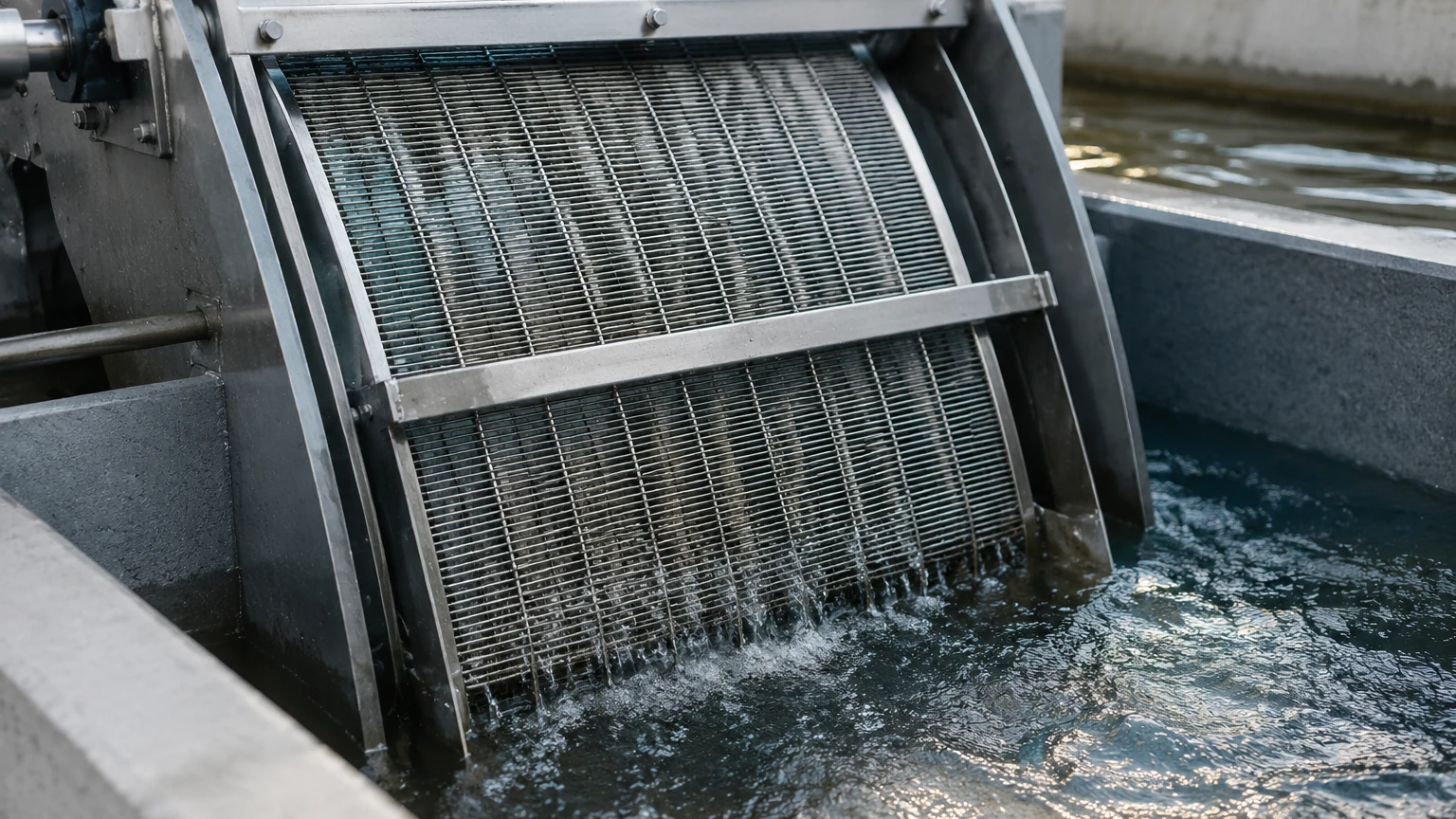
Fine screening involves apertures ranging from 1.5mm to 6mm. This stage is critical for removing smaller solids that could settle in pipes or damage fine-tuned industrial equipment. Fine screens often utilize perforated plates or wire mesh configurations. In many industrial processes, such as food and beverage production, fine screening is essential for recovering usable byproducts or meeting strict discharge regulations.
Micro-screening
Micro-screening targets particles smaller than 0.5mm. This level of filtration often employs specialized stainless steel wire cloth or precision-engineered metal filter cartridges. Micro-screens are frequently used as pre-filtration for Reverse Osmosis (RO) systems or as a final polishing step in process water loops where high clarity is required.
Engineering Considerations for Screen Selection
Selecting the right screening component requires more than just identifying a micron rating. Engineers must evaluate several mechanical and hydraulic factors to ensure long-term reliability and efficiency.
Aperture Geometry and Open Area
The geometry of the screen opening—whether square mesh, rectangular, or circular perforations—affects the flow characteristics and the screen’s tendency to blind (clog). The "percentage of open area" is a critical metric; a higher open area reduces the pressure drop (head loss) across the screen but may compromise the structural integrity of the component under high-pressure conditions. Balancing open area with mechanical strength is a key aspect of custom filter design.
Flow Velocity and Head Loss
As water passes through a screen, it encounters resistance, leading to a drop in pressure known as head loss. If the velocity through the screen is too high, it can force compressible solids through the apertures or cause cavitation. Engineers must calculate the "approach velocity" and the "through-screen velocity" to ensure they remain within the design limits of the system housing and the material's fatigue limits.
Material Selection: The Case for Stainless Steel
In water treatment, the choice of material is dictated by the chemical composition of the water and the operating environment. Stainless steel is the industry standard for high-performance screening due to its superior mechanical properties.
* SS304: Suitable for general-purpose water treatment where corrosion risks are moderate.
* SS316L: Preferred for applications involving brackish water, high chloride concentrations, or acidic cleaning chemicals. The addition of molybdenum provides enhanced resistance to pitting and crevice corrosion.
* Specialty Alloys: In highly aggressive chemical processing or high-temperature environments, duplex stainless steels or nickel-based alloys may be required to prevent premature failure.
Customization and OEM Integration
Every industrial water system has unique spatial and performance constraints. Off-the-shelf screening solutions often fail to meet the precise requirements of specialized machinery or proprietary processes. This is where custom manufacturing becomes essential.
Custom stainless steel filtration solutions allow for the integration of specific flange types, reinforced support structures, and tailored micron ratings. For instance, in hydraulic water systems, a screen may need to be integrated directly into a high-pressure manifold, requiring precision-machined end caps and high-strength welding. For more detailed specifications on custom filtration components, engineers can visit the Main Page to review product options and application support.
OEM (Original Equipment Manufacturer) partnerships enable the development of filtration components that are optimized for specific equipment footprints. By working with a manufacturer that understands both the metallurgy and the filtration physics, engineering teams can reduce the total weight of the filtration assembly while maintaining or improving the effective filtration area.
Operational Challenges and Maintenance
The efficiency of screening for water treatment is heavily dependent on the maintenance strategy and the ability of the screen to be cleaned effectively. The two primary challenges in screen operation are blinding and corrosion.
Managing Screen Blinding
Blinding occurs when particles become lodged in the screen openings or when a biofilm grows over the surface. To combat this, industrial screens often incorporate self-cleaning mechanisms, such as automatic backwashing, scrapers, or ultrasonic cleaning. The design of the wire mesh itself can also mitigate blinding; for example, certain weave patterns or wedge wire profiles are designed to release particles more easily during the cleaning cycle.
Cleaning and Replacement Cycles
While stainless steel is durable, it is not indestructible. Regular inspection for mechanical wear, wire displacement, or localized corrosion is necessary. In high-solids applications, the replacement cycle of a filter cartridge or screen element should be determined by monitoring the differential pressure. Once the pressure drop reaches a predetermined threshold, the screen must be cleaned or replaced to prevent system-wide performance degradation.
Total Cost of Ownership (TCO) in Screening
When evaluating screening solutions, purchasing teams should look beyond the initial capital expenditure (CAPEX). The Total Cost of Ownership (TCO) includes energy consumption (related to head loss), maintenance labor, replacement parts, and the cost of downtime.
1. Durability: A higher-quality stainless steel screen may have a higher upfront cost but can last significantly longer than lower-grade alternatives, reducing the frequency of replacement.
2. Energy Efficiency: Screens designed with optimized open areas minimize the load on pumps, leading to substantial energy savings over the life of the system.
3. Process Protection: The most significant cost factor is often the protection of downstream assets. A failure in the screening stage can lead to the destruction of high-value membranes or pumps, resulting in costs that far exceed the price of the screen itself.
Technical Confirmation for Procurement
Before finalizing a purchase or design specification for water treatment screening, engineers should confirm the following technical details with their supplier:
* Particle Size Distribution (PSD): What is the smallest particle that must be captured, and what is the largest particle expected in the influent?
* Chemical Compatibility: Does the water contain chlorine, ozone, or other oxidants that could affect the lifespan of the metal mesh?
* Pressure Ratings: What is the maximum operating pressure and the maximum allowable differential pressure before the screen risks structural deformation?
* Cleaning Protocol: Is the screen compatible with Clean-in-Place (CIP) procedures, and what chemicals will be used during cleaning?
* Certifications: Are there specific industry standards (such as NSF, FDA for food-grade, or ISO) that the filtration component must meet?
Conclusion
Effective screening for water treatment is a critical engineering discipline that requires a balance of material science, hydraulic design, and mechanical precision. By selecting high-quality stainless steel components and prioritizing custom-engineered solutions, industrial operators can ensure the longevity of their water treatment infrastructure. Reliable screening not only improves the quality of the processed water but also serves as a vital safeguard for the entire industrial operation, minimizing downtime and optimizing the total cost of ownership. For professionals seeking to optimize their filtration systems, consulting with a manufacturer experienced in precision metal filtration is the most effective path toward achieving durable and efficient performance.
