


Screening in Sewage Treatment
In the hierarchy of wastewater management, screening in sewage treatment represents the critical first line of defense. It is a physical unit operation designed to remove large floating or suspended solids that could otherwise damage downstream equipment, obstruct hydraulic flow, or reduce the efficiency of biological treatment processes. For engineers and facility managers, selecting the appropriate screening technology is not merely a matter of debris removal; it is a strategic decision that impacts the total lifecycle cost and operational reliability of the entire treatment plant.
Industrial and municipal sewage contains a diverse array of materials, ranging from organic matter and plastics to rags, wood, and metal fragments. Without effective screening, these materials can lead to pump impellers clogging, pipe blockages, and the accumulation of non-biodegradable solids in aeration tanks and anaerobic digesters. This article examines the technical nuances of screening systems, focusing on engineering specifications, material selection, and the integration of precision metal components in modern filtration setups.
The Role of Screening in Modern Wastewater Management
Screening in sewage treatment serves two primary functions: the protection of mechanical equipment and the improvement of the overall quality of the influent before it reaches secondary treatment stages. By removing large solids at the headworks, facility operators prevent "ragging"—a common phenomenon where fibrous materials wrap around rotating equipment, leading to motor burnout and expensive downtime.
From a process engineering perspective, screening is categorized by the size of the openings and the method of cleaning. The choice between coarse, fine, and micro-screening depends heavily on the specific characteristics of the influent and the sensitivity of the downstream processes. For instance, membrane bioreactors (MBR) require significantly more stringent pre-screening than traditional activated sludge systems to prevent membrane fouling and physical damage.
Classification of Screening Systems: Coarse vs. Fine
Screening systems are generally classified based on the clear space between the screening elements, such as bars, wires, or perforated plates.
Coarse Screening
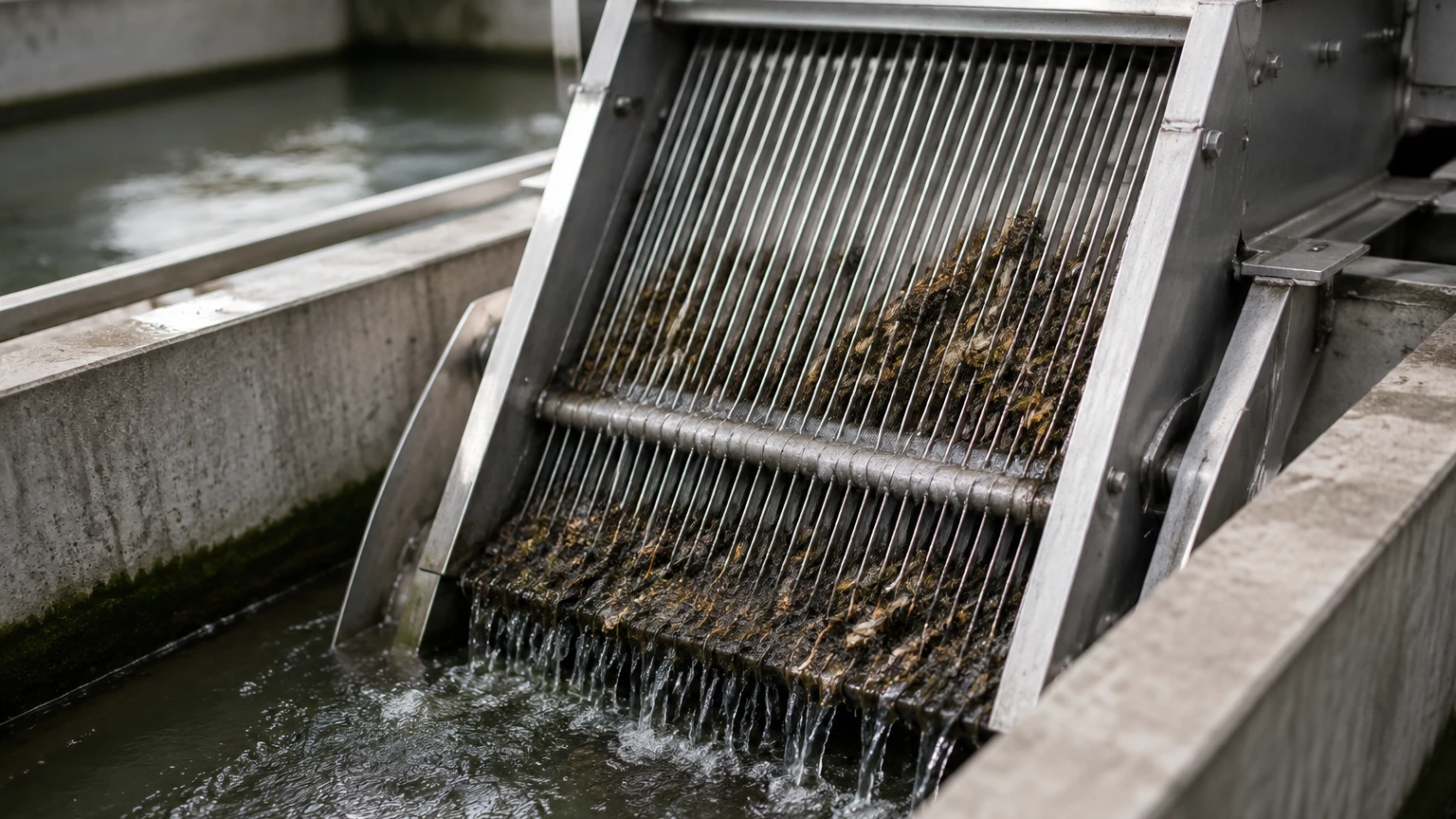
Coarse screens, often referred to as bar screens or trash racks, typically feature openings ranging from 6 mm to 150 mm. These are installed at the very beginning of the treatment process to capture large debris like branches, plastic bottles, and heavy rags. They are essential for protecting raw sewage pumps. Coarse screens can be manually cleaned in very small installations, but mechanical cleaning is the standard for industrial and municipal applications to ensure consistent flow and safety.
Fine Screening
Fine screens utilize openings smaller than 6 mm, often reaching as low as 0.5 mm in specialized applications. These systems are designed to remove smaller solids that pass through coarse screens, such as seeds, hair, and fine plastic fragments. Fine screening is increasingly critical as environmental regulations tighten and treatment technologies become more sophisticated. The media for fine screens often involves stainless steel wire mesh or perforated metal plates, which provide a high degree of filtration accuracy and structural integrity.
Micro-Screening
Micro-screening involves apertures smaller than 50 micrometers. This stage is typically used in tertiary treatment or for specific industrial effluent where high-purity discharge is required. At this level, the quality of the filter media is paramount. Precision-engineered stainless steel mesh is often the material of choice due to its ability to maintain consistent pore sizes under hydraulic pressure.
Material Selection and Engineering for Durability
In the harsh environment of a sewage treatment plant, material selection is a decisive factor in the longevity of screening equipment. Sewage is inherently corrosive, often containing hydrogen sulfide (H2S), chlorides, and varying pH levels depending on industrial contributions.
Stainless steel is the industry standard for high-performance screening components. Grades such as 304 and 316L are preferred for their exceptional resistance to oxidation and chemical attack. For engineers, the transition from carbon steel or plastic components to stainless steel filtration solutions represents a move toward lower maintenance requirements and longer replacement cycles.
When designing or specifying screens, engineers must consider:
1. Corrosion Resistance: 316L stainless steel offers superior resistance to pitting and crevice corrosion in high-chloride environments compared to 304.
2. Mechanical Strength: The screening media must withstand the physical impact of heavy debris and the hydraulic forces of high-velocity influent.
3. Surface Finish: Smooth, electropolished surfaces can reduce the adhesion of organic biofilms, making the cleaning process more efficient and reducing the frequency of backwashing or mechanical raking.
For those seeking technical specifications on high-durability metal filter components, reviewing the Main Page of a specialized manufacturer can provide insights into the custom configurations available for industrial-grade filtration.
Technical Parameters and Selection Criteria for Engineers
Selecting a screen for sewage treatment requires a detailed analysis of hydraulic and physical parameters. A poorly specified screen can lead to excessive head loss, which may cause upstream flooding or necessitate expensive pumping adjustments.
Hydraulic Head Loss
Head loss is the difference in water level across the screen. It is influenced by the percentage of open area, the velocity of the fluid, and the degree of blinding (clogging). Engineers use the Bernoulli equation and specific discharge coefficients to calculate the expected head loss. A higher percentage of open area, achieved through precision wire mesh or optimized perforated patterns, minimizes head loss and energy consumption.
Approach and Through-Screen Velocity
The approach velocity should be high enough to keep grit and solids in suspension (typically above 0.4 m/s) but low enough to prevent the "push-through" of compressible solids. The through-screen velocity is usually limited to 0.6–1.2 m/s to prevent excessive head loss and to ensure that the cleaning mechanism can effectively remove captured debris.
Screenings Volume and Handling
The volume of screenings produced is a function of the aperture size and the influent characteristics. Fine screens produce significantly more waste than coarse screens. Engineers must plan for the washing, compaction, and disposal of these solids. Modern systems often integrate a screenings washer-compactor to reduce the weight and volume of the waste, thereby lowering disposal costs.
Operational Challenges and Maintenance Protocols
Even the most robust screening in sewage treatment requires a proactive maintenance strategy. The primary operational challenge is "blinding," where the screen openings become blocked by grease, hair, or fibrous materials.
1. Cleaning Mechanisms: Mechanical screens use rakes, brushes, or high-pressure water sprays to clear the media. The timing of these cleaning cycles is often controlled by differential pressure sensors. When the head loss reaches a predetermined setpoint, the cleaning cycle activates.
2. Wear and Tear: Moving parts in mechanical screens, such as chains, sprockets, and bearings, are subject to wear. Using stainless steel components for these parts can significantly extend the interval between overhauls.
3. Grease Accumulation: In many industrial applications, grease can coat the screen media, reducing the effective open area. Regular chemical cleaning or hot water washes may be necessary in addition to mechanical raking.
Custom Solutions for Specialized Industrial Influent
While municipal sewage follows relatively predictable patterns, industrial wastewater—such as that from food processing, chemical plants, or pharmaceutical facilities—presents unique challenges. These environments may require custom-designed filtration components that can handle high temperatures, extreme pH levels, or specific particle shapes.
Customization options for stainless steel filter cartridges and wire mesh filters allow engineers to tailor the filtration performance to the exact needs of the facility. This includes selecting specific weave patterns for wire mesh (such as plain, twilled, or dutch weaves) to balance flow rate with filtration accuracy. Precision metal filter components can be manufactured to fit existing infrastructure, allowing for the upgrading of older headworks without a complete structural overhaul.
Total Cost of Ownership (TCO) Considerations
When evaluating screening solutions, the initial purchase price is only one component of the Total Cost of Ownership. Engineers must also account for:
* Energy Consumption: Systems with lower head loss require less pumping energy.
* Maintenance Labor: High-quality stainless steel screens require fewer manual interventions and less frequent parts replacement.
* Downstream Impact: Superior screening protects expensive downstream equipment like high-speed centrifuges and fine-bubble diffusers, extending their service life and maintaining their efficiency.
* Disposal Costs: Efficient screenings washers and compactors can reduce disposal volumes by up to 50%, providing significant long-term savings.
In conclusion, screening in sewage treatment is a fundamental process that dictates the operational health of a wastewater facility. By prioritizing material quality, hydraulic efficiency, and precision engineering, professionals can ensure that their treatment systems remain resilient against the challenges of modern wastewater streams. For those involved in the procurement and design of these systems, focusing on specialized stainless steel components is a proven strategy for achieving reliable, long-term performance in demanding industrial environments.
