


Screening in Water Treatment
In the hierarchy of industrial process engineering, screening in water treatment represents the critical first line of defense. It is the physical process of removing large solids, debris, and particulate matter from a liquid stream to protect downstream equipment, ensure process efficiency, and meet specific water quality standards. For engineers and facility managers, selecting the appropriate screening technology is not merely a matter of choosing a mesh size; it involves a complex evaluation of hydraulic loads, material compatibility, and long-term operational costs.
At its core, screening is a mechanical separation process. Whether the application involves municipal wastewater, industrial process water, or high-purity pharmaceutical intake, the effectiveness of the initial screening phase dictates the lifespan and performance of subsequent filtration stages, such as membrane bioreactors (MBR), reverse osmosis (RO) units, and high-precision filter cartridges. This guide examines the technical nuances of screening, providing the factual foundation necessary for informed procurement and system design.
The Classification of Screening Systems
Screening in water treatment is generally categorized by the size of the openings and the mechanical method used to clear the accumulated debris. Understanding these categories is essential for matching the technology to the specific influent characteristics.
Coarse Screening
Coarse screens, often referred to as bar screens or trash racks, typically feature openings larger than 6 mm (0.25 inches). Their primary function is to remove large objects—such as sticks, plastic waste, and heavy debris—that could damage pumps, valves, and agitators. In industrial settings, these are often the first components encountered in an intake structure. While simple in design, the engineering focus here is on structural integrity and the ability to withstand significant hydraulic surges.
Fine Screening
Fine screening utilizes apertures ranging from 0.5 mm to 6 mm. This stage is critical for removing smaller solids that coarse screens miss but which are still too large for fine media filters. Fine screens often employ stainless steel wire mesh or perforated plates. In food and beverage or chemical processing, fine screening ensures that the bulk of suspended solids is removed before the water enters more sensitive treatment phases. The precision of the mesh weave determines the reliability of the separation.
Micro-screening
Micro-screening involves apertures smaller than 0.5 mm (500 microns). This level of screening often requires specialized stainless steel filter components designed to handle high flow rates while maintaining strict particle retention. Micro-screens are frequently used as a pre-treatment step for membrane systems to prevent premature fouling. At this scale, the selection of the wire mesh type—such as plain weave, twilled weave, or Dutch weave—becomes a decisive factor in the screen’s performance and cleanability.
Engineering Considerations for Screen Selection
When specifying components for screening in water treatment, engineers must look beyond the nominal micron rating. Several hydraulic and mechanical factors influence the total effectiveness of the system.
Particle Size Distribution (PSD)
An accurate analysis of the influent’s particle size distribution is the starting point for any screening design. If the screen openings are too large, downstream equipment is at risk. If they are too small, the screen will clog (blind) too rapidly, leading to excessive head loss and frequent maintenance cycles. The goal is to select a screening media that captures the target particles while allowing the maximum possible volume of water to pass through.
Open Area Ratio
The open area ratio is the percentage of the total screen surface that is actually open for fluid flow. A higher open area reduces the approach velocity and the pressure drop across the screen. For industrial applications, stainless steel wire mesh is often preferred over perforated plate because it typically offers a higher open area for the same filtration rating, leading to better energy efficiency and lower pump requirements.
Approach Velocity and Head Loss
Head loss is the difference in water level (or pressure) between the upstream and downstream sides of the screen. As solids accumulate, head loss increases. Engineers must calculate the maximum allowable head loss to prevent structural failure of the screen or overflows. The approach velocity—the speed at which water reaches the screen—must be controlled to prevent "wash-through," where flexible or high-velocity particles are forced through the openings they would otherwise be caught by.
Material Selection: The Case for Stainless Steel
In the demanding environments of industrial water treatment, material durability is non-negotiable. Screening components are constantly exposed to moisture, varying pH levels, and abrasive particles.
Corrosion Resistance
Stainless steel 304 and 316L are the industry standards for screening in water treatment. Grade 304 provides excellent resistance for general water applications, while 316L, which contains molybdenum, is essential for environments with high chloride concentrations or acidic conditions. Using inferior materials leads to pitting and stress-corrosion cracking, which eventually compromises the integrity of the mesh and allows bypass of unfiltered water.
Mechanical Strength and Rigidity
Unlike synthetic meshes, stainless steel provides the mechanical strength required to withstand high differential pressures. This is particularly important during backwashing or mechanical cleaning cycles. A rigid stainless steel screen maintains its aperture geometry under load, ensuring consistent filtration performance throughout its service life. For high-pressure hydraulic systems or deep-well water intake, the structural stability of metal filtration components is a critical safety and performance factor.
Customization and OEM Integration
Many industrial water treatment challenges cannot be solved with off-the-shelf products. Customization is often required to fit existing infrastructure or to meet unique process requirements. This is where professional manufacturing expertise becomes invaluable.
Customization options include:
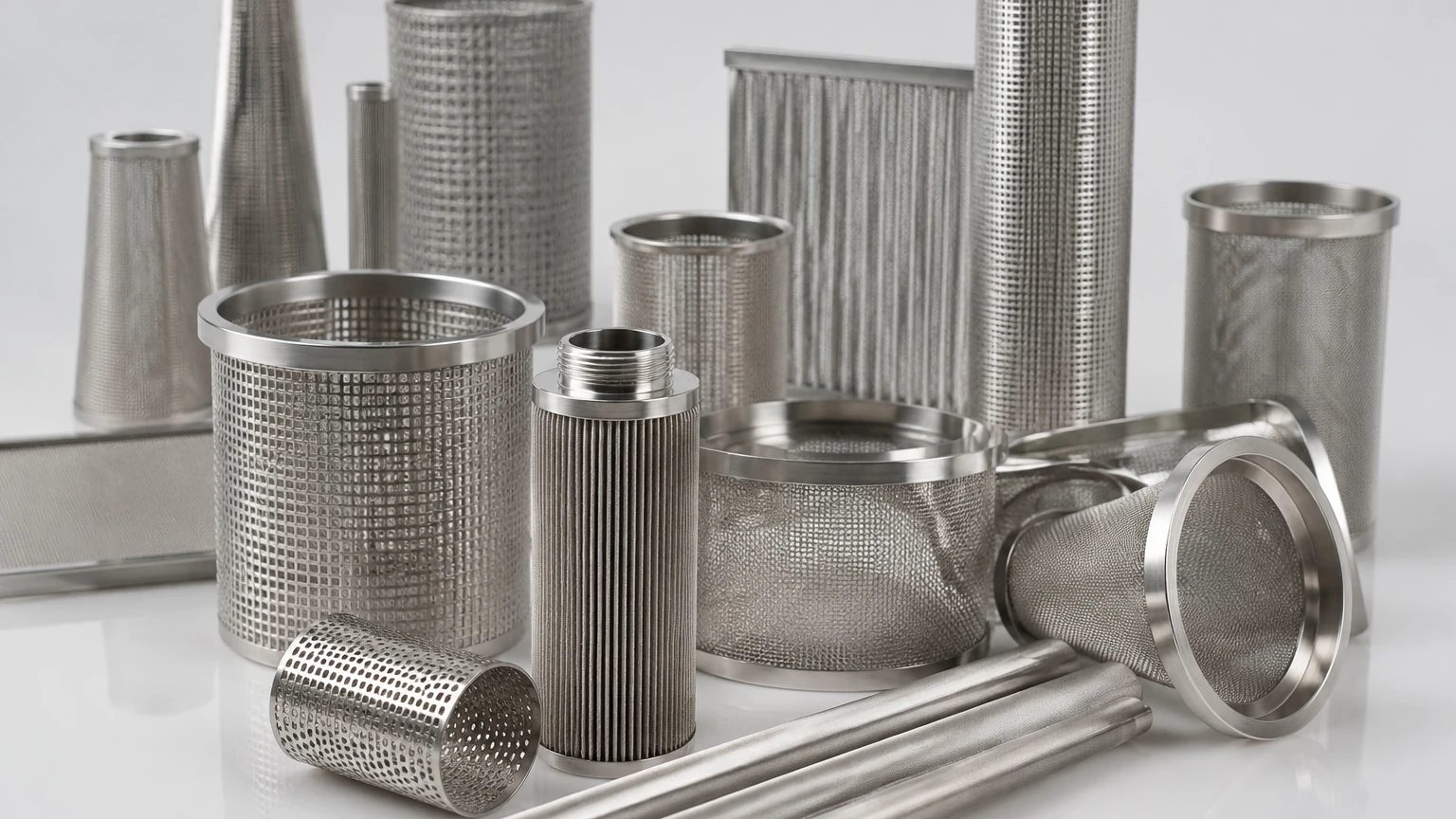
* Specific Geometry: Designing screens to fit unique housing shapes, such as conical, cylindrical, or flat-panel configurations.
* Layering and Sintering: Combining multiple layers of wire mesh through sintering to create a composite media that offers both high filtration precision and extreme mechanical strength.
* Edge Treatments: Custom flanges, gaskets, and reinforcements to ensure a leak-proof fit within the treatment system.
For companies looking to optimize their filtration processes, reviewing specialized product options and engineering support is a vital step. You can explore a wide range of tailored solutions on the Main Page of the Kaifil website, where technical specifications for various stainless steel filtration components are detailed.
Maintenance, Cleaning, and Replacement Cycles
The efficiency of screening in water treatment is heavily dependent on the cleaning mechanism. Even the best-designed screen will fail if it is not properly maintained.
Cleaning Mechanisms
* Manual Cleaning: Suitable for coarse screens in low-flow applications where debris volume is minimal.
* Mechanical Raking: Common in large-scale intake structures where automated arms remove debris from bar screens.
* Backwashing: For fine and micro-screens, high-pressure water or air is forced through the mesh in the reverse direction to dislodge trapped particles. The design of the mesh (e.g., wedge wire or Dutch weave) significantly impacts how effectively backwashing can restore the screen’s original flow capacity.
Determining Replacement Cycles
While stainless steel screens are durable, they are not permanent. Replacement should be planned based on:
1. Mechanical Wear: Evidence of wire thinning or broken strands due to abrasive solids.
2. Irreversible Blinding: When backwashing no longer restores the pressure drop to acceptable levels.
3. Chemical Degradation: Signs of corrosion that could lead to structural failure.
Proactive monitoring of differential pressure is the most effective way to determine when a screen or filter cartridge requires cleaning or replacement. By establishing a baseline for a clean screen, operators can set setpoints for automated cleaning cycles or manual inspections.
Total Cost of Ownership (TCO) in Screening
When evaluating screening solutions, purchasing teams should look beyond the initial capital expenditure (CAPEX). The Total Cost of Ownership (TCO) provides a more accurate picture of the investment's value.
Key factors in TCO include:
* Energy Consumption: Screens with low open areas increase the load on pumps, leading to higher electricity costs over time.
* Downtime: Frequent cleaning or premature failure of low-quality screens results in costly production halts.
* Downstream Impact: The cost of replacing a fouled RO membrane or a damaged pump far exceeds the cost of a high-quality stainless steel pre-filter.
* Longevity: A high-grade stainless steel filter may have a higher upfront cost but can outlast synthetic alternatives by several years, reducing the frequency of procurement and installation labor.
Conclusion
Screening in water treatment is a foundational process that requires technical precision and robust materials. By understanding the hydraulic demands of the application and selecting the appropriate stainless steel mesh and structural design, engineers can significantly enhance the reliability of their water treatment systems. Whether the goal is to protect sensitive downstream equipment or to ensure the purity of process water, the choice of screening technology is a decisive factor in operational success. For those seeking reliable, high-performance filtration components, Kaifil provides the manufacturing expertise and customized engineering support necessary to meet the most demanding industrial requirements.
